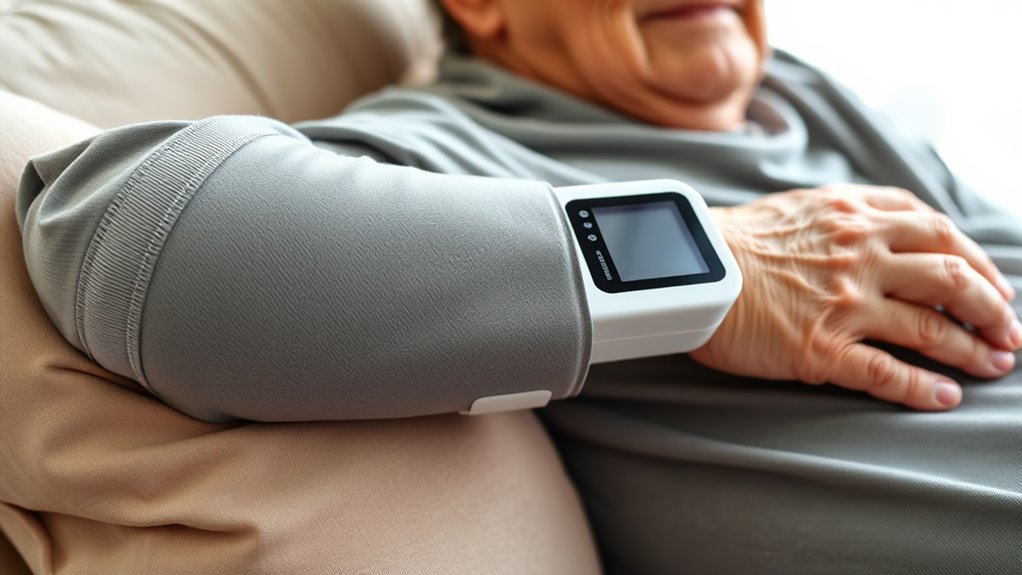

For most older adults, I’d start with the OMRON Silver Upper Arm Blood Pressure Monitor for its straightforward upper-arm format and practical home-monitoring features. The Paramed Automatic Upper Arm Monitor stands out for its voice broadcast and large LCD, while the iHealth Track may suit people who need a wide-range cuff. The main tradeoffs are ease of applying the cuff, readability, fit, and whether a wrist model’s portability is worth the extra care needed with positioning. A monitor can support home tracking, but it does not replace clinical advice or a properly checked reading technique. Read on for how all 15 options compare and which type may fit your needs.

Turn the school run and nap time into listening time
- Thousands of audiobooks, podcasts and originals
- Listen on your phone, tablet or Echo — also offline
- Cancel anytime
Complete the kit


Key Takeaways
- Upper-arm models lead this roundup for routine home checks: they make up most of the selection, while wrist monitors are better treated as a portability option that calls for careful positioning.
- The OMRON Silver is the strongest all-around choice in this comparison: it offers a familiar upper-arm approach, while the OMRON Iron and Bronze provide alternatives within the same brand lineup.
- Accessibility features distinguish the Paramed: its voice broadcast and large LCD address reading and display challenges more directly than basic monitor designs.
- Cuff fit may matter more than extra memory: the iHealth Track’s wide-range cuff and the AQESO’s three-cuff set speak to different fit needs, so measure the arm before choosing.
- Rechargeable and carrying-case designs favor convenience, not necessarily daily ease: the Oklar wrist options and MMIZOO may appeal to people who value portability, but users still need a suitable fit and consistent measuring position.
| Oklar Upper Arm Blood Pressure Monitor for Home Use |  | Best for Two-Person Tracking | Measurement location: Upper arm | Operation: One-button | Display: Backlit LED | VIEW ON AMAZON | See Our Full Breakdown |
| OMRON Iron Upper Arm Blood Pressure Monitor |  | Best for Reading Checks | Measurement location: Upper arm | Cuff fit: 9–17 inches | Operation: One-touch | VIEW ON AMAZON | See Our Full Breakdown |
| OMRON Bronze Upper Arm Blood Pressure Monitor |  | Best for App-Based Tracking | Measurement location: Upper arm | Cuff fit: 9–17 inches | On-device storage: Up to 14 readings | VIEW ON AMAZON | See Our Full Breakdown |
| Paramed Automatic Upper Arm Blood Pressure Monitor with Large LCD, Voice Broadcast, and 120 Memory |  | Best for Audio and Large Controls | Measurement location: Upper arm | Cuff range: 8.7–16.5 inches | Memory capacity: 120 readings per user | VIEW ON AMAZON | See Our Full Breakdown |
| FDA-Cleared Automatic Wrist Blood Pressure Monitor with 199 Memory |  | Best Compact Option | Measurement location: Wrist | Measurement time: 30 seconds | Memory capacity: 199 readings with date and time stamps | VIEW ON AMAZON | See Our Full Breakdown |
| MMIZOO Wrist Blood Pressure Monitor with Carrying Case |  | Best Wrist Pick for Voice Guidance | Display: Large LCD | Reading time: About 45 seconds | User profiles: 2 | VIEW ON AMAZON | See Our Full Breakdown |
| iHealth Track Smart Upper Arm Blood Pressure Monitor with Wide-Range Cuff |  | Best for App-Based Tracking | Measurement standards: Meets ESH 2010 performance standards | On-device storage: Up to 99 readings | App storage: Unlimited readings in the iHealth app | VIEW ON AMAZON | See Our Full Breakdown |
| Sinocare Upper Arm Blood Pressure Monitor |  | Best for Simple One-Button Operation | Display: 3.6-inch screen | Cuff size: 8.6–16.5 inches | Cuff pressure accuracy: ±3 mmHg (±0.4 kPa) | VIEW ON AMAZON | See Our Full Breakdown |
| Alcedo Blood Pressure Monitor for Home Use, Upper Arm Cuff BP Machine |  | Best for Spoken Guidance and Averaged Readings | Display: LCD with live-voice broadcast | Measurement method: One-push operation with automatic averaging of 3 values | User modes: 2 users | VIEW ON AMAZON | See Our Full Breakdown |
| Oklar Rechargeable Wrist Blood Pressure Monitor |  | Best Rechargeable Wrist Option | Measurement time: About 35 seconds | Memory: Up to 240 readings for two users | Cuff range: 4.92–8.46 inches | VIEW ON AMAZON | See Our Full Breakdown |
| Upper Arm Blood Pressure Monitor with Adjustable Cuff and Storage Bag |  | Best for Two-Person Home Tracking | Measurement type: Upper arm | User memory: 2 users, 120 readings per user | Cuff fit: 8.7–16.5 inches | VIEW ON AMAZON | See Our Full Breakdown |
| OMRON Silver Upper Arm Blood Pressure Monitor |  | Best for App-Based Health Tracking | Measurement type: Upper arm blood pressure | On-device memory: Up to 30 readings | Connectivity: Bluetooth | VIEW ON AMAZON | See Our Full Breakdown |
| AILE Automatic Upper Arm Blood Pressure Monitor |  | Best for Simple, No-Fuss Readings | Measurement type: Automatic upper arm | Measurements displayed: Systolic pressure, diastolic pressure, and pulse | Cuff fit: 8.7–16.5 inches (22–42 cm) | VIEW ON AMAZON | See Our Full Breakdown |
| AQESO Automatic Upper Arm Blood Pressure Monitor with 3 Cuffs |  | Best for Shared Use Across Different Arm Sizes | Measurements: Systolic and diastolic blood pressure, and heart rate | Cuff sizes: Small: 7–9 inches; medium/large: 9–17 inches; large/extra-large: 13–21 inches | Arm circumference range: 7–21 inches | VIEW ON AMAZON | See Our Full Breakdown |
| Oklar Rechargeable Wrist Blood Pressure Monitor |  | Best for Voice Guidance and Wrist Convenience | Measurement type: Automatic wrist blood pressure monitor | Measurement time: About 35 seconds | Memory capacity: Up to 240 readings for 2 users | VIEW ON AMAZON | See Our Full Breakdown |
| blood pressure cuffs for elderly | Display |
|---|---|
| Oklar Upper Arm Blood Pressure | Backlit LED |
| OMRON Iron Upper Arm Blood Pre | — |
| OMRON Bronze Upper Arm Blood P | — |
| Paramed Automatic Upper Arm Bl | Large LCD |
| FDA-Cleared Automatic Wrist Bl | Large LCD screen |
| MMIZOO Wrist Blood Pressure Mo | Large LCD |
| iHealth Track Smart Upper Arm | — |
| Sinocare Upper Arm Blood Press | 3.6-inch screen |
| Alcedo Blood Pressure Monitor | LCD with live-voice broadcast |
| Oklar Rechargeable Wrist Blood | Large backlit LED |
| Upper Arm Blood Pressure Monit | Large digital display with LED screen |
| OMRON Silver Upper Arm Blood P | — |
| AILE Automatic Upper Arm Blood | — |
| AQESO Automatic Upper Arm Bloo | Backlit LCD |
| Oklar Rechargeable Wrist Blood | Large backlit LED |
More Details on Our Top Picks
Oklar Upper Arm Blood Pressure Monitor for Home Use
The Oklar makes sense for older adults who want straightforward one-button readings and a history shared between two household users. Its 240-reading capacity is more generous than the OMRON Bronze’s 14 on-device readings, so users can review more measurements without relying on an app. The backlit LED display helps with visibility in dim rooms, while the 8.7–15.7-inch cuff covers many common upper-arm sizes. Power is flexible: use three AA batteries or a Type-C connection. That connection is not a charging port, however, and the monitor is not rechargeable; using it without batteries means keeping a compatible cable nearby. Choose it for simple shared home tracking, but compare cuff fit carefully if the user’s arm is larger than 15.7 inches.
Pros:- One-button operation keeps routine measurements simple.
- Backlit display supports reading results in dimmer rooms.
- Stores up to 120 readings for each of two users.
- Can run on AA batteries or a Type-C power connection.
Cons:- Type-C provides power but does not recharge the monitor.
- A cable is needed when using Type-C without batteries.
- The cuff range may not fit users with arms larger than 15.7 inches.
Best for: Older adults and partners who want simple upper-arm readings and separate, substantial histories for two users.
Not ideal for: People who want a rechargeable monitor or whose upper arms measure outside the 8.7–15.7-inch cuff range.
- Measurement location:Upper arm
- Operation:One-button
- Display:Backlit LED
- Reading storage:Up to 240 readings total
- User profiles:2 users, 120 readings per user
- Power:3 AA batteries or Type-C connection; not rechargeable
- Arm cuff range:8.7–15.7 inches (22–40 cm)
- Reading time:Within 1 minute
Our verdict“Choose the Oklar for easy two-person tracking and a large stored history, provided its cuff fits and non-rechargeable power is acceptable.”
OMRON Iron Upper Arm Blood Pressure Monitor
The OMRON Iron is a sensible choice for older adults who want one-touch operation with alerts for movement and irregular heartbeats. The movement alert can flag a reading taken while the arm shifts, offering a prompt to pause and repeat rather than treating every result as equally dependable. Its 9–17-inch wide-range cuff fits a broader span than the Oklar monitor’s 8.7–15.7-inch cuff, which may make fitting easier for some users. Unlike the OMRON Bronze, this model’s listed features do not include Bluetooth tracking or a hypertension indicator; its appeal is a simpler, direct-reading routine. It also has no stated memory capacity, so it is a weaker fit for people who need to review a long history on the device. Treat irregular-heartbeat alerts as prompts to discuss readings with a clinician, not as a diagnosis.
Pros:- One-touch operation limits steps during a routine reading.
- Movement detection can flag readings taken while the user shifts.
- Irregular-heartbeat detection adds a useful prompt to review readings.
- The 9–17-inch cuff covers a wide range of upper-arm sizes.
Cons:- No reading-storage capacity is listed.
- No Bluetooth or app tracking is specified.
- No hypertension indicator is listed, unlike the OMRON Bronze.
Best for: Older adults who want a simple upper-arm monitor that flags movement during measurement and need a cuff fitting arms 9–17 inches.
Not ideal for: People who need on-device reading history, app-based tracking, or an elevated-reading indicator.
- Measurement location:Upper arm
- Cuff fit:9–17 inches
- Operation:One-touch
- Measurement technology:Advanced Accuracy Technology
- Irregular heartbeat detection:Yes
- Body movement detection:Yes
- Included:Monitor, wide-range D-ring cuff, instruction manual, quick start guide
Our verdict“Pick the OMRON Iron for a simple reading routine with movement and irregular-heartbeat alerts, not for saved histories or app tracking.”
OMRON Bronze Upper Arm Blood Pressure Monitor
The OMRON Bronze suits older adults or caregivers who prefer to keep readings in a phone app for sharing and reviewing over time. Bluetooth syncing with OMRON Connect, Apple Health, and Google Fit adds a record beyond the monitor’s 14-reading on-device memory, while the hypertension indicator and irregular-heartbeat detection provide extra cues during measurement. Compared with the OMRON Iron, the Bronze adds app connectivity and an elevated-reading indicator, but the Iron lists body movement detection and may suit someone who wants a more direct, alert-focused routine. The tradeoff is dependence on a compatible phone and willingness to manage app syncing; the small on-device history is limiting when the phone is unavailable. Its 9–17-inch cuff, storage case, and included batteries make it ready for a conventional upper-arm setup.
Pros:- Bluetooth can transfer readings to OMRON Connect.
- Compatible with Apple Health and Google Fit.
- Hypertension indicator and irregular-heartbeat detection add measurement cues.
- Includes a 9–17-inch cuff, storage case, and four AA batteries.
Cons:- Stores only 14 readings on the monitor itself.
- App tracking depends on access to a compatible smartphone and successful syncing.
- Uses four AA batteries.
Best for: Older adults or caregivers who already use a compatible smartphone and want readings saved and shared through a health app.
Not ideal for: People who avoid smartphone apps or need a long reading history stored directly on the monitor.
- Measurement location:Upper arm
- Cuff fit:9–17 inches
- On-device storage:Up to 14 readings
- Connectivity:Bluetooth
- App compatibility:OMRON Connect, Apple Health, Google Fit
- Measurement indicators:Irregular heartbeat detection and hypertension indicator
- Included:Monitor, wide-range D-ring cuff, storage case, instruction manual, quick start guide, four AA batteries
Our verdict“Choose the Bronze if app-based sharing matters more than keeping a large history on the monitor itself.”
Paramed Automatic Upper Arm Blood Pressure Monitor with Large LCD, Voice Broadcast, and 120 Memory
The Paramed is designed around access: oversized buttons, a large LCD, and voice broadcast can help older adults who find small controls or screen-only feedback difficult. Its self-checking cuff is adjustable from 8.7 to 16.5 inches, wider than the Oklar’s upper limit, and the two-user memory holds 120 readings per person. That makes it a stronger option than the OMRON Bronze for households wanting a substantial on-device history without app syncing. The voice feature can be turned off, although buyers who do not need spoken results may find the extra feature unnecessary. It is an upper-arm-only monitor, so it does not offer a wrist-worn alternative for users who cannot comfortably position an arm cuff. Batteries and a carrying bag are included for setup and storage.
Pros:- Large LCD and oversized buttons support easier viewing and operation.
- Voice broadcast offers spoken measurement feedback and can be turned off.
- Stores up to 120 readings for each of two users.
- Self-checking cuff fits upper arms 8.7–16.5 inches; batteries and bag are included.
Cons:- The voice feature may be unnecessary for users who prefer a basic silent monitor.
- Upper-arm measurement is the only listed measurement location.
- The stated cuff range may not fit arms outside 8.7–16.5 inches.
Best for: Older adults with low vision or difficulty using small controls, especially couples who want separate saved readings without an app.
Not ideal for: Users who cannot comfortably apply an upper-arm cuff or prefer a minimal monitor without voice features.
- Measurement location:Upper arm
- Cuff range:8.7–16.5 inches
- Memory capacity:120 readings per user
- User profiles:2
- Display:Large LCD
- Features:Voice broadcast, self-checking cuff, low-battery indicator, date display
- Included accessories:4 AA batteries and carrying bag
Our verdict“Pick the Paramed when spoken feedback, large controls, and shared on-device history matter more than a minimal feature set.”
FDA-Cleared Automatic Wrist Blood Pressure Monitor with 199 Memory
This wrist monitor is the compact alternative for older adults who have difficulty fitting or operating an upper-arm cuff. Its one-click operation and 30-second measurement keep the routine short, and the large LCD plus date-and-time-stamped storage for 199 readings make results easier to review at home. Compared with the upper-arm Paramed, it is easier to carry and avoids wrapping a cuff around the upper arm, but wrist readings are more sensitive to positioning. The wrist must be held at the appropriate level during measurement, so users who cannot keep it steady may get less dependable results. Its 5.31–8.46-inch wrist cuff also has a narrower fit range than the upper-arm options in this lineup. Choose it for portability or upper-arm cuff difficulty, while following measurement instructions and clinician guidance.
Pros:- One-click operation and a stated 30-second measurement keep the routine brief.
- Large LCD supports reading results.
- Stores up to 199 readings with date and time stamps.
- Includes two AAA batteries and a carrying case.
Cons:- Wrist readings can be less dependable when the monitor is not positioned correctly.
- The 5.31–8.46-inch cuff range may not fit every wrist.
- Requires consistent wrist positioning during measurement.
Best for: Older adults who need a compact monitor or have trouble applying an upper-arm cuff and can position their wrist consistently.
Not ideal for: People who may struggle to hold the wrist correctly during a reading or whose wrist falls outside the 5.31–8.46-inch cuff range.
- Measurement location:Wrist
- Measurement time:30 seconds
- Memory capacity:199 readings with date and time stamps
- Power:2 AAA batteries, included
- Wrist cuff size:5.31–8.46 inches (13.5–21.5 cm)
- Display:Large LCD screen
- Auto shut-off:After 1 minute of inactivity
- Certification:FDA-cleared
Our verdict“Choose this wrist model for compactness or upper-arm cuff difficulties only if the user can follow wrist-positioning instructions reliably.”
MMIZOO Wrist Blood Pressure Monitor with Carrying Case
For an older adult who finds an upper-arm cuff difficult to position, the MMIZOO wrist monitor offers a simpler-to-carry alternative, with a large LCD and voice broadcast that can make readings easier to follow. It takes about 45 seconds and keeps 99 readings for each of two users, giving a household a useful record without requiring an app. Compared with the Alcedo upper-arm monitor, it is more portable but lacks Alcedo’s automatic three-reading average and upper-arm format. Wrist readings depend closely on correct positioning, so this is not the best choice for someone who struggles to keep the cuff at heart level or follow setup instructions. The included case helps with storage, but buyers need to supply batteries separately.
Pros:- Large LCD and voice broadcast support users with vision difficulties.
- Stores up to 99 readings for each of two users.
- Carrying case makes storage and transport easier.
- Warning symbols flag readings beyond the stated normal range.
Cons:- Batteries are not included.
- Wrist readings depend on correct positioning during measurement.
- Reading takes about 45 seconds, longer than the Oklar rechargeable wrist monitor’s stated 35 seconds.
Best for: Older adults who prefer a portable cuff, benefit from spoken reading announcements, and can consistently position a wrist monitor as directed.
Not ideal for: People who have difficulty positioning their wrist correctly or want an upper-arm cuff and an automatic three-reading average.
- Display:Large LCD
- Reading time:About 45 seconds
- User profiles:2
- Stored measurements:Up to 99 per user
- Alerts:Warning symbols for readings beyond normal levels
- Included accessories:Carrying case and instruction manual
- Batteries:Not included
Our verdict“Choose this for portable, voice-guided wrist measurements if you can position the cuff reliably and do not mind buying batteries.”
iHealth Track Smart Upper Arm Blood Pressure Monitor with Wide-Range Cuff
The iHealth Track suits an older adult or caregiver who wants readings recorded beyond the monitor itself. Its upper-arm cuff fits 8.7–16.5 inches, while Bluetooth can sync results to the iHealth app for a longer digital record; the device also stores 99 readings on its own. A color-coded backlit display makes the immediate result easier to interpret, and the monitor flags possible heart rhythm disturbances. Compared with the Alcedo, iHealth adds app syncing and rhythm alerts, while Alcedo offers voice broadcast, more onboard memory, and an automatic three-reading average. The app features depend on a compatible phone and Bluetooth, which may add setup work for someone who wants a self-contained monitor. Careful cuff placement remains part of getting a useful measurement.
Pros:- Wide-range upper-arm cuff fits arms measuring 8.7–16.5 inches.
- Color-coded, backlit display makes results easier to read at a glance.
- Stores 99 readings on the device and syncs readings to the iHealth app.
- Identifies possible heart rhythm disturbances.
Cons:- App syncing requires a compatible smartphone and Bluetooth.
- Setup and cuff placement require care for dependable measurements.
- Uses four AAA batteries rather than a stated rechargeable power option.
Best for: Older adults who use a compatible smartphone, want app-based records for themselves or a caregiver, and need a wide-range upper-arm cuff.
Not ideal for: People who do not use a compatible iOS or Android phone, prefer spoken instructions, or want a monitor that works without app setup.
- Measurement standards:Meets ESH 2010 performance standards
- On-device storage:Up to 99 readings
- App storage:Unlimited readings in the iHealth app
- Cuff fit:Upper arms 8.7–16.5 inches (22–42 cm)
- Connectivity:Bluetooth 4.0 or later
- Phone compatibility:iOS 12.0 or later; Android 9.0 or later
- Power:4 AAA batteries
- Warranty:12 months
Our verdict“Pick iHealth Track if smartphone-based record keeping and rhythm alerts matter more than voice guidance or larger onboard memory.”
Sinocare Upper Arm Blood Pressure Monitor
Sinocare’s strongest case for an older adult is its one-button operation: it avoids app setup and keeps the measuring process straightforward. The 3.6-inch screen, color-coded indicators, and posture detection add useful cues, while two user profiles each hold up to 99 readings. Its adjustable cuff covers 8.6–16.5-inch arms, a slightly broader stated lower fit than the iHealth Track, and power can come from four AAA batteries or USB-C. Unlike the Alcedo, Sinocare does not list voice broadcast or automatic averaging of three readings, so buyers who benefit from spoken results or that averaging feature may prefer Alcedo. The cable for USB-C power is not included, and the supplied details do not specify an adapter or rechargeable battery.
Pros:- One-button operation keeps the routine simple.
- 3.6-inch screen with color-coded indicators supports easier reading.
- Stores up to 99 readings for each of two users.
- Offers posture detection and irregular heartbeat alerts.
Cons:- USB-C cable is not included.
- No voice broadcast is listed, unlike the Alcedo.
- No automatic three-reading averaging feature is specified.
Best for: Older adults who want straightforward upper-arm measurements, a large display, and separate memory for two people without relying on a smartphone.
Not ideal for: Users who need spoken readings, want app syncing, or expect USB-C operation without sourcing a cable.
- Display:3.6-inch screen
- Cuff size:8.6–16.5 inches
- Cuff pressure accuracy:±3 mmHg (±0.4 kPa)
- Pulse rate accuracy:±5%
- Power:4 AAA batteries or USB-C
- Users:2
- Reading storage:Up to 99 readings per user
- Features:Posture detection, irregular heartbeat alerts, and color-coded indicators
Our verdict“Choose Sinocare for a simple, shared upper-arm monitor with posture cues, provided a screen-only result suits the user.”
Alcedo Blood Pressure Monitor for Home Use, Upper Arm Cuff BP Machine
Alcedo is a strong fit for older adults who want a mostly self-contained upper-arm monitor with spoken results. Its live-voice broadcast has adjustable volume, and one-push operation automatically averages three values, which can reduce the temptation to judge health from a single measurement. Cuff-position and movement checks offer extra prompts while taking a reading; two user modes each store 120 measurements. Compared with the Sinocare, Alcedo adds voice and three-reading averaging, while Sinocare lists posture detection, irregular heartbeat alerts, and USB-C power. Alcedo does not list Bluetooth or irregular-heartbeat detection, so it is less suited to app-based tracking or users seeking that alert. The wide-range cuff fits arms 8.7–16.5 inches, but the fit still needs checking before purchase.
Pros:- Live-voice broadcast with adjustable volume can help users who have difficulty reading a screen.
- Automatically averages three readings with one-push operation.
- Keeps up to 120 readings for each of two users.
- Cuff-position and movement detection provide measurement prompts.
Cons:- Bluetooth or app integration is not listed.
- Irregular-heartbeat detection is not listed, unlike the Sinocare.
- The stated cuff range may not fit arms outside 8.7–16.5 inches.
Best for: Older adults who prefer spoken results, want automatic averaging, and need separate stored records for two household members.
Not ideal for: People who want Bluetooth app syncing, irregular-heartbeat alerts, or a monitor with stated USB-C power.
- Display:LCD with live-voice broadcast
- Measurement method:One-push operation with automatic averaging of 3 values
- User modes:2 users
- Memory capacity:120 readings per user
- Cuff size:8.7–16.5 inches in circumference
- Measurement prompts:Self-checking cuff positioning and movement detection
- Voice settings:Adjustable volume
- Eligibility:FSA/HSA eligible
Our verdict“Choose Alcedo if spoken guidance and three-reading averaging matter more than app connectivity or rhythm alerts.”
Oklar Rechargeable Wrist Blood Pressure Monitor
For someone who finds an upper-arm cuff uncomfortable or awkward, the Oklar offers a wrist-based option with a backlit LED display and adjustable voice broadcast. Its stated 35-second measurement time is shorter than the MMIZOO’s roughly 45 seconds, and it stores up to 240 readings for two users, giving a household a larger record than the MMIZOO’s 99 per user. A built-in rechargeable battery and Type-C cable also avoid routine battery replacement, though the charging adapter is not included. The main compromise is shared by wrist monitors: measurements depend on keeping the wrist positioned correctly. Compared with the upper-arm Alcedo, Oklar is more compact and rechargeable, but Alcedo adds cuff-position checks and automatic three-reading averaging.
Pros:- Backlit LED display and adjustable voice broadcast support easier reading.
- Stores up to 240 readings for two users.
- Built-in rechargeable battery comes with a Type-C cable.
- Stated measurement time is about 35 seconds.
Cons:- Correct wrist positioning is important for the measurement process.
- Charging adapter is not included.
- Unlike the Alcedo, it does not list cuff-position checks or automatic averaging of three readings.
Best for: Older adults who prefer a portable wrist cuff, want spoken readings and backlighting, and value rechargeable power and larger shared memory.
Not ideal for: People who may struggle to hold the wrist in the correct position, want an upper-arm cuff, or need a charging adapter included.
- Measurement time:About 35 seconds
- Memory:Up to 240 readings for two users
- Cuff range:4.92–8.46 inches
- Battery:Built-in rechargeable battery
- Charging:Type-C cable included; adapter not included
- Display:Large backlit LED
- Voice broadcast:Adjustable volume or can be turned off
- Auto shutoff:After 60 seconds of inactivity
Our verdict“Pick Oklar for a rechargeable, voice-enabled wrist monitor with ample shared memory if the user can position the cuff reliably.”
Upper Arm Blood Pressure Monitor with Adjustable Cuff and Storage Bag
For an older adult who shares a monitor with a partner, I’d shortlist this model for its separate memory for two users and simple one-touch operation. Each person can save up to 120 readings, which gives more room for tracking changes than the OMRON Silver’s 30 on-device readings. The large digital display is intended to make results easier to read, while the cuff fits upper arms from 8.7 to 16.5 inches. USB-C or AA-battery power offers flexibility if the monitor needs to be moved or kept away from an outlet. The tradeoff is that the description doesn’t list added features like an app or irregular-heartbeat detection. I’d favor this straightforward record-keeper over a more connected model for a household that wants room for readings without phone setup.
Pros:- Stores up to 120 readings for each of two users
- One-touch operation avoids navigating multiple measurement steps
- Large digital display supports easier result reading
- USB-C and three-AA-battery power options
Cons:- Requires three AA batteries when USB-C power is unavailable
- No app connectivity or irregular-heartbeat detection is listed
- Cuff range may not fit arms outside 8.7–16.5 inches
Best for: Older couples who want separate, sizable reading histories and a straightforward upper-arm monitor.
Not ideal for: Buyers who need app-based sharing, irregular-heartbeat alerts, or a cuff sized beyond 8.7–16.5 inches.
- Measurement type:Upper arm
- User memory:2 users, 120 readings per user
- Cuff fit:8.7–16.5 inches
- Operation:One-touch measurement
- Display:Large digital display with LED screen
- Power:USB-C cable or 3 AA batteries
- Included accessories:Adjustable cuff, USB-C cable, instruction manual, user guide, storage bag
Our verdict“Choose this for a two-person household that values ample separate memory and simple operation over app features.”
OMRON Silver Upper Arm Blood Pressure Monitor
I’d choose the OMRON Silver when an older adult or caregiver wants readings that can be tracked and shared digitally. Bluetooth connection to OMRON Connect, with Apple Health and Google Fit compatibility, makes it more suited to ongoing record-sharing than the Upper Arm Blood Pressure Monitor with Adjustable Cuff and Storage Bag, which offers larger on-device memory but no listed app connection. This model also detects irregular heartbeats and has a hypertension indicator for elevated readings; those flags can prompt a conversation, but they are not a diagnosis. The main compromise is space for only 30 readings on the device, so regular app syncing matters if the owner wants a longer history. Its 9–17-inch cuff range is also narrower at the lower end than some alternatives.
Pros:- Bluetooth syncing supports trend tracking in OMRON Connect
- Can share reports and works with Apple Health and Google Fit
- Detects irregular heartbeats and flags elevated readings
- Includes a storage case and four AA batteries
Cons:- Stores only 30 readings on the device
- App tracking depends on access to a compatible smartphone
- Cuff fits arms 9–17 inches, which may not suit every user
Best for: Older adults who already use a smartphone, or caregivers who want to review and share blood pressure trends.
Not ideal for: People who want a long reading history stored on the monitor or who have an arm outside the 9–17-inch cuff range.
- Measurement type:Upper arm blood pressure
- On-device memory:Up to 30 readings
- Connectivity:Bluetooth
- App compatibility:OMRON Connect, Apple Health, Google Fit
- Cuff fit:9–17 inches
- Additional features:Irregular-heartbeat detection and hypertension indicator
- Included accessories:ComFit cuff, storage case, instruction manual, quick start guide, four AA batteries
Our verdict“Pick the OMRON Silver if app-based tracking and shareable reports matter more than a large built-in reading history.”
AILE Automatic Upper Arm Blood Pressure Monitor
The AILE is a sensible pick for an older adult who wants a straightforward automatic reading without depending on an app. It displays systolic pressure, diastolic pressure, and pulse on a large screen, while date-and-time memory keeps up to 99 readings for each of two users. That’s less capacity than the Upper Arm Blood Pressure Monitor with Adjustable Cuff and Storage Bag, but it still gives a useful history for two household members. Its 8.7–16.5-inch cuff range matches that model, while the AQESO’s three included cuffs cover a much wider range if fit is uncertain. The tradeoff is power: AILE takes four AAA batteries unless external power is used, and its cuff won’t fit arms outside the stated range. I’d keep this in the running for simple home tracking, not specialized alerts or broad sizing.
Pros:- One-touch automatic operation
- Large digital screen shows pressure readings and pulse
- Stores dated and timed readings for two users
- Can run on four AAA batteries or external power
Cons:- Requires four AAA batteries when external power is not used
- Cuff range is limited to 8.7–16.5 inches
- No app connectivity or additional alert features are listed
Best for: Older adults who want automatic upper-arm readings and dated records for themselves or one other person.
Not ideal for: Households needing extra-wide cuff coverage, app sharing, or features such as irregular-heartbeat alerts.
- Measurement type:Automatic upper arm
- Measurements displayed:Systolic pressure, diastolic pressure, and pulse
- Cuff fit:8.7–16.5 inches (22–42 cm)
- Memory:99 readings per user for 2 users, with date and time
- Power:4 AAA batteries or external power
- Weight:13.4 oz
- Dimensions:5.5 × 3.8 × 2.7 inches
Our verdict“Choose the AILE for uncomplicated two-user tracking if its cuff range fits and app features are not needed.”
AQESO Automatic Upper Arm Blood Pressure Monitor with 3 Cuffs
When several family members will use one monitor—or cuff fit is a concern—the AQESO’s three included cuffs set it apart. Its stated coverage runs from 7 to 21 inches, much broader than the AILE’s single 8.7–16.5-inch cuff, so a household can choose a size intended for each user rather than relying on one adjustable cuff. It also saves up to 99 readings for each of three users and has a backlit LCD, a practical aid in dim rooms. Readings take about 30 seconds, and power comes from four AAA batteries or USB-C. The compromises are that it is not rechargeable and a USB adapter is not included; USB operation still needs a suitable power source. I’d pick it for shared use and fit flexibility, not for someone who wants the simplest single-user setup.
Pros:- Three cuffs cover arm circumferences from 7 to 21 inches
- Stores up to 99 readings for each of three users
- Backlit LCD is easier to view in dim settings
- Includes USB-C cable and four AAA batteries
Cons:- Not rechargeable; USB-C use requires an external power source
- USB adapter is not included
- Three cuffs add more pieces to store and manage
Best for: Families or caregivers sharing a monitor among up to three people with different arm sizes.
Not ideal for: A single user with a known, standard cuff fit who wants a rechargeable unit or a compact, minimal setup.
- Measurements:Systolic and diastolic blood pressure, and heart rate
- Cuff sizes:Small: 7–9 inches; medium/large: 9–17 inches; large/extra-large: 13–21 inches
- Arm circumference range:7–21 inches
- Reading time:About 30 seconds
- Display:Backlit LCD
- User memory:3 users, up to 99 readings per user
- Power:4 AAA batteries or USB-C cable
- Included accessories:3 cuffs, cloth bag, USB-C cable, 4 AAA batteries, user manual
Our verdict“Choose the AQESO when cuff-size flexibility and three separate user histories matter more than a compact or rechargeable design.”
Oklar Rechargeable Wrist Blood Pressure Monitor
The Oklar is the lineup’s wrist-based alternative for an older adult who finds upper-arm cuffs awkward to put on. Its voice broadcast can make results easier to hear, while the large backlit LED provides a visual readout; volume can be adjusted or muted. The built-in rechargeable battery and included Type-C cable also avoid keeping a supply of disposable batteries, unlike the AILE, which needs four AAA batteries without external power. The tradeoff is that this monitor measures at the wrist, not the upper arm, and its cuff fits only 4.92–8.46 inches. Proper wrist position matters when taking a reading, so this design may be less suitable for someone who has trouble holding their arm in the needed position. I’d choose it for accessibility and charging convenience only when wrist measurement fits the user’s needs.
Pros:- Voice broadcast has adjustable volume and a mute option
- Large backlit LED display
- Stores up to 240 readings for two users
- Built-in rechargeable battery with Type-C cable
Cons:- Wrist measurement may not suit users who need an upper-arm cuff
- Cuff fit is limited to 4.92–8.46 inches
- Charging adapter is not included
Best for: Older adults who have difficulty handling an upper-arm cuff and would benefit from spoken results and rechargeable power.
Not ideal for: People who need an upper-arm monitor, have a wrist outside the 4.92–8.46-inch range, or cannot hold their wrist in position during measurement.
- Measurement type:Automatic wrist blood pressure monitor
- Measurement time:About 35 seconds
- Memory capacity:Up to 240 readings for 2 users
- Cuff range:4.92–8.46 inches
- Display:Large backlit LED
- Voice broadcast:Adjustable volume or mute
- Power and charging:Built-in rechargeable battery; Type-C cable included; adapter not included
- Automatic shutoff:After 60 seconds of inactivity
Our verdict“Choose the Oklar for spoken feedback and rechargeable wrist convenience if its cuff fits and wrist positioning is manageable.”

How We Picked
I ranked these blood pressure cuffs for older adults around the practical demands of home use: getting a suitable fit, placing and fastening the cuff, reading the result, and repeating measurements consistently. I gave more weight to upper-arm options for regular monitoring, while recognizing that a wrist cuff can be useful when upper-arm use is uncomfortable or impractical. Display size, voice output, memory, power format, storage, and included cuff options helped distinguish products with a clear usability benefit from more basic choices.
The ordering reflects how directly each model addresses common barriers for older users, not a claim that every monitor is right for every person. A wide-range or multi-cuff package can be a better match than a higher-ranked general-purpose pick if its cuff fits the user’s arm. Product names and feature descriptions alone do not establish clinical accuracy; I recommend checking whether a specific model is validated for blood pressure measurement and asking a clinician to compare its readings with office measurements. I also separate similarly named options where their listed format or features differ, rather than assuming they are interchangeable.
Factors to Consider When Choosing Blood Pressure Cuffs For Elderly
Choosing a home monitor is less about collecting the most features and more about finding a device the user can operate correctly every time. I’d use these factors to narrow the options before comparing individual models.
1. Confirm cuff fit before choosing a monitor
Measure the upper arm around its midpoint and compare that measurement with the cuff’s stated range; do not choose by body size or appearance alone. A cuff that is too small or too large can affect readings, so a monitor with a wide-range cuff or alternate cuff sizes may solve a real fit problem. If the standard cuff does not fit comfortably, check the manufacturer’s available cuff options before buying a different device. Avoid assuming that a package with multiple cuffs automatically includes the right size for a particular person. For wrist models, fit around the wrist matters too, but correct position during measurement adds another layer. When a measurement falls near a range boundary, ask a healthcare professional which cuff size is appropriate.
2. Match the monitor to the user’s dexterity and vision
Consider whether the user can wrap and secure a cuff without help, press small buttons, and read the display under ordinary room lighting. A large screen may help with legibility, while spoken results can reduce reliance on reading small numbers. These features do not fix poor cuff placement or a display that is hard to navigate, so look for simple controls as well as accessibility aids. If hand strength or shoulder movement is limited, have the user try the cuffing steps with a caregiver before relying on the monitor. A model that is easy for a helper to set up may still be frustrating for independent use. Prioritize the task the user finds hardest rather than choosing a device with the longest feature list.
3. Choose upper-arm or wrist based on practical use
Upper-arm monitors are the usual starting point for home tracking, but they may be uncomfortable or hard to apply for someone with pain, limited movement, or a difficult arm fit. A wrist model can be easier to carry and put on, yet it requires the wrist to be held at heart level during the reading. A wrist held too low or too high can produce a result that is less useful, even if the device itself is functioning normally. Ask a clinician whether a wrist monitor is suitable when upper-arm measurement is not workable. Do not select a wrist style only because it looks simpler; practice the required posture first. Convenience is valuable only when the user can repeat the technique reliably.
4. Decide what memory and sharing features are actually needed
Memory can help a person or caregiver track readings over time, but a large storage count is not automatically useful if no one reviews the results. Check whether the monitor separates readings by user and whether its stored information can be shown or shared in a way the care team accepts. A paper log may be easier for some households, particularly when app setup or account access is a barrier. If readings will inform a care conversation, record the date, time, and any relevant notes rather than relying on a single number without context. Ask the clinician how often to measure and what readings should prompt a call. Choose the simplest record-keeping method the user will maintain.
5. Weigh power, portability, and ongoing upkeep
Battery-powered designs can work during travel or a power interruption, while rechargeable models reduce the need to keep spare disposable batteries on hand. Each choice has a tradeoff: batteries need replacement, and rechargeable units need a charging routine. A carrying case can protect a monitor and keep parts together, but it does not make the cuff easier to fasten. At home, a monitor that stays in one visible location may be easier to use consistently than one stored away after each reading. Check instructions for cuff cleaning, storage, and replacement, since the cuff is the part that receives the most handling. Pick a power arrangement and storage habit that fit the household’s routine.
6. Check validation and plan for clinical comparison
Feature labels such as automatic, smart, or FDA-cleared are not a substitute for checking a model’s specific validation status. Look for independent validation information for the exact monitor and cuff combination, and confirm that it is appropriate for the user’s age and health circumstances. When the device arrives, bring it to a medical appointment and compare its readings with the clinic’s equipment, following the clinician’s directions. This can reveal a technique issue, an unsuitable cuff, or a difference that needs follow-up. Do not change medication based on home readings without medical guidance. A monitor is most useful when its readings are collected consistently and interpreted with a care professional.
Frequently Asked Questions
Should an older adult choose an upper-arm or wrist blood pressure monitor?
I’d begin with an upper-arm monitor for routine home readings if the cuff fits and the user can put it on comfortably. A wrist model may make more sense when upper-arm use is painful, difficult, or impractical, but it requires careful positioning at heart level. Ask a clinician whether a wrist device is suitable for the user’s situation, and practice the technique before relying on its readings. If possible, compare the chosen monitor with clinic equipment during an appointment. The easiest device is the one the user can operate correctly and consistently.
How do I know whether a cuff will fit an older adult’s arm?
Measure around the upper arm at the location specified in the monitor’s instructions, then compare the result with the cuff’s printed size range. Do not guess based on clothing size or assume that a wide-range cuff fits everyone. If the measurement sits outside the stated range, choose a compatible cuff size or another monitor rather than tightening the cuff beyond its design. A clinician or pharmacist may be able to help check the fit. Recheck the fit if the user’s arm size changes or the cuff no longer sits securely.
Are voice readings worth prioritizing for someone with poor eyesight?
Voice output can help when small numbers are difficult to read, and the Paramed in this roundup includes a voice broadcast feature. It is still worth checking whether the controls and setup are manageable, since spoken results do not remove the need to apply the cuff correctly. Consider whether the voice can be heard clearly in the room and whether the user is comfortable with results being audible to others. A large display, simple buttons, or caregiver support may be more helpful for some users. Choose accessibility features around the specific task that causes difficulty.
Do I need a monitor with a lot of stored readings?
More memory helps only if the readings will be reviewed or shared. If a caregiver or clinician tracks trends, stored results can reduce the work of writing each measurement down, provided the device presents them clearly and distinguishes users when needed. If technology feels burdensome, a paper log with dates and times may be easier to keep up. Ask the care team how often readings should be taken and what information they want recorded. A simple, consistent record is more useful than a large memory bank no one checks.
Can a home blood pressure reading tell me whether to change medication?
No; a home monitor cannot replace a clinician’s advice about medication changes. A reading can be affected by cuff fit, posture, recent activity, stress, and measurement technique, so a single result may not represent a reliable pattern. Follow the care team’s instructions about when to measure and how to report results, and do not adjust a dose on your own. Ask in advance what readings require a routine call or urgent care. Bring the monitor to an appointment if you want to check its readings against clinical equipment.
Conclusion
For a dependable starting point among these options, I’d choose the OMRON Silver as the best overall pick, while the OMRON Bronze is the best value-style choice for someone who wants a straightforward upper-arm monitor without prioritizing extra accessibility features. The OMRON Iron is my best premium-style recommendation within the OMRON group for buyers comparing its particular feature set, though I’d still weigh fit and usability over brand alone. For beginners who benefit from spoken results and a large display, the Paramed is the clearest match. For a wider arm-fit need, compare the iHealth Track and AQESO three-cuff set; for portability or difficulty using an upper-arm cuff, consider the Oklar or MMIZOO wrist models only if the user can hold the required position. Before settling on any pick, confirm cuff fit, check validation for the exact model, and ask a clinician to review the measurement routine.