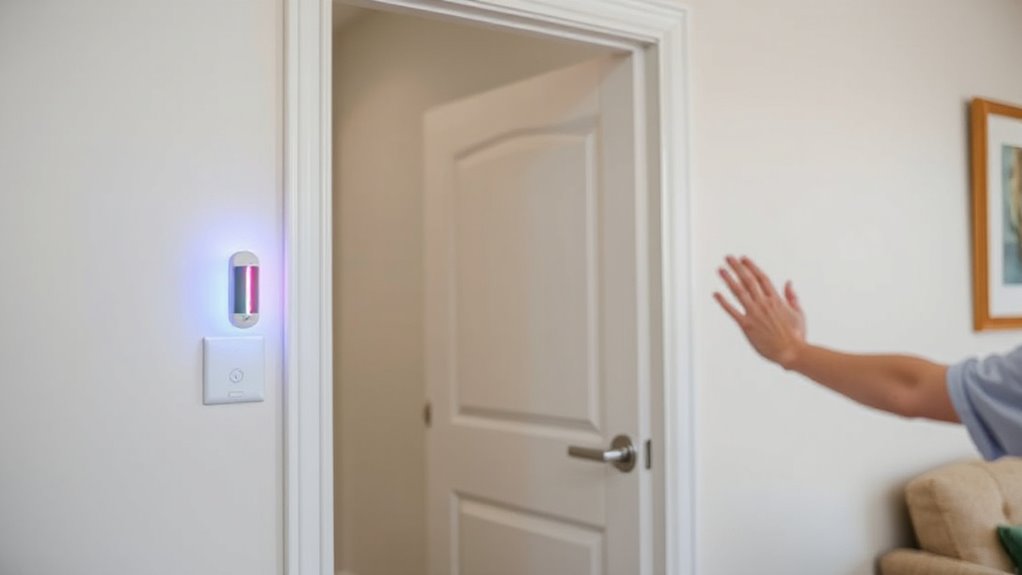

Dementia door alarms for wandering can alert a caregiver when a door opens or someone steps onto a monitored area. My best overall pick is the Wireless Door Alarm Sensor and Caregiver Pager, which pairs multiple sensors with portable receivers for caregiver awareness around the home. The Smart Caregiver Floor Mat Alarm suits monitoring beside a bed or doorway, while the PILSAMAS Wi-Fi system is a fit for people who want connected alerts and several sensors. The main tradeoff is between simple local alarms, which are easy to set up but may be loud or limited in range, and systems with pagers or Wi-Fi, which can offer more flexible notification but add setup needs. Read on for the full breakdown and guidance on choosing a setup that fits the person, home, and caregiver routine.

Turn the school run and nap time into listening time
- Thousands of audiobooks, podcasts and originals
- Listen on your phone, tablet or Echo — also offline
- Cancel anytime
Complete the kit


Key Takeaways
- Caregiver notification separates the leading options: the system with three sensors and two receivers supports coverage across several openings and lets a caregiver carry a receiver, unlike basic sensor alarms that sound at the door.
- A floor mat addresses a different risk point: the Smart Caregiver mat can detect someone stepping onto a monitored area, which may suit bedside monitoring better than a door-only trigger.
- Simple multi-packs favor broad, low-complexity coverage: the 3-Pack 120 dB alarms and METAK 5-Pack offer multiple contact sensors, but their audible alerts do not replace a caregiver pager.
- Connectivity brings setup tradeoffs: SanJie WiFi and PILSAMAS Wi-Fi options can appeal to caregivers seeking connected alerts, while traditional chimes avoid dependence on network setup.
- Alert style matters as much as sensor count: a loud alarm, a selectable chime, and a caregiver receiver suit different households; the right choice depends on who must hear the alert and where they are likely to be.
| 120 dB Wireless Door and Window Alarm Sensor (3-Pack) |  | Best for a Loud Local Alert | Alarm volume: 120 dB | Pack size: 3 sensors | Sensor type: Contact sensor | VIEW ON AMAZON | See Our Full Breakdown |
| SanJie WiFi Door Chime and Door Alarm Sensor |  | Best for Shared Smartphone Alerts | Connectivity: 2.4 GHz Wi-Fi only | Power: One included AAA battery | Stated battery life: Up to 2 years at 40 openings and closings per day | VIEW ON AMAZON | See Our Full Breakdown |
| METAK Window & Door Alarm 5-Pack (White) |  | Best for Covering More Openings | Pack size: 5 alarms | Alarm volume: 120 dB, adjustable to 90 dB | Power: 2 AAA alkaline batteries per unit; not included | VIEW ON AMAZON | See Our Full Breakdown |
| Skil-Care Stop Strip Alarm with Hook & Loop Mounts, 18″ H x 50″ L |  | Best for Wide Doorway Coverage | Coverage length: Up to 50 inches | Strip height: 18 inches | Trigger: Alarm sounds when strip is crossed or disturbed | VIEW ON AMAZON | See Our Full Breakdown |
| Wireless Door Chime and Alarm System with 58 Melodies and 500FT Range |  | Best for Customizable Multi-Sensor Alerts | Wireless range: 500 feet | Melodies: 58 | Volume settings: 5 levels | VIEW ON AMAZON | See Our Full Breakdown |
| Satisure Wireless Doorbell Sensor Alarm – Door Chime for Open Doors |  | Best for Long-Range, Simple Alerts | Wireless range: Up to 700 ft in open area | Melodies: 58 | Volume: 5 levels, mute to 110 dB | VIEW ON AMAZON | See Our Full Breakdown |
| SanJie Door Chime Alarm – Instant Alert When Door Opens (Kids Safety, Home & Business) |  | Best for Multi-Entry Expansion | Included components: 2 sensors and 1 receiver | Maximum range: 500 ft | Tones: 26 | VIEW ON AMAZON | See Our Full Breakdown |
| Smart Caregiver Wireless Floor Mat Alarm & Monitor System |  | Best for Bedside or Room-Exit Monitoring | Mat size: 24 x 36 in | Sensor type: Contact sensor floor mat | Monitor: Cordless monitor | VIEW ON AMAZON | See Our Full Breakdown |
| Wireless Door Alarm Sensor and Caregiver Pager, Three Sensors and Two Receivers |  | Best for Alerting Caregivers in Two Rooms | Included components: 3 sensors and 2 receivers | Detection range: Nearly 260 ft | Ringtones: 58 | VIEW ON AMAZON | See Our Full Breakdown |
| PILSAMAS Wi-Fi Door and Window Alarm System with 4 Sensors and Remote |  | Best for Remote App Monitoring | Included components: 1 receiver, 4 sensors, and 1 remote | Connectivity: 2.4 GHz Wi-Fi | Maximum range: 328 ft | VIEW ON AMAZON | See Our Full Breakdown |
| Wireless Door Chime and Open Door Alarm, 2 Sensors and 1 Receiver |  | Best for Flexible Alerting | Sensors: 2 | Receivers: 1 | Chimes: 58 melodies | VIEW ON AMAZON | See Our Full Breakdown |
| PILSAMAS Rechargeable Door and Window Alarm System for Seniors |  | Best for Identifying the Triggered Door | Included items: 1 receiver and 2 door alarm sensors | Power: Battery powered; rechargeable | Batteries: 3 lithium polymer batteries included | VIEW ON AMAZON | See Our Full Breakdown |
| dementia door alarms for wandering | Power | Installation | Volume |
|---|---|---|---|
| 120 dB Wireless Door and Windo | Battery powered; alkaline batteries included | Adhesive tape; wireless | — |
| SanJie WiFi Door Chime and Doo | One included AAA battery | — | — |
| METAK Window & Door Alarm 5-Pa | 2 AAA alkaline batteries per unit; not included | Self-adhesive | — |
| Skil-Care Stop Strip Alarm wit | — | — | — |
| Wireless Door Chime and Alarm | — | 3M double-sided tape or screws | — |
| Satisure Wireless Doorbell Sen | — | Plug-and-play; adhesive mounting | 5 levels, mute to 110 dB |
| SanJie Door Chime Alarm | AC receiver and two 12V batteries | — | 5 levels; up to 110 dB |
| Smart Caregiver Wireless Floor | — | — | Low, medium, and high |
| Wireless Door Alarm Sensor and | — | Plug-in receivers; adhesive-mounted sensors | 5 levels; up to 110 dB |
| PILSAMAS Wi-Fi Door and Window | USB-powered receiver; included AAA sensor batteries | — | 4 levels, including mute |
| Wireless Door Chime and Open D | — | 3M double-sided tape or screws | 5 levels, from mute to 110 dB |
| PILSAMAS Rechargeable Door and | Battery powered; rechargeable | — | — |
More Details on Our Top Picks
120 dB Wireless Door and Window Alarm Sensor (3-Pack)
I’d choose this three-sensor set when the main need is a very loud alert at the doorway, rather than a message sent to a caregiver elsewhere. Its 120 dB siren is louder than the SanJie WiFi Door Chime and Door Alarm Sensor’s 110 dB maximum, but this model has no listed app notification or remote alert feature. Adhesive mounting keeps setup simple across several entry points, and the three included units can also cover a window or cabinet. The tradeoff is that the alarm depends on the sensor pieces staying within 8 mm of each other, so placement needs care. I’d also favor METAK’s five-pack if broader coverage and adjustable volume matter more than included batteries; this set’s batteries need periodic replacement.
Pros:- 120 dB siren provides a strong local warning when a monitored opening separates.
- Three sensors allow coverage of multiple doors, windows, or cabinets.
- Adhesive installation avoids wiring and drilling.
- Batteries are included, with a stated 6–12 month battery life.
Cons:- No app, pager, or other remote alert feature is listed.
- Sensor components must be positioned within 8 mm of each other.
- Batteries require periodic replacement.
Best for: Caregivers who want a strong in-home siren on up to three doors or windows and can respond when they hear it.
Not ideal for: Families who need remote caregiver notifications, or who cannot reliably hear an alarm sounding inside the home.
- Alarm volume:120 dB
- Pack size:3 sensors
- Sensor type:Contact sensor
- Power:Battery powered; alkaline batteries included
- Stated battery life:6–12 months
- Installation:Adhesive tape; wireless
- Maximum range:750 feet
- Model:MSA-820
Our verdict“Choose this set for loud, straightforward alerts at several openings, but skip it if caregivers need notifications away from the alarm.”
SanJie WiFi Door Chime and Door Alarm Sensor
Among these picks, this is the clearest fit when caregivers want a phone notification as well as a sound inside the home. Free app push alerts and device sharing can help more than one family member keep watch; the 120 dB Flyoukki set, by comparison, provides a local siren without listed phone alerts. SanJie also offers an indoor chime, five volume levels, and instant or delayed alert modes. A delay may suit a household where immediate sound is disruptive, while a chime can be less startling than a siren. The limits matter: it requires 2.4 GHz Wi-Fi, metal doors are not recommended, and phone calls or text alerts require a paid subscription. I’d skip it if the home’s internet setup is uncertain or app-based monitoring is not practical for the caregiver.
Pros:- Free app push notifications can alert caregivers beyond the room where the sensor is installed.
- Device sharing supports monitoring by multiple family members or caregivers.
- Instant and delayed alert modes offer different responses to door openings.
- Twenty chimes and five volume levels allow the local alert to be tailored.
Cons:- Works with 2.4 GHz Wi-Fi only, not 5 GHz.
- Phone call and text alerts require a paid subscription.
- Not recommended for metal doors.
Best for: Families with reliable 2.4 GHz Wi-Fi who want shared app push alerts alongside a local chime or alarm.
Not ideal for: Caregivers seeking a standalone system without Wi-Fi, using a metal door, or relying on phone calls and texts without a subscription.
- Connectivity:2.4 GHz Wi-Fi only
- Power:One included AAA battery
- Stated battery life:Up to 2 years at 40 openings and closings per day
- Maximum volume:110 dB
- Chimes:20 options
- Volume settings:5 levels
- Alert modes:Instant and delayed
- Mounting:Door mount with 3M adhesive tape
Our verdict“Pick SanJie for shared smartphone push alerts and flexible local sounds, provided the door and Wi-Fi meet its requirements.”
METAK Window & Door Alarm 5-Pack (White)
When several possible exit points need monitoring, METAK’s five-sensor pack offers more coverage points than the three-unit Flyoukki set. Each unit has an adjustable 90 dB or 120 dB alarm, so a caregiver can choose a less forceful sound where appropriate and reserve the louder setting for a higher-risk doorway. Self-adhesive installation keeps placement simple, and the low-battery LED gives a maintenance cue that is not listed for Flyoukki. This is still a local contact alarm, not a system for notifying an off-site caregiver, and it has no remote-control operation. The two AAA batteries per unit are not included, adding setup work. Compared with the Skil-Care Stop Strip, METAK suits several separate openings better, while Skil-Care covers a wide doorway with one strip.
Pros:- Five units can cover more openings than the three-sensor Flyoukki pack.
- Alarm volume can be set to 90 dB or 120 dB.
- Low-battery LED helps flag when maintenance is needed.
- Self-adhesive mounting allows wire-free installation.
Cons:- Two AAA batteries per unit are not included.
- No remote-control operation is supported.
- No app or remote caregiver notification is listed.
Best for: Caregivers who need local alerts across several doors, windows, or restricted areas and want adjustable alarm volume.
Not ideal for: Households needing remote alerts, remote control, or a ready-to-install set with batteries supplied.
- Pack size:5 alarms
- Alarm volume:120 dB, adjustable to 90 dB
- Power:2 AAA alkaline batteries per unit; not included
- Sensor type:Contact alert
- Installation:Self-adhesive
- Battery warning:Low-battery LED indicator
- Dimensions:4.18 x 1.2 x 0.6 inches
- Model:D130
Our verdict“Choose METAK when the priority is adjustable local alerts across five openings, and another alert method is not needed.”
Skil-Care Stop Strip Alarm with Hook & Loop Mounts, 18″ H x 50″ L
The Skil-Care Stop Strip takes a different approach from the small contact sensors in the Flyoukki and METAK packs: it places an 18-inch-high strip across a doorway and sounds when the strip is crossed or disturbed. That makes it a specific option for caregivers who want an alert tied to movement through a broad opening, rather than a sensor mounted beside the door. Hook-and-loop fasteners allow tool-free fitting without adhesive or screws, and the strip spans up to 50 inches. Its main tradeoff is fit: a single size may not suit every frame, and the product data does not give an alarm volume, remote alert, or battery detail. Unlike SanJie’s Wi-Fi sensor, it is not presented as a phone-notification system. I’d measure the doorway and check placement before choosing it.
Pros:- 18-inch strip covers a broad area of the doorway.
- Fits openings up to 50 inches long.
- Hook-and-loop mounting avoids screws and adhesive.
- Sounds an audible alarm when the strip is crossed or disturbed.
Cons:- Only one size is listed, so it may not fit every doorway.
- No alarm volume or remote notification details are provided.
- The strip-based format is less suited to monitoring several separate openings than a multi-sensor pack.
Best for: Caregivers monitoring a wide doorway who want a strip-based local alarm and can confirm the opening fits its dimensions.
Not ideal for: Households with narrow or unusually shaped frames, or caregivers who need app, pager, or phone alerts.
- Coverage length:Up to 50 inches
- Strip height:18 inches
- Trigger:Alarm sounds when strip is crossed or disturbed
- Sensor type:Contact sensor
- Mounting:Hook-and-loop fasteners on both sides of the door frame
- Weight:1.2 pounds
- Color:Yellow
- Model:909218
Our verdict“Choose the Skil-Care strip for a compatible wide doorway where a local crossing alert matters more than remote notification.”
Wireless Door Chime and Alarm System with 58 Melodies and 500FT Range
This system is a better match than the single-location METAK alarms when a caregiver wants a receiver-based alert across multiple entry points. Its pre-paired wireless setup, expandable sensor capacity, and stated 500-foot range can suit a larger home or property, while 58 melodies and five volume levels make it possible to distinguish the alert from other household sounds. A visual LED indicator offers another cue when the receiver is in view. Unlike the SanJie WiFi sensor, the description does not list smartphone notifications, so caregivers still need to be within reach of the receiver. Sensor battery replacement is part of upkeep, and the plastic construction may be less reassuring for rough handling. I’d choose this for flexible in-home coverage, not for app-based monitoring or a particularly loud alarm requirement; its stated maximum is 110 dB.
Pros:- Supports multiple sensors for monitoring several entry points.
- Stated 500-foot range can suit larger properties.
- Fifty-eight melodies and five volume levels allow alert customization.
- Pre-paired components and adhesive or screw mounting offer setup flexibility.
Cons:- No app or remote caregiver notifications are listed.
- Sensor batteries require periodic replacement.
- Plastic construction may feel less durable than sturdier alternatives.
Best for: Caregivers who want a customizable receiver alert across multiple doors or windows in a larger home.
Not ideal for: Families needing phone notifications, a stated higher-volume siren, or hardware built for rough handling.
- Wireless range:500 feet
- Melodies:58
- Volume settings:5 levels
- Maximum volume:110 dB
- Alert indicator:Visual LED
- System setup:Wireless, pre-paired
- Expandability:Supports multiple sensors
- Installation:3M double-sided tape or screws
Our verdict“Pick this system for expandable, customizable alerts through an in-home receiver, but not if caregivers need notifications on their phones.”
Satisure Wireless Doorbell Sensor Alarm – Door Chime for Open Doors
The Satisure stands out for caregivers who want a straightforward alert across a large home without setting up Wi-Fi or an app. Its stated 700-foot open-area range is the longest specified among these five picks, which may help when the receiver needs to sit far from an exit. The RGB flash adds a visual cue that the SanJie Door Chime Alarm also offers, while Satisure gives you more tone choices: 58 rather than 26. Five volume levels, including mute, make it adaptable to different rooms.
That simplicity has limits: it offers no phone notifications or activity history, unlike the Wi-Fi-connected PILSAMAS system. Battery life is also unspecified, and adhesive mounting may not suit every door surface. I’d choose Satisure for local, long-range monitoring, not remote oversight.
Pros:- Specified open-area range of up to 700 feet can suit larger homes or separated rooms.
- RGB LED flash provides a visual alert alongside the audible chime.
- 58 melodies and five volume settings offer more alert customization than the SanJie Door Chime Alarm.
- Pre-paired, plug-and-play setup avoids Wi-Fi and app configuration.
Cons:- No smartphone notifications, remote monitoring, or smart-home integration.
- Sensor battery life is not specified, making replacement timing unclear.
- Adhesive mounting may be unsuitable for some door and window surfaces.
Best for: Caregivers who need a plug-and-play alert at a distant receiver and want both sound and a visual indicator.
Not ideal for: Families who need alerts while away from home, app-based activity records, or a mounting option beyond adhesive.
- Wireless range:Up to 700 ft in open area
- Melodies:58
- Volume:5 levels, mute to 110 dB
- Visual alert:RGB LED flash
- Sensor power:Battery powered
- Receiver power:AC adapter
- Installation:Plug-and-play; adhesive mounting
Our verdict“Choose Satisure for a simple local alert with long stated range, but pick the PILSAMAS Wi-Fi system if remote notifications matter more.”
SanJie Door Chime Alarm – Instant Alert When Door Opens (Kids Safety, Home & Business)
For a caregiver monitoring several exits, the SanJie’s strongest differentiator is its stated support for unlimited additional sensors. That makes it more adaptable as monitoring needs grow than the three-sensor Wireless Door Alarm Sensor and Caregiver Pager, which specifies a limit of 20 sensors per receiver. The package includes two sensors and one receiver, and its 500-foot range offers flexibility for placing the receiver away from the monitored doors.
Its 26 tones and five volume levels cover basic alert customization, but the Satisure offers more than twice as many melodies and a longer stated range. SanJie’s maximum volume of 110 dB may be useful in a noisy area, yet too forceful for a quiet household. Sensors use replaceable batteries, so ongoing checks are part of using it. I’d favor this model for expanding local coverage, not app-based supervision.
Pros:- Supports unlimited additional sensors, according to the product description.
- Two sensors are included, allowing monitoring of more than one opening from the start.
- Five volume levels and 26 tones allow basic adjustment to household conditions.
- Plug-in receiver and adhesive sensor pads avoid complex installation.
Cons:- No app or remote notification features are specified.
- Sensor batteries need periodic replacement.
- The 110 dB maximum may be excessively loud for quiet rooms or nearby residents.
Best for: Caregivers who want to start with two monitored openings and add sensors as household needs change.
Not ideal for: Families who need smartphone alerts or want many tone choices and a visual indicator detailed for the receiver.
- Included components:2 sensors and 1 receiver
- Maximum range:500 ft
- Tones:26
- Volume:5 levels; up to 110 dB
- Power:AC receiver and two 12V batteries
- Sensor technology:Contact sensor
- Expandability:Supports unlimited additional sensors
- Mounting:Adhesive sensor pads
Our verdict“Pick SanJie when expandability across multiple exits matters more than app control or a broad selection of alert tones.”
Smart Caregiver Wireless Floor Mat Alarm & Monitor System
Unlike the door-contact systems in this group, the Smart Caregiver alerts when someone steps onto a floor mat. That distinction makes it useful when a caregiver wants a warning as a person gets out of bed or approaches a monitored area, before they reach an exterior door. Its 24-by-36-inch mat and cordless monitor are designed for elderly care, giving it a more care-focused role than the entry chimes from Satisure or SanJie.
The tradeoff is placement: this is not a direct substitute for monitoring multiple doors, and the mat must sit where footsteps will land. The monitor offers low, medium, and high volume plus a low-battery indicator, but the system requires three C batteries or an AC adapter, neither included. Compared with the PILSAMAS system, it has no stated app alerts or activity history. I’d choose it for a specific room threshold or bedside cue, not whole-home exit coverage.
Pros:- Floor mat can alert caregivers before a person reaches an exterior door.
- Wireless monitor placement avoids running a cable between the mat and receiver.
- Three volume levels allow adjustment for different rooms and caregiver needs.
- Low-battery indicator helps flag when maintenance is needed.
Cons:- The mat monitors one placement area rather than multiple doors or windows.
- Three C batteries or an AC adapter are required and not included.
- Mat placement must match the person’s route, limiting where the alert works.
Best for: Caregivers who want a local alert when a person rises from bed or steps into a defined area.
Not ideal for: Households seeking direct alerts from several doors, remote phone notifications, or a ready-to-use system with power supplies included.
- Mat size:24 x 36 in
- Sensor type:Contact sensor floor mat
- Monitor:Cordless monitor
- Power options:Three C batteries or AC adapter
- Power supplies:Batteries and AC adapter not included
- Volume:Low, medium, and high
- Low-battery indicator:Yes
- Color:Gray
Our verdict“Choose this system for bedside or room-area alerts; use Satisure or SanJie instead when the main need is monitoring door openings.”
Wireless Door Alarm Sensor and Caregiver Pager, Three Sensors and Two Receivers
This package is the most ready-made choice here for caregivers who need alerts in two different rooms: it includes three door or window sensors and two plug-in receivers. That setup can put a chime near a caregiver while another receiver stays elsewhere, an advantage over the single-receiver Satisure and SanJie packages. Each receiver supports up to 20 sensors, and each sensor can pair with up to 20 receivers, giving the system useful flexibility as coverage changes.
The stated range is nearly 260 feet, shorter than Satisure’s 700 feet and SanJie’s 500 feet, so it fits better in a smaller home or within a more compact monitoring layout. Its 58 ringtones, five volume levels, and LED indicator provide alert options, but both receivers need outlets and the sensors rely on adhesive mounting. I’d choose it for distributed local alerts, not app monitoring or long-distance coverage.
Pros:- Three sensors and two receivers support multiple openings and listening locations out of the box.
- Each receiver can pair with up to 20 sensors, and each sensor with up to 20 receivers.
- 58 ringtones and five volume levels allow alert customization.
- LED indicator adds a visual cue to the audible alert.
Cons:- Nearly 260-foot stated range is shorter than the Satisure and SanJie systems.
- Both receivers require standard outlets, limiting placement.
- Sensors use adhesive mounting, which may not work well on every surface.
Best for: Caregivers who want alerts from several openings audible in two parts of a home.
Not ideal for: People monitoring far-separated buildings or who need phone alerts, battery-powered receivers, or non-adhesive sensor mounting.
- Included components:3 sensors and 2 receivers
- Detection range:Nearly 260 ft
- Ringtones:58
- Volume:5 levels; up to 110 dB
- Receiver capacity:Up to 20 sensors per receiver
- Sensor pairing:Each sensor supports up to 20 receivers
- Installation:Plug-in receivers; adhesive-mounted sensors
- Visual alert:LED indicator
Our verdict“Choose this package when two receiver locations and three monitored openings matter more than maximum wireless range or app features.”
PILSAMAS Wi-Fi Door and Window Alarm System with 4 Sensors and Remote
The PILSAMAS is the clearest choice here for a caregiver who cannot stay within earshot of a local chime. Its app alerts, sensor identification, and activity history can show which monitored opening triggered an alert and when, while the included remote and local chimes still provide in-home options. Four sensors also give it broader included door-and-window coverage than Satisure’s single-sensor description, and schedules may help tailor alerts to household routines.
This added visibility depends on 2.4 GHz Wi-Fi; it does not support 5 GHz, and SMS or phone-call alerts require an in-app purchase. Its 328-foot stated sensor range falls below Satisure’s and SanJie’s, and it offers 18 melodies rather than 58. I’d pick it for app-based monitoring and records, but skip it if the home network is unreliable or local alerts are all that’s needed.
Pros:- App alerts and sensor identification help caregivers tell which opening triggered an alert.
- Activity history and schedules add context beyond a basic door chime.
- Four sensors, one receiver, and a remote are included.
- Local chimes remain available alongside app-based alerts.
Cons:- Requires 2.4 GHz Wi-Fi and does not support 5 GHz.
- SMS and phone-call alerts require an in-app purchase.
- The 328-foot stated range is shorter than Satisure’s and SanJie’s specified ranges.
Best for: Caregivers who need app notifications, sensor-specific alerts, and activity history while away from the receiver.
Not ideal for: Households without reliable 2.4 GHz Wi-Fi or caregivers who want phone calls or SMS without an additional in-app purchase.
- Included components:1 receiver, 4 sensors, and 1 remote
- Connectivity:2.4 GHz Wi-Fi
- Maximum range:328 ft
- Sensor technology:Contact sensor
- Melodies:18
- Volume:4 levels, including mute
- Power:USB-powered receiver; included AAA sensor batteries
- Dimensions:3.3 x 1 x 3.3 in
Our verdict“Choose PILSAMAS when remote app alerts and activity records are more useful than the longer local range offered by Satisure or SanJie.”
Wireless Door Chime and Open Door Alarm, 2 Sensors and 1 Receiver
For caregivers who want a choice between audible alerts and a visual cue, this two-sensor set stands out for its five volume levels, including mute, plus a colorful LED indicator. The mute-and-light option can suit a quieter household, while the range of 58 chimes lets caregivers choose a sound that is easier to recognize. Compared with the PILSAMAS Rechargeable Door and Window Alarm System for Seniors, this receiver is specified with a longer range of up to 500 feet but does not identify which sensor triggered it. Pre-paired sensors and tape-or-screw mounting keep setup straightforward, and extra sensors can extend coverage to more entry points. The tradeoff is that the listing does not specify a portable or rechargeable receiver, so caregivers should check placement and power needs before relying on it for alerts across rooms.
Pros:- Two sensors let caregivers monitor separate doors or entry points
- Five volume settings include mute, with a colorful LED for visual alerts
- Pre-paired sensors and tape-or-screw mounting simplify installation
- Supports adding sensors for broader entry coverage
Cons:- The receiver is not described as portable or rechargeable, and its power requirements are not specified
- No sensor-specific trigger identification is listed, making it harder to tell which monitored door opened
- The stated 500-foot range may not reflect performance through indoor walls
Best for: Caregivers monitoring two exits who want adjustable sound, a visual alert, and the option to add sensors
Not ideal for: Caregivers who need a portable receiver that identifies the triggered door, or who require confirmation of receiver power and battery details
- Sensors:2
- Receivers:1
- Chimes:58 melodies
- Volume:5 levels, from mute to 110 dB
- Indicator:Colorful LED
- Wireless range:Up to 500 feet
- Installation:3M double-sided tape or screws
- Expandable:Supports additional sensors
Our verdict“Choose this set if adjustable chimes and a visual cue matter more than identifying which door triggered the alert.”
PILSAMAS Rechargeable Door and Window Alarm System for Seniors
The PILSAMAS system is a stronger fit when a caregiver needs to know which monitored exit opened, not just hear that a sensor was triggered. Its receiver displays the sensor ID and offers five alert modes, including silent vibration, making it more adaptable than the Wireless Door Chime and Open Door Alarm, which lists a visual LED but no sensor-specific identification. A portable rechargeable receiver can also suit caregivers moving between rooms. The stated outdoor range reaches 1,000 feet, but the listed indoor range is 100–500 feet and varies with walls and materials; the seller recommends a walk test, so coverage should be checked before depending on it. It includes two sensors, but the product details do not describe an expansion option. Skip it if you need a specified, dependable indoor range without testing the layout first.
Pros:- Receiver identifies the triggered sensor to help locate the opened exit
- Five alert modes include loud chime and silent vibration
- Rechargeable receiver and sensors support portable monitoring
- No cameras or monthly fees are required
Cons:- Indoor range varies with walls and materials, and a walk test is recommended
- The provided details list two sensors but do not state whether the system can be expanded
- Outdoor range may not translate to reliable coverage throughout a home
Best for: Caregivers who move around the home and need a portable alert that identifies which of two monitored doors opened
Not ideal for: Households needing guaranteed indoor coverage without testing, or caregivers who want documented support for adding more sensors
- Included items:1 receiver and 2 door alarm sensors
- Power:Battery powered; rechargeable
- Batteries:3 lithium polymer batteries included
- Maximum range:Up to 1,000 feet outdoors
- Indoor range:100–500 feet; varies by walls and materials
- Sensor technology:RFID
- Alert modes:5, including vibration
- Mounting and control:Door mount; touch control
- Weight:9.6 ounces
Our verdict“Pick PILSAMAS if sensor identification and a portable vibration-capable receiver matter more than avoiding an indoor coverage test.”

How We Picked
I ranked these products by how well their alert method fits wandering prevention at home: whether they detect an opened door or a step onto a monitored area, how an alert reaches the caregiver, and whether multiple sensors or receivers support coverage across likely exit points. I also weighed setup complexity, power and maintenance demands, range claims, and whether the alert can be heard or carried by the person responsible for responding. For this use case, a sensor is only useful if someone can hear or receive its alert in time.
The ranking favors systems that pair useful coverage with a practical caregiver notification path, then distinguishes those from simpler chimes, loud standalone alarms, and connected systems with added setup needs. A floor mat earns a distinct place because it monitors movement at a specific spot rather than an opening. Product names and listed features guide this comparison; I do not treat any consumer alarm as a substitute for supervision, a care plan, or emergency support.
Factors to Consider When Choosing Dementia Door Alarms For Wandering
Choosing a door alarm is less about finding the loudest alert and more about matching detection and notification to the household routine. I would start with where wandering is most likely to begin, who needs to respond, and whether that person can reliably hear or carry a receiver.
Match the sensor to the point of risk
Door and window contact sensors alert when a monitored opening moves, so they suit homes where a specific exit is the main concern. A floor mat instead detects a person stepping onto its surface, which can help near a bed or at a passage point. These devices do not monitor every route through a home, so list the likely exits and movement paths before choosing a sensor count. A common mistake is buying several door sensors while leaving an unmonitored door or window as an easy route. Place sensors where caregivers can maintain them and where opening the door itself reliably signals movement. If the concern includes nighttime bed exits, a mat may add a different kind of coverage rather than simply duplicating a door alert.
Choose an alert the caregiver can act on
A loud local alarm draws attention near the door, but it may not help if the caregiver is in another room, outside, or asleep behind a closed door. A chime can be easier to live with during the day, though a gentle sound may be missed in a noisy home. A pager or receiver changes the equation by making alerts portable, provided the caregiver keeps it nearby and the signal reaches the places they spend time. Wi-Fi notifications may extend awareness beyond the room, but they rely on compatible setup and a working network. Think through the actual response path: who hears the alert, who checks the person, and what happens if the first caregiver is unavailable. Do not select an alert tone based only on volume; frequent false alarms or disruptive sounds can lead people to switch the system off.
Plan coverage before choosing sensor quantity
Count the openings that matter, then consider whether each needs its own sensor and whether one receiver can serve the household. A multi-pack may cover several doors, but it does not automatically provide caregiver notification in every room. Check how the system pairs sensors and receivers, whether alerts identify which sensor triggered, and whether additional units can be added. Homes with multiple floors or thick walls may need a different arrangement from a small single-level home. Treat stated wireless range as a starting point, not a guarantee through walls, floors, and appliances. Test the intended placement throughout the home before depending on it, and revise the layout if the signal is inconsistent.
Account for sound, routine, and the person being monitored
The best alert is one that caregivers notice and can respond to without creating unnecessary distress. A piercing alarm may be appropriate when an immediate, unmistakable sound is needed, but it can be startling and disruptive for the person with dementia or others at home. A selectable chime offers a less forceful cue, yet caregivers must be close enough to hear it. Consider hearing ability, sleep schedules, household noise, and whether the person may tamper with or remove visible equipment. Put controls and reset procedures somewhere the caregiver can reach without confusion during an alert. A short trial during ordinary routines can reveal whether the sound is audible, tolerable, and useful before the system becomes part of daily care.
Compare upkeep and connectivity demands
Battery-powered sensors need periodic checks, and rechargeable models still require a charging routine. A neglected low battery can leave an opening unmonitored, so assign one caregiver to check status and test each sensor on a schedule. Wi-Fi systems may need app configuration, network credentials, and notification permissions on the caregiver’s device. A local chime or receiver can avoid some network dependencies, although it may offer less reach when the caregiver is away from the receiver. Ask who will manage setup and ongoing maintenance before choosing a feature-rich system. Paying for connectivity makes more sense when remote notifications are a real care need and someone can keep the system configured; otherwise, a simpler alert may be more dependable for that household.
Use alarms as one part of a safety plan
A door alarm signals an event; it does not prevent a person from leaving or guarantee that a caregiver will respond. Pair alerts with a household plan that names who responds, keeps important contact information accessible, and accounts for times when the main caregiver is occupied. Check that monitoring does not create a new hazard, such as a cord across a walking path or an alarm that encourages someone to rush toward a door. Review sensor placement as routines and mobility change. Families should also discuss wandering risks and suitable safeguards with the person’s care team, since needs vary widely. An alarm works best when its limits are understood and the home has a clear response plan.
Frequently Asked Questions
Should I choose a loud door alarm or a caregiver pager?
Choose based on where the caregiver will be when an exit opens. A loud local alarm can be simple and direct, but sound may not carry through closed doors or reach someone outside the home. A pager or portable receiver can follow a caregiver from room to room, though it must be carried and kept within its working range. In some homes, pairing a local sound with a portable alert offers useful backup, but the extra equipment also adds setup and maintenance. Test the alert from the caregiver’s usual locations before relying on it.
How many door sensors do I need for a home?
Start by identifying the doors and windows that could provide an exit, rather than choosing a sensor count based only on the home’s size. Prioritize the most likely routes and account for how the person moves through the home at different times of day. Multi-sensor kits can simplify coverage, but verify that each sensor can communicate with the receiver from its installed position. If a caregiver cannot respond to an alert from every monitored opening, add or reposition receivers before adding more sensors. Recheck the plan whenever routines or access to the home change.
Is a floor mat alarm better than a door sensor for nighttime wandering?
They monitor different events, so one is not automatically better. A mat can alert when someone steps onto a specific area, such as beside a bed, while a door sensor alerts when a monitored opening is opened. A mat may provide earlier notice of movement, but only if the person steps on the mat and the caregiver can hear or receive its alert. A door sensor can be more direct when the concern is a particular exit. Consider the person’s usual route and mobility, and avoid placing a mat where it could create a trip hazard.
Will a Wi-Fi door alarm still alert me if the internet goes down?
That depends on the device’s alert design, so check whether it offers a local alarm or receiver in addition to app notifications. Internet-based alerts may stop reaching a phone during an outage, while a direct sensor-to-receiver connection may continue if the product supports it. A Wi-Fi system also depends on correct app permissions and a reliable connection. Before choosing one as the only warning method, test its behavior with the internet unavailable and confirm what alerts remain active. If uninterrupted local notification matters most, a system with a separate receiver can reduce reliance on network access.
Can a door alarm replace supervision or other safety measures?
No. An alarm can notify a caregiver that a door opened or a monitored area was crossed, but it cannot stop someone from leaving or guarantee that anyone hears the alert. Response time, sensor placement, power, connectivity, and caregiver availability all affect its usefulness. Treat it as one layer in a broader care plan that may include supervision, agreed household routines, and advice from the person’s care team. Test the system regularly and make sure another caregiver knows how to respond. If wandering creates an immediate risk, discuss additional safeguards with qualified care professionals.
Conclusion
For most households seeking broad door coverage with portable caregiver alerts, I would start with the Wireless Door Alarm Sensor and Caregiver Pager as the best overall fit in this lineup. The 120 dB Wireless Door and Window Alarm Sensor 3-Pack is my best-value choice for straightforward coverage across several openings, while the PILSAMAS Wi-Fi system is the best premium-style pick for households that can manage connected setup and want multiple sensors. For beginners, the Wireless Door Chime and Open Door Alarm with 2 Sensors and 1 Receiver offers a simpler local-alert approach. Choose the Smart Caregiver Floor Mat for a monitored bedside or step-on point, and look to the rechargeable PILSAMAS model if reducing battery changes is a priority. Whichever option you choose, match it to the caregiver’s ability to receive the alert and build it into a tested response plan.