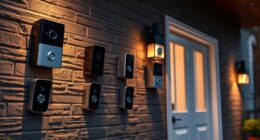
Choosing a motion sensor light for fall prevention is less about adding the brightest bulb and more about lighting the places someone actually walks at night: the route from bed to bathroom, a dark hallway, or an unfamiliar doorway. My three picks differ most in placement, power, and how long they stay lit. The YELKO Plug-In LED Motion Sensor Night Lights are my top pick for outlet-powered coverage and their adjustable shutoff timer; the Lyridz Rechargeable Motion Sensor Night Light suits spots where an outlet is inconvenient; and the Sujeet 4-Pack makes it easier to cover several rooms with softer, adjustable light.

Turn the school run and nap time into listening time
- Thousands of audiobooks, podcasts and originals
- Listen on your phone, tablet or Echo — also offline
- Cancel anytime
Those strengths come with meaningful tradeoffs. Plug-in models need a well-placed outlet, while the rechargeable Lyridz lights need charging and are not water resistant. Sujeet offers more color choices and four lights, but its fixed 60-second timer gives less control than YELKO. I’m ranking these for predictable nighttime illumination, practical placement, and useful controls—not as a replacement for clear walkways, handrails, or other fall-prevention measures.
Complete the kit


Key Takeaways
- YELKO is my overall pick when an outlet is available: its 30-, 90-, and 180-second shutoff settings let buyers tune how long a path stays lit.
- Lyridz is the flexible-placement choice for small spaces without a convenient outlet, but it needs periodic USB-C charging and cannot be used in wet locations.
- Sujeet covers more rooms in one package with four plug-in lights, three color temperatures, and a dusk-to-dawn mode; its timer is fixed at 60 seconds.
- Choose brightness for the route, not the spec sheet: adjustable settings help limit glare while still making edges and obstacles easier to see.
- None of these lights solves every fall risk. Check sensor placement and the full walking route, and keep floors, cords, and doorways clear.
| YELKO Plug-In LED Motion Sensor Night Lights, 2-Pack |  | Best Overall for Adjustable Hallway Coverage | Pack size: 2 lights | Color temperature: 3000K warm white | Brightness: Five levels: 20%, 40%, 60%, 80%, 100% | VIEW ON AMAZON | See Our Full Breakdown |
| Lyridz Rechargeable Motion Sensor Night Light, USB-C, Dimmable, Warm White, 2-Pack |  | Best for Flexible, Outlet-Free Placement | Pack size: 2 lights | Light output: 1–20 lumens; five preset levels | Color temperature: 2700K warm white | VIEW ON AMAZON | See Our Full Breakdown |
| Sujeet Plug-In LED Night Light with Motion Sensor, 3 Color Temperatures, and 5 Brightness Levels, 4-Pack |  | Best for Multi-Room Coverage | Pack size: 4 lights | Color temperatures: 1800K, 2700K, and 5700K | Brightness: 1–80 lumens; five preset levels | VIEW ON AMAZON | See Our Full Breakdown |
| motion sensor lights for fall prevention | Pack size | Motion detection | Auto-off | Color temperature |
|---|---|---|---|---|
| YELKO Plug-In LED Motion Senso | 2 lights | Up to 16 feet; 120-degree angle | 30, 90, or 180 seconds | 3000K warm white |
| Lyridz Rechargeable Motion Sen | 2 lights | 10–16 feet; 120-degree angle | 20 seconds after inactivity | 2700K warm white |
| Sujeet Plug-In LED Night Light | 4 lights | 3–8 meters; 120-degree angle | 60 seconds | — |
More Details on Our Top Picks
YELKO Plug-In LED Motion Sensor Night Lights, 2-Pack
For a route that passes a usable outlet, YELKO is my strongest all-around choice because it lets the buyer control not just brightness, but how long the light stays on. Its 30-, 90-, and 180-second shutoff options are a useful distinction for fall-conscious households: a quick bathroom trip and a slower walk through a longer hallway may call for different amounts of time. By comparison, Lyridz turns off after 20 seconds, while Sujeet uses a fixed 60-second timer.
The lights offer five brightness settings, a warm 3000K output, and a stated detection range of up to 16 feet across 120 degrees. That combination can help buyers tune the glow for a bedroom or hallway without defaulting to the brightest setting. Auto-Sensor mode is the relevant choice for nighttime movement, while Always-On can suit a spot where steady illumination is preferred. The compact plug-in shape is designed not to block the outlet, though placement still matters: an outlet behind furniture or at the wrong end of a corridor may not help the walking route.
Compared with the rechargeable Lyridz, YELKO avoids charging and is less dependent on remembering to maintain a battery. Compared with Sujeet, it gives more control over the shutoff delay, but it comes as a two-pack rather than four and has a single stated color temperature. I’d skip it if the path has no suitable outlet or if you need lighting inside a damp bathroom area. It is not water resistant, and a night light should be positioned so it illuminates the route without creating glare or leaving shadowed sections.
Pros:- Three selectable auto-off delays: 30, 90, or 180 seconds.
- Five brightness levels and warm 3000K light.
- Motion detection specified up to 16 feet across a 120-degree angle.
- Compact plug-in design that is intended not to block the outlet.
Cons:- Needs a convenient wall outlet for useful placement.
- Not water resistant.
- Offers one color temperature and two lights per pack.
Best for: Households with outlets along a bedroom-to-bathroom or hallway route that want adjustable brightness and a longer, selectable auto-off period.
Not ideal for: Anyone needing a light in a wet location, without a suitable outlet, or wanting several color temperatures in one model.
- Pack size:2 lights
- Color temperature:3000K warm white
- Brightness:Five levels: 20%, 40%, 60%, 80%, 100%
- Motion detection:Up to 16 feet; 120-degree angle
- Auto-off:30, 90, or 180 seconds
- Modes:Always-On and Auto-Sensor
- Power:AC plug-in
- Casing:V-0 fire-resistant
Our verdict“I’d choose YELKO first for an outlet-served walking route because its adjustable shutoff delay is the most useful control difference in this group.”
Lyridz Rechargeable Motion Sensor Night Light, USB-C, Dimmable, Warm White, 2-Pack
Lyridz earns its place for buyers who cannot put a plug-in light where the walking route needs it. Its built-in magnet and adhesive patches allow installation on suitable surfaces in a closet, hallway, or other small space, and USB-C charging avoids disposable batteries. That makes it more adaptable than YELKO and Sujeet, both of which must sit at wall outlets. For fall-prevention planning, this flexibility can matter when the darkest point is between outlets or when the route needs a small light mounted at a particular height.
The light produces a warm 2700K glow with five brightness levels, spanning 1–20 lumens, and its motion sensor is specified for 10–16 feet across 120 degrees. It switches off after 20 seconds without movement. That brief delay can conserve battery, but it is the shortest timeout in this lineup: someone moving slowly or pausing may find the light turns off sooner than desired. YELKO is more accommodating for longer trips because its delay can reach 180 seconds, while Sujeet holds for 60 seconds.
Lyridz is a better fit for a targeted light near a bed or along a short section of wall than for a buyer seeking a permanent, maintenance-free setup throughout the home. Its battery can last up to 180 days in sensor mode at low brightness according to the supplied specifications, but actual duration depends on use and brightness; it still needs charging. It is not water resistant, so I would not place it where splashes or moisture are expected. Choose it over the plug-in models for mounting freedom, not for the longest illumination window or the least upkeep.
Pros:- Rechargeable by USB-C, without disposable batteries.
- Magnetic and adhesive mounting options allow flexible placement.
- Five brightness settings with a memory function.
- Compact size and warm 2700K output suit small spaces.
Cons:- The 20-second auto-off is shorter than the delays on YELKO and Sujeet.
- Battery life varies with use and brightness, so charging is part of upkeep.
- Not water resistant.
Best for: Buyers who need a compact motion light mounted away from an outlet, such as near a bed, closet, or short dark passage.
Not ideal for: People who want a long adjustable timer, steady plug-in power, or a light for a damp bathroom location.
- Pack size:2 lights
- Light output:1–20 lumens; five preset levels
- Color temperature:2700K warm white
- Motion detection:10–16 feet; 120-degree angle
- Auto-off:20 seconds after inactivity
- Charging:USB-C; full charge in about 3 hours
- Mounting:Built-in magnet and adhesive patches
- Dimensions:3 × 1.59 × 1.01 inches
Our verdict“I’d pick Lyridz when mounting freedom matters more than a long timer, especially for a small dark spot with no convenient outlet.”
Sujeet Plug-In LED Night Light with Motion Sensor, 3 Color Temperatures, and 5 Brightness Levels, 4-Pack
Sujeet is the practical choice when the goal is to place lights in several rooms or along multiple sections of a route. A four-pack gives it a clear coverage advantage over the two-light YELKO and Lyridz sets, while its plug-in power avoids the charging routine required by Lyridz. The backlit design is intended to cast soft, indirect illumination, which may suit buyers who dislike a bright point of light in a dark bedroom. That softer effect is a different approach from simply turning up brightness, though the actual result will depend on the outlet location and surrounding surfaces.
Its most distinctive controls are three color temperatures—1800K, 2700K, and 5700K—along with five brightness levels and memory for the last settings. Buyers can set a warmer light for nighttime comfort or select a different tone where sharper visual contrast is preferred. Motion-sensing and dusk-to-dawn modes add flexibility. The stated sensor range is 3–8 meters across 120 degrees, and the light stays on for 60 seconds after motion. That timer is longer than Lyridz’s 20 seconds, but unlike YELKO it cannot be adjusted to match a slower or faster route.
Sujeet therefore makes the most sense when multi-room coverage and light customization outrank timer control. Compared with YELKO, it provides more units and more color choices, but gives up selectable shutoff delays. Compared with Lyridz, it removes battery charging and offers a dusk-to-dawn mode, but cannot be mounted where there is no outlet. The product is not water resistant, so it should stay out of splash-prone areas. For a fall-conscious setup, I’d use the extra units to cover connected parts of a route rather than assume one light will illuminate every doorway and floor-level obstacle.
Pros:- Four lights support coverage across more than one room or route segment.
- Three color temperatures and five brightness settings.
- Motion-sensing and dusk-to-dawn modes with setting memory.
- Backlit design provides soft, indirect illumination.
Cons:- Requires a wall outlet for each light location.
- The 60-second auto-off timer is fixed, unlike YELKO’s selectable delays.
- Not water resistant.
Best for: Buyers who want several outlet-powered lights for multiple rooms and value adjustable color temperature, brightness, and a soft backlit effect.
Not ideal for: Anyone without useful outlets, needing water-resistant bathroom lighting, or wanting to select a shutoff delay.
- Pack size:4 lights
- Color temperatures:1800K, 2700K, and 5700K
- Brightness:1–80 lumens; five preset levels
- Motion detection:3–8 meters; 120-degree angle
- Auto-off:60 seconds
- Modes:Motion sensing and dusk-to-dawn
- Power:120 V AC plug-in; 2 W
- Dimensions:2.6 × 2.6 × 0.98 inches
Our verdict“I’d choose Sujeet for broader multi-room coverage and color flexibility, but not when timer customization or outlet-free mounting is the priority.”

How We Picked
I ranked these options around the needs of someone moving through a home in low light: dependable automatic activation, practical control over the light, and a realistic way to place coverage along a walking route. A light that turns on only after a person is already close to it may leave part of the path dark, so I gave weight to the stated detection range and angle, while recognizing that walls, furniture, mounting height, and approach direction can affect real coverage.
Control matters for comfort and visibility. Adjustable brightness can reduce harsh glare while still providing useful illumination, and a longer shutoff delay can give someone more time to move through a route. That is why YELKO ranks first: its 30-, 90-, and 180-second choices are more adaptable than the fixed timers on the other models. I placed Lyridz next for its placement flexibility and dimming, with Sujeet close behind for broader multi-room coverage and softer indirect light.
I also considered power and installation. Plug-in lights avoid routine battery charging but depend on outlets in useful locations; a rechargeable light can mount where an outlet is absent, though its battery must be maintained. Pack size, water resistance, mode options, and stated safety-related casing details also informed the comparisons. These are product-feature comparisons, not clinical findings: motion lights can improve visibility, but they cannot guarantee fall prevention or replace an individualized home-safety assessment.
| motion sensor lights for fall prevention | Modes |
|---|---|
| YELKO Plug-In LED Motion Senso | Always-On and Auto-Sensor |
| Lyridz Rechargeable Motion Sen | — |
| Sujeet Plug-In LED Night Light | Motion sensing and dusk-to-dawn |
Factors to Consider When Choosing Motion Sensor Lights For Fall Prevention
I’d choose a motion sensor light by mapping the nighttime walking route first, then matching the power source and controls to its weak points. A light that is easy to install but leaves a dark gap is less useful than a modest light positioned to reveal the route ahead.Map the route before choosing the light
Start at the bed and trace the path to the bathroom, kitchen, or other destination a person uses after dark. Mark corners, changes in flooring, door thresholds, furniture edges, and any place where a person might pause. A single sensor light may not cover a long corridor and adjoining room at once. YELKO and Sujeet can work well where outlets line the route, while Lyridz offers more freedom to mount a light between outlets. The aim is a connected path of usable illumination, not simply the presence of a sensor.
Check what the sensor will face. The listed detection angles are 120 degrees, but a stated angle and range do not promise the same result through obstacles or from every approach. A doorway, cabinet, or furniture can interrupt detection. Test the placement during normal movement and adjust it if the light activates too late or misses a direction of approach.
Choose a timer that matches walking pace
Automatic shutoff helps avoid leaving a light on, but too short a delay can leave a person in darkness while they are still on the route. YELKO offers the most control with 30-, 90-, and 180-second settings. Sujeet’s 60-second timer is a middle ground, while Lyridz’s 20-second delay is the shortest. If someone walks slowly, uses a mobility aid, or may pause, the longer YELKO setting is the most adaptable of these three options.
Motion sensors can also behave differently when someone stops moving or turns away from the sensor. I would not treat any timer as a substitute for steady lighting where a person needs it. For a route that calls for illumination throughout the night, compare YELKO’s Always-On mode and Sujeet’s dusk-to-dawn option with the household’s preference for continuous versus motion-triggered light.
Balance brightness, color, and glare
More brightness is not automatically safer if a sudden beam creates glare or makes it harder to see when entering a dark room. Adjustable settings let a household tune the light to the surface, distance, and user. Lyridz offers five settings from 1–20 lumens, YELKO has five percentage levels, and Sujeet spans 1–80 lumens with five levels. The figures are not directly interchangeable because the products have different designs, so consider whether the path is actually visible rather than selecting a setting by number alone.
Sujeet stands apart with three color temperatures and a backlit design for softer, indirect illumination. Lyridz and YELKO use warm-white light at 2700K and 3000K respectively. A buyer sensitive to light may favor a dimmer, warmer setting; someone who needs more contrast may prefer to compare the available tones in the actual room. Avoid aiming light into the eyes or placing it where reflections obscure steps and edges.
Match power and placement to the home
Plug-in models are straightforward when there is an outlet in the right place. YELKO and Sujeet do not need periodic battery charging, but each unit’s usefulness depends on outlet location. Sujeet’s four-pack can help distribute lights across more areas; it still requires an outlet at every chosen position. Lyridz’s rechargeable design, magnet, and adhesive patches make placement more flexible, but the buyer takes on charging and must account for battery life changing with use and brightness.
Keep water resistance in mind. None of these three products is specified as water resistant, so I would not position one where it may be splashed or exposed to damp conditions. Follow the manufacturer’s installation guidance and do not cover an outlet or obstruct a walking path with cords or other equipment.
Treat lighting as one part of fall prevention
A motion light can make obstacles easier to see, but it cannot clear a rug, repair an uneven floor, provide support on stairs, or guarantee that a person will notice a hazard. I’d pair lighting with clear walkways, secure rugs, visible step edges, accessible switches, and handrails where appropriate. A clinician or home-safety professional can help identify risks that a light alone will not address.
After installing lights, walk the route at night at the user’s usual pace. Confirm that the sensor activates before the person reaches a hazard and that the light lasts through the trip. If coverage has gaps, reposition a unit or add another light rather than relying on the maximum stated sensor range.
Frequently Asked Questions
Can motion sensor lights prevent falls?
Motion sensor lights can improve visibility on a nighttime route, which may make obstacles and changes in flooring easier to see. They do not guarantee fall prevention, and a sensor may fail to activate at the right moment because of placement, obstructions, or movement direction. I’d use lighting alongside clear walkways, secure rugs, suitable handrails, and advice from a qualified professional when fall risk is a concern.
Which of these lights is best for a slow nighttime walk?
YELKO is the most adaptable choice for a slow walk because its auto-off delay can be set to 90 or 180 seconds. Sujeet stays on for 60 seconds, while Lyridz switches off after 20 seconds without movement. A longer timer can help if someone pauses, but sensor placement and the path’s total coverage still matter; test the light during the actual route.
Are plug-in lights better than rechargeable lights for fall prevention?
Neither power type is automatically better. Plug-in YELKO and Sujeet avoid routine charging but need outlets in useful positions. Rechargeable Lyridz can mount away from an outlet, which may help cover a dark section of wall, but it must be recharged and is not water resistant. I’d choose based on where the route needs light and whether the household can maintain a rechargeable unit.
Where should I place a motion sensor night light?
Place lights so they illuminate the route before a person reaches a doorway, turn, threshold, or other potential hazard. Check the sensor’s view from the direction the person approaches, and look for furniture or walls that could interrupt detection. A single light may not cover a full hallway and adjoining room, so test the route at night and add or reposition lights if any section remains dark.
Can I use these night lights in a bathroom?
The product information for all three options says they are not water resistant, so I would avoid placing them where they could be splashed or exposed to moisture. A dry area near a bathroom entrance may be suitable if the manufacturer’s instructions allow it and an outlet or mounting surface is appropriate. For damp or wet locations, look for a light specifically rated for that environment.
Conclusion
For the most adaptable outlet-powered setup, I recommend YELKO: its selectable 30-, 90-, and 180-second delays make it the strongest fit for a route where walking pace or pauses may vary. Choose Lyridz if the key problem is a dark spot without an outlet and you are comfortable charging the lights; its short 20-second timeout is the tradeoff. Pick Sujeet when you want four lights to spread across several rooms, plus color and brightness choices, and can work with a fixed 60-second timer.
Whichever model fits, I’d treat it as one layer of a safer home rather than a standalone fall-prevention fix. Check that the sensor turns on early enough, that illumination reaches the entire route, and that the selected brightness is comfortable without glare. Clear obstacles and address other household hazards alongside the lighting.