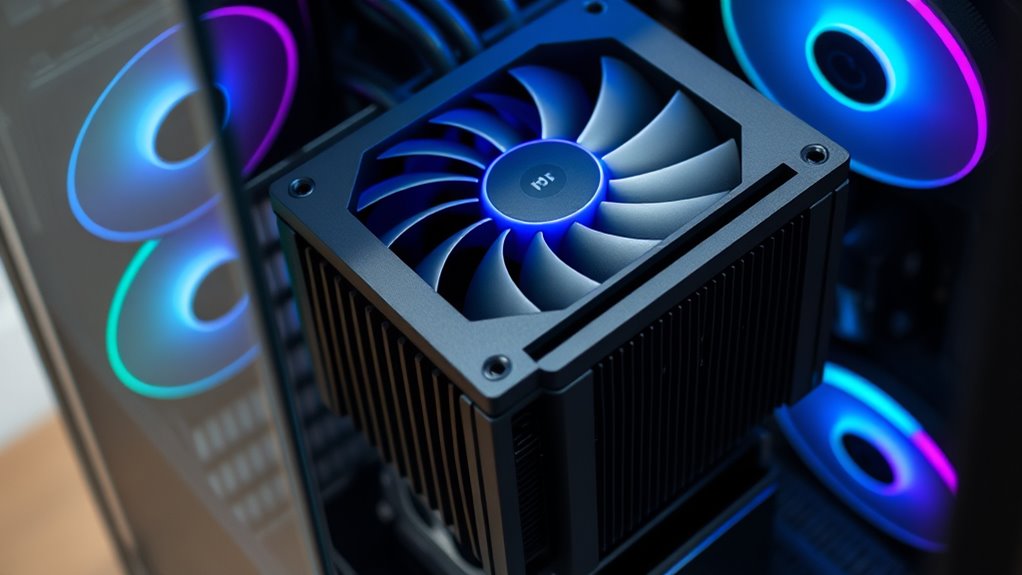

For most high-power overclocking builds, I’d start with the Noctua NH-D15 G2: its large dual-tower design puts sustained cooling ahead of compact size or flashy extras. The ASUS ROG Ryujin III ARGB Extreme 360mm suits buyers who want a 360mm liquid setup, while the Thermalright Peerless Assassin 120 SE is a simpler air-cooling alternative. The main tradeoffs are cooling headroom versus case and memory clearance, and liquid cooling capacity versus pump complexity and radiator fit. No cooler can compensate for a processor, motherboard, or case that limits heat dissipation. Read on for how these 14 options differ and which one fits your overclocking plans.

Turn the school run and nap time into listening time
- Thousands of audiobooks, podcasts and originals
- Listen on your phone, tablet or Echo — also offline
- Cancel anytime
Complete the kit


Key Takeaways
- The NH-D15 G2 leads for air cooling: its large dual-tower format makes it the clearest all-round choice here for buyers prioritizing cooling headroom over size.
- The Ryujin III Extreme and the air coolers serve different goals: the 360mm AIO offers a radiator-based approach, but it needs compatible case mounting and adds a pump to the system.
- The Peerless Assassin 120 SE stands apart as the value-oriented pick: it offers a dual-tower layout without the premium positioning of the Noctua flagships.
- Clearance changes the ranking for compact builds: the NH-D15S, NH-U12A, and NH-U9S trade some large-cooler scale for easier fit in different case and motherboard layouts.
- Brand and finish do not replace fit checks: several Noctua models share a family resemblance, so buyers should compare height, memory access, fan arrangement, and exact model before choosing.
| Noctua NH-D15 G2 Dual-Tower CPU Cooler |  | Best Overall for Quiet Overclocking | Cooling method: Air | Heatpipes: 8 | Fans: 2 × 140 mm NF-A14x25r G2 PWM | VIEW ON AMAZON | See Our Full Breakdown |
| Thermalright Peerless Assassin 120 SE Dual-Tower CPU Cooler |  | Best Value Air-Cooling Alternative | Cooling method: Air | Dimensions: 125 × 135 × 155 mm | Heatpipes: 6 × 6 mm AGHP | VIEW ON AMAZON | See Our Full Breakdown |
| ID-COOLING FX240 PRO 240mm AIO CPU Cooler |  | Best 240 mm Liquid-Cooling Option | Cooling method: Liquid | Radiator size: 240 mm | Pump speed: 2900 RPM ±10% | VIEW ON AMAZON | See Our Full Breakdown |
| Noctua NH-D15 Dual-Tower CPU Cooler |  | Best Proven-Design Air Cooler | Design: Dual tower | Heatpipes: 6 | Fans: 2 × NF-A15 140 mm PWM | VIEW ON AMAZON | See Our Full Breakdown |
| Noctua NH-D15 G2 chromax.Black Quiet High-Performance CPU Cooler | 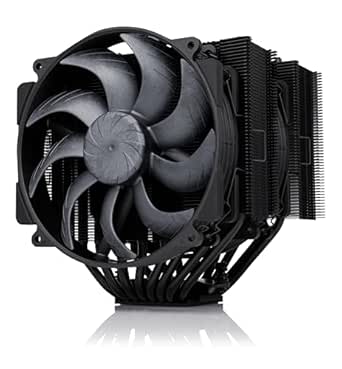 | Best Premium Black Air Cooler | Heatpipes: 8 | Fans: 2 × 140 mm NF-A14x25r G2 | Surface area: 20% more than the previous generation | VIEW ON AMAZON | See Our Full Breakdown |
| KINGCOOL CRYO Titan 120 ARGB Dual-Tower CPU Air Cooler, White |  | Best Value Dual-Tower Air Cooler | Cooling method: Air | Maximum TDP: 260 W | Heat pipes: 6 copper | VIEW ON AMAZON | See Our Full Breakdown |
| ASUS ROG Ryujin III ARGB Extreme 360mm Liquid CPU Cooler |  | Best Feature-Rich 360mm AIO | Radiator size: 360 mm | Compatibility: AMD and Intel | Pump: Asetek Emma Gen8 V2, 3-phase motor | VIEW ON AMAZON | See Our Full Breakdown |
| Noctua NH-D15S chromax.Black CPU Cooler |  | Best Quiet Dual-Tower Choice | Height: 160 mm | RAM clearance: 65 mm | Fan: 140 mm NF-A15 | VIEW ON AMAZON | See Our Full Breakdown |
| Noctua NH-U9S CPU Cooler |  | Best Compact Cooler for Mild Overclocking | Height: 125 mm | Fan size: 92 mm | Dimensions: 4.92 × 3.74 × 4.72 in | VIEW ON AMAZON | See Our Full Breakdown |
| Noctua NH-U12A chromax.Black Dual-Fan CPU Cooler |  | Best Balanced 120 mm Air Cooler | Cooling method: Air | Fans: 2 × 120 mm PWM | Maximum fan speed: 2,000 RPM | VIEW ON AMAZON | See Our Full Breakdown |
| Noctua NH-D15 chromax.Black Dual-Tower CPU Cooler |  | Best Overall Air Cooler for Overclocking | Design: All-black dual tower | Fans: 2 × NF-A15 140 mm PWM | Heatpipes: 6 | VIEW ON AMAZON | See Our Full Breakdown |
| be quiet! Dark Rock Pro 6 Air CPU Cooler | 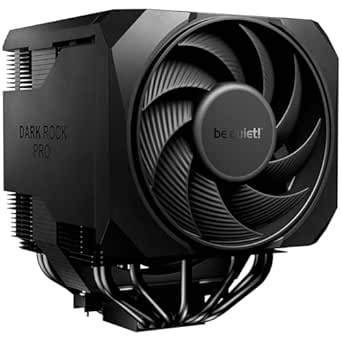 | Best for Quiet-First Overclocking | Cooling type: Air | Heat pipes: 7 high-performance copper | Fans: 135 mm PWM and 120 mm PWM | VIEW ON AMAZON | See Our Full Breakdown |
| Noctua NL-LC1-36 360mm AIO CPU Cooler |  | Best Premium 360mm Liquid Cooler | Cooling method: Water | Radiator: 360 mm; 30 mm thick | Fans: 3 × 120 mm Noctua NF-A12x25 G2 PWM | VIEW ON AMAZON | See Our Full Breakdown |
| Minorsonic 360mm AIO CPU Cooler with Ceramic Bearing Pump and ARGB Fans | 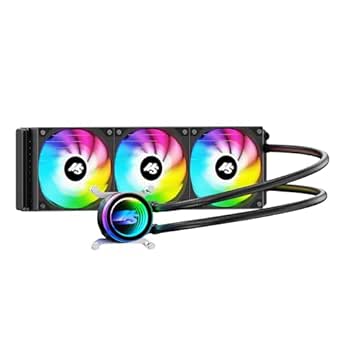 | Best for ARGB Builds and Simple Cable Management | Radiator size: 360 mm | Pump speed: 3000 RPM | Pump bearing: Ceramic | VIEW ON AMAZON | See Our Full Breakdown |
| premium cpu coolers for overclocking | Fans | Noise level |
|---|---|---|
| Noctua NH-D15 G2 Dual-Tower CP | 2 × 140 mm NF-A14x25r G2 PWM | 24.8 dB |
| Thermalright Peerless Assassin | 2 × 120 mm PWM | ≤25.6 dB(A) |
| ID-COOLING FX240 PRO 240mm AIO | — | 35.2 dB |
| Noctua NH-D15 Dual-Tower CPU C | 2 × NF-A15 140 mm PWM | — |
| Noctua NH-D15 G2 chromax.Black | 2 × 140 mm NF-A14x25r G2 | — |
| KINGCOOL CRYO Titan 120 ARGB D | 2 × 120 mm PWM ARGB, hydraulic bearing | 32 dB(A) |
| ASUS ROG Ryujin III ARGB Extre | — | — |
| Noctua NH-D15S chromax.Black C | — | — |
| Noctua NH-U9S CPU Cooler | — | — |
| Noctua NH-U12A chromax.Black D | 2 × 120 mm PWM | 22.6 dB |
| Noctua NH-D15 chromax.Black Du | 2 × NF-A15 140 mm PWM | — |
| be quiet! Dark Rock Pro 6 Air | 135 mm PWM and 120 mm PWM | — |
| Noctua NL-LC1-36 360mm AIO CPU | 3 × 120 mm Noctua NF-A12x25 G2 PWM | 22.5 dB |
| Minorsonic 360mm AIO CPU Coole | 3 × 120 mm PWM ARGB; maximum 1600 RPM | 30 dB |
More Details on Our Top Picks
Noctua NH-D15 G2 Dual-Tower CPU Cooler
The NH-D15 G2 is my strongest air-cooling pick here for builders who want to push a processor while keeping fan noise restrained. Its eight heatpipes, expanded fin area and two 140 mm fans give it more cooling hardware than the older six-heatpipe NH-D15, while the low-noise adapters let buyers favor quieter operation when their workload allows. Compared with the liquid-cooled ID-COOLING FX240 PRO, this design avoids a pump and radiator installation, though it occupies substantial space around the socket. Its 168 mm height rules out some cases, and the two-fan setup leaves less room above memory modules. I’d choose it for a roomy system where sustained air cooling and noise control matter more than compactness or effortless RAM access.
Pros:- Eight heatpipes and expanded cooling surface support demanding CPU workloads.
- Two 140 mm PWM fans provide adjustable airflow, with low-noise adapters included.
- Supports a broad range of current AMD and Intel sockets.
- Thermal paste and a screwdriver are included for installation.
Cons:- Its 168 mm height exceeds the clearance available in some cases.
- Both fans reduce RAM clearance around the CPU socket.
- The large dual-tower assembly is heavier and more intrusive than a 240 mm AIO radiator setup.
Best for: Overclocking-focused builders with a tall, spacious case who want high-capacity air cooling and quiet fan control.
Not ideal for: Small-case builders or anyone using tall memory modules who needs generous clearance around the cooler.
- Cooling method:Air
- Heatpipes:8
- Fans:2 × 140 mm NF-A14x25r G2 PWM
- Maximum fan speed:1500 rpm
- Noise level:24.8 dB
- Airflow:155.6 m³/h
- Dimensions:5.98 × 5.91 × 6.61 in
- Height and weight:168 mm; 1525 g
- Compatible sockets:AMD AM5/AM4; Intel LGA1851/LGA1700/LGA1200/LGA115x
Our verdict“Choose the NH-D15 G2 if you want premium, quiet air cooling for an overclocked CPU and have room for its tall dual-tower design.”
Thermalright Peerless Assassin 120 SE Dual-Tower CPU Cooler
The Peerless Assassin 120 SE is the practical pick for buyers who want a dual-tower layout for overclocking without stepping up to the larger Noctua NH-D15 G2. It pairs six 6 mm heatpipes with two 120 mm PWM fans in a 155 mm-tall package, making case fit easier than with the G2’s 168 mm height. That smaller footprint does not make it compact, though: its width and depth can still crowd memory or motherboard components. The listed noise ceiling is also higher than the G2’s, so builders prioritizing a quieter high-load system may prefer Noctua’s larger cooler. AMD installation requires the motherboard’s original backplate, a detail that can complicate a build if it is missing. This suits budget-conscious overclockers who value dual-tower cooling and socket flexibility over premium noise refinement.
Pros:- Dual towers and six heatpipes provide substantial air-cooling hardware.
- Two 120 mm PWM fans allow speed control based on load.
- At 155 mm tall, it is shorter than the Noctua NH-D15 G2.
- Supports a range of Intel and AMD sockets, including AM5.
Cons:- The wide dual-tower footprint can restrict case, RAM or motherboard clearance.
- Its listed noise level is higher than that of the NH-D15 G2.
- AMD installation requires the motherboard’s original backplate.
Best for: Cost-conscious builders seeking a dual-tower air cooler for an overclockable Intel or AMD desktop, with a case that fits its footprint.
Not ideal for: Quiet-build enthusiasts, owners of cramped cases, or AMD builders who no longer have the motherboard’s original backplate.
- Cooling method:Air
- Dimensions:125 × 135 × 155 mm
- Heatpipes:6 × 6 mm AGHP
- Fans:2 × 120 mm PWM
- Fan speed:1550 RPM ±10%
- Maximum airflow:66.17 CFM
- Noise level:≤25.6 dB(A)
- Voltage and connector:12 V; 4-pin
- Supported sockets:Intel 115X/1200/1700/17XX; AMD AM4/AM5
Our verdict“Pick the Peerless Assassin 120 SE for a dual-tower overclocking build when case height and value matter more than the NH-D15 G2’s quieter operation.”
ID-COOLING FX240 PRO 240mm AIO CPU Cooler
The FX240 PRO is the liquid-cooling choice in this group for builders who prefer a radiator-and-pump layout over a tall air tower. Its 240 mm radiator and 2900 RPM pump give an overclocking build a different cooling arrangement from the NH-D15 G2 and Peerless Assassin 120 SE, freeing the area directly above the CPU socket from a bulky fin stack. That can help with access around memory, but radiator placement still depends on case support and clearance. The tradeoff is noise: the listed 35.2 dB level is higher than the quiet-focused Noctua air options, and the pump adds another component to install and power. Daisy-chain fan connectors reduce cable clutter, a useful touch for a clean build, but they do not remove the extra steps of liquid-cooler installation.
Pros:- A 240 mm radiator and pump provide an alternative to a large socket-mounted air tower.
- Two 120 mm fans offer up to 82.5 CFM airflow.
- Daisy-chain fan connectors simplify cable routing.
- Supports a range of current Intel and AMD sockets.
Cons:- The listed 35.2 dB noise level is higher than the quiet-focused Noctua air coolers.
- Pump and radiator installation adds complexity compared with the NH-D15 G2 or Peerless Assassin 120 SE.
- Case radiator clearance and mounting support limit build compatibility.
Best for: Overclockers with a case that supports a 240 mm radiator who want liquid cooling and more open space around the CPU socket.
Not ideal for: Buyers prioritizing a quiet, simpler air-cooling setup or builders whose cases lack suitable 240 mm radiator clearance.
- Cooling method:Liquid
- Radiator size:240 mm
- Pump speed:2900 RPM ±10%
- Fan configuration:2 × 120 mm
- Maximum airflow:82.5 CFM
- Maximum air pressure:2.55 mmH₂O
- Noise level:35.2 dB
- Weight:1163 g
- Compatibility:Intel LGA1851/1700/1200/1151/1150/1155/1156; AMD AM4/AM5
Our verdict“Choose the FX240 PRO if your case supports its 240 mm radiator and you prefer liquid cooling over a large air tower, but not if low noise is your main goal.”
Noctua NH-D15 Dual-Tower CPU Cooler
The original Noctua NH-D15 suits overclockers who want a substantial air cooler with a mature mounting system and fewer heatpipes than the newer G2. Its six heatpipes and two 140 mm PWM fans make it a high-performance, quiet-operation option, while SecuFirm2 mounting hardware and included NT-H1 paste cover the essentials for assembly. Against the NH-D15 G2, this model gives up the newer design’s eight heatpipes and expanded surface area; buyers chasing the strongest cooling hardware in this lineup should favor the G2 instead. The older NH-D15 remains a sensible fit for builders who value its established feature set and broad socket support, but its large dual-tower form still calls for ample case clearance. It is less suitable for compact builds than the 240 mm FX240 PRO.
Pros:- Two 140 mm PWM fans support adjustable cooling and quieter operation.
- SecuFirm2 mounting system and NT-H1 thermal paste are included.
- Compatible with a broad range of current Intel and AMD sockets.
- Six-year manufacturer warranty is specified.
Cons:- It has six heatpipes, compared with eight in the NH-D15 G2.
- The large dual-tower design needs substantial case clearance.
- Its socket-mounted bulk is less convenient for memory and component access than a radiator-based layout.
Best for: Builders seeking a large, quiet-capable air cooler with broad socket support and an established mounting system for an overclocking desktop.
Not ideal for: Overclockers seeking the newest NH-D15 cooling design, or anyone with limited case clearance around a tall dual tower.
- Design:Dual tower
- Heatpipes:6
- Fans:2 × NF-A15 140 mm PWM
- Mounting system:SecuFirm2
- Included accessories:Low-Noise Adaptors; NT-H1 thermal paste
- Intel socket compatibility:LGA1851/LGA1700/LGA1200/LGA115x
- AMD socket compatibility:AM5/AM4
- Warranty:6 years
Our verdict“Choose the NH-D15 if you want a substantial, quiet-capable air cooler and do not need the newer NH-D15 G2’s eight-heatpipe design.”
Noctua NH-D15 G2 chromax.Black Quiet High-Performance CPU Cooler
The NH-D15 G2 chromax.Black is the premium choice for builders who want the newer G2 cooling design in a black finish. It shares the standard eight-heatpipe layout and two 140 mm NF-A14x25r G2 fans, so its overclocking appeal is closer to the NH-D15 G2 than to the six-heatpipe original NH-D15. The included NT-H2 paste, SecuFirm2+ mounting system and screwdriver make the package ready for installation, while low-noise adapters support quieter fan operation. Its distinctive practical advantage is specified memory clearance: 59 mm in single-fan mode, but only 32 mm with both fans installed. Compared with the standard G2, this model is a finish-and-accessory-led alternative rather than a different cooling class. Buyers who do not need the black treatment should compare the two G2 options around their build priorities.
Pros:- Eight heatpipes and 20% more surface area than the previous generation.
- Two 140 mm PWM fans include low-noise adapters and speed-offset placement.
- Includes NT-H2 thermal paste, SecuFirm2+ hardware and a screwdriver.
- Supports current AMD AM4/AM5 and Intel sockets.
Cons:- With both fans installed, RAM clearance is limited to 32 mm.
- Its large dual-tower form demands substantial space around the CPU socket.
- Its cooling hardware closely matches the standard NH-D15 G2, so the black finish is its main distinction.
Best for: Premium black-build owners who want the NH-D15 G2’s dual-tower cooling hardware and included installation accessories for an overclocked system.
Not ideal for: Builders using tall RAM with both fans fitted, or those who do not need a black finish and want to avoid a large dual-tower cooler.
- Heatpipes:8
- Fans:2 × 140 mm NF-A14x25r G2
- Surface area:20% more than the previous generation
- RAM clearance:59 mm in single-fan mode; 32 mm with both fans
- Features:PWM speed control, low-noise adapters, speed-offset fans
- Included accessories:NT-H2 thermal paste, SecuFirm2+ mounting system, NM-SD1 screwdriver
- Supported sockets:AMD AM5/AM4; Intel LGA1851/LGA1700/LGA1200/LGA115x
- Color:Black
Our verdict“Choose the chromax.Black G2 for a premium black build that needs the latest NH-D15 cooling design and can accommodate its dual-fan RAM clearance.”
KINGCOOL CRYO Titan 120 ARGB Dual-Tower CPU Air Cooler, White
The CRYO Titan 120 is a straightforward choice for builders who want substantial air-cooling hardware without moving to liquid cooling. Its six copper heat pipes, dual towers, and two PWM fans are rated for CPUs up to 260 W TDP, giving it a stronger overclocking brief than the compact Noctua NH-U9S. The white ARGB finish also makes it a more visible centerpiece than Noctua’s understated NH-D15S chromax.Black.
The tradeoff is physical fit: at 155 mm tall and 137 mm wide, this cooler can crowd a case or nearby components, so check clearances before choosing it. Its 32 dB(A) rated noise level may also be less appealing than the NH-D15S’s quiet-operation focus. I’d pick it for a compatible system where dual-tower cooling and lighting matter more than a particularly quiet profile.
Pros:- Dual towers and six copper heat pipes support a stated 260 W TDP
- Two PWM ARGB fans offer adjustable cooling and lighting
- Supports the listed current AMD and Intel sockets
- Air-cooling design avoids adding a radiator and liquid loop
Cons:- Its 155 mm height and broad 137 mm footprint can restrict case or component clearance
- Rated noise level of 32 dB(A) may not suit quiet-focused builds
- Listed socket support does not include every CPU platform
Best for: Builders with a case that fits a 155 mm dual-tower cooler who want air cooling, ARGB lighting, and headroom for CPU overclocking.
Not ideal for: Small-case builders or noise-sensitive users who need more clearance or a quieter-focused cooler.
- Cooling method:Air
- Maximum TDP:260 W
- Heat pipes:6 copper
- Fans:2 × 120 mm PWM ARGB, hydraulic bearing
- Maximum fan speed:1,800 RPM
- Airflow:57.72 CFM
- Noise level:32 dB(A)
- Dimensions:127 × 137 × 155 mm
- Compatible sockets:AMD AM5, AM4; Intel LGA 1851, 1700, 1200, 115X
Our verdict“Choose the CRYO Titan 120 if your case has room for it and you want a feature-rich dual-tower air cooler for an overclocking build.”
ASUS ROG Ryujin III ARGB Extreme 360mm Liquid CPU Cooler
The ROG Ryujin III ARGB Extreme is the pick here for builders who want a large liquid-cooling setup with visible system controls, not just a radiator and pump. Its 360 mm radiator and Asetek Emma Gen8 V2 pump are paired with thickened ARGB fans, while an embedded fan directs cooling at motherboard VRMs—a useful extra for systems under sustained CPU load. The 3.5-inch LCD can show monitoring data or custom GIFs, a feature neither the air-cooled Noctua NH-U12A chromax.Black nor NH-D15S offers.
That added display and software control make this a more involved, feature-led choice than a simpler cooler, and it requires a case with room for a 360 mm radiator. The supplied details do not list fan speed, noise, or radiator dimensions beyond the 360 mm class, so I would not choose it on those figures. It suits builders who value monitoring and VRM airflow alongside liquid cooling.
Pros:- 360 mm radiator design is suited to high-load CPU cooling setups
- 3.5-inch LCD supports system monitoring and custom GIFs
- Embedded fan provides airflow over motherboard VRMs
- Magnetically connected fans are designed to simplify installation
Cons:- Requires case space and mounting support for a 360 mm radiator
- LCD and software controls add complexity compared with air coolers such as the NH-U12A
- Provided product data does not specify fan speed or noise level
Best for: Enthusiast builders with 360 mm radiator support who want on-cooler system monitoring, custom display content, and added VRM airflow.
Not ideal for: Compact-case builders or buyers seeking a simple, low-complexity air cooler without display software and radiator fit requirements.
- Radiator size:360 mm
- Compatibility:AMD and Intel
- Pump:Asetek Emma Gen8 V2, 3-phase motor
- Display:3.5-inch LCD, 640 × 480 resolution
- Lighting:ARGB fans
- Additional cooling:Embedded motherboard VRM fan
- Software features:Pump and embedded fan speed control; AIDA64 themes
Our verdict“Pick the Ryujin III if your case supports a 360 mm radiator and you want display features and VRM cooling as well as liquid cooling.”
Noctua NH-D15S chromax.Black CPU Cooler
The NH-D15S chromax.Black favors quiet, capable air cooling over extra fans and lighting. Its asymmetrical dual-tower layout and included 140 mm NF-A15 fan make it a compelling option for overclockers who want a premium air cooler without stepping up to a 360 mm AIO like the ASUS ROG Ryujin III. The 65 mm RAM clearance and offset layout can also make component fit easier than a more centered dual-tower design, though motherboard and case clearances still need checking.
It is not the choice for someone chasing every last increment over a dual-fan cooler: the product description notes that its single-fan setup may cool slightly less than the NH-D15. At 160 mm tall, it can also be too large for some cases. I’d favor it over the smaller NH-U9S when sustained CPU cooling matters more than compact dimensions.
Pros:- Dual-tower design paired with a 140 mm NF-A15 fan
- Asymmetrical layout and 65 mm RAM clearance aid component fit
- Low-Noise Adaptor supports PWM noise control
- SecuFirm2 mounting system and NT-H1 thermal paste are included
Cons:- Single-fan configuration may cool less than the dual-fan NH-D15
- 160 mm height may exceed some case limits
- No ARGB lighting for builds where illuminated hardware is a priority
Best for: Overclockers who want quiet-focused premium air cooling, an all-black finish, and more RAM clearance than a typical dual-tower layout may offer.
Not ideal for: Builders with a low-clearance case or buyers who want the extra fan capacity of a dual-fan cooler.
- Height:160 mm
- RAM clearance:65 mm
- Fan:140 mm NF-A15
- Noise control:PWM with Low-Noise Adaptor
- Thermal paste:NT-H1 included
- Mounting system:SecuFirm2
- Compatible sockets:Intel LGA1851, LGA1700, LGA1200, LGA115x; AMD AM5, AM4
Our verdict“Choose the NH-D15S chromax.Black for quiet-focused dual-tower air cooling when your case can accommodate its 160 mm height.”
Noctua NH-U9S CPU Cooler
The NH-U9S earns its place by solving a fit problem that larger overclocking coolers cannot: it stands just 125 mm tall and uses a 92 mm fan, making it more suitable for compact cases and HTPC-style builds. Compared with the 160 mm NH-D15S chromax.Black, it gives up cooling capacity for a much smaller footprint. Its copper base and heat pipes, PWM fan, and Low-Noise Adaptor support a restrained build where noise and clearance matter.
That compact form also sets a limit. The product data describes it as a single-tower cooler and specifically cautions that it may not suit overclocking, so I would not put it ahead of the larger NH-U12A for a high-heat CPU under sustained load. It makes more sense for modest tuning, restricted cases, or users who need a capable cooler that fits where dual towers do not.
Pros:- 125 mm height suits many compact builds
- Copper base and heat pipes pair with aluminum fins
- PWM fan and Low-Noise Adaptor support quieter operation
- SecuFirm2 mounting system and thermal paste are included
Cons:- Single-tower design has less cooling capacity than larger options in this roundup
- Not suited to demanding overclocking according to the product description
- 92 mm fan provides less airflow potential than 120 mm and 140 mm alternatives
Best for: Small-form-factor and HTPC builders who need a 125 mm cooler and plan only mild CPU tuning.
Not ideal for: Overclockers running high-power CPUs under sustained heavy loads who can fit a larger cooler such as the NH-U12A.
- Height:125 mm
- Fan size:92 mm
- Dimensions:4.92 × 3.74 × 4.72 in
- Weight:618 g
- Materials:Copper base and heat pipes, aluminum fins, nickel plating
- Mounting system:SecuFirm2
- Compatible sockets:Intel LGA1851, LGA1700, LGA1200, LGA115x; AMD AM5, AM4
- Warranty:6 years
Our verdict“Choose the NH-U9S when compact dimensions take priority and your overclocking plans are modest rather than sustained and aggressive.”
Noctua NH-U12A chromax.Black Dual-Fan CPU Cooler
The NH-U12A chromax.Black is the balanced air-cooling pick for builders who want two fans without the bulk of a large dual-tower cooler. Its pair of 120 mm PWM fans and copper heat pipes make it a stronger overclocking candidate than the compact NH-U9S, while its design aims to preserve RAM and PCIe clearance on compatible systems. That combination suits a performance build where component access matters as much as cooling hardware.
At 158 mm tall, it still needs a case with enough cooler clearance, so it is not as easy to place as the NH-U9S. It also lacks the NH-D15S’s dual-tower layout, while the 360 mm ASUS ROG Ryujin III offers a different route for builders with radiator space. The NH-U12A is the more measured choice for buyers who want premium air cooling and broad socket support without committing to a large radiator or the tallest tower designs.
Pros:- Two 120 mm PWM fans support airflow and adjustable fan control
- Designed to preserve RAM and PCIe clearance on many compatible systems
- Copper base and heat pipes transfer CPU heat to aluminum fins
- Includes thermal paste, mounting hardware, and a 6-year warranty
Cons:- 158 mm height can rule it out for some cases
- Air cooler still needs suitable internal clearance, unlike a radiator-mounted cooling layout
- Product data does not state a maximum TDP rating
Best for: Overclockers seeking a premium dual-fan air cooler with broad socket support and clearance-minded design for RAM and PCIe components.
Not ideal for: Builders whose cases cannot fit a 158 mm cooler or who need a compact 125 mm option like the NH-U9S.
- Cooling method:Air
- Fans:2 × 120 mm PWM
- Maximum fan speed:2,000 RPM
- Airflow capacity:102.1 CFM
- Noise level:22.6 dB
- Dimensions:4.92 × 4.41 × 6.22 in
- Height:158 mm
- Materials:Copper base and heat pipes, aluminum cooling fins
- Compatible sockets:Intel LGA1851, LGA1700, LGA1200, LGA115x; AMD AM5, AM4
Our verdict“Choose the NH-U12A chromax.Black if you want a capable dual-fan air cooler with broad compatibility and can fit its 158 mm height.”
Noctua NH-D15 chromax.Black Dual-Tower CPU Cooler
The NH-D15 chromax.Black is my air-cooling pick for overclockers who want a substantial heatsink without adding pump noise or liquid-cooling complexity. Its six heatpipes and two 140 mm PWM fans give demanding CPUs a broad cooling setup, while PWM control can balance fan speed against noise as workloads change. Compared with the Noctua NL-LC1-36, this cooler avoids radiator placement and pump considerations, though a 360 mm liquid cooler may suit a build with generous radiator space and a preference for liquid cooling. The tradeoff here is physical: the dual-tower assembly needs considerable case and memory clearance. Its SecuFirm2 mounting hardware and included NT-H1 paste help make installation more straightforward, but buyers should check socket support and case dimensions before choosing it.
Pros:- Dual-tower design with six heatpipes for demanding CPU workloads
- Two 140 mm PWM fans allow fan speed to respond to cooling needs
- Includes NT-H1 thermal paste and SecuFirm2 mounting hardware
- Supports a range of listed Intel and AMD sockets
Cons:- Large heatsink can limit case, memory, and component clearance
- Air-cooling layout may be less suitable than a radiator for builds designed around liquid cooling
Best for: Overclockers building a spacious desktop who want quiet, high-performance air cooling across supported Intel or AMD sockets.
Not ideal for: Small-case builders or systems with tight memory and side-panel clearance, since the dual towers occupy substantial space.
- Design:All-black dual tower
- Fans:2 × NF-A15 140 mm PWM
- Heatpipes:6
- Included accessories:Low-Noise Adaptors, NT-H1 thermal paste, SecuFirm2 mounting system
- Intel compatibility:LGA1851, LGA1700, LGA1200, LGA115x
- AMD compatibility:AM5, AM4
- Warranty:6 years
Our verdict“Choose the NH-D15 chromax.Black if you want a premium, quiet air cooler for overclocking and have room for its dual-tower footprint.”
be quiet! Dark Rock Pro 6 Air CPU Cooler
The Dark Rock Pro 6 is aimed at builders who want to tune cooling behavior around noise, not just leave fans at a fixed pace. Its active and semi-passive modes offer a choice between stronger cooling and fan-stop operation below 40% PWM, while seven copper heat pipes provide the cooling path for demanding CPUs. That control gives it a different appeal from the Noctua NH-D15 chromax.Black, which is the clearer choice when the priority is a familiar dual-140 mm fan configuration and explicitly listed socket support. Here, the adjustable front fan and preinstalled mounting bridge can ease installation and fit adjustments, but the product data omits socket compatibility and cooler dimensions. I would verify both with the manufacturer and case documentation before planning an overclocked build around it.
Pros:- Active and semi-passive modes allow different cooling and fan-stop behavior
- Seven copper heat pipes are specified for demanding cooling loads
- Adjustable front fan can help with fit flexibility
- Preinstalled mounting bridge simplifies the mounting process
Cons:- Supported CPU sockets are not specified in the provided product data
- Dimensions and weight are not provided, making clearance planning harder
- The two-fan setup uses different 135 mm and 120 mm fan sizes
Best for: Noise-conscious PC builders who want selectable fan behavior and have confirmed the cooler fits their CPU socket and case.
Not ideal for: Buyers who need clearly documented socket compatibility or physical dimensions before selecting parts.
- Cooling type:Air
- Heat pipes:7 high-performance copper
- Fans:135 mm PWM and 120 mm PWM
- Fan bearing:Fluid-dynamic
- Fan motor:6-pole
- Semi-passive operation:Fan stop below 40% PWM
- Installation:Preinstalled mounting bridge; rail-mounted adjustable front fan
- Thermal grease:Liquid metal thermal grease included
Our verdict“Pick the Dark Rock Pro 6 for configurable, quiet-focused cooling only after confirming socket support and case clearance.”
Noctua NL-LC1-36 360mm AIO CPU Cooler
For overclockers who have room for a large radiator, the Noctua NL-LC1-36 is the liquid-cooling choice in this group, pairing an Asetek Emma V2 platform with three NF-A12x25 G2 fans. Its 360 mm radiator gives builders a different layout from the air-cooled Noctua NH-D15 chromax.Black: it shifts cooling hardware to the case radiator mount, which can free space around the CPU socket, but demands compatible radiator clearance. Noctua lists pump noise and vibration reduction, along with offset mounting options for AM5 and LGA1851. The included NT-H2 paste and AM5 paste guard are useful details for those platforms. Its documented compatibility is limited to AM5 and LGA1851, so buyers on other sockets should check support rather than assume it carries over from broader-compatibility alternatives.
Pros:- 360 mm radiator paired with three Noctua NF-A12x25 G2 PWM fans
- Pump noise and vibration reduction targets quieter operation
- Offset mounting options are provided for AM5 and LGA1851
- Includes NT-H2 thermal paste and an AM5 paste guard
Cons:- Requires a case with suitable 360 mm radiator mounting space
- Listed compatibility covers only AMD AM5 and Intel LGA1851
- Compatible auxiliary cooling fan is sold separately
Best for: AM5 or LGA1851 overclockers with a case that supports a 360 mm radiator and who prefer liquid cooling with Noctua fans.
Not ideal for: Builders with smaller cases or CPUs outside the listed AM5 and LGA1851 compatibility, unless they verify additional support.
- Cooling method:Water
- Radiator:360 mm; 30 mm thick
- Fans:3 × 120 mm Noctua NF-A12x25 G2 PWM
- Maximum rotational speed:1800 rpm
- Airflow capacity:107.3 m³/h
- Noise level:22.5 dB
- Compatibility:Desktop; AMD AM5 and Intel LGA1851
- Materials:Copper base and aluminium radiator
- Warranty:6 years
Our verdict“Choose this AIO for an AM5 or LGA1851 overclocking build with 360 mm radiator clearance and a preference for liquid cooling.”
Minorsonic 360mm AIO CPU Cooler with Ceramic Bearing Pump and ARGB Fans
The Minorsonic pairs a 360 mm radiator with three pre-installed ARGB fans, making it a visually oriented liquid-cooling option for overclocked systems that can accommodate a full-size radiator. Its most practical distinction is the daisy-chained fan wiring: one PWM and one ARGB connection can reduce cable clutter compared with a setup that routes each fan separately. The listed Intel LGA1851/LGA1700 and AMD AM5/AM4 support is broader than the NL-LC1-36’s stated compatibility, though the Noctua AIO provides more detail about its fans, noise-control features, and included mounting extras. Minorsonic specifies a 3000 RPM ceramic-bearing pump and fans up to 1600 RPM, but the provided data offers no independent performance comparisons. Buyers focused on predictable overclocking headroom should treat that missing evidence as a reason to compare carefully, not assume performance from pump speed alone.
Pros:- 360 mm radiator and three pre-installed 120 mm PWM ARGB fans
- Daisy-chained fans simplify PWM and ARGB cable routing
- Ceramic-bearing pump is specified at 3000 RPM
- Supports Intel LGA1851/LGA1700 and AMD AM5/AM4
Cons:- Requires space for a 360 mm radiator
- No independent performance comparisons are supplied
- Listed noise level is 30 dB, with no additional acoustic-control features specified
Best for: Overclockers with a 360 mm radiator mount who want integrated ARGB lighting, simplified fan cabling, and support for listed current Intel and AMD sockets.
Not ideal for: Buyers seeking documented comparative cooling results or a quiet-first cooler, since the provided data gives limited performance context and lists a 30 dB noise level.
- Radiator size:360 mm
- Pump speed:3000 RPM
- Pump bearing:Ceramic
- Fans:3 × 120 mm PWM ARGB; maximum 1600 RPM
- Noise level:30 dB
- Power connector:4-pin
- Compatible sockets:Intel LGA1851/LGA1700; AMD AM5/AM4
Our verdict“Choose the Minorsonic if ARGB presentation and simpler fan wiring matter alongside 360 mm liquid cooling, but compare performance evidence before relying on it for heavy overclocking.”

How We Picked
I ranked these coolers around the demands of overclocking: sustained heat dissipation, practical fit, noise control potential, build design, maintenance, and the flexibility to work in real systems. I gave more weight to cooling capacity and a credible path to stable operation under extended loads than to lighting or display features. Air coolers avoid pump and radiator installation, while AIOs can suit builds with space for a large radiator; each approach carries a different set of fit and maintenance tradeoffs.
The order reflects how well each model matches a broad overclocking use case, not a claim that one cooler will deliver a fixed temperature or clock speed on every processor. The NH-D15 G2 leads as a high-capacity air option; the Ryujin III Extreme earns a place for buyers seeking a 360mm AIO, and the Peerless Assassin 120 SE offers a more restrained route to dual-tower cooling. Smaller or clearance-conscious models rank for their specific fit advantages, while model variants with closely related designs are separated by the buyer needs they best address. I would check socket support, case dimensions, motherboard layout, and the exact included hardware before purchasing.
Factors to Consider When Choosing Premium Cpu Coolers For Overclocking
Choosing a cooler for overclocking is a system-planning decision, not a contest of headline size alone. I’d match the cooler to the processor’s sustained power, the case’s airflow and mounting points, and the kind of installation and upkeep I’m willing to handle.
Match Cooling Headroom to Your Overclocking Plan
Decide whether you want a modest all-core boost, a sustained manual overclock, or simply quieter operation under heavy workloads. Those goals place different demands on a cooler, and the processor’s power behavior can matter as much as its model name. A large dual-tower cooler such as the NH-D15 G2 is a strong starting point for air cooling, but a demanding chip can still run hot when voltage and power rise. Avoid choosing by a cooler’s advertised processor wattage alone; those figures rarely describe your case airflow, ambient temperature, or workload. Pair cooling plans with conservative voltage settings and monitor temperatures and stability after each change. If your goal requires more thermal headroom than your case can support, reconsider the overclock or the case rather than assuming a different fan will solve everything.
Check Case, RAM, and Motherboard Clearance Together
A cooler can fit the socket and still interfere with memory, a graphics card, or the side panel. Before ordering, check the cooler’s height against the case limit and confirm how its front fan sits above your RAM. Tall memory may require raising a fan, which can increase the cooler’s total height or alter airflow. Large heatsinks can also crowd motherboard components and make access to power connectors harder during assembly. Compact models such as the NH-U9S or NH-U12A address some space constraints, while the NH-D15S offers a different fit profile from a standard dual-tower layout. Check the exact model drawings and your board layout instead of relying on the product-family name.
Choose Air or Liquid for Your Case, Not for Appearance Alone
Air coolers keep the system simpler: there is no pump, radiator, or liquid loop to mount, though the heatsink still needs room around the CPU socket. AIOs move heat to a radiator, which can help when the case has a suitable mounting position and airflow path. A 360mm radiator needs three fan positions, and the case must support its length and thickness without blocking other hardware. Front mounting can affect graphics-card space or intake airflow; top mounting can be limited by motherboard and memory clearance. AIO owners also add pump noise and another component whose operation matters to system reliability. Choose liquid cooling because your layout and workload suit it, not because the format guarantees lower temperatures in every build.
Plan for Noise Across Fans, Pumps, and Case Airflow
Overclocking increases heat, which often pushes fans to run faster and makes noise control more relevant. A cooler’s noise depends on its fans, fan curve, case airflow, and the power levels your processor sustains. Large air coolers can use broad heatsinks and multiple fans, but they still need a sensible curve and clear intake. AIO systems add pump sound to radiator-fan noise, so listen for both when setting expectations. Do not rely on a quiet-focused product label to predict the result in a poorly ventilated case. Set fan curves after confirming thermal stability, then adjust them for the workloads and noise level you can accept.
Compare Total Build Cost and Long-Term Upkeep
The purchase decision includes more than the cooler itself: check whether the required mounting hardware, thermal paste, and compatible fans are included for your socket and build. Air coolers have fewer active components, though dust removal and fan replacement remain part of routine upkeep. AIOs can offer a clean socket area and radiator-based layout, but their pump and tubing add complexity and a finite service life. Premium features such as lighting or a display may improve the build’s look without adding overclocking headroom. Spend more when the design solves a real thermal, acoustic, or installation need. If you will not use those extras, a capable air cooler may leave more of the build budget for a case with better airflow or a stronger processor power setup.
Treat Cooling as One Part of Overclocking Stability
A cooler cannot guarantee an overclock: CPU silicon variation, motherboard power delivery, BIOS behavior, memory settings, and room temperature all influence results. Start from stable default settings, change one setting at a time, and test with workloads that reflect how you use the system. Monitor processor temperatures alongside clock behavior and power limits; a high temperature can cause throttling even when the cooler appears physically substantial. Motherboard voltage defaults can also add heat that a manual tune might avoid. Keep an eye on case intake and exhaust because a powerful CPU cooler cannot remove heat efficiently if hot air remains trapped. Set a target based on stable performance and acceptable noise rather than chasing a clock number at any cost.
Frequently Asked Questions
Is a 360mm AIO automatically better for overclocking than a premium dual-tower air cooler?
No. A 360mm AIO can suit sustained high heat when the case supports the radiator and has a good airflow path, but radiator size alone does not promise better results. Fan quality, pump behavior, mounting, case ventilation, and processor power all affect performance. A premium dual-tower air cooler avoids pump complexity and may be easier to maintain, though it takes up more space around the socket. Compare independent testing for your processor class where available, and check the exact case layout before choosing. Pick the format that delivers adequate headroom in your system rather than assuming liquid always wins.
How do I know whether a large dual-tower cooler will fit my RAM and case?
Check three measurements before buying: maximum CPU cooler height, memory clearance, and the cooler’s full dimensions with its fans installed. If a front fan must sit higher to clear tall RAM, the cooler can exceed the case’s height limit even when its listed base height fits. Also inspect the motherboard layout for nearby heatsinks or slots that could obstruct the cooler. Use the exact product’s clearance diagram and your case and memory specifications, not a similar model’s measurements. If the fit remains uncertain, choose a cooler with a clearer clearance margin or a smaller design.
Should I choose the NH-D15 G2 or the NH-D15 G2 chromax.Black?
Start by checking the exact package contents, dimensions, and socket support for the listing, since a finish variant should not be assumed to have identical accessories without checking. If the cooler’s color matters to your build, the chromax.Black version offers a dark look; the standard NH-D15 G2 may suit a different visual scheme. For overclocking, fit and installation matter more than color: verify RAM clearance, case height, and motherboard access. Compare the current model specifications rather than relying on the shared NH-D15 G2 name. If those practical details match your build, choose the finish that fits your preferences.
Can a compact cooler like the NH-U9S handle an overclocked processor?
It can be a fit-conscious option, but compact size leaves less heatsink area than a large dual-tower cooler. Whether it suits your overclock depends on the processor’s sustained power, the case airflow, and how much heat and fan noise you will accept. A small cooler may make more sense for a space-limited system with moderate tuning than for a high-power chip under long workloads. Check the processor’s behavior in your intended applications and monitor for throttling after setup. If your priority is sustained overclocking headroom, favor a larger cooler when the case allows it.
What should I do if my CPU still runs hot after installing a premium cooler?
First check mounting pressure, thermal paste coverage, fan direction, and whether the cooler’s fans are connected to the correct headers. Then confirm that the case has unobstructed intake and exhaust and that the radiator or heatsink is free of dust. Review BIOS voltage and power settings, since aggressive automatic settings can create more heat than expected. Test at stock settings to separate a cooler installation problem from the demands of the overclock. If temperatures remain high, reduce voltage or power targets and check whether the processor is throttling rather than assuming a new cooler is the only fix.
Conclusion
For most buyers building an overclocked system around air cooling, I’d choose the Noctua NH-D15 G2 as the best overall; it pairs a substantial dual-tower design with a clear focus on cooling headroom. The Thermalright Peerless Assassin 120 SE is my best value-oriented pick for buyers who want a capable dual-tower format without stepping up to a flagship model. For a best premium liquid option, the ASUS ROG Ryujin III ARGB Extreme 360mm fits builds with a supported 360mm radiator mount and room for its added pump and tubing. Beginners who want a simpler installation and fewer active components should look first at air cooling, then choose among the Noctua NH-D15 G2, NH-U12A, and Peerless Assassin according to clearance and budget. For compact cases, compare the NH-U9S, NH-U12A, and NH-D15S against exact dimensions; for a quieter-focused build, examine fan curves and the be quiet! Dark Rock Pro 6 alongside case airflow. My final advice is to confirm fit and socket support before buying, then tune the overclock to the cooling capacity your whole system can sustain.