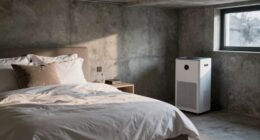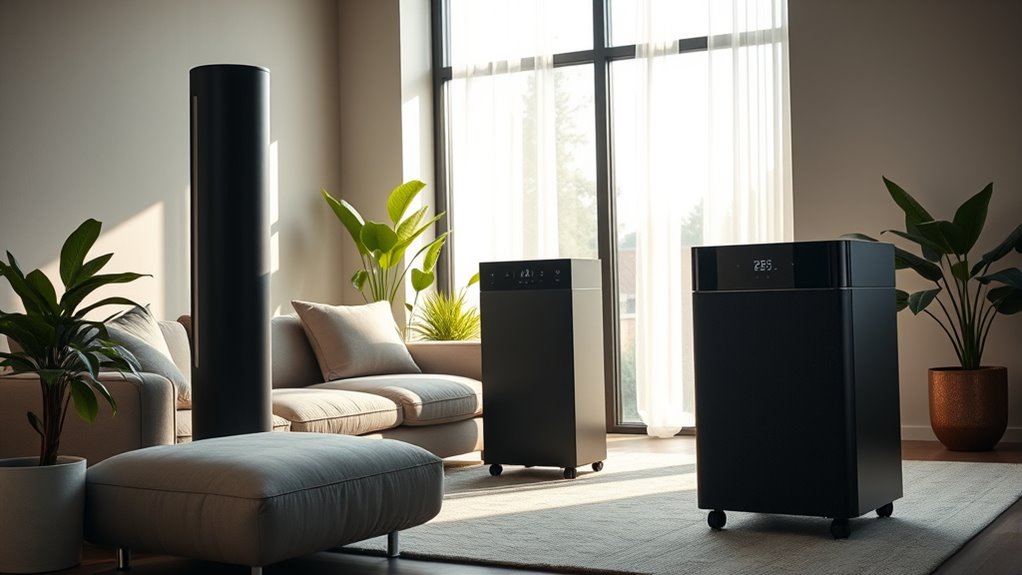

Choosing a whole house air purifier for allergies means balancing room coverage, particle filtration, operating details, and how the purifier fits your home. These are large-room units, not duct-connected systems that clean every room at once, so placement and the area each machine can treat matter. My leading picks are the Blueair Blue Pure 211i Max for its broad stated coverage and app controls, the Levoit Vital 200S-P for independently tested CADR ratings and allergen-focused options, and the Winix 5520 for its stated cleaning rates and HEPA-plus-carbon setup.

Turn the school run and nap time into listening time
- Thousands of audiobooks, podcasts and originals
- Listen on your phone, tablet or Echo — also offline
- Cancel anytime
The tradeoffs are meaningful: coverage figures are not directly comparable unless room conditions and cleaning speed match, while extra controls do not replace filter maintenance. I rank these models by how clearly their supplied details support allergy-focused use, how practical their coverage and controls appear, and what buyers need to know about upkeep. My shortlist favors transparent particle-cleaning information and useful day-to-day features over a single impressive area claim.
Complete the kit

Key Takeaways
- Blueair Blue Pure 211i Max has the largest stated coverage, up to 3,235 sq. ft.; treat that as a broad-area claim, not proof of equal cleaning speed in every home.
- Levoit Vital 200S-P is the clearest choice when independently tested smoke, dust, and pollen CADR ratings matter more than app features.
- Winix 5520 gives multiple cleaning-time and area figures, plus True HEPA and carbon filtration, making its coverage details easier to relate to room size.
- FreAire pairs triple air intakes with a washable pre-filter, PM2.5 monitoring, and quiet sleep mode, but its recommended HEPA-filter changes add ongoing upkeep.
- Coway Mighty AP-1512HH suits buyers who value a three-year warranty and automatic adjustments, though its stated coverage is lower than several other picks.
| Blueair Blue Pure 211i Max Smart Air Purifier |  | Best Overall for Broad Open Areas | Coverage area: Up to 3,235 sq. ft. | Filtration: HEPASilent | Particle retention: Down to 0.1 micron | VIEW ON AMAZON | See Our Full Breakdown |
| Levoit Vital 200S-P Smart Air Purifier for Large Rooms |  | Best for Allergy Performance Data | Coverage area: Up to 1,875 sq. ft. | Smoke CADR: 250 CFM | Dust CADR: 254 CFM | VIEW ON AMAZON | See Our Full Breakdown |
| Winix 5520 Air Purifier for Large Rooms |  | Best for Clear Cleaning-Rate Details | Coverage: Up to 1,882 sq. ft. per hour | Cleaning rates: 941 sq. ft. in 30 min.; 627 sq. ft. in 20 min.; 470 sq. ft. in 15 min. | Filtration: Four-stage system with True HEPA, carbon, and washable fine mesh pre-filter | VIEW ON AMAZON | See Our Full Breakdown |
| FreAire Air Purifier for Large Rooms up to 2,600 sq. ft. |  | Best for Quiet Operation and Simple Monitoring | Coverage: Up to 2,600 sq. ft. per hour | Filter: HEPA filter with washable pre-filter | Particle capture: 99.97% | VIEW ON AMAZON | See Our Full Breakdown |
| Coway Mighty AP-1512HH(W) Air Purifier, White |  | Best for Warranty and Straightforward Auto Operation | Model: AP-1512HH(W) | Coverage: Up to 1,748 sq. ft. in 60 minutes | Filtration: Washable pre-filter, deodorization filter, bipolar device, and HEPA filter | VIEW ON AMAZON | See Our Full Breakdown |
| whole house air purifiers for allergie | Filtration | Coverage |
|---|---|---|
| Blueair Blue Pure 211i Max Sma | HEPASilent | — |
| Levoit Vital 200S-P Smart Air | — | — |
| Winix 5520 Air Purifier for La | Four-stage system with True HEPA, carbon, and washable fine mesh pre-filter | Up to 1,882 sq. ft. per hour |
| FreAire Air Purifier for Large | — | Up to 2,600 sq. ft. per hour |
| Coway Mighty AP-1512HH(W) Air | Washable pre-filter, deodorization filter, bipolar device, and HEPA filter | Up to 1,748 sq. ft. in 60 minutes |
More Details on Our Top Picks
Blueair Blue Pure 211i Max Smart Air Purifier
The Blueair Blue Pure 211i Max takes my top spot for buyers trying to address airborne allergens across a large, connected living area. Its stated coverage reaches up to 3,235 sq. ft., the largest figure in this group, and its HEPASilent system is described as capturing pollen, dust, smoke, pet dander, and other airborne particles down to 0.1 micron. Sensors can adjust the fan automatically, while app, Alexa, and button controls give households several ways to manage it.
Compared with the Levoit Vital 200S-P, Blueair offers a larger stated area and more connected controls, but Levoit supplies independently tested CADR ratings for smoke, dust, and pollen. That makes Levoit the more evidence-led pick for buyers comparing particle-cleaning performance, while Blueair makes more sense when the priority is broad stated coverage and convenient monitoring. Its 23 dB noise figure is useful for buyers planning to run it in a living or sleeping area, though the supplied details do not identify the conditions behind that figure.
This is still a single corded purifier, not a whole-home system, and the coverage claim should not be read as a guarantee of uniform cleaning throughout a multilevel house. Filter reminders also mean ongoing upkeep is part of ownership. I would choose it for an open-plan space, but compare its room layout and placement needs against Winix’s more detailed cleaning-rate figures before deciding.
Pros:- Largest stated coverage in this lineup, up to 3,235 sq. ft.
- HEPASilent filtration is described for pollen, dust, smoke, and pet dander.
- Sensors, app control, Alexa, and onboard buttons support flexible operation.
- Listed noise level is 23 dB.
Cons:- Corded placement limits where the unit can sit.
- Filter reminders point to recurring filter upkeep, and the supplied details do not state a replacement interval.
- No CADR figures are supplied here for direct performance comparison with Levoit.
Best for: People with a large open-plan room who want automatic sensing, app or voice control, and a broad stated coverage area.
Not ideal for: Buyers who need independently stated CADR data in the supplied specifications, or who expect one portable unit to clean every separate room in a house.
- Coverage area:Up to 3,235 sq. ft.
- Filtration:HEPASilent
- Particle retention:Down to 0.1 micron
- Noise level:23 dB
- Power:46 watts
- Controls:App, Amazon Alexa, and buttons
- Dimensions:14.4 × 14.4 × 22.7 in.
Our verdict“I recommend Blueair for large connected spaces where broad stated coverage and smart controls matter more than having CADR figures in the listed specifications.”
Levoit Vital 200S-P Smart Air Purifier for Large Rooms
For buyers who want more than a broad room-size claim, the Levoit Vital 200S-P is the most straightforward model to evaluate. It is AHAM-certified and lists independently tested CADR ratings of 250 CFM for smoke, 254 CFM for dust, and 289 CFM for pollen. Those separate figures help allergy shoppers see how the purifier performs against different particle categories instead of relying on one area number alone.
Its stated coverage is up to 1,875 sq. ft., which is below Blueair’s 3,235-square-foot claim and FreAire’s 2,600-square-foot figure. In exchange, Levoit gives clearer performance information and a traditional inlet plus a U-shaped inlet intended to help collect pet hair and odors. Optional replacement filters, including Pet Allergy and Smoke Remover versions, let buyers tailor upkeep to household concerns. That flexibility is a practical distinction from Coway’s listed filter arrangement.
The supplied specifications do not state noise levels or energy use, so I would not pick this over Blueair for a known quiet-running requirement or compare operating costs from the information here. Filter replacements are also part of the plan. Levoit is my pick for shoppers who want allergy-relevant test data and a pet-conscious intake design, rather than the biggest coverage number or the most complete set of operating details.
Pros:- AHAM-certified with independently tested smoke, dust, and pollen CADR ratings.
- U-shaped inlet is designed to help capture pet hair and odors.
- Coverage is stated at up to 1,875 sq. ft.
- Replacement filter options include Pet Allergy, Smoke Remover, and Toxin Absorber.
Cons:- Noise level and energy consumption are not specified in the supplied details.
- Its stated coverage is smaller than Blueair and FreAire.
- Replacement filters remain an ongoing maintenance need.
Best for: Allergy shoppers who want AHAM certification, independently tested CADR ratings for pollen, dust, and smoke, and optional filter types.
Not ideal for: People who need noise or energy-use figures before choosing, or who want the largest stated coverage area in this group.
- Coverage area:Up to 1,875 sq. ft.
- Smoke CADR:250 CFM
- Dust CADR:254 CFM
- Pollen CADR:289 CFM
- Air inlets:Traditional inlet and U-shaped inlet
- Certification:AHAM-certified
- Replacement filter options:Toxin Absorber, Smoke Remover, and Pet Allergy
Our verdict“I would choose Levoit when comparable allergen-focused performance data matters more than the broadest coverage claim or a fully specified operating profile.”
Winix 5520 Air Purifier for Large Rooms
The Winix 5520 stands out for stating several room-area and cleaning-time combinations instead of leaving buyers with a single maximum. It lists up to 1,882 sq. ft. per hour, with 941 sq. ft. in 30 minutes, 627 sq. ft. in 20 minutes, and 470 sq. ft. in 15 minutes. Those figures help a buyer match a purifier to the actual space and desired cleaning pace, although the room conditions behind those rates still matter.
Its four-stage setup includes a True HEPA filter, carbon filter, and washable fine mesh pre-filter. The description says it captures 99.99% of airborne allergens and particles as small as 0.01 microns, while carbon filtration targets odors and VOCs. Sensors adjust the fan in Auto Mode, and app compatibility adds remote control. Compared with Levoit, Winix gives more cleaning-interval examples but does not provide separate CADR figures for pollen, dust, and smoke. Compared with Coway, it adds app control and more detailed area rates.
Sleep Mode activates when the room is dark, and the lowest-speed noise figure is 23.5 dB. That is useful, but it is the only noise level supplied, so buyers should not assume every operating speed stays quiet. PlasmaWave is described as potentially helping reduce pollutants; I would treat the HEPA and carbon filtration as the clearer allergy-relevant basis for this choice. Select Winix for its multi-rate coverage information and layered filtration, not for an expectation that one unit will reach every room in a whole house.
Pros:- Lists cleaning rates for several room sizes and time intervals.
- True HEPA, carbon, and washable fine mesh pre-filter address particles and household odors.
- Auto Mode uses air-quality sensors to adjust fan speed.
- Sleep Mode, app compatibility, and AHAM Verified and UL Certified status are listed.
Cons:- Only the lowest-speed noise level is specified.
- PlasmaWave’s pollutant-reduction claim is described as potential rather than the primary filtration basis.
- Its maximum stated coverage is lower than Blueair’s and FreAire’s.
Best for: People who want multiple stated room-cleaning rates, washable pre-filter maintenance, and particle-plus-odor filtration for a large room.
Not ideal for: Buyers who need noise figures across all fan speeds or want separate CADR ratings for pollen, dust, and smoke.
- Coverage:Up to 1,882 sq. ft. per hour
- Cleaning rates:941 sq. ft. in 30 min.; 627 sq. ft. in 20 min.; 470 sq. ft. in 15 min.
- Filtration:Four-stage system with True HEPA, carbon, and washable fine mesh pre-filter
- Particle capture:99.99% of airborne allergens and particles as small as 0.01 microns
- Lowest-speed noise:23.5 dB
- Controls:Auto Mode, Sleep Mode, and Winix Smart App compatibility
- Certifications:AHAM Verified and UL Certified
Our verdict“I recommend Winix for buyers who want detailed cleaning-rate examples and combined HEPA and carbon filtration, with the caveat that noise data covers only the lowest speed.”
FreAire Air Purifier for Large Rooms up to 2,600 sq. ft.
FreAire combines a high stated area with features that make continuous use easier to manage. Its triple air intakes support coverage claims up to 2,600 sq. ft. per hour, while a HEPA filter is described as capturing 99.97% of airborne particles, including dust, smoke, pet hair, and dander. A PM2.5 display and automatic fan adjustment give the owner a visible signal of changing air quality rather than requiring constant manual speed changes.
Compared with the Blueair 211i Max, FreAire has a smaller stated coverage area, but its supplied details include a washable pre-filter, a filter replacement reminder, and a listed 22 dB sleep mode with lights off. That makes it a credible option for bedrooms or shared living spaces where low-light, low-noise operation is a priority. The Coway Mighty also has automatic air-quality adjustment and a washable pre-filter, but FreAire lists a higher area figure and a specific sleep-mode noise value.
The main ownership tradeoff is upkeep: the HEPA filter is recommended for replacement every three to six months, and the description recommends brand-specific replacements. Its 99.97% capture statement is useful, but the supplied information does not include CADR ratings to compare with Levoit. I would choose FreAire for its balance of quiet mode, monitoring, and stated coverage, while checking replacement-filter availability before making it the main purifier for a high-allergen household.
Pros:- Triple air intakes and stated coverage up to 2,600 sq. ft. per hour.
- HEPA filter is described as capturing 99.97% of airborne particles.
- PM2.5 monitoring and automatic fan adjustment support hands-off operation.
- Sleep mode is listed at 22 dB with lights off; pre-filter is washable.
Cons:- HEPA filter replacement is recommended every three to six months.
- Description recommends brand-specific replacement filters.
- No CADR figures are supplied for comparison with Levoit.
Best for: People seeking a large-room purifier with PM2.5 monitoring, automatic fan adjustment, a washable pre-filter, and a specifically listed quiet sleep mode.
Not ideal for: Buyers who want independently stated CADR ratings or prefer flexible third-party replacement-filter options.
- Coverage:Up to 2,600 sq. ft. per hour
- Filter:HEPA filter with washable pre-filter
- Particle capture:99.97%
- Air-quality sensor:PM2.5
- Fan speeds:4
- Sleep-mode noise:22 dB
- Recommended filter replacement:Every 3–6 months
- Certifications:ETL, FCC, EPA, CARB, DOE
Our verdict“I would choose FreAire for quiet, sensor-guided large-room use, provided its recurring filter replacement needs suit the household.”
Coway Mighty AP-1512HH(W) Air Purifier, White
The Coway Mighty AP-1512HH is the lower-coverage pick in this group, but it earns a distinct place for its three-year warranty and four-part filtration arrangement. Its washable pre-filter, deodorization filter, bipolar device, and HEPA filter are designed to address fine particles, allergens, odors, and some volatile organic compounds. The unit monitors air quality and automatically adjusts its fan, so it can respond without constant manual intervention.
Its stated coverage reaches up to 1,748 sq. ft. in 60 minutes, below the Levoit Vital 200S-P’s 1,875 sq. ft. figure and the Winix 5520’s 1,882 sq. ft. per hour. Those numbers are not necessarily like-for-like tests, but the Coway is the least expansive stated option here. Buyers should weigh that against its three-year warranty, maintenance alerts, and an indicator light that can be switched off for sleeping. Levoit has more explicit allergy-specific CADR information; Coway offers a broader listed filter combination and a longer stated warranty.
The supplied description says the HEPA filter reduces 99.97% of 0.3-micron particles. Its pre-filter needs regular cleaning, and the coverage claim is tied to specified test conditions that may differ from everyday rooms. I see this as a sensible choice for a buyer focused on a defined large room rather than a wide open floor plan. Skip it if the largest area claim is your main priority or you want pollen-specific CADR figures.
Pros:- Four-stage listed filtration includes HEPA and deodorization filters.
- Automatic fan adjustment responds to monitored air quality.
- Indicator light can be turned off, and filter alerts support routine maintenance.
- Three-year warranty is listed.
Cons:- Lowest stated coverage among these five options.
- Coverage is based on specified test conditions and may vary in actual use.
- Washable pre-filter requires regular cleaning.
Best for: Buyers who want automatic air-quality response, maintenance alerts, a washable pre-filter, and a stated three-year warranty for a large room.
Not ideal for: Households seeking the broadest stated coverage or explicit pollen, dust, and smoke CADR figures.
- Model:AP-1512HH(W)
- Coverage:Up to 1,748 sq. ft. in 60 minutes
- Filtration:Washable pre-filter, deodorization filter, bipolar device, and HEPA filter
- Particle reduction:99.97% of 0.3-micron particles
- Modes:Auto and Eco
- Features:Air-quality monitor and indicator, timer, and filter alerts
- Warranty:3 years
Our verdict“I recommend Coway for a defined large room where warranty length and automatic operation matter more than the biggest coverage claim.”
How We Picked
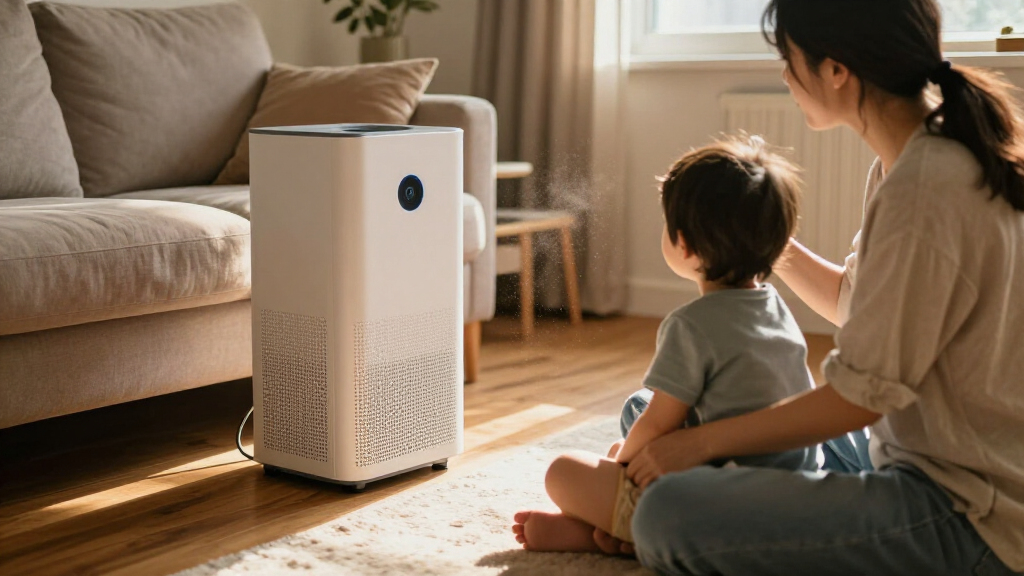
I ranked these five options for allergy-focused large-room use, not as substitutes for a whole-home HVAC filtration system. I looked at the supplied coverage claims, filtration details, particle or CADR data, air-quality automation, noise information, and maintenance cues. For allergies, the core question is whether a unit can move and filter enough air in the space where symptoms are a concern; a long feature list alone does not answer that.
I gave extra weight to measurable or clearly described performance information. Levoit provides independently tested CADR figures for smoke, dust, and pollen, while Winix lists several coverage rates tied to different cleaning intervals. Blueair and FreAire state large coverage areas, but their supplied details do not provide comparable CADR figures. Coway combines a HEPA filter with deodorization and automatic monitoring, though its stated area is smaller than the largest claims here.
I also weighed practical ownership differences: washable pre-filters can catch larger debris before it reaches the main filter, sensors can adjust operation as air quality changes, and filter reminders help with upkeep. I did not treat coverage numbers as interchangeable because the supplied descriptions do not establish matching test conditions for every model. My ranking therefore favors a useful balance of allergen-relevant evidence, stated coverage, and manageable controls, while calling out gaps that buyers should verify for their room.
| whole house air purifiers for allergie | Filtration | Coverage |
|---|---|---|
| Blueair Blue Pure 211i Max Sma | HEPASilent | — |
| Levoit Vital 200S-P Smart Air | — | — |
| Winix 5520 Air Purifier for La | Four-stage system with True HEPA, carbon, and washable fine mesh pre-filter | Up to 1,882 sq. ft. per hour |
| FreAire Air Purifier for Large | — | Up to 2,600 sq. ft. per hour |
| Coway Mighty AP-1512HH(W) Air | Washable pre-filter, deodorization filter, bipolar device, and HEPA filter | Up to 1,748 sq. ft. in 60 minutes |
Factors to Consider When Choosing Whole House Air Purifiers For Allergies
For allergy relief, I would start with the room where symptoms are most bothersome and match the purifier to that space. A portable large-room unit can help clean the air around it, but it does not automatically filter bedrooms behind closed doors or replace a central HVAC filter. These buying points help separate a useful fit from an appealing feature list.
Treat coverage claims as a starting point
Room coverage depends on how quickly air is cleaned, room layout, ceilings, and how often doors open. The Blueair lists the largest area, while Winix gives several area-and-time combinations; those figures describe different kinds of information. I would not compare maximum square footage alone as if all five units clean a room at the same rate. For a bedroom or enclosed living room, compare the stated area with the actual room and look for CADR data when available. Levoit’s smoke, dust, and pollen CADR ratings provide the clearest category-specific comparison in this lineup.
Prioritize particle filtration for allergy triggers
Pollen, dust, and pet dander are airborne particles, so focus on the filtration claims that address them directly. Levoit names these common allergens and supplies pollen CADR; Winix lists True HEPA filtration and a particle-capture claim; FreAire and Coway also describe HEPA filtration. Blueair’s HEPASilent system is described for pollen, dust, and dander. Carbon or deodorization layers can help with odors and some gases, but they serve a different purpose from particle filtration. Choose based on the trigger you want to address, not the number of filter stages alone.
Match controls and noise to where it will run
A purifier only helps while it is operating, so noise and controls matter in bedrooms and shared spaces. FreAire lists 22 dB in sleep mode, Blueair lists 23 dB, and Winix lists 23.5 dB on its lowest speed. These figures refer to different operating descriptions, so they do not establish a direct quietness ranking. Coway can turn off its indicator light, while Winix’s Sleep Mode responds to darkness and Blueair offers app and Alexa controls. Check whether the controls suit the room and whether the unit needs to run at a higher fan speed to serve your space.
Plan for filter care before buying
Washable pre-filters can reduce the debris reaching a main filter, but they still need cleaning. Coway explicitly calls for regular pre-filter cleaning, and FreAire recommends replacing its HEPA filter every three to six months. Winix and Levoit also rely on replacement filters, with Levoit offering several filter types. Blueair includes filter reminders, while FreAire provides a replacement reminder. I would check the recommended schedule, availability of the specified filter, and any model-specific care instructions before choosing a purifier for daily allergy management.
Think of whole-house coverage as a room strategy
None of these products is described as a duct-connected purifier that treats every room through a central system. Their large-area claims make them candidates for open rooms or broad spaces, but walls and closed doors limit how air moves. A practical plan may mean one unit in the main living area and another where someone sleeps, rather than expecting one appliance to cover an entire multilevel home. If you want central whole-house filtration, compare these portable purifiers with HVAC filter upgrades or a professionally installed system instead of treating them as direct equivalents.
Frequently Asked Questions
Can a portable air purifier clean an entire house?
These models are portable room purifiers, not central duct systems. Their stated coverage can suit a large open room, but walls, floors, and closed doors limit how air circulates between rooms. For allergy concerns across a whole home, place a purifier in the rooms where people spend the most time or explore central HVAC filtration separately. Do not interpret a large square-footage claim as a promise to clean every enclosed room evenly.
Which purifier in this roundup gives the clearest allergy performance data?
The Levoit Vital 200S-P provides independently tested CADR figures for smoke, dust, and pollen, which makes it the clearest option here for comparing performance by particle category. Winix provides multiple cleaning-rate examples and describes True HEPA filtration, while several other models give broad coverage or particle-capture claims. CADR figures do not remove the need to match the purifier to room size and use conditions, but they offer useful comparison points.
Should I choose the model with the largest coverage number?
Not automatically. Blueair has the largest stated coverage in this group, but coverage figures may reflect different test conditions and do not show that every model cleans a room at the same speed. Consider room dimensions, layout, desired cleaning pace, and whether the supplied information includes CADR or multiple cleaning rates. For a large open plan, a broad coverage claim may help; for a specific bedroom, a better-matched unit with useful performance data may be the stronger choice.
Are washable pre-filters enough for allergy filtration?
A washable pre-filter is a maintenance feature, not a substitute for the main particle filter. It can catch larger debris and needs regular cleaning so the purifier can keep drawing air as intended. For airborne pollen, dust, and dander, pay attention to the model’s HEPA or other stated particle-filtration system as well. Coway and FreAire list washable pre-filters, and Winix describes a washable fine mesh pre-filter alongside its True HEPA filter.
How often will I need to replace filters?
Replacement timing varies by model and household conditions, including how much dust, smoke, or pet hair enters the filter. FreAire recommends replacing its HEPA filter every three to six months and points buyers toward brand-specific replacements. The other supplied descriptions do not give a comparable interval, so check each manufacturer’s current instructions for the exact model and replacement type. Filter reminders can prompt maintenance, but they do not eliminate the need to inspect or replace filters according to the maker’s guidance.
Conclusion
My recommendation depends on the room and the evidence you value most. Choose the Blueair Blue Pure 211i Max for a large open area where broad stated coverage and app or voice control are priorities. Pick the Levoit Vital 200S-P if pollen, dust, and smoke CADR figures are your deciding factor, or the Winix 5520 if you want several stated cleaning rates alongside HEPA and carbon filtration. For quiet sleep-mode use and PM2.5 monitoring, consider FreAire, while buyers who value a three-year warranty and automatic operation in a defined room should compare Coway Mighty. I would treat every one as part of a room-by-room allergy plan, not a standalone whole-house solution.
Halloween Picks
halloween
As an affiliate, we earn on qualifying purchases.