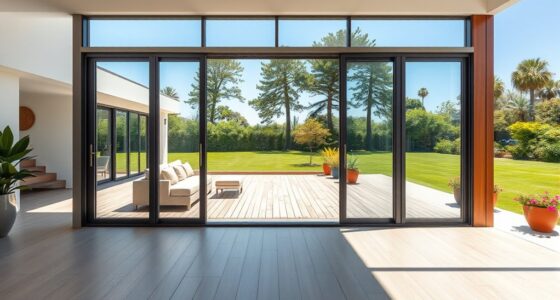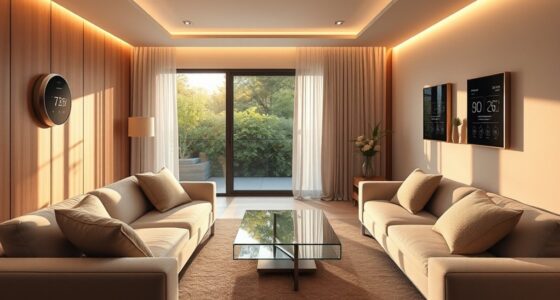
Designing for comfort and efficiency involves selecting ergonomic furniture that supports your natural posture and reduces fatigue, while incorporating energy-saving lighting options like LEDs and smart systems to minimize waste. Position furniture near windows to maximize daylight and use task lighting to avoid unnecessary brightness. Thoughtful choices create a space that boosts well-being, saves energy, and enhances productivity. Keep exploring to discover how these strategies can transform your environment into a more sustainable and comfortable haven.
Key Takeaways
- Incorporate ergonomic furniture to support natural posture and reduce fatigue.
- Maximize natural light through strategic placement near windows for energy efficiency.
- Use energy-saving LED and smart lighting systems to minimize electricity consumption.
- Employ task lighting for specific activities to enhance comfort and conserve energy.
- Create a balanced environment with adjustable lighting and ergonomic design for optimal well-being.
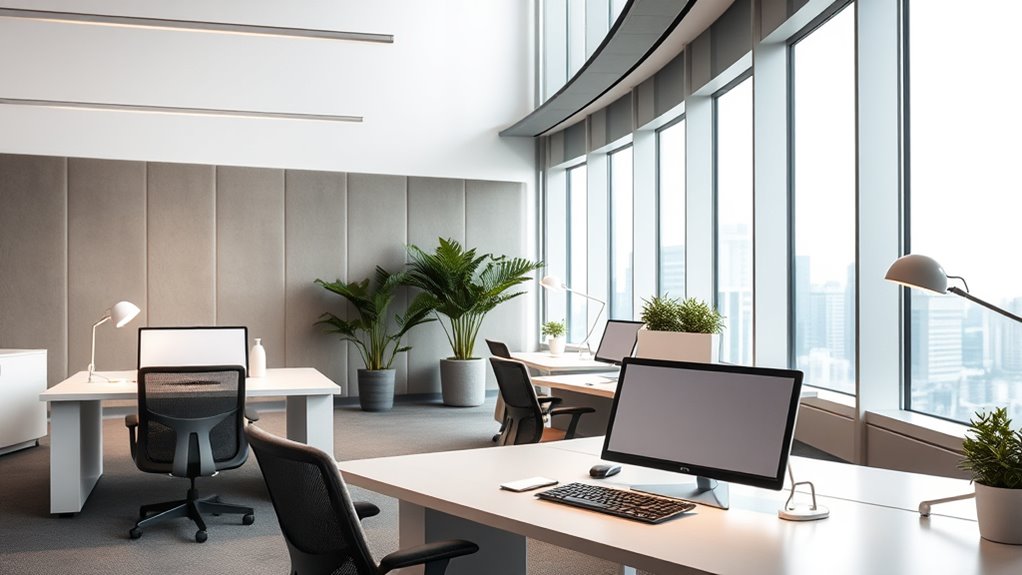
Have you ever wondered how good design can make your space both comfortable and energy-efficient? It’s a powerful combination that transforms everyday environments into places where you feel at ease while also saving on energy costs. One of the easiest ways to achieve this balance is by incorporating ergonomic furniture. When you choose ergonomic chairs, desks, and accessories, you support your body’s natural posture, reducing strain and fatigue. This not only improves your comfort during long hours of work or relaxation but also promotes better health over time. Ergonomic furniture helps prevent aches and discomfort that can come from poorly designed spaces, making your environment more inviting and functional.
Good design combines comfort and energy efficiency through ergonomic furniture and thoughtful lighting choices.
Alongside ergonomic furniture, energy saving lighting plays a vital role in optimizing your space’s efficiency. Instead of relying on traditional incandescent bulbs that waste energy and generate excess heat, consider switching to LED lighting or smart lighting systems. These alternatives consume substantially less power and can be programmed to turn off when not needed, decreasing your overall energy footprint. Proper lighting design also enhances the atmosphere of your space, making it more inviting and tailored to your activities. For example, adjustable lighting allows you to switch from bright illumination for focused work to softer tones for relaxation, all while conserving energy.
When you combine ergonomic furniture with energy saving lighting, you’re creating an environment that promotes well-being and sustainability. Think about placing your ergonomic chair at a desk that’s positioned near a window to maximize natural light during the day. Natural light not only reduces your dependence on artificial lighting but also boosts your mood and productivity. When natural light is insufficient, energy saving lighting solutions ensure you get the right amount of illumination without wasting energy. Use task lighting for specific activities, like reading or working on a computer, so you’re not lighting the entire room unnecessarily.
Furthermore, integrating these elements into your design encourages mindful consumption. You’ll find that with ergonomic furniture, you’re more comfortable and less prone to discomfort, which can improve your focus and efficiency. Meanwhile, energy saving lighting reduces your electricity bills and carbon footprint. It’s about making intentional choices that benefit both your personal comfort and the environment. By paying attention to how you light your space and supporting your body with ergonomic furniture, you create a balanced environment that’s both welcoming and sustainable. It’s a smart, straightforward way to make your space better suited to your needs, now and in the future. Incorporating air quality considerations, such as using air purifiers with HEPA filters, can further enhance your environment’s overall comfort and health benefits.
Frequently Asked Questions
How Can Smart Technology Improve Comfort and Efficiency?
Smart technology improves comfort and efficiency by allowing you to control your environment effortlessly. Smart thermostats learn your schedule, adjusting the temperature for ideal comfort and energy savings. Automated shading responds to sunlight, reducing glare and heat gain while keeping your space cozy. With these innovations, you save energy, lower costs, and enjoy a more comfortable home, all by simply adjusting settings or letting the technology adapt automatically.
What Materials Best Balance Comfort and Sustainability?
You should choose eco-friendly fabrics like organic cotton, hemp, and bamboo, which offer comfort while being sustainable. Renewable materials such as cork, reclaimed wood, and recycled metals also balance comfort with environmental benefits. These options reduce your ecological footprint without sacrificing quality, ensuring your space feels cozy and eco-conscious. By prioritizing these materials, you create a sustainable environment that promotes comfort and supports your eco-friendly values.
How Does Lighting Design Affect Energy Use and Comfort?
Lighting design markedly impacts your energy use and comfort. By maximizing natural illumination, you reduce reliance on artificial lighting, saving energy. Adjusting color temperature helps create a cozy or vibrant atmosphere, enhancing comfort. Proper placement and dimming options allow you to control brightness, further conserving energy and customizing your environment. Well-designed lighting balances efficiency with visual comfort, making your space both eco-friendly and inviting.
What Role Does Acoustics Play in Comfort?
Sound plays a huge role in comfort, with studies showing that poor acoustics can reduce productivity by up to 66%. You can improve comfort by incorporating soundproofing and acoustic panels, which absorb and block unwanted noise. These elements help create a quieter environment, reduce distractions, and promote focus. By paying attention to acoustics, you make your space more inviting and comfortable, ensuring better well-being and efficiency for everyone inside.
How Can Adaptive Furniture Enhance Efficiency?
Adaptive furniture enhances efficiency by offering modular flexibility and ergonomic support, allowing you to customize your workspace quickly. With modular pieces, you can reconfigure your environment to suit different tasks, boosting productivity. Ergonomic support ensures comfort during long work hours, reducing fatigue and discomfort. This dynamic approach helps you create a versatile, comfortable setting that promotes focus and efficiency, adjusting seamlessly to your evolving needs.
Conclusion
When designing for comfort and efficiency, it’s often believed that optimizing one naturally benefits the other. However, research shows that balancing both requires intentional choices—such as ergonomics and energy flow—that support both goals simultaneously. By prioritizing user needs and understanding the science behind human interaction with spaces, you can create environments that truly enhance well-being and productivity. Remember, a thoughtful design isn’t just about aesthetics; it’s about fostering harmony between comfort and efficiency.