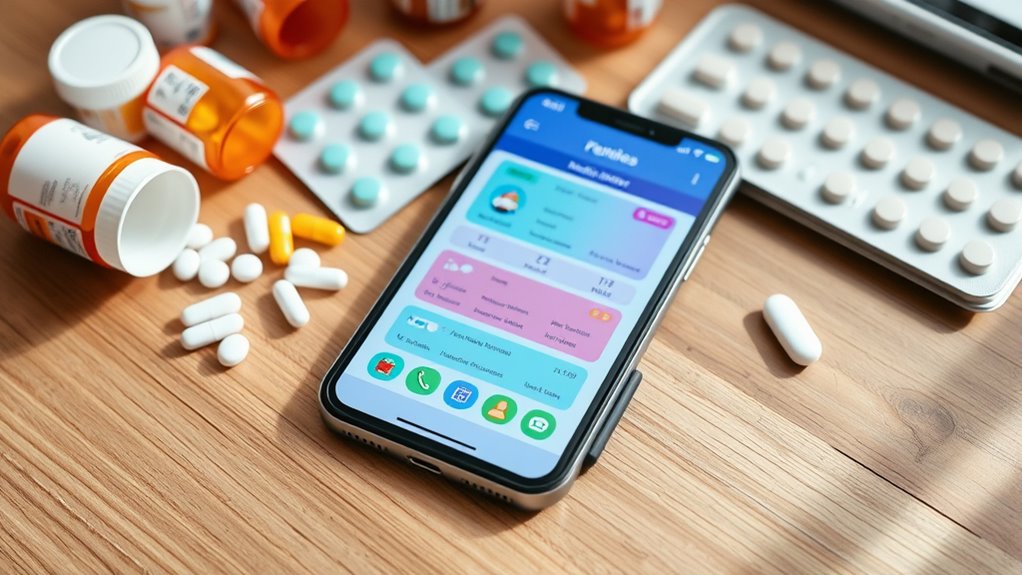

When choosing a medication management app, focus on features like customizable reminders, dosage tracking, and secure data handling to keep your health information safe. Look for an app that’s easy to navigate and works across your devices, so you can stay organized wherever you are. Refill alerts and notes for side effects add extra convenience. To find the best fit for your needs, explore options further—you’ll discover more ways to simplify your medication routine.

Turn the school run and nap time into listening time
- Thousands of audiobooks, podcasts and originals
- Listen on your phone, tablet or Echo — also offline
- Cancel anytime
Key Takeaways
- Ensure the app offers reliable pill reminder and dosage tracking features to prevent missed doses.
- Check for strong security measures and privacy policies to protect sensitive health information.
- Confirm compatibility across multiple devices and platforms for seamless access.
- Look for customizable alerts, reports, and notes to tailor the app to individual medication routines.
- Consider additional features like refill reminders and healthcare provider integration for comprehensive management.

Medication management apps have become vital tools for anyone looking to stay organized and guarantee they take their medications correctly. When selecting an app, one of the first features you’ll want to consider is the pill reminder function. This feature guarantees you never forget a dose by alerting you at the right time, whether you need to take medication multiple times a day or just once daily. A reliable pill reminder system is essential, especially if you’re managing complex medication schedules or juggling several prescriptions. It can help reduce missed doses, prevent accidental overdoses, and provide peace of mind that you’re staying on track with your health plan.
Medication apps help ensure you never miss a dose and stay on track with your health plan.
In addition to reminders, dosage tracking is a key feature to look for in a medication management app. Dosage tracking allows you to log each time you take your medication, providing a clear record of your adherence. This function is particularly advantageous if you need to monitor your medication intake for healthcare providers or personal accountability. With dosage tracking, you can see at a glance whether you’ve taken your medication for the day, week, or month, helping you identify patterns or issues early on. Some apps even generate reports that you can share with your doctor, offering valuable insights into your medication routine. Additionally, choosing an app that supports multiple device compatibility**** can ensure you stay organized whether you are using your phone, tablet, or computer, making it easier to keep track of your medication schedule across different platforms.
When choosing the right app, consider how intuitive and user-friendly it is. You don’t want an app that’s complicated or difficult to navigate, as this might discourage consistent use. Look for a clean interface with simple options to set up reminders and logs. Customizability is another important aspect—being able to set different alert tones, snooze options, or personalized schedules makes the app more tailored to your needs. Compatibility across devices is also worth checking; ideally, the app should work seamlessly on your phone, tablet, or computer, so you can access your medication information wherever you are.
Security and privacy should not be overlooked. Your health data is sensitive, so choose an app that employs strong encryption and privacy policies to protect your information. Finally, consider additional features that might be useful, such as refill reminders, notes about side effects, or integration with healthcare providers. By prioritizing these elements, you’ll be able to find a medication management app that effectively supports your health routine, keeps you organized, and guarantees you’re taking your medications safely and accurately.
As an affiliate, we earn on qualifying purchases.
Frequently Asked Questions
How Secure Is My Personal Medication Data?
Your personal medication data is generally secure, but privacy concerns do exist. Reputable apps use data encryption to safeguard your information from unauthorized access. Always check an app’s privacy policy and security features before using it. You should also enable two-factor authentication and avoid sharing sensitive details. Staying informed about how your data is stored and protected helps ensure your medication information remains private and safe.
Can the App Sync With My Healthcare Provider’s System?
Think of syncing your app with your healthcare provider’s system like linking two puzzle pieces. Many apps now support integrating electronic records, enabling secure data sharing, so your medication info stays up-to-date. However, compatibility varies; check if your provider’s system connects with the app. When it does, you get seamless updates and fewer errors, making managing medications safer and more efficient, just like fitting puzzle pieces perfectly together.
Are There Features for Managing Multiple Users or Family Members?
Yes, many medication management apps support family sharing and multiple profiles, making it easy to manage medications for everyone in your household. You can create individual profiles for each family member, set personalized reminders, and track their medication schedules separately. This feature helps you stay organized and guarantees each person receives the right doses at the right times. Look for apps that prioritize family sharing to simplify managing medications for loved ones.
What Is the Cost of Premium Features or Subscriptions?
The cost of premium features varies depending on the app, but most offer clear pricing transparency through detailed subscription plans. You can expect monthly or annual fees, often ranging from $5 to $15 per month, with discounts for yearly subscriptions. These plans typically include advanced features like multi-user management, reminders, and detailed reports. Always review the app’s subscription options to choose the plan that best fits your needs and budget.
How Often Are Medication Databases Updated?
Medication databases are usually updated regularly, often monthly or quarterly, to guarantee medication accuracy. These updates include new drug information, dosage changes, and safety alerts. You should check the app’s update schedule to stay informed about the latest database updates. Regular updates help you manage your medications safely, so choosing an app with frequent database updates is essential for maintaining accurate medication records and avoiding potential errors.
Conclusion
Ultimately, choosing the right medication management app simplifies your schedule, secures your health, and supports your wellness journey. By balancing basic features with personalized preferences, you create a clear, convenient, and confident course toward consistent care. Remember, your diligent decision makes a difference—delivering peace of mind, promoting proper pills, and paving a path to healthier habits. Stay selective, stay savvy, and let your chosen app serve as your steadfast, supportive sidekick every step of the way.
Halloween Picks
halloween
As an affiliate, we earn on qualifying purchases.