
One of the most overlooked maintenance jobs in laundry rooms is regularly inspecting and cleaning the dryer vent and lint trap. Lint buildup can cause fire hazards, reduce dryer efficiency, and increase energy bills. Many forget to check these areas often enough, risking costly repairs or safety issues. Keeping vents clear also guarantees proper airflow and prolongs appliance lifespan. Stay tuned to discover more simple steps that can keep your laundry space safe and running smoothly.
Key Takeaways
- Regularly cleaning and inspecting dryer vents to prevent lint buildup and fire hazards.
- Ensuring proper ventilation and airflow to reduce moisture and mold growth.
- Checking and maintaining hoses for leaks or cracks to avoid water damage.
- Organizing storage areas to prevent dust, lint, and detergent residue accumulation.
- Routine cleaning of lint traps and detergent dispensers to maintain appliance efficiency.
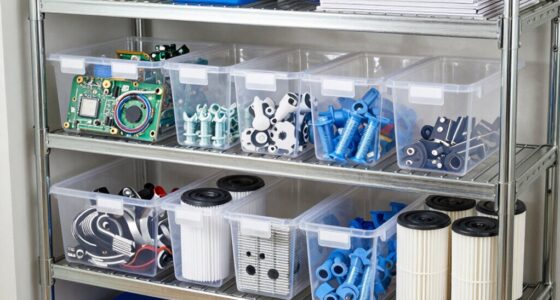
Have you ever wondered what it takes to keep laundry rooms running smoothly? It’s not just about tossing clothes in the washer or dryer; it’s about maintaining a system that works efficiently and reliably. One of the most overlooked maintenance jobs in laundry rooms is ensuring proper ventilation and air circulation. While it might seem minor, neglecting this aspect can lead to issues like mold growth, unpleasant odors, and even equipment breakdowns. Proper ventilation helps remove excess moisture and heat, which is essential when using eco friendly detergents that, while better for the environment, sometimes leave behind residues that can cling to surfaces if not properly ventilated. Additionally, maintaining adequate airflow can help mitigate the buildup of dust, lint, and detergent residues that can impair machinery performance. Keeping your laundry room organized plays a key role in maintaining its overall health. When shelves, hampers, and storage areas are cluttered, it becomes easier for dust, lint, and detergent residues to accumulate in places that are hard to reach. This buildup can cause machinery to work harder, increasing the risk of breakdowns and reducing efficiency. Regularly checking and tidying up your laundry room isn’t just about aesthetics; it’s about preventing problems before they start. A well-organized space makes it easier to identify leaks, worn-out hoses, or clogged vents, which are often overlooked but essential to keep an eye on. Routine ventilation maintenance is crucial for preventing moisture buildup and maintaining indoor air quality. In fact, neglecting ventilation systems can lead to long-term health issues from poor indoor air quality. Furthermore, ensuring proper air circulation can also help control humidity levels, which is vital for preventing mold and mildew growth in damp areas.
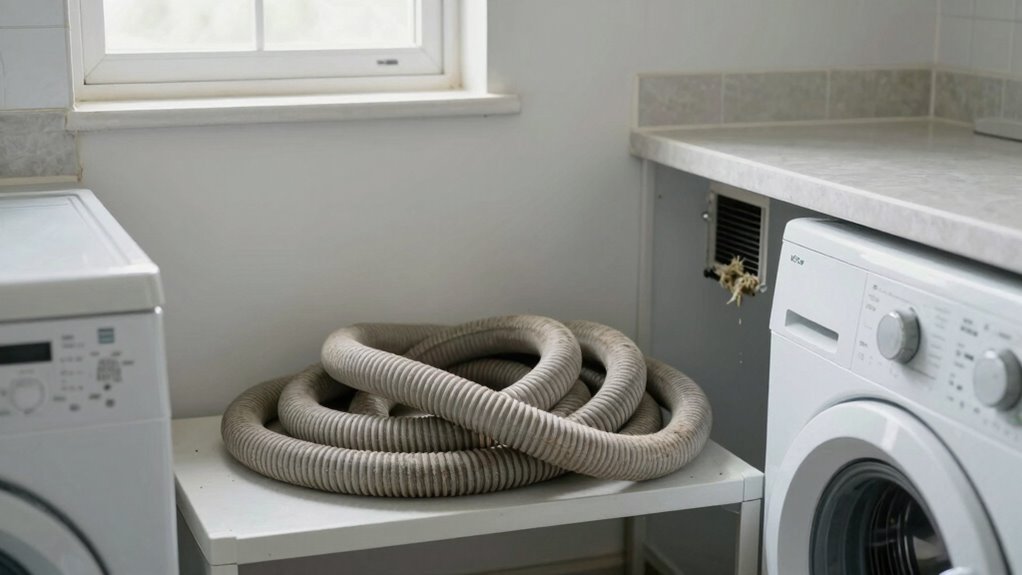
Another often ignored aspect is the routine cleaning of lint traps and dryer vents. Lint buildup is a fire hazard and reduces the efficiency of your dryer, making it work longer and consume more energy. When you clean lint traps frequently and ensure vents are clear, you extend the lifespan of your appliances and keep your laundry room safer. This task might seem simple, but it’s imperative to prevent costly repairs down the line. Regular inspections of hoses and vents also help ensure proper airflow and reduce fire risks.
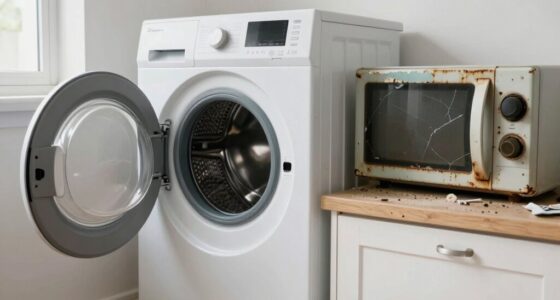
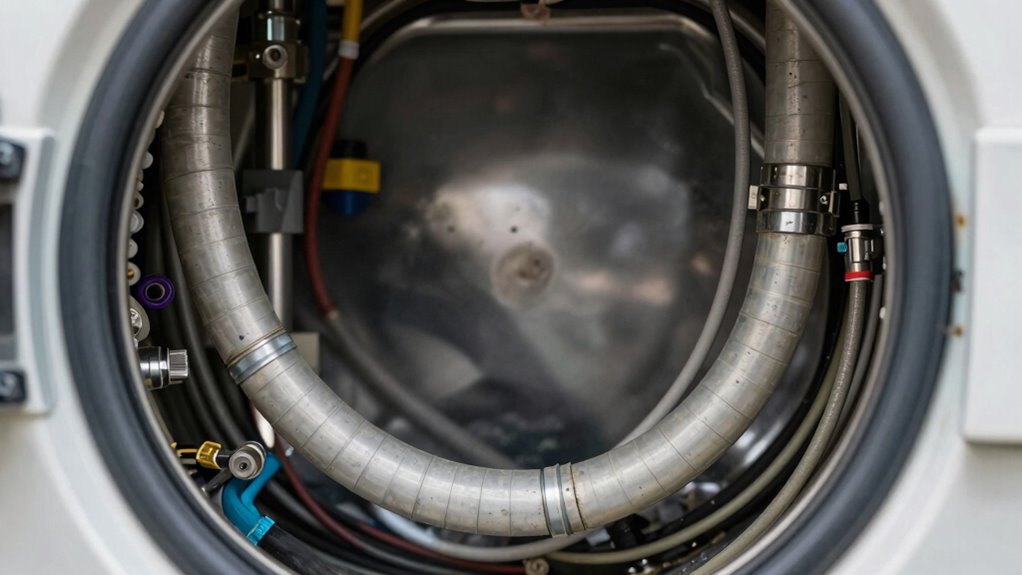
In addition, regularly inspecting and maintaining your washing machine and dryer prevents small issues from escalating. Check hoses for cracks or leaks, clean the detergent dispensers, and run maintenance cycles as recommended by the manufacturer. These steps ensure your appliances run smoothly, especially when using eco friendly detergents that might require different cleaning routines to prevent buildup. Proper ventilation and routine maintenance are vital for a safe and efficient laundry environment.
Frequently Asked Questions
How Often Should the Laundry Room Ventilation System Be Inspected?
You should inspect your laundry room ventilation system at least once a year to guarantee ideal airflow and ventilation efficiency. Regular inspections help identify blockages or buildup that could hinder airflow, reducing the system’s effectiveness. By maintaining proper ventilation, you prevent mold, odors, and moisture damage, keeping your laundry area safe and efficient. Don’t forget to clean vents and filters during these inspections to maximize airflow and prolong your system’s lifespan.
What Are Signs of a Clogged Dryer Vent?
You notice your clothes take longer to dry, and the dryer feels hotter than usual—that’s a sign of a clogged dryer vent. You might also see lint buildup around the vent opening or smell a burning odor during use. These signs threaten dryer safety and indicate it’s time for vent cleaning. Regular inspections and cleaning keep your appliance running efficiently, prevent fire hazards, and save you money in the long run.
Can I Clean the Washing Machine Filter Myself?
Yes, you can definitely handle DIY cleaning of your washing machine filter. Regular filter maintenance helps your machine run efficiently and prevents clogs. Start by unplugging the machine, locate the filter—usually at the front bottom—and carefully remove it. Clean out any lint or debris with a soft brush or cloth, then replace the filter securely. Doing this routinely keeps your washer in top shape and extends its lifespan.
What Safety Precautions Are Necessary During Maintenance?
You might think laundry maintenance is simple, but safety’s essential. Always wear personal protective equipment like gloves and goggles to prevent injuries. Guarantee electrical safety by unplugging machines before starting work, and avoid working on appliances with wet hands. Keep your workspace dry and well-lit, and follow manufacturer instructions carefully. These precautions protect you from electrical hazards and other injuries, making your maintenance safe and effective.
How Does Regular Maintenance Extend Laundry Machine Lifespan?
Regular maintenance keeps your laundry machine running smoothly, which directly extends its lifespan. By cleaning filters, checking hoses, and inspecting parts, you improve energy efficiency, reducing energy consumption. This not only prevents costly breakdowns but also results in significant cost savings over time. When you stay proactive with maintenance, your laundry machine operates efficiently longer, saving you money and ensuring reliable performance with less downtime.
Conclusion
Don’t let this sneaky maintenance task slip through your fingers like a whisper in the wind. Giving your dryer vent a quick cleanup is the secret handshake that keeps your laundry room running smoothly, preventing fires and saving energy. Think of it as giving your appliance a breath of fresh air — a simple gesture that shields your home from chaos. Stay vigilant, and your laundry day will remain a breeze, not a storm.