
You should consider repairing your appliance if it’s relatively new, in good condition, and repair costs are low compared to buying new. If it’s over a decade old, frequently breaking down, or repairs are costly, replacing might be smarter. Also, assess energy efficiency; newer models often save money long-term. When repairs are just a temporary fix or not worth the expense, it’s better to replace. Keep exploring to discover more tips on making the best decision.
Key Takeaways
- Consider repair costs versus the price of a new, energy-efficient appliance to determine economic viability.
- An appliance nearing or exceeding 10-15 years may be less cost-effective to repair than replace.
- If repairs are frequent or costly, replacing the appliance offers better reliability and less stress.
- When warranty coverage is valid and repairs are inexpensive, fixing the appliance can be practical.
- Upgrading to energy-efficient models reduces long-term costs and environmental impact compared to repairing outdated appliances.
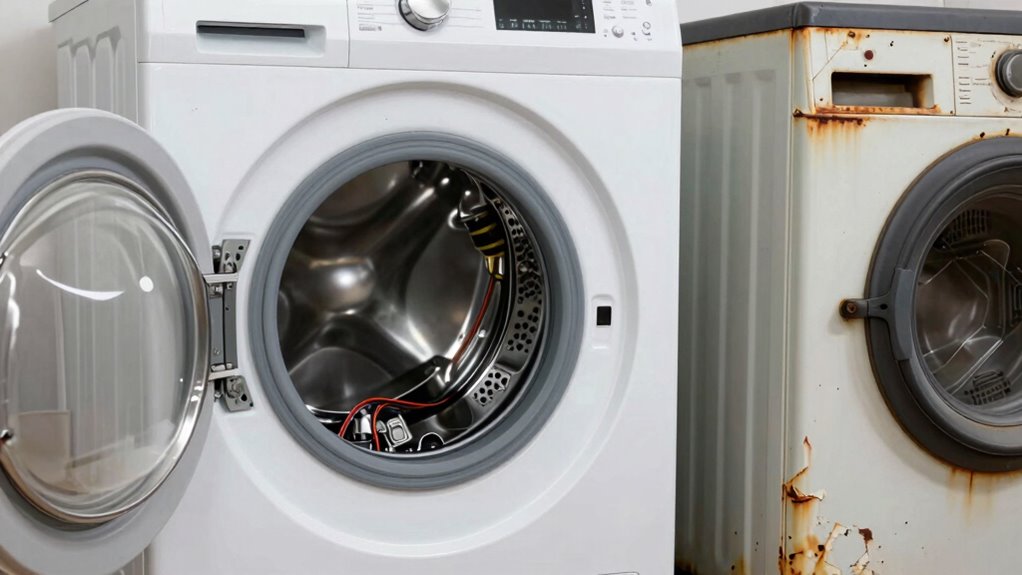
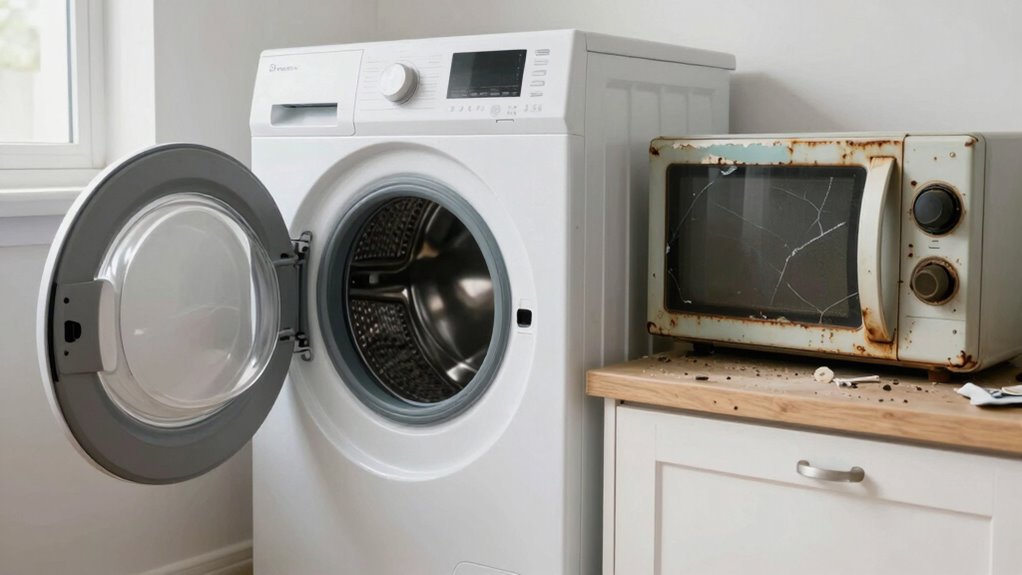
Deciding whether to repair or replace an appliance can be challenging, especially when you’re unsure if it’s worth investing in repairs or if it’s already at the end of its lifespan. One of your first considerations should be energy efficiency. Older appliances tend to consume more energy, which can considerably increase your utility bills over time. If your appliance is outdated and inefficient, replacing it with a newer, energy-efficient model might save you money in the long run. Modern appliances often come with advanced features designed to reduce energy consumption, which can make a big difference in your monthly costs and your environmental footprint.
Another vital factor is warranty coverage. When an appliance is still under warranty, repairs might be free or notably cheaper, making it more cost-effective to fix rather than replace. Check the warranty details carefully, as coverage can vary based on the manufacturer and the type of appliance. If the warranty is still valid and the repair costs are within a reasonable range, repairing the appliance could be the smarter choice. However, once the warranty expires, repair costs tend to increase, and you’ll need to weigh whether those costs are justified compared to the price of a new device.
You should also evaluate the repair itself. If the repair is minor and the appliance is relatively new, fixing it can extend its life and delay the need for a costly replacement. Conversely, if the appliance has multiple issues or is over a decade old, repairs might only be a temporary fix. In such cases, investing in a new appliance could be more reliable and less stressful in the long term. Additionally, consider the potential downtime during repairs. If your appliance is essential for daily tasks, frequent breakdowns can disrupt your routine. A newer model might offer more durability and less hassle.
Cost also plays a role. Sometimes, repairs cost nearly as much as a new appliance, especially when parts are hard to find or labor costs are high. In those situations, replacing could be more economical. technological advancements have made newer models more durable and energy-efficient, which can influence your decision. Moreover, assessing the overall cost-benefit of repairing versus replacing can help clarify your options. It’s important to consider the potential environmental impact of your choice, as repairs generally produce less waste than disposal and manufacturing new appliances. Additionally, assessing the expected lifespan of the new appliance compared to repairing the current one can help ensure you’re making the most informed decision. Ultimately, you need to balance the immediate repair costs, long-term savings, energy efficiency, warranty coverage, and how much longer you expect the appliance to serve you effectively. Making this assessment carefully will help you decide whether to repair or replace, ensuring you get the best value for your money.

Frigidaire, 2 Door Apartment Size Refrigerator/Freezer Combo, 7.5 cu ft, Platinum Series, Stainless, 23" D x 21.5" W x 55.5" H
- Spacious 7.5 cu ft Capacity: Generous storage for essentials
- Removable Glass Shelves: Easy to organize and clean
- Transparent Crisper Drawer: Keeps produce fresh and visible
As an affiliate, we earn on qualifying purchases.
As an affiliate, we earn on qualifying purchases.
Frequently Asked Questions
How Can I Tell if My Appliance Is Worth Repairing?
You can tell if your appliance is worth repairing by considering its energy efficiency and potential cost savings. If repairs are minor and will restore energy efficiency, it’s often worth fixing, saving you money long-term. However, if the appliance is outdated or repairs are costly, replacing it might be more economical. Think about the age, repair costs, and how much energy it consumes to make an informed decision.
What Are Hidden Signs Indicating an Appliance Is Beyond Repair?
You’ll notice signs like frequent breakdowns, costly repairs, or strange noises, which suggest your appliance is beyond repair. If it’s near the end of its typical appliance lifespan, repairs may no longer be worth it. Don’t fall for repair myths that suggest fixing older models is always possible; sometimes, replacing is more cost-effective. When repairs exceed half the cost of a new appliance, it’s usually time to replace.
How Do Repair Costs Compare to Replacement Expenses?
You’ll find that repair costs often add up quickly, especially with older appliances, making replacement more cost-effective. Conduct a cost analysis to compare repair expenses against the price of a new unit. A longevity comparison helps determine if repairs will extend your appliance’s life sufficiently. Usually, if repairs cost more than half the price of a new appliance or won’t provide long-term benefits, replacement is the smarter choice.
Are There Environmental Impacts of Repairing Versus Replacing Appliances?
Repairing appliances generally has fewer environmental impacts than replacing them. It reduces waste sent to landfills and conserves resources by extending the appliance’s life. Recycling programs help properly dispose of old parts, and using eco-friendly materials during repairs minimizes pollution. When you choose to repair instead of replace, you support sustainable practices, lower energy consumption, and lessen the environmental footprint associated with manufacturing new appliances.
What Warranties or Guarantees Are Available for Appliance Repairs?
Back in the day, you’d expect a handshake to seal a deal, but today, warranties matter more. You can often get extended warranties or repair guarantees that cover parts and labor for a set period. Always ask your repair service about these options—they offer peace of mind and protect your investment. Some companies even provide specific guarantees on their repairs, so you know you’re covered if issues reoccur shortly after service.
Conclusion
Remember, a stitch in time saves nine. If your appliance is repairable, it’s often worth fixing—saving money and reducing waste. But if it’s truly at the end of its life, replacing it might be the smarter choice. Weigh the repair costs against a new appliance’s benefits. Sometimes, holding onto the old isn’t worth the trouble, and letting go makes room for better, more efficient models. Trust your judgment—know when to repair and when to replace.