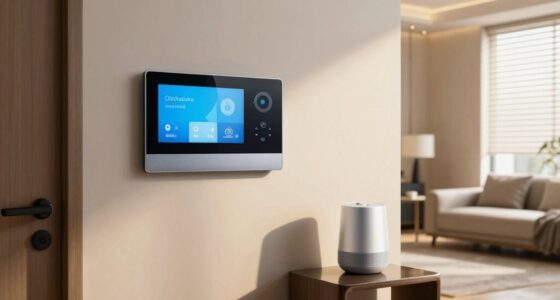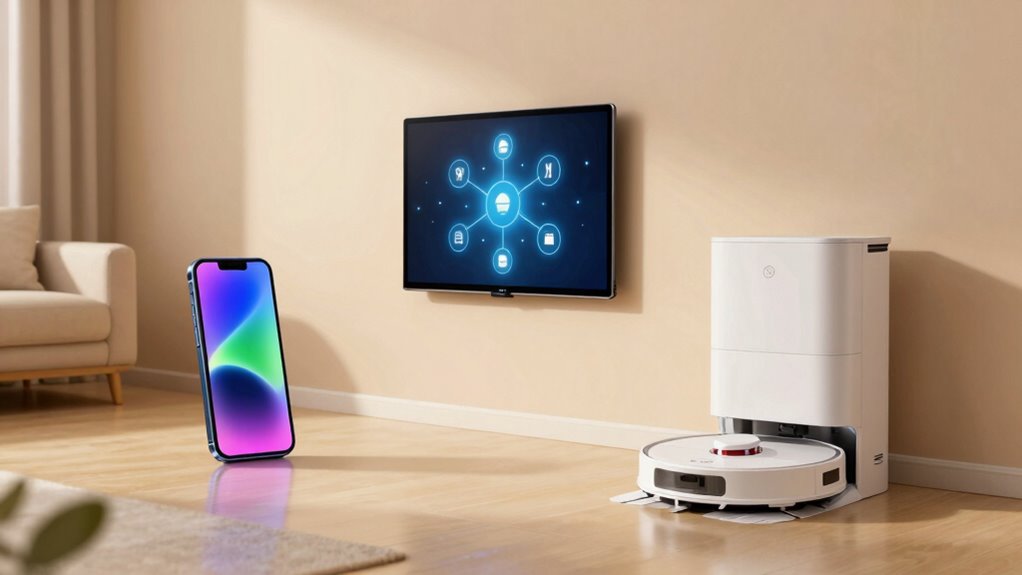

Smart devices are user-friendly gadgets that give you quick access to settings and information. Connected systems link multiple devices or platforms via the internet, allowing monitoring and management across different units. Truly automated systems operate independently with minimal human input, often using AI and algorithms for decision-making. The differences between these levels of technology are important to understand, and exploring further will help you see how they shape your daily life and industry innovations.
Key Takeaways
- Smart devices are user-friendly tools that provide easy access to settings and information but lack extensive automation.
- Connected systems link multiple devices or platforms via the internet to monitor and manage them collectively.
- True automation operates independently with minimal human intervention, often leveraging AI and advanced algorithms.
- The evolution from smart to fully automated systems involves increasing complexity, decision-making capabilities, and reduced user control.
- User interfaces influence how users interact with and control each level, impacting security and ease of use.
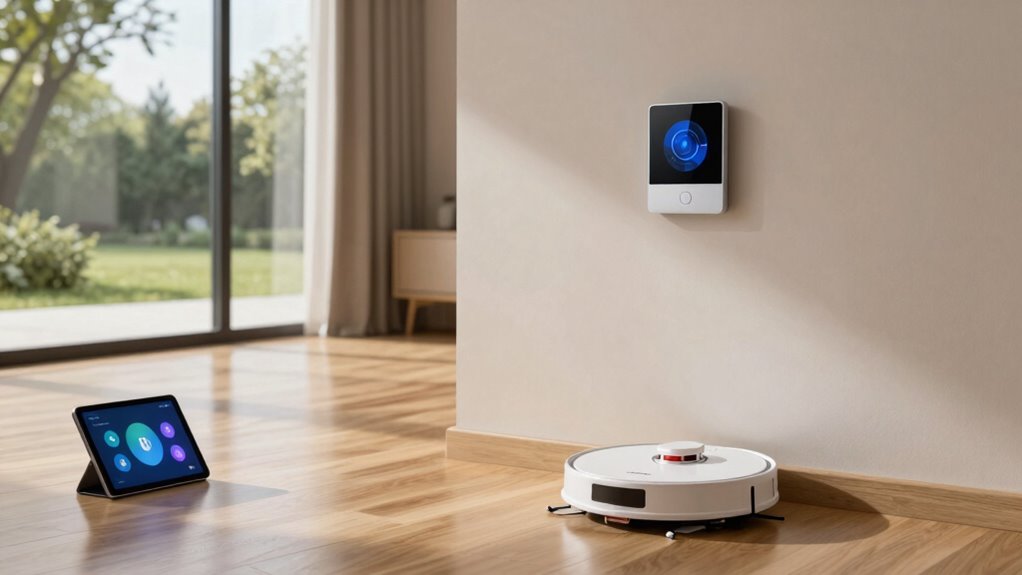
In today’s rapidly evolving technological landscape, it’s easy to confuse smart devices, connected systems, and true automation. These terms often get used interchangeably, but they represent vastly different levels of technological sophistication. When exploring these concepts, understanding the role of the user interface becomes crucial. A user interface is what you interact with—whether it’s a touchscreen, voice command, or app—and it shapes your experience with the device or system. With smart devices, the interface is designed to be user-friendly, providing easy access to settings and information. However, a simple user interface doesn’t necessarily mean the device is secure; data privacy becomes a significant concern, especially when these devices collect personal data to function effectively. user interface design plays a critical role in how effectively and securely these systems operate. Connected systems take this a step further by linking multiple devices or platforms, often via the internet. Here, the user interface might involve dashboards or control panels that allow you to monitor and manage several devices from one place. While this connectivity offers convenience, it also amplifies data privacy challenges. The more systems you connect, the more potential vulnerabilities arise—making it essential to understand how your data is stored, shared, and protected. You might find yourself comfortable managing a smart home, but without proper data privacy measures, your personal information could be exposed or misused. Additionally, the integration of security protocols becomes increasingly important as connectivity expands to prevent unauthorized access. As these systems grow more complex, ongoing updates and cybersecurity measures are vital to maintaining safety. True automation, on the other hand, involves systems that operate independently with minimal human intervention. These systems leverage sophisticated algorithms and artificial intelligence to adapt and respond to changing conditions without your constant input. In this scenario, the user interface often shifts from direct control to passive oversight, where you set initial parameters and then let the system run autonomously. As these systems become more advanced, understanding machine learning can help you appreciate how decisions are made behind the scenes. Because these systems make decisions on their own, data privacy is even more critical. You need assurances that the system’s data handling complies with privacy standards, especially since automated systems often process large amounts of sensitive information to optimize performance. Recognizing these distinctions helps you make more informed choices about the technology you adopt, balancing ease of use with security and privacy considerations, especially as automation technology continues to evolve rapidly.
Frequently Asked Questions
How Do These Technologies Impact Data Privacy?
These technologies considerably impact your data privacy by collecting and sharing vast amounts of information. You need to prioritize data security because sensitive data can be vulnerable to breaches. Privacy regulations help protect your rights by setting standards for data handling. As these technologies evolve, staying informed about your privacy rights and ensuring compliance with regulations becomes essential to safeguard your personal data from misuse and unauthorized access.
What Industries Benefit Most From Automation?
They say, “The future belongs to those who innovate.” You’ll find industries like manufacturing, healthcare, and logistics benefit most from automation. Industry-specific applications streamline processes, increase efficiency, and reduce costs. Technological integration allows these sectors to optimize operations, improve accuracy, and enhance customer experience. Embracing automation transforms traditional workflows, making businesses more competitive and adaptable in a rapidly evolving landscape.
Are There Ethical Concerns With Automation?
Yes, automation raises ethical dilemmas and societal implications. You might worry about job displacement, privacy issues, or decision-making transparency. Automation can create economic disparities and challenge existing norms, making it essential to contemplate its broader impact. As you adopt these technologies, you should weigh potential benefits against ethical concerns, ensuring responsible use that promotes fairness, respects human rights, and minimizes unintended negative consequences in society.
How Cost-Effective Is Implementing These Systems?
You might find that implementing smart, connected, and automated systems can be quite cost-effective when you do a thorough cost analysis and ROI evaluation. While upfront expenses can seem high, the long-term savings from increased efficiency, reduced errors, and minimized labor costs often outweigh initial investments. Coincidentally, many organizations discover that automation pays for itself faster than they expected, making it a smart financial move in the long run.
What Skills Are Needed to Develop These Technologies?
To develop these technologies, you need skills in AI integration and software development. You should focus on programming languages like Python, machine learning, and data analysis. Understanding IoT systems and network security is also essential. By actively engaging in skill development through courses, hands-on projects, and staying updated on industry trends, you’ll be better equipped to create innovative smart, connected, and automated solutions.
Conclusion
Understanding the difference between smart, connected, and truly automated systems helps you see how technology is transforming your world. Did you know that by 2025, it’s estimated that there will be over 75 billion connected devices globally? This rapid growth highlights the importance of distinguishing between these concepts. Embracing true automation means more efficiency and innovation, so stay informed and ready to adapt as technology continues to evolve around you.