Step-free thresholds are a simple upgrade that can transform your space by removing barriers and making entrances accessible for everyone. They eliminate steps, lips, and other obstacles, creating smooth, safe, and seamless entryways. Whether for a home, business, or public building, these upgrades promote safety, independence, and inclusivity. By implementing step-free thresholds, you’re making a meaningful difference—continue to discover how this simple change can truly change everything.
Key Takeaways
- Step-free thresholds eliminate physical barriers, ensuring smooth, accessible entry for all users.
- They enhance safety by reducing trip hazards and facilitating easier movement of objects and equipment.
- Installing step-free thresholds is cost-effective, often requiring minimal modifications during building upgrades.
- They promote inclusivity, supporting legal compliance and demonstrating commitment to accessible design.
- Overall, they create welcoming, seamless environments that benefit everyone regardless of mobility.
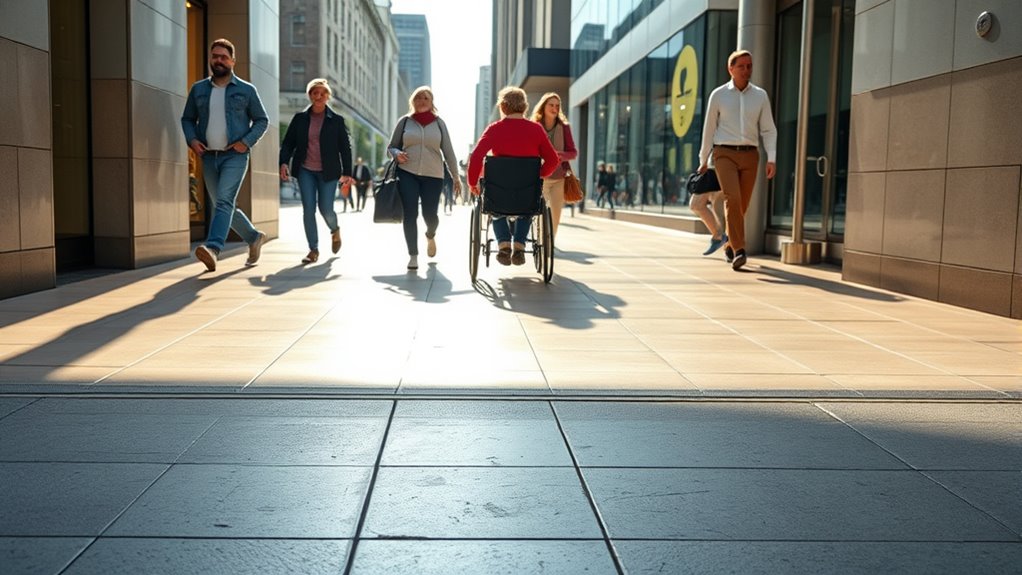
Have you ever struggled with uneven or raised thresholds that make entering buildings difficult? If so, you’re not alone. Many people face obstacles every day because of poorly designed doorways. Traditional thresholds often have a step or a lip that can be a barrier for those with mobility challenges, parents pushing strollers, or anyone carrying heavy loads. These bumps not only cause inconvenience but also pose safety risks, increasing the chances of trips and falls. Fortunately, there’s a simple yet powerful solution: step-free thresholds. They’re transforming the way buildings are accessed, creating a more inclusive environment that benefits everyone.
Step-free thresholds are designed to eliminate the height difference at doorways, creating a smooth, continuous surface from outside to inside. Installing these thresholds involves removing or modifying existing steps or lips, replacing them with a gentle slope that’s easy to navigate. This upgrade might seem minor, but it has a profound impact. By removing physical barriers, you make it easier for wheelchair users, people with strollers, or those with limited mobility to enter and exit buildings independently. It’s more than just convenience—it’s a step toward equality and accessibility, ensuring no one is left behind due to architectural design.
The process of upgrading to step-free thresholds is straightforward and often cost-effective. Many buildings, especially older ones, can be modified with minimal disruption. This might involve adding a ramped transition or a low-profile ramp integrated seamlessly into the existing floor. In new constructions, incorporating step-free thresholds is a standard part of accessible design, ensuring compliance with regulations and broader inclusivity. Not only do these upgrades improve access, but they also enhance the overall aesthetic of a building. Modern ramped thresholds can be sleek and unobtrusive, blending seamlessly with architectural styles while maintaining functionality.
The benefits go beyond accessibility. Step-free thresholds can improve safety by reducing trip hazards and making it easier to move large objects or equipment in and out of buildings. They also promote independence, allowing individuals to navigate spaces without assistance or concern. For business owners and facility managers, investing in such upgrades can demonstrate a commitment to inclusivity, potentially attracting a wider range of customers or clients. Additionally, many regions now require accessible entrances by law, making these upgrades not just a moral choice but a legal one.
In the end, step-free thresholds are more than just a practical upgrade; they’re an essential step toward creating environments that welcome everyone. Whether you’re an architect, building owner, or individual, recognizing the importance of accessible entrances can lead to more inclusive spaces where everyone can move freely and confidently. It’s a simple change with a big impact—one that truly changes everything.
Frequently Asked Questions
How Do Step-Free Thresholds Impact Property Values?
Step-free thresholds can substantially boost your property’s value by making it more accessible and appealing to a wider range of buyers, including those with mobility challenges. When you upgrade to step-free entry, you create an inclusive home that stands out in the market. This accessibility feature increases desirability, potentially leading to quicker sales and higher offers, ultimately enhancing your property’s overall worth.
Are Step-Free Thresholds Suitable for All Types of Buildings?
Step-free thresholds are suitable for most buildings, especially those open to the public or used by people with mobility challenges. However, they might not work well for historic structures or buildings with specific architectural features that make installing ramps difficult. You should evaluate each building’s design and purpose to determine if a step-free threshold can be implemented without compromising safety or aesthetics. Consulting with accessibility experts can help you find the best solution.
What Are the Costs Associated With Installing Step-Free Thresholds?
Installing step-free thresholds costs can feel like a small investment for such a transformative upgrade. Typically, expenses include materials, labor, and any necessary modifications to existing structures, which vary based on building size and complexity. You might spend a few hundred to several thousand dollars. While it’s an upfront cost, the benefits of improved accessibility and inclusivity make it well worth the investment, changing lives in ways you can’t imagine.
How Long Does It Take to Install Step-Free Thresholds?
Installing step-free thresholds typically takes a few hours to a day, depending on the project’s complexity. You’ll notice quick progress, especially if the existing thresholds are simple to replace. Factors like door frame modifications or flooring adjustments can extend the time. Make sure you plan for some disruption, but overall, the process is usually swift, making your space more accessible without lengthy delays.
Are There Government Grants or Funding Available for Accessibility Upgrades?
Yes, you can often access government grants or funding for accessibility upgrades. You might find programs tailored for homeowners, landlords, or businesses aiming to improve accessibility. Check local government websites or contact relevant agencies, as funding opportunities vary by region and eligibility criteria. Applying is straightforward, and these grants can markedly reduce costs, making it easier for you to install step-free thresholds and create more inclusive spaces.
Conclusion
So, you might think step-free thresholds are just a small upgrade, but they actually change everything—except, of course, for the fact that they still haven’t reached every station. Ironically, the very improvements meant to make travel easier often highlight just how much more still needs fixing. You might wonder if, someday, we’ll truly have truly accessible stations everywhere. Until then, enjoy the progress—it’s the best thing we’ve got, for now.