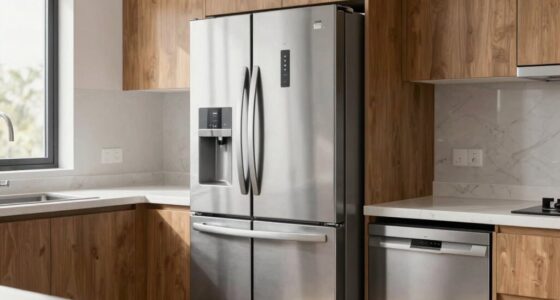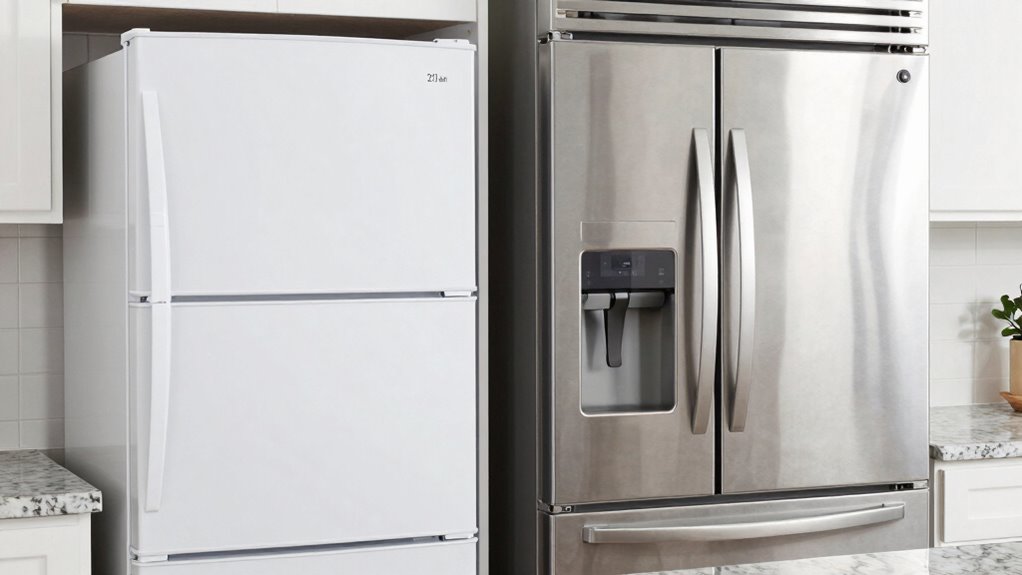

You’ll find that residential appliances are designed for home use, focusing on convenience and energy efficiency, making them smaller and easier to handle. Commercial-style appliances are built for heavy-duty tasks in busy settings, with larger sizes and stronger materials to withstand constant use. They often consume more energy but offer higher capacity and durability. If you want to understand how these differences impact performance and cost, keep exploring the details below.

Turn the school run and nap time into listening time
- Thousands of audiobooks, podcasts and originals
- Listen on your phone, tablet or Echo — also offline
- Cancel anytime
Key Takeaways
- Residential appliances prioritize simplicity, energy efficiency, and ease of use, while commercial-style appliances emphasize durability and capacity for heavy-duty tasks.
- Commercial appliances are larger, more robust, and built with industrial-grade materials to withstand continuous, high-volume use.
- Residential models require less maintenance and are easier to repair, whereas commercial appliances need regular professional servicing.
- Commercial appliances typically have higher upfront costs and ongoing energy expenses due to their size and performance.
- Commercial-style appliances offer a balance, combining the aesthetic of residential designs with some features of commercial durability.

Whether you’re outfitting a home or a business, appliances play an essential role in daily operations. They help you cook, clean, and keep everything running smoothly. When choosing between residential and commercial-style appliances, you’ll notice differences in size, durability, and performance. Residential appliances are designed for home use, focusing on convenience and energy efficiency. They typically have lower power consumption, which helps you save on electricity bills. These appliances often come with simpler maintenance requirements, making them easier for everyday users to manage. On the other hand, commercial appliances are built to handle heavy-duty tasks in busy environments like restaurants or laundries. They’re larger, more robust, and designed for continuous operation, which means they tend to consume more energy but are optimized for high performance.
One of the key distinctions lies in their energy efficiency and maintenance requirements. Commercial appliances often prioritize durability and capacity over energy efficiency, which can mean higher utility costs. However, many newer models incorporate energy-saving features to mitigate this. When it comes to maintenance requirements, residential appliances usually need less frequent servicing and are easier to repair, thanks to their smaller size and simpler mechanisms. They’re also more accessible, allowing you to perform basic maintenance without specialized tools or knowledge. Commercial appliances, however, demand more regular upkeep and often require professional service to ensure they stay in top shape. Their complexity and size mean that maintenance is more involved and potentially more costly but necessary to keep up with high-volume use. Additionally, commercial appliances are often built with industrial-grade materials to withstand prolonged use and harsh conditions. This emphasis on durability ensures they remain effective over long periods, even under demanding circumstances. Furthermore, understanding appliance design and usage can help you identify which features are most suitable for your specific environment and needs.
Choosing the right appliance depends on your needs. If you’re outfitting a home, you’ll want appliances that are energy-efficient, reliable, and easy to maintain. You might opt for models with energy-saving features to reduce ongoing costs and simplify maintenance routines. For a commercial setting, durability and capacity are critical; you need appliances that can handle continuous use without breaking down. While they may consume more energy and require more maintenance, their robustness and efficiency in high-demand environments make them the better choice. Ultimately, understanding these differences helps you make informed decisions that balance upfront costs, ongoing energy expenses, and maintenance efforts, ensuring your appliances support your operations effectively and sustainably.
residential energy-efficient dishwasher
As an affiliate, we earn on qualifying purchases.
As an affiliate, we earn on qualifying purchases.
Frequently Asked Questions
Are Commercial Appliances More Energy-Efficient Than Residential Ones?
Commercial appliances typically have higher energy consumption but are designed for greater appliance efficiency, making them more durable and capable of handling continuous use. While they might use more power per hour, their efficiency often means they operate more effectively over time. So, if you’re considering energy consumption, commercial appliances can be more efficient in the long run, especially in high-volume settings where durability and performance matter most.
Can Residential Appliances Be Used for Commercial Purposes?
Yes, you can use residential appliances for commercial purposes, but keep in mind appliance compatibility and durability. Home kitchen appliances are designed for lower usage and might not withstand constant operation in a commercial setting. If your business requires heavy-duty performance, investing in commercial appliances is smarter. However, for light, infrequent use, residential appliances can work temporarily, but they may wear out faster or lack necessary features for commercial tasks.
How Long Do Commercial Appliances Typically Last?
You’ll be amazed at how commercial appliances outlast residential ones—often enduring 10 to 15 years, sometimes even longer! Their incredible appliance lifespan is thanks to durability factors like heavy-duty components and rigorous testing. These machines are built to withstand constant use, making them a smart investment for busy environments. So, if you’re looking for longevity, commercial appliances are your best bet—they’re designed to perform under pressure and keep going strong.
Do Residential Appliances Require Special Maintenance?
Residential appliances generally don’t require special maintenance beyond regular cleaning and inspection. To maximize their appliance lifespan, you should follow the manufacturer’s recommended maintenance frequency, like cleaning filters or checking connections. While commercial appliances might need more specialized upkeep due to their heavy use, residential ones are designed for standard household use, making routine maintenance simple and straightforward, ensuring they stay efficient and last longer.
Are Commercial Appliances More Expensive to Repair?
Like a finely tuned race car, commercial appliances are built for endurance, but their repair costs can be steeper. You’ll find that repair cost factors, such as complexity and durability, often make commercial repairs more expensive than residential ones. While they’re more durable, when repairs are needed, you might pay a premium because parts and specialized labor tend to be pricier, reflecting their higher-grade build and industrial standards.
Conclusion
In the battle between residential and commercial appliances, understanding their differences helps you choose what’s best for your needs. Residential appliances bring comfort and style to your home, while commercial ones are built tough to handle the busiest days. Remember, choosing the right appliances can make your life easier and more efficient—like having a superhero on your side. So, select wisely, and watch your space transform into a powerhouse of performance and convenience!
Fall Picks
fall essentials
As an affiliate, we earn on qualifying purchases.