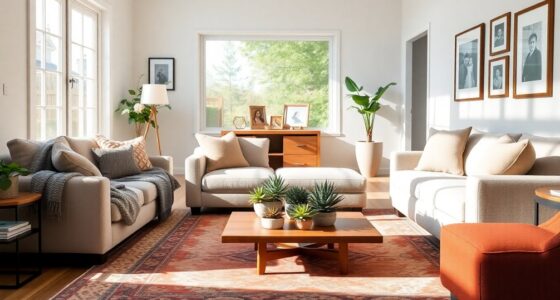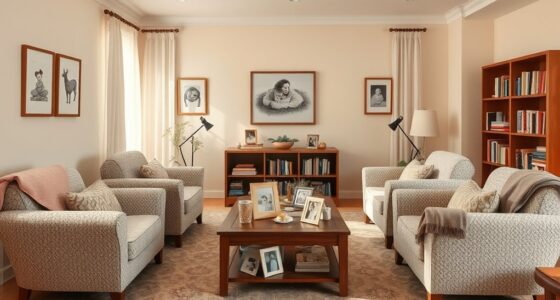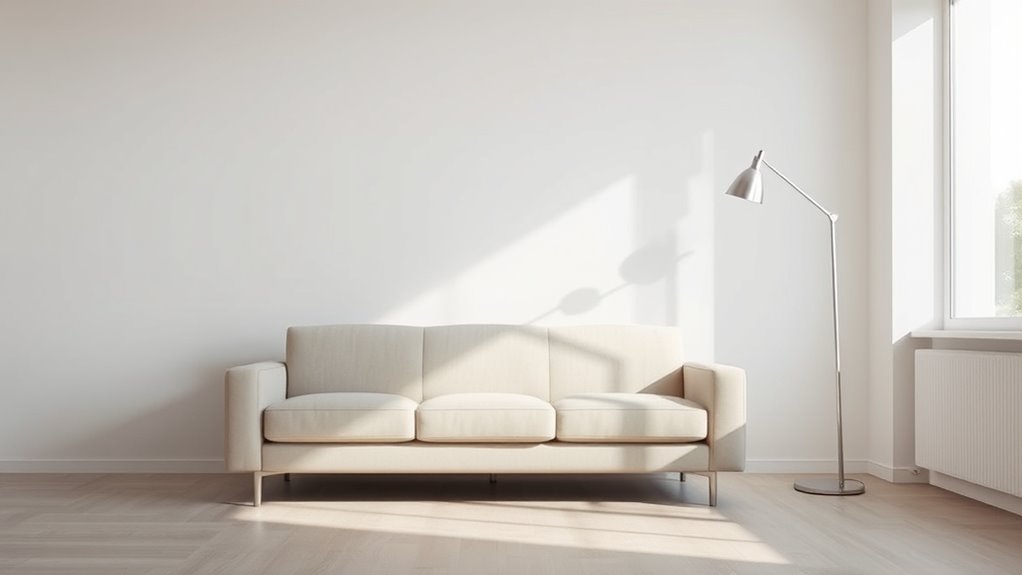

Choosing minimalist décor helps create open, clutter-free spaces that make navigation easier and reduce hazards like tripping or falling. Opt for space-saving furniture with multi-purpose functions and keep surfaces clear by using built-in storage solutions. Use neutral colors to promote calmness and improve visibility of potential dangers. Emphasizing natural light and simple lighting options further enhances safety. If you want to learn more about creating a safer home through minimalist design, keep exploring these ideas.

Turn the school run and nap time into listening time
- Thousands of audiobooks, podcasts and originals
- Listen on your phone, tablet or Echo — also offline
- Cancel anytime
Key Takeaways
- Adopt simple, open layouts to improve visibility and prevent tripping hazards.
- Use space-saving, multi-purpose furniture to maximize room functionality and reduce clutter.
- Choose neutral, muted color palettes to create a calm environment and conceal dust or hazards.
- Keep surfaces clear and incorporate hidden storage to minimize obstacles and clutter accumulation.
- Maximize natural light and use unobtrusive lighting to enhance safety and reduce electrical cord risks.
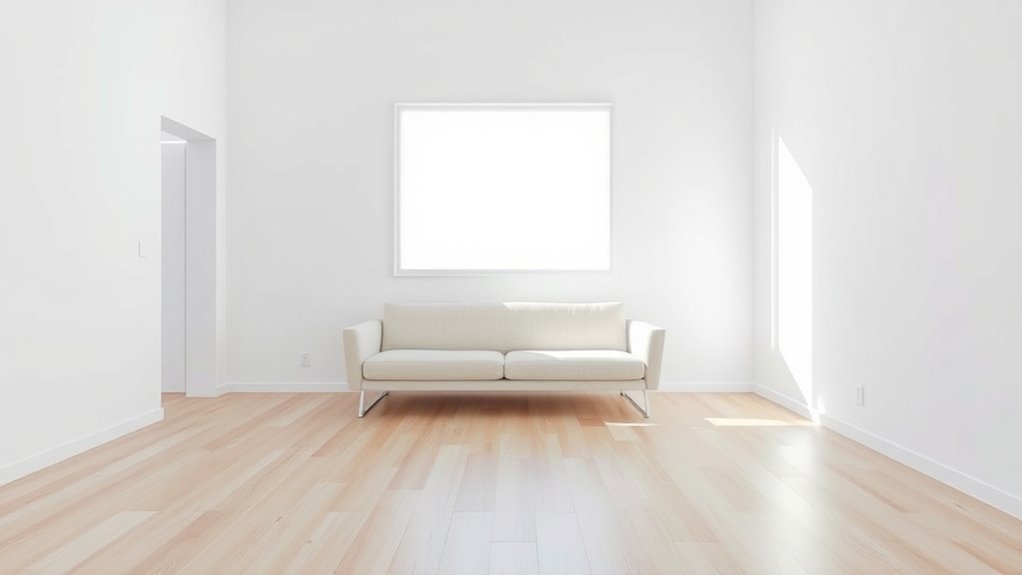
Minimalist décor emphasizes simplicity and functionality, creating spaces that feel open and calming. When designing your space with this approach, you naturally reduce clutter and unnecessary items, which can substantially lower hazards like tripping or falling. One of the key ways to enhance safety is by choosing space-saving furniture. These pieces are designed to maximize your room’s potential without overwhelming it, often featuring multi-purpose functions that serve multiple needs. For example, a sofa bed or a fold-away desk can free up floor space, leaving fewer obstacles to navigate and reducing the risk of accidents. Space-saving furniture also tends to be sleek and streamlined, with clean lines that avoid sharp edges or bulky designs that could cause injuries.
Choose sleek, multi-purpose furniture to maximize space and reduce hazards for a safer, more organized home.
Using neutral color palettes is another essential element in minimalist décor that supports hazard reduction. Soft, muted tones like beige, gray, or pastel shades create a visual sense of calm and order, making your environment less stimulating and easier to navigate. These colors also help conceal dust and dirt, encouraging regular cleaning and maintenance, which directly impacts safety. When your space is painted in neutral shades, you’re less likely to overlook clutter or potential hazards, because the subdued hues don’t distract the eye. This clarity supports a more organized and safe environment overall.
In a minimalist setting, you’re encouraged to keep surfaces clear and clutter-free, which directly minimizes tripping hazards and makes cleaning easier. Incorporate storage solutions that blend seamlessly into your décor, such as built-in shelves or hidden compartments. These help keep items out of sight but easily accessible, maintaining the clean aesthetic while preventing clutter from accumulating on floors or furniture. When every item has a designated place, you reduce the chances of tripping over misplaced objects or furniture blocking pathways. Additionally, reducing unnecessary items can help prevent cross-chaining or other drivetrain issues in bicycles, promoting a safer environment overall.
Furthermore, minimalist décor often emphasizes natural light and openness, reducing the need for excessive lighting fixtures or cluttered electrical cords. This approach minimizes tripping risks associated with tangled cords or poorly lit areas. By choosing simple, unobtrusive lighting options that complement your neutral palette, you create a safer, more inviting environment. Overall, adopting minimalist principles with space-saving furniture and neutral colors fosters not just a stylish space but a safer one, where hazards are minimized through thoughtful design and organization. This creates a peaceful atmosphere where you can move freely and feel secure in your environment.
Products Worth Considering

Dyson V8 Cordless Vacuum

Levoit Core 400S-P Smart Air Purifier for Large Rooms

Sonos Era 100 Wireless Smart Speaker, Black
As an affiliate, we earn on qualifying purchases.
Frequently Asked Questions
How Does Minimalist Décor Improve Home Safety?
Minimalist décor improves your home safety by reducing fire hazard risks and clutter. With fewer items, there’s less chance of tripping or knocking things over, which can cause accidents. Clutter elimination makes it easier for you to navigate spaces quickly during emergencies, while a streamlined environment minimizes fire hazards by keeping combustible items away from heat sources. This simple approach helps you create a safer, more organized living space effortlessly.
Are There Specific Materials Recommended for Hazard-Free Minimalist Spaces?
You should choose materials like non-toxic finishes and shatterproof glass for a hazard-free minimalist space. It’s no coincidence that these materials naturally reduce risks—non-toxic finishes prevent harmful chemical exposure, while shatterproof glass minimizes injury if broken. By selecting these safe, durable options, you create a cleaner, safer environment that’s both stylish and functional, making your home a secure haven for everyone.
Can Minimalist Décor Help Prevent Allergies or Respiratory Issues?
Yes, minimalist décor can help prevent allergies and respiratory issues. By reducing clutter and unnecessary items, you minimize dust accumulation and limit areas where airborne allergens like pet dander or mold can settle. Using simple, smooth surfaces makes cleaning easier and more effective, helping you breathe cleaner air. Keeping your space tidy and free of excess decor promotes better airflow, reducing the risk of allergy flare-ups and supporting healthier breathing.
What Are Common Pitfalls When Adopting Minimalist Décor for Safety?
Watch out for clutter concealment and sharp edges, the sneaky pitfalls of minimalist décor. You might think less is more, but accidentally hiding hazards behind sleek surfaces can cause injuries. Overly sparse spaces tempt you to leave sharp corners exposed or hide clutter that’s hard to see at a glance. Remember, safety isn’t sacrificed for style—ensure your minimalist space isn’t a danger zone with hidden risks lurking behind those clean lines.
How Can I Incorporate Safety Features Into Minimalist Design?
To incorporate safety features into minimalist design, you should focus on safety integration by choosing furniture with rounded edges and non-slip surfaces. Keep pathways clear to reduce hazards, and install well-placed lighting for visibility. Use hidden storage to minimize clutter and keep the space tidy. Prioritize hazard reduction by eliminating unnecessary items and ensuring that essential safety devices, like smoke detectors, blend seamlessly into your minimalist aesthetic.
Conclusion
By embracing minimalist décor, you create a safer, more functional space that minimizes hazards. Imagine a busy family room where clutter is replaced with sleek, open surfaces—reducing tripping risks and making cleaning easier. For example, Sarah redesigned her living room with simple furniture and fewer décor pieces; she noticed her children played more safely, and injuries decreased. Keep your space simple, and enjoy a safer environment that’s both stylish and secure.