
To evaluate your home safety regularly, check your fire escape routes, smoke detectors, and electrical systems to guarantee everything functions properly. Keep pathways clear, test safety devices like fire extinguishers, and replace batteries or alarms as needed. Conduct safety inspections every few months to spot hazards early and make necessary updates. Staying proactive in safety checks helps prevent accidents and keeps your household secure—continue with these tips to maintain a safe and alert home environment.
Key Takeaways
- Conduct regular home safety inspections, including electrical systems, appliances, and heating to identify potential hazards.
- Test smoke and carbon monoxide detectors monthly and replace batteries annually for reliable alerts.
- Review and practice fire escape plans periodically to ensure all household members are familiar with evacuation routes.
- Keep pathways clear, secure furniture, and ensure windows and doors lock properly for overall safety.
- Schedule safety checks quarterly or semi-annually to update safety measures and maintain a secure living environment.
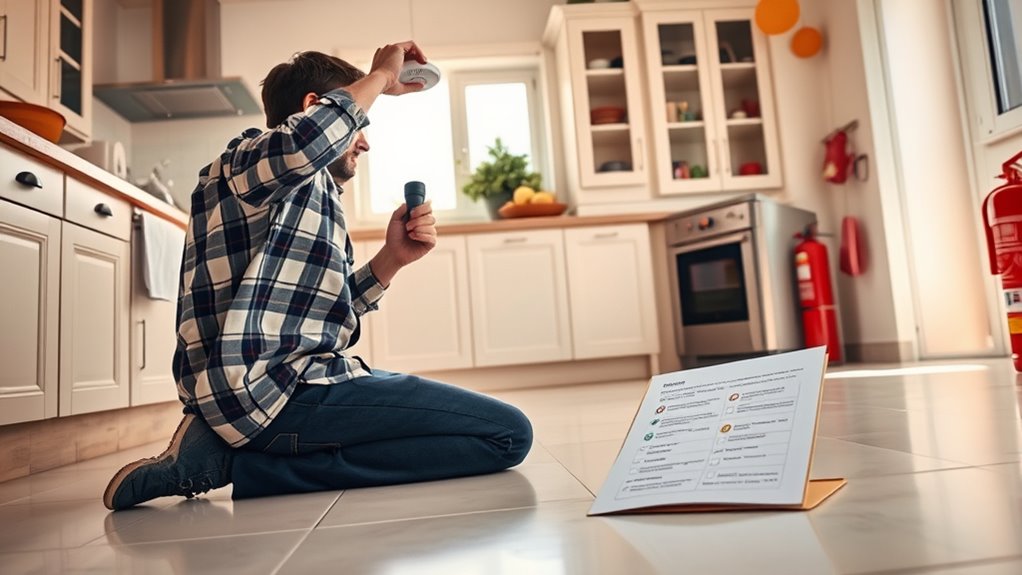
Have you ever wondered if your home is truly safe for everyone who lives there? Regularly evaluating your home safety is essential, not just for peace of mind but also to prevent accidents before they happen. One critical aspect of this process is reviewing your fire escape plans. Do you know exactly how everyone in your household would get out safely if a fire broke out? It’s easy to assume that everyone remembers the escape routes, but habits fade, and emergencies can cause panic. Take the time to walk through your home, identify all possible exits, and ensure each family member knows the plan. Practice fire drills periodically, just as you would in school or work, to build confidence and muscle memory. Make sure your escape routes are clear of clutter and obstacles, so nothing slows anyone down in an emergency.
Regularly review and practice your fire escape plans to keep everyone safe and prepared in emergencies.
Alongside your fire escape plans, smoke detector maintenance plays a crucial role in your home safety evaluation. Smoke detectors are your first line of defense against fire and smoke hazards, yet they’re often overlooked. Check each detector monthly to ensure they’re functioning properly—press the test button and listen for the alarm. Replace batteries at least once a year, or immediately if you hear a chirping sound indicating a low battery. It’s also wise to replace smoke detectors every 8-10 years, as their sensors can become less reliable over time. Remember, a smoke detector isn’t just a device; it’s a vital alert system that can give you precious seconds to escape a dangerous situation. Energetic alignment can also play a role in maintaining a safe environment by promoting a positive atmosphere that encourages proactive safety habits.
Beyond fire-specific safety measures, consider other elements that contribute to a secure home environment. Conduct regular inspections of electrical wiring, appliances, and heating systems. Keep pathways clear, secure heavy furniture, and ensure windows and doors lock properly. Test your carbon monoxide detectors, especially if you use gas appliances, to prevent silent, deadly leaks. Installing safety devices like fire extinguishers in key areas is another smart step, along with knowing how to use them effectively.
Evaluating your home safety isn’t a one-time task; it’s an ongoing process. Setting a schedule—whether quarterly or semi-annually—helps you stay on top of maintenance and updates. By staying vigilant about fire escape plans, smoke detector maintenance, and overall hazards, you create a safer environment for everyone. Remember, the goal isn’t just to react to danger but to prevent it whenever possible. Taking these proactive steps ensures that your home remains a secure haven for you and your loved ones.
Frequently Asked Questions
How Often Should I Check My Home Safety Measures?
You should check your home safety measures at least once every three to six months. During these checks, guarantee fire alarm maintenance is up to date and test the alarms to confirm they’re working. Also, update your emergency kit regularly, replacing expired supplies and adding new items. Regular inspections help identify potential hazards early, keeping you and your family safe and prepared for any emergencies.
What Are Signs That Safety Equipment Needs Replacement?
You’ll know safety equipment needs replacing if your fire extinguisher shows a pressure gauge outside the green zone or if it’s past its expiration date. For smoke detectors, test them monthly to verify they’re working properly, and replace batteries annually or if the alarm becomes silent or false. Regular fire extinguisher maintenance and smoke detector testing help you stay safe, so don’t ignore these signs.
Are There Seasonal Safety Checks I Should Perform?
Imagine a winter storm knocks out your outdoor lighting, making your home less visible. You should perform seasonal safety checks, like testing your fire escape routes and inspecting outdoor lighting before winter and summer. These checks ensure your fire escape is accessible and outdoor lights work, preventing accidents in low visibility. Regularly reviewing these safety features helps keep your home safe year-round, especially during seasonal changes.
How Can I Involve Children in Home Safety Evaluations?
You can involve children in home safety evaluations by turning it into a fun family activity. Teach them about child safety by inspecting smoke alarms, checking for hazards, and practicing fire drills together. Let them participate in creating safety checklists, and assign simple tasks like securing furniture or testing alarms. This encourages family participation, raises awareness about safety, and helps kids learn responsibility in a supportive way.
What Safety Issues Are Common in Older Homes?
They say “an ounce of prevention is worth a pound of cure,” and that’s especially true for older homes. You should check for fire hazards like outdated wiring or overloaded outlets, and assess structural integrity for signs of rot or foundation issues. These common safety issues can pose serious risks. Regular inspections help you catch problems early, keeping your home safe and sound for everyone inside.
Conclusion
Regularly checking your home’s safety is like tending a delicate garden—small, consistent efforts help prevent bigger issues from sprouting. By staying attentive and addressing minor concerns early, you create a secure haven where peace can flourish. Remember, a little care goes a long way in nurturing a space that’s welcoming and protected. In the end, it’s these gentle whispers of vigilance that keep your home’s harmony intact, allowing you to enjoy peace of mind.