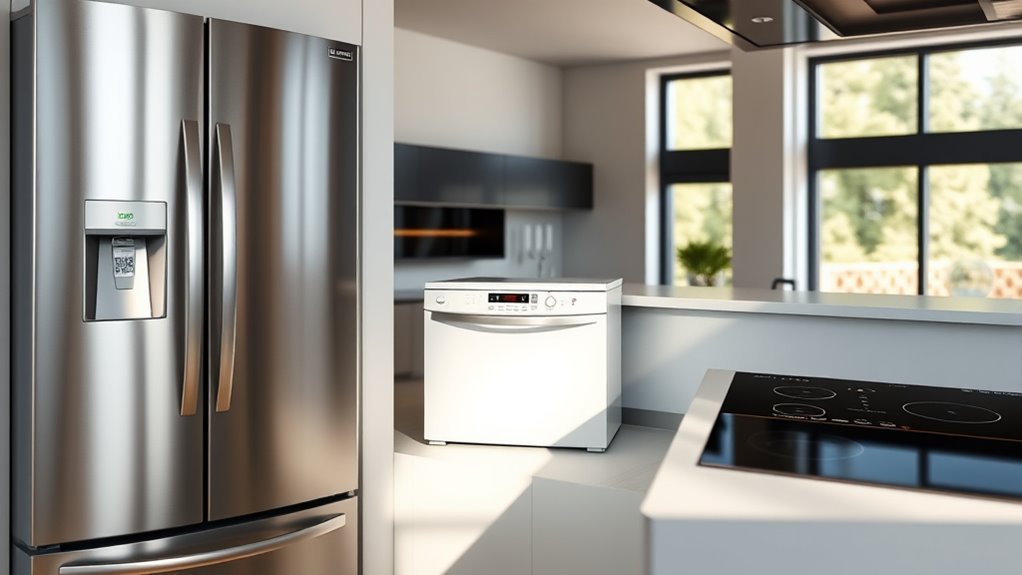

When selecting energy-efficient appliances, look for models with high ENERGY STAR ratings, as they meet strict efficiency standards. Consider features like smart technology, longer warranties, and appropriate sizing to maximize savings and durability. Proper maintenance—such as cleaning filters, adjusting settings, and scheduling regular check-ups—helps extend their lifespan and keeps them operating efficiently. Keep these tips in mind, and you’ll make smarter choices that save money and energy—more helpful details follow.
Key Takeaways
- Prioritize appliances with high ENERGY STAR ratings for proven efficiency.
- Consider the appliance’s size to avoid unnecessary energy consumption.
- Balance upfront costs with long-term savings from lower operating expenses.
- Check for longer warranties indicating better durability and quality.
- Utilize smart technology features to monitor and optimize energy use regularly.

Choosing energy-efficient appliances can substantially reduce your household’s energy consumption and save you money over time. When selecting these appliances, it’s important to consider not only their initial cost but also how their efficiency impacts your long-term expenses. Energy-efficient models typically use less power to perform the same tasks as their traditional counterparts, leading to lower utility bills. But to maximize their benefits, you need to pay attention to the appliance lifespan and proper maintenance tips. A well-maintained, efficient appliance can last longer and operate at peak performance, giving you more value for your investment.
Energy-efficient appliances save money by reducing energy use and lasting longer with proper maintenance.
One key factor to consider is the appliance’s lifespan. High-quality, energy-efficient appliances tend to last longer if you follow recommended maintenance tips. Regular upkeep helps prevent breakdowns and keeps the appliance running smoothly. For example, cleaning filters in your refrigerator or dishwasher, inspecting seals and gaskets, and avoiding overloading machines can significantly extend their lifespan. When appliances operate efficiently, they don’t work as hard, which reduces wear and tear. This means fewer repairs and replacements, ultimately saving you money and reducing waste. Additionally, smart technology integrated into modern appliances can help monitor and optimize their energy use, further enhancing efficiency and lifespan.
Additionally, learning and applying proper maintenance tips can enhance energy efficiency further. For your refrigerator, regularly cleaning coils and adjusting temperature settings can prevent it from overworking. For washing machines and dishwashers, using appropriate load sizes and choosing eco-friendly cycles helps conserve energy and water. For heating and cooling systems, changing filters and scheduling annual professional check-ups ensures they run at their best. These simple steps can improve appliance lifespan and maintain energy efficiency, which is especially important when you want to get the most out of your investment.
When shopping for energy-efficient appliances, look for those with high ENERGY STAR ratings. These products meet strict efficiency guidelines and often have longer warranties, which can be a sign of durability. Keep in mind that investing in a slightly more expensive model can pay off in the long run through lower operating costs and longer appliance lifespan. Also, consider the size of the appliance; choosing appropriately-sized units prevents unnecessary energy waste.
Frequently Asked Questions
How Do I Interpret Energy Efficiency Labels on Appliances?
When interpreting efficiency ratings on energy labels, start by looking at the energy label categories, which classify appliances from most to least efficient. The labels often include a star rating or a letter grade, with higher ratings indicating better efficiency. Focus on the annual energy consumption figures, and compare these across models. This helps you choose an appliance that saves energy and reduces your utility bills effectively.
What Is the Average Lifespan of Energy-Efficient Appliances?
You might expect energy-efficient appliances to last longer, but their durability averages around 10-15 years, similar to standard models. While they often save you money on energy bills, consider the potential replacement costs if they break down sooner. Proper maintenance can extend their lifespan, but understanding their typical durability helps you plan for future replacements and budget wisely, ensuring you get the most value from your investment.
Are There Government Incentives for Purchasing Energy-Efficient Appliances?
Yes, there are government incentives like rebate programs and tax credits that can help you save money when purchasing energy-efficient appliances. These programs often offer financial rewards or deductions, making eco-friendly choices more affordable. To take advantage, check local or federal websites for current offers. By applying for these incentives, you can reduce your upfront costs and support energy conservation efforts simultaneously.
How Do Energy-Efficient Appliances Impact Overall Household Energy Bills?
Energy-efficient appliances considerably lower your household energy bills through energy savings. They use less power while performing the same tasks, leading to reduced costs over time. When doing a cost comparison, you’ll notice higher upfront expenses but quicker returns thanks to lower utility bills. Overall, investing in energy-efficient appliances helps you save money long-term, making your home more eco-friendly and budget-friendly at the same time.
Can Energy-Efficient Appliances Be Repaired Easily if They Break Down?
Energy-efficient appliances can often be repaired, but appliance repair might be more challenging due to their advanced technology and specialized parts. You might face maintenance challenges, especially if the appliance is out of warranty or if parts are hard to find. However, many manufacturers offer good support and repair services. Regular maintenance can help prevent breakdowns, making repairs easier and less costly when they do happen.
Conclusion
By choosing energy-efficient appliances, you can save money and reduce your environmental impact. Did you know that ENERGY STAR appliances use at least 10% less energy than standard models? Making smart choices now not only benefits your wallet but also helps protect the planet. So, when shopping, look for those energy-efficient labels—you’ll enjoy long-term savings and contribute to a greener future every day.