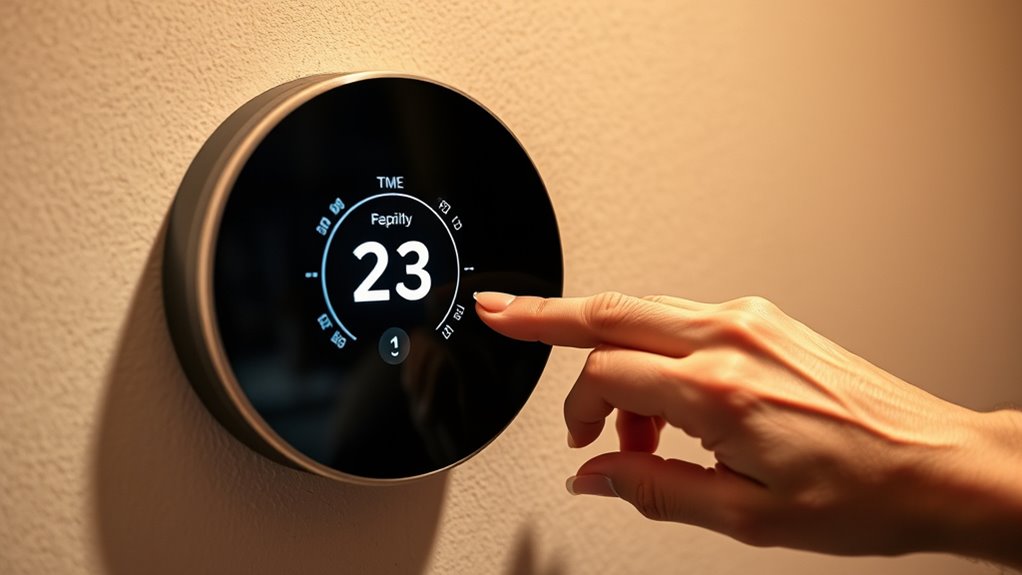

To match aging bodies’ comfort needs, set your smart thermostat to maintain warmer temperatures during the day and slightly increase the heat at night for better sleep. Program gradual adjustments to prevent sudden temperature changes and consider zones for targeted comfort. Consistently review and tweak your schedule to support health and well-being. By customizing these settings, you’ll enhance comfort and save energy—learn more about creating the perfect schedule for your needs.
Key Takeaways
- Set warmer daytime temperatures to accommodate age-related comfort preferences and maintain consistent warmth.
- Program slightly higher temperatures during sleep hours to ensure restful, uninterrupted sleep for aging bodies.
- Use adaptive scheduling that gradually adjusts temperatures based on daily routines and activity levels.
- Incorporate zone control to target frequently used areas, ensuring comfort without unnecessary energy use.
- Regularly review and modify schedules to support health needs, such as circulation and respiratory comfort.

A well-designed smart thermostat schedule can considerably improve your home’s comfort and save you money on energy bills. When your body changes with age, your comfort needs shift too, making it crucial to tailor your thermostat settings accordingly. Instead of sticking to a static schedule, you can leverage the flexibility of a smart thermostat to match your evolving preferences and health considerations. This approach ensures your home feels just right at all times, reducing discomfort and unnecessary energy consumption.
Adjust your thermostat for comfort and savings as you age with a flexible, smart schedule.
As you age, you might find that your tolerance for temperature fluctuations diminishes. You could prefer a consistently warmer environment during the day or need a slight increase in temperature during the night to sleep comfortably. With a smart thermostat, you can set specific temperature ranges for different times of the day, ensuring your home adapts to your comfort needs automatically. For example, you might program it to keep the living areas warmer during waking hours and slightly cooler when you’re asleep, reducing energy waste while maintaining comfort.
Sleep quality is another important factor. Older adults often find that cooler temperatures interfere with restful sleep, so pre-programmed nighttime settings can help. You might set the thermostat to gradually increase the temperature before bedtime or keep it at a steady, comfortable warmth throughout the night. Some smart thermostats even learn your sleep patterns over time, adjusting automatically to optimize both comfort and energy efficiency. This personalized control helps reduce disruptions, making it easier to get restorative sleep, which becomes increasingly crucial as you age.
Mobility and daily routines also influence how you should schedule your thermostat. If you spend a lot of time in specific areas of your home, you can customize the schedule to prioritize those spaces. For instance, if you tend to relax in the living room during the afternoon, set a warmer temperature there, while conserving energy in less-used rooms. Many smart thermostats allow for zone control or remote adjustments, so you can modify settings on the go if your routine changes unexpectedly.
Finally, consider health-related needs like circulation issues or respiratory conditions, which may require maintaining certain temperatures consistently. By setting your smart thermostat to keep your home within a comfortable range, you avoid sudden temperature drops or spikes that could cause discomfort or health problems. Regularly reviewing and adjusting your schedule ensures your environment always supports your well-being. Additionally, understanding the sustainable practices of smart home devices can help you make environmentally conscious choices while optimizing comfort. With a smart thermostat tailored to your aging body’s needs, you’ll enjoy greater comfort, better sleep, and lower energy bills—all while maintaining control over your home’s climate effortlessly.
Frequently Asked Questions
How Do Smart Thermostats Adapt to Health-Related Temperature Needs?
Smart thermostats adapt to your health-related temperature needs by learning your preferences and adjusting settings automatically. You can set specific temperatures for different times of day or activities, ensuring comfort and safety. Some models even monitor indoor conditions and suggest changes or send alerts if it detects temperature fluctuations that could affect your health. With these features, you stay comfortable and healthy without constantly adjusting your thermostat manually.
Can Smart Thermostats Be Integrated With Medical Alert Systems?
Yes, smart thermostats can be integrated with medical alert systems. You can connect compatible devices through smart home platforms, allowing your thermostat to work alongside alert systems for emergencies. This setup guarantees that your environment responds swiftly during health crises, providing comfort and safety. While integration enhances your safety, always verify device compatibility and consult professionals for a seamless, reliable connection tailored to your health needs.
What Security Measures Protect Personal Health Data Collected?
Your personal health data is protected through encryption, secure cloud storage, and strict access controls. Manufacturers often comply with health privacy laws like HIPAA, ensuring your information remains confidential. Multi-factor authentication and regular security updates help prevent unauthorized access. Always review privacy policies and choose devices with proven security features. By staying informed and vigilant, you can enjoy the benefits of smart thermostats without risking your sensitive health information.
Are There Specific Brands Recommended for Elderly Care?
If you’re choosing a smart thermostat for elderly care, look for brands like Nest, Ecobee, or Honeywell. These brands combine advanced features with user-friendly interfaces, making adjustments simple for seniors. While sleek designs might appeal to tech enthusiasts, prioritize models with easy-to-read displays and voice control options. Think of it as balancing style with practicality—just like caring for your loved ones, you want both comfort and simplicity.
How Do Smart Thermostats Improve Sleep Quality for Seniors?
Smart thermostats improve your sleep quality by maintaining a comfortable, consistent temperature throughout the night, preventing you from waking up due to cold or heat. They can automatically adjust the temperature based on your sleep schedule or preferences, ensuring peak comfort. With remote control and scheduling features, you can easily set the ideal environment, helping you fall asleep faster and enjoy deeper, more restorative sleep each night.
Conclusion
Just like a gentle guide adjusting to your changing needs, smart thermostat schedules can seamlessly match your aging body’s comfort. By setting personalized routines, you guarantee your home stays cozy without waste or hassle. Embrace these smart systems, and they’ll work quietly in the background—like a trusted friend—making sure you’re always comfortable. With a little setup, you’ll enjoy a home that responds to you, turning everyday living into a smoother, more adaptive experience.