
To optimize your building’s energy efficiency and comfort, focus on proper solar orientation by positioning key windows and facades to maximize sunlight in winter and minimize it in summer. Use adjustable shading devices like external louvers or plants that respond seasonally to control solar gain and reduce glare. Incorporating these strategies helps keep indoor temperatures stable and lowers energy costs. If you want to explore effective ways to implement these techniques, there’s more to discover below.
Key Takeaways
- Proper building orientation maximizes solar gain in winter and minimizes overheating in summer.
- South-facing facades in the northern hemisphere receive the most sunlight for natural heating and lighting.
- External shading devices like awnings and louvers effectively control solar gain and glare seasonally.
- Adjustable shading solutions, such as motorized louvers or planting trees, optimize energy efficiency year-round.
- Diffusing sunlight reduces glare, enhances indoor comfort, and complements strategic solar orientation.
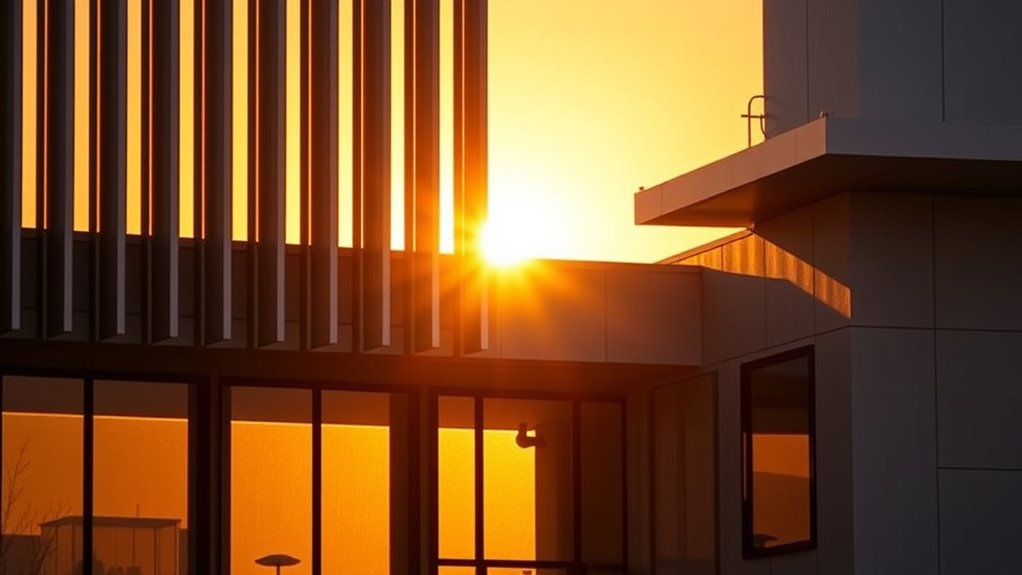
Understanding how your building is oriented toward the sun is essential for maximizing energy efficiency and indoor comfort. The way your structure faces influences how much solar gain it receives throughout the day and across different seasons. By paying attention to solar orientation, you can optimize natural light while minimizing unwanted heat gain during hot periods. This balance helps reduce reliance on artificial lighting and air conditioning, lowering your energy bills and decreasing your environmental footprint.
To make the most of solar gain, it’s important to consider how the sun moves across the sky. In the northern hemisphere, south-facing facades typically receive the most sunlight, especially during winter when the sun is lower. This means that positioning windows and glass doors on these sides allows your building to harness more natural light and warmth. Conversely, east and west-facing surfaces tend to catch the morning and late afternoon sun, which can cause overheating if not properly managed. North-facing windows, on the other hand, receive less direct sunlight, providing a cooler, more stable interior environment, particularly useful in warmer months.
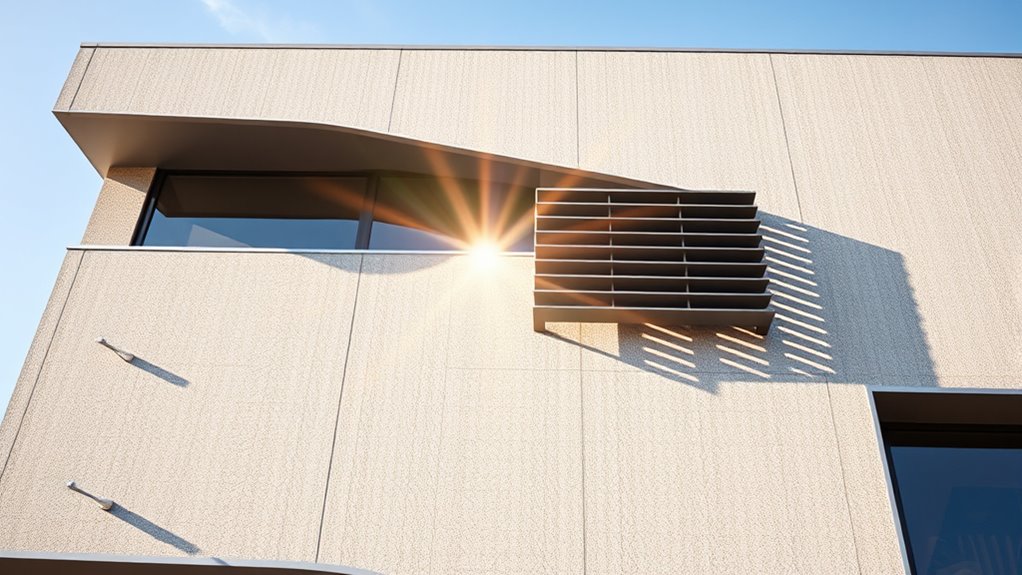
Shading devices play a critical role in controlling solar gain. They act as a barrier between the sun’s rays and your building’s surfaces, reducing heat transfer and preventing overheating. External shading devices like awnings, louvers, and shading screens are especially effective because they intercept sunlight before it reaches windows, allowing you to enjoy natural light without the excess heat. Properly designed shading devices also help diffuse sunlight, reducing glare and creating more comfortable indoor conditions. When choosing shading strategies, consider seasonal variations: in summer, you want shading devices that block high-angle sun, while in winter, you want to allow low-angle sunlight to enter and warm your space.
Incorporating shading devices that are adjustable or automated gives you greater control over solar gain throughout the day and year. For example, motorized louvers can open or close based on the sun’s position, optimizing natural light and temperature regulation. Additionally, planting strategically placed trees or vines can provide natural shading, further enhancing energy efficiency without sacrificing aesthetics. Understanding solar orientation and shading strategies is vital for designing comfortable and energy-efficient buildings that adapt to seasonal changes.
Frequently Asked Questions
How Does Climate Influence Solar Orientation Choices?
You should consider climate zones when choosing solar orientation because they directly affect solar gain. In colder climates, orient your building to maximize sunlight exposure, enhancing passive heating. Conversely, in hot, sunny zones, you’ll want to minimize solar gain with shading or strategic positioning to keep interiors cool. Understanding your local climate helps you optimize solar orientation, improving energy efficiency and comfort throughout the year.
What Materials Best Optimize Shading Effectiveness?
Don’t let poor shading choices ruin your comfort and energy savings. You should choose shading materials like dense wood, aluminum, or reflective fabrics, as they block sunlight effectively and last longer. Material selection is essential; opt for durable, high-quality shading materials to guarantee maximum protection and efficiency. With the right materials, you’ll enjoy cooler indoor temperatures, lower energy bills, and a more comfortable space all year round.
How Can Shading Strategies Be Integrated Into Existing Buildings?
You can integrate shading strategies into existing buildings by installing interior shading devices like blinds or curtains that respond to sunlight levels. Additionally, facade integration with adjustable louvers or overhangs enhances shading control and energy efficiency. To maximize effectiveness, make sure these elements are tailored to the building’s orientation and window placement, allowing you to reduce heat gain and glare while maintaining natural light and comfort inside.
What Are the Cost Implications of Advanced Shading Systems?
Imagine a sleek, automated shading system gracefully adjusting to the sun’s dance, but it comes with higher costs upfront. You’ll need to weigh the cost-benefit analysis, considering energy savings versus initial investment. Advanced systems may have increased maintenance requirements, yet could reduce long-term expenses. While pricier initially, they often pay off through reduced energy bills and enhanced comfort, making them a smart investment for your building’s efficiency and aesthetics.
How Do Local Building Codes Affect Shading Design Options?
Local building codes greatly influence your shading design options, especially in urban planning and historical preservation areas. You need to comply with regulations that protect the aesthetic and heritage value of buildings, which may limit the extent or type of shading structures you can implement. These codes guarantee your shading solutions respect the character of the neighborhood while promoting energy efficiency, so always check local guidelines before designing or installing shading features.
Conclusion
By understanding solar orientation and shading strategies, you can optimize your building’s energy efficiency, enhance comfort, and protect your space from unwanted heat. You can maximize sunlight in winter, minimize it in summer, and create shaded comfort zones year-round. You can design with purpose, adapt with intention, and create spaces that breathe with the sun’s journey. Embrace these strategies to shape a more sustainable, comfortable, and energy-conscious environment for yourself and future generations.