
Adopting better drying habits in your laundry room helps you cut energy use and protect your clothes. Using natural air drying when possible, wringing out excess water, and avoiding over-drying can considerably lower electricity bills. Combining these practices with energy-efficient dryers boosts efficiency even more. Proper airflow, regular maintenance, and mindful habits extend your clothes’ lifespan and reduce environmental impact. Keep these tips in mind to maximize savings and garment care — you’ll find more helpful strategies ahead.
Listen free for 30 days with Audible
Thousands of audiobooks and originals — cancel anytime.
As an affiliate, we earn on qualifying purchases.
Key Takeaways
- Adopting natural drying methods reduces electricity consumption and lowers utility bills.
- Properly wringing out clothes speeds up drying and decreases energy use.
- Combining air drying with energy-efficient dryers balances convenience and energy savings.
- Regular maintenance of appliances ensures optimal efficiency and reduces unnecessary energy use.
- Maintaining good airflow and organization in the laundry area prevents odors and promotes faster drying.
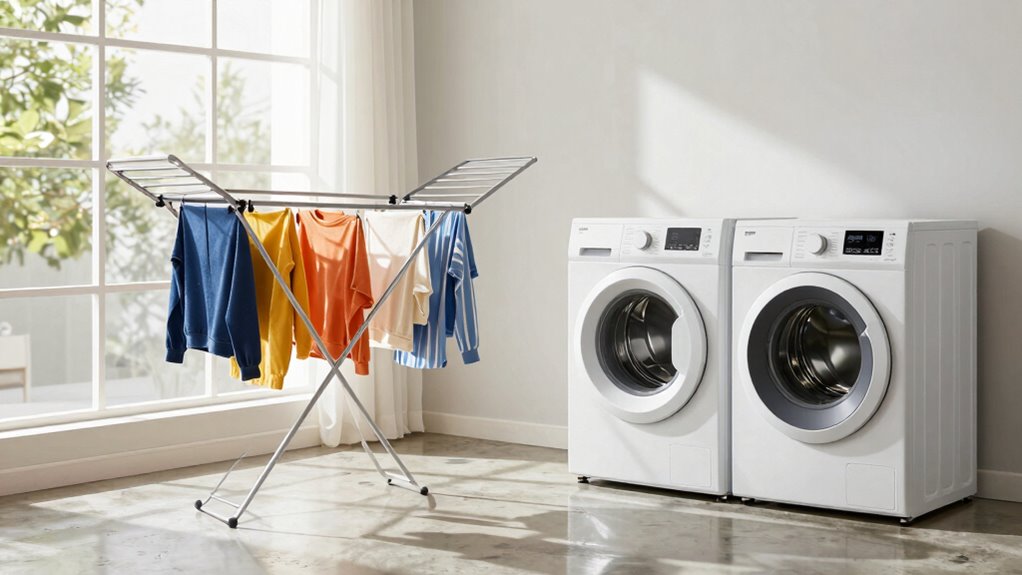
Drying clothes efficiently in your laundry room can make a big difference in how quickly your laundry is completed and how well your garments stay in shape. By being mindful of your drying habits, you can considerably reduce energy consumption and lower your utility bills. One effective way is to use energy efficient dryers that are designed to consume less power while delivering the same level of drying performance. These appliances often feature advanced sensors that detect when clothes are dry, preventing unnecessary running time and saving energy. Investing in an energy efficient dryer not only benefits your wallet but also minimizes your environmental impact by reducing electricity use.
Using energy-efficient dryers with sensors reduces energy use and keeps clothes in great condition.
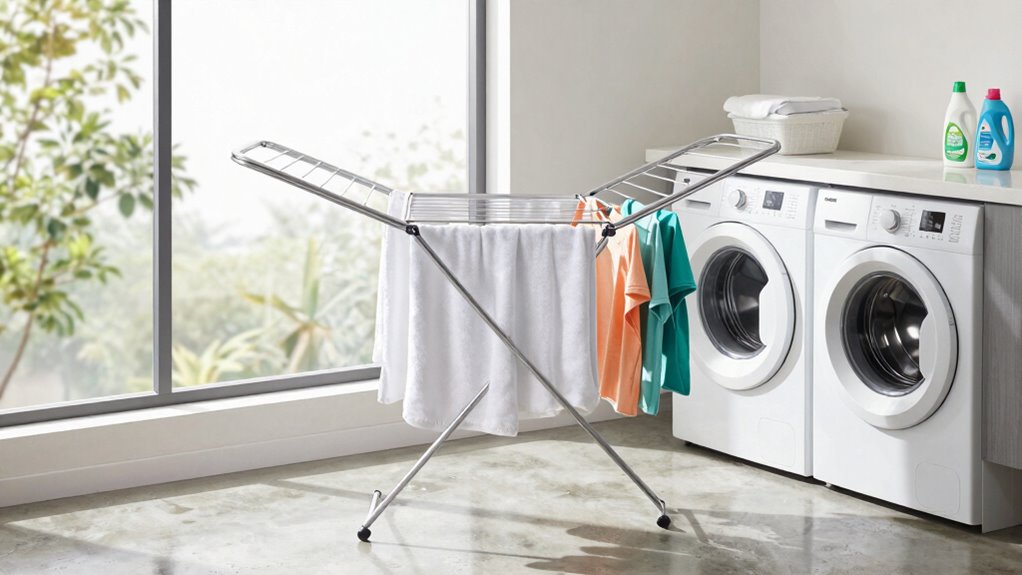
In addition to upgrading your dryer, incorporating natural drying methods can further enhance your energy savings. Air drying clothes on a rack or clothesline requires no electricity at all, making it one of the most eco-friendly and cost-effective options available. While it might take longer, natural drying methods help preserve the quality of your garments by avoiding the excessive heat that can sometimes damage fabrics in electric dryers. Plus, hanging your clothes in a well-ventilated space can speed up the process, especially in warm or breezy weather. It’s a simple habit that reduces reliance on mechanical drying, cutting down energy consumption markedly. Proper airflow is essential for quick and efficient natural drying, helping to improve overall drying times. Ensuring good ventilation also prevents musty odors and mold growth in your laundry area.
To maximize efficiency, try to combine the use of energy efficient dryers with natural drying methods whenever possible. For instance, you can use the dryer for quick drying on busy days and switch to air drying when you have more time. This hybrid approach allows you to balance convenience with energy savings. Be sure to wring out excess water before drying—either by spinning clothes thoroughly in your washer or by hand—so they dry faster and use less energy. Additionally, avoid over-drying your clothes, as leaving them slightly damp can save both energy and fabric wear.
Keep your laundry room well-ventilated and organized to facilitate natural drying. Proper airflow helps clothes dry more quickly and reduces the need for prolonged machine use. If you do use a dryer, always clean the lint filter after each cycle; a clogged filter decreases efficiency and forces the dryer to work harder. Regular maintenance of your appliances ensures they operate at peak efficiency, saving you energy and money in the long run. Proper appliance maintenance and adopting smarter drying habits—using energy efficient dryers, embracing natural drying methods, and maintaining your appliances—can make a noticeable impact on your energy consumption while keeping your clothes in great shape.
energy efficient clothes dryer with sensors
As an affiliate, we earn on qualifying purchases.
As an affiliate, we earn on qualifying purchases.
Frequently Asked Questions
How Does Drying Time Affect Energy Consumption?
Drying time directly affects energy consumption because longer drying periods use more energy. When you improve air circulation, moisture evaporates faster, reducing drying time. Efficient drying means your dryer doesn’t have to run as long, saving energy. By managing drying time and promoting better air circulation, you decrease overall energy use, cut costs, and make your laundry routine more eco-friendly.
Can Using a Drying Rack Save More Energy Than a Dryer?
Using a drying rack can save more energy than a dryer, especially if you consider clothesline alternatives like indoor or outdoor drying. Some might think it’s less convenient, but energy-efficient drying methods reduce electricity use considerably. By hanging clothes to air dry, you cut down on the energy consumption of electric or gas dryers, making it an eco-friendly, cost-effective choice that benefits both your wallet and the environment.
What Are the Best Indoor Drying Practices for Energy Efficiency?
To maximize energy efficiency indoors, you should hang your laundry in a well-ventilated area, ideally near open windows or with proper laundry room ventilation systems. Using a drying rack reduces reliance on electric dryers, saving energy. Keep indoor air quality high by avoiding excess humidity, which can cause mold. Make sure good airflow to dry clothes faster and maintain a healthier environment while conserving energy.
How Do Humidity Levels Impact Drying Energy Use?
Coincidentally, humidity levels directly influence your drying energy use. When humidity is high, moisture management becomes more challenging, forcing your dryer to work harder to remove residual moisture, which increases energy consumption. Conversely, maintaining ideal humidity through moisture control helps your dryer operate efficiently, reducing energy use. Proper humidity management in your laundry room not only speeds up drying times but also cuts down on unnecessary energy expenditure.
Are There Eco-Friendly Drying Technologies Available?
Yes, eco-friendly drying technologies are available. You can try solar drying, which uses natural sunlight to dry clothes without energy consumption. Additionally, choosing eco-friendly fabrics that dry faster helps reduce energy use. Many modern dryers also feature energy-efficient settings or use renewable energy sources like solar panels. By combining these methods, you can substantially lower your environmental impact and save on energy costs while drying your laundry.
Conclusion
By adopting better drying habits, you not only save energy and money but also help the environment. Think of it as a modern-day act of heroism, like the knights of old defending their domain—only your domain is the planet. With just a little effort, you can make a big difference, turning your laundry routine from a mundane chore into a powerful step toward sustainability. So, embrace these habits and be a champion for our future.
NFL season / tailgating Picks
team gear
As an affiliate, we earn on qualifying purchases.