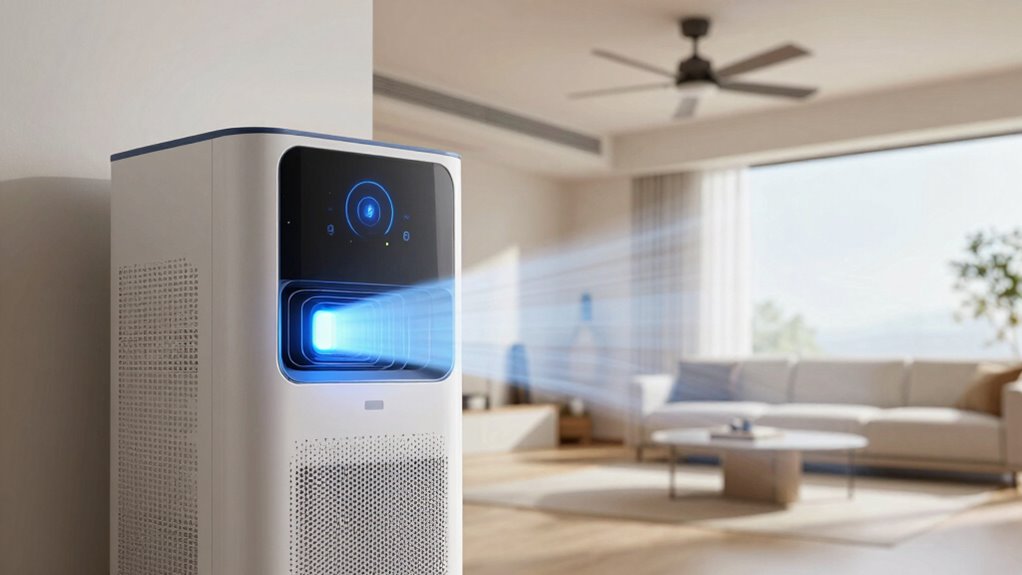

To cool a single room efficiently, options like portable fans or window units are cost-effective and consume less energy, with window units actively removing heat for better comfort. For whole-house cooling, central air systems offer consistent comfort but come with higher upfront costs and energy use. Proper insulation and maintenance boost efficiency for both setups. If you want to find the best choice for your needs, keep exploring how each option compares.

Get baby and family essentials delivered free — and shop member deals
- Fast, free delivery on millions of items
- Access to Prime Big Deal Days deals on October 6–7
- Prime Video, Amazon Music and more included
Key Takeaways
- Portable fans are most efficient for quick, localized cooling in small spaces, while central systems are better for whole-house comfort.
- Window units actively remove heat, making them more effective for single-room cooling than fans.
- Central air conditioning offers uniform cooling but involves higher upfront costs; targeted units are more cost-effective for one room.
- Proper insulation and maintenance enhance efficiency of both single-room and whole-house cooling methods.
- The choice depends on budget, space size, and specific cooling needs, balancing energy efficiency and comfort.
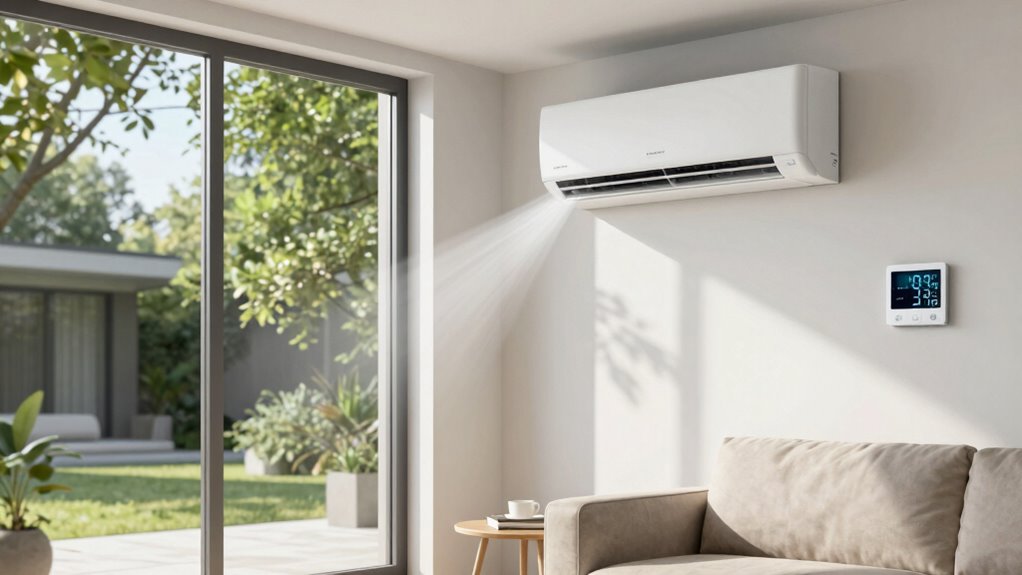
Are you wondering whether it’s more efficient to cool a single room or your entire house? The answer depends on your goals, budget, and the specific situation. If you’re only spending time in one room, cooling that space makes more sense. You might consider using portable fans or a window unit, which can be more energy-efficient than cooling the entire house. Portable fans are inexpensive, easy to move around, and consume less electricity, making them a good choice for targeted cooling. They work well in small spaces or when you just need a quick breeze to beat the heat. However, they don’t lower the temperature significantly; they mainly improve comfort by circulating air.
Cooling one room with portable fans or a window unit saves energy and targets comfort efficiently.
Window units are another popular option for cooling a single room. They are more effective at reducing temperature than portable fans because they actively remove heat from the room and exhaust it outside. They’re also relatively affordable and easy to install, making them a practical choice if you only need to cool one area. Keep in mind, though, that window units do consume more energy than portable fans, but they’re still more efficient than running central air conditioning for just one room. If you’re looking to cool a small space efficiently without cooling the entire house, a window unit strikes a good balance between cost, energy use, and cooling power.
On the other hand, if you want to cool your entire house, central air conditioning is usually the most effective method. It cools multiple rooms uniformly and can maintain a consistent temperature throughout your home. While central systems tend to be more expensive upfront, they often prove more cost-effective in the long run if you need to cool multiple rooms or the whole house regularly. Plus, modern systems are quite energy-efficient and come with programmable thermostats, allowing you to control cooling precisely where and when you need it. Considering energy efficiency can help you make a more sustainable choice. Additionally, proper insulation can significantly improve the overall efficiency of your cooling system, regardless of which method you choose. Moreover, regular maintenance of your cooling system ensures optimal performance and energy savings over time.
Ultimately, the choice hinges on your specific needs. For occasional or localized cooling, portable fans and window units are practical, affordable options that save energy and money. But if you’re trying to keep your entire house comfortable during the hottest months, investing in a central air system might be the most efficient and convenient solution. Think about how much space you need to cool, your budget, and your energy goals. That way, you can choose the most efficient cooling method for your situation.
As an affiliate, we earn on qualifying purchases.
Frequently Asked Questions
How Much Does It Cost to Cool a Single Room Versus the Entire House?
Cooling a single room is generally much cheaper than cooling the whole house. You save on energy costs because you’re only running a small, energy-efficient unit, making it more cost-effective and energy-efficient. The cost comparison shows that single-room cooling options, like window units or portable ACs, consume less power and are cheaper to operate daily. So, if you only need to cool one space, it’s a smart, budget-friendly choice.
Which Cooling Method Is Best for Small, Poorly Insulated Rooms?
For small, poorly insulated rooms, a window unit is your best choice because it cools quickly and directly. To improve efficiency, consider insulation improvements like sealing leaks and adding weather stripping, which help retain the cool air. This combo ensures you won’t waste energy cooling a space that’s losing heat rapidly. Using a window unit alongside insulation upgrades keeps the room comfortable without skyrocketing your energy bills.
How Long Does It Take to Install a Whole-House Cooling System?
Installing a whole-house cooling system typically takes about one to two days, depending on your home’s size and complexity. This quick installation can lead to significant energy savings, as central systems are often more efficient than individual units. Keep in mind, a professional assessment guarantees proper setup, maximizing comfort and efficiency. So, with a relatively short installation timeline, you gain long-term benefits and improved climate control throughout your entire home.
Are Portable Air Conditioners Effective for Cooling Multiple Rooms?
Portable units can cool multiple rooms, but their effectiveness depends on size, placement, and insulation. They work best when vented through window options, like sliding or sash windows, to exhaust hot air outside. However, if your rooms are far apart or poorly insulated, a portable AC may struggle to cool everything evenly. For better efficiency across multiple spaces, consider using multiple units or a dedicated central cooling system.
What Maintenance Is Required for Different Cooling Systems?
Don’t worry about maintenance; it’s simpler than you think. For cooling systems, you’ll need to regularly clean filters, check humidifier maintenance, and guarantee thermostat calibration is accurate. Portable ACs and central systems both require filter changes and drain cleaning, while window units need occasional coil cleaning. Keeping these up-to-date helps your system run efficiently, saves energy, and prolongs its lifespan. Staying on top of maintenance makes cooling hassle-free.
Conclusion
So, whether you’re whispering secrets to a single room or singing in harmony across your entire home, choosing the right cooling method is like finding the perfect key to access comfort. Think of it as tuning a delicate instrument—focus on efficiency, and you’ll keep your cool without wasting energy or money. With the right approach, you’ll turn your living space into a invigorating oasis, where comfort flows as smoothly as a gentle breeze on a hot summer day.
Cold & flu season Picks
humidifiers
As an affiliate, we earn on qualifying purchases.