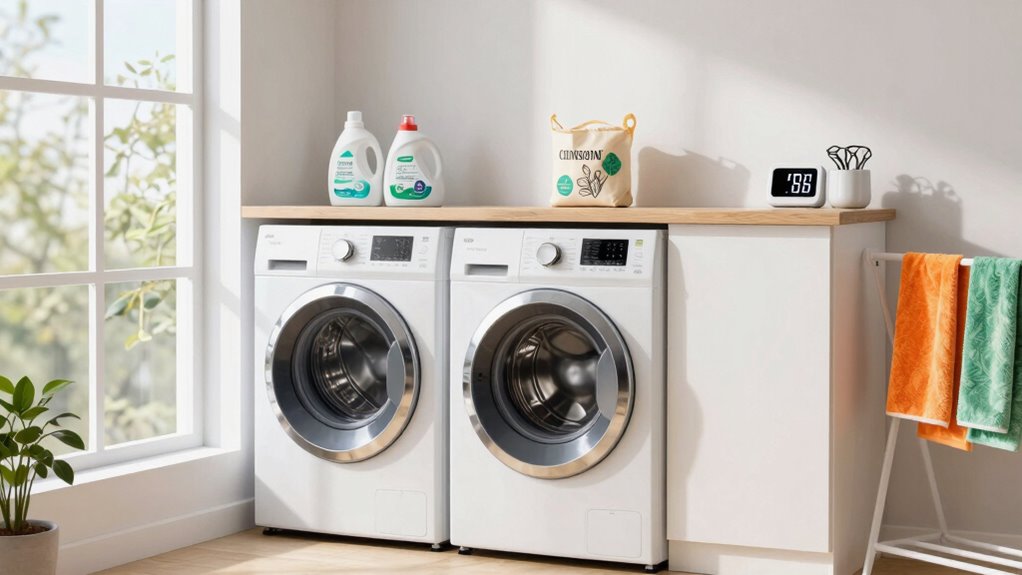

To build an energy-smart laundry routine, start by choosing efficient detergents that clean well at lower water temperatures. Always run full loads and use cold water when possible to save energy. Keep your laundry organized so you can quickly sort by color and fabric, choosing the right cycle and avoiding small washes. Air dry clothes whenever you can, and maintain your appliances to keep them running efficiently. If you’re interested, there’s more to discover about making your laundry habits even greener.

Turn the school run and nap time into listening time
- Thousands of audiobooks, podcasts and originals
- Listen on your phone, tablet or Echo — also offline
- Cancel anytime
Key Takeaways
- Use energy-efficient detergents and run full loads at lower temperatures to save water and energy.
- Organize your laundry space for quick access and proper sorting to optimize cycle choices.
- Select appropriate cycle lengths and cold water options for effective cleaning with less energy.
- Air dry clothes whenever possible and maintain appliances for maximum efficiency.
- Invest in high Energy Star-rated washers and dryers for long-term energy and cost savings.
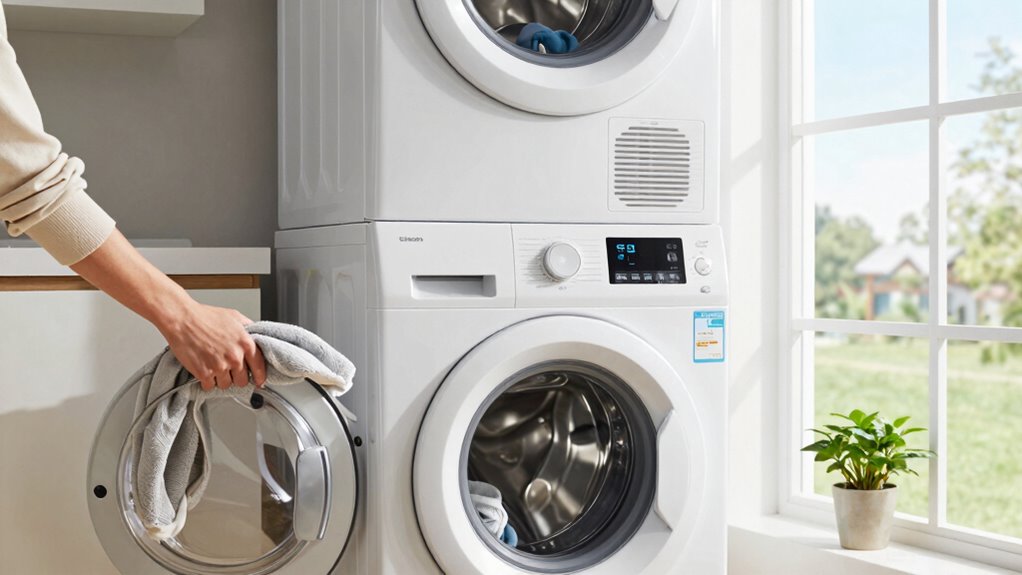
Doing laundry might seem straightforward, but making it energy-smart can considerably reduce your utility bills and environmental impact. The key is to adopt habits that maximize efficiency without sacrificing cleanliness. One simple step is to choose energy-efficient detergents. These formulas are designed to clean effectively using less water and fewer resources, which means you can often wash clothes in smaller loads or at lower temperatures. Using the right detergent also means your clothes come out just as fresh and clean, so you don’t have to run extra cycles or rewash items.
Choose energy-efficient detergents to save resources and keep your clothes fresh with fewer loads and lower temperatures.
Next, focus on laundry room organization. When your laundry area is well-organized, it’s easier to stick to energy-saving routines. Keep detergents, fabric softeners, and stain removers within easy reach, and store laundry baskets and hampers in a way that encourages sorting clothes by color and fabric type. Proper sorting allows you to set the machine to the correct cycle and temperature, preventing unnecessary energy use. For example, whites and heavily soiled items often need hot water, while delicates and lightly soiled garments do just fine with cold water. An organized laundry room helps you make these distinctions quickly, reducing guesswork and wasted energy. Additionally, a well-organized space can motivate you to maintain these energy-efficient habits consistently.
Another tip is to always run full loads whenever possible. Your washing machine and dryer consume the same amount of energy regardless of load size, so filling them up maximizes efficiency. If you’re in a hurry, use the shortest cycle that gets your clothes clean, but avoid running small loads. Additionally, opt for cold water washes when you can. Modern detergents and fabrics are designed to clean well even without hot water, saving you a significant amount of energy. Incorporating energy-saving laundry practices into your routine can further enhance your eco-friendly efforts. Being aware of energy-efficient appliance features can help you select models that maximize savings and performance.
When it comes to drying, air drying clothes whenever feasible is the most energy-smart choice. If you use a dryer, make sure it’s properly maintained, with lint filters cleaned regularly, and avoid over-drying clothes, which wastes energy and can damage fabrics. Installing a moisture sensor in your dryer can prevent over-drying by shutting off the machine when clothes are dry. Being mindful of energy-efficient appliances and their features can further enhance your routine’s eco-friendliness. Choosing appliances with advanced features can also optimize energy use and prolong the lifespan of your laundry equipment. Regular maintenance and proper use ensure your appliances operate at peak efficiency, saving you more in the long run.
Finally, consider investing in energy-efficient appliances, such as washers and dryers with high Energy Star ratings. These models are designed to use less water and electricity, further reducing your environmental footprint. Combining these habits—using energy-efficient detergents, maintaining an organized laundry space, and choosing the right cycles—creates a laundry routine that’s both effective and eco-friendly. You’ll save money on utility bills while doing your part to protect the environment.
Products Worth Considering

Dyson Supersonic Nural Hair Dryer

Levoit Vital 100 Air Purifier

Blueair Blue Pure 511i Max Smart Air Purifier
As an affiliate, we earn on qualifying purchases.
Frequently Asked Questions
What Are the Best Energy-Efficient Laundry Detergents?
You should choose energy-efficient laundry detergents that feature eco-friendly packaging and plant-based formulas. These options reduce environmental impact and often require less water and energy to rinse out. Look for labels like “biodegradable” or “plant-derived,” which indicate eco-conscious ingredients. By selecting detergents with these qualities, you help conserve resources, protect the planet, and maintain a clean wardrobe, all while supporting sustainable practices.
How Can I Reduce Water Usage During Laundry?
You can reduce water usage during laundry by opting for water conservation practices, like washing full loads and using eco-friendly detergents that work efficiently in lower water levels. Choose high-efficiency washers designed to use less water, and avoid pre-rinsing clothes unnecessarily. These steps help conserve water, support eco-friendly detergents, and make your laundry routine more sustainable, saving both water and energy in the process.
Are There Specific Laundry Cycles for Energy Savings?
Choosing the right laundry cycle can be your secret weapon for savings. Opt for eco friendly detergents and select shorter, gentle cycles, which are designed to use less energy and water. Many modern machines have eco or energy-saving settings—use them whenever possible. These cycles efficiently clean your clothes while reducing environmental impact, making your laundry routine more sustainable without sacrificing freshness.
How Often Should I Run Full Loads to Save Energy?
You should run full loads as often as possible to save energy, since load frequency impacts efficiency. Avoid multiple small loads, which waste water and electricity. When doing laundry frequently, choose the right detergent—preferably a high-efficiency or eco-friendly one—to optimize cleaning without excess use. By maintaining full loads and selecting suitable detergent, you minimize energy consumption and extend your washer’s lifespan, making your laundry routine more sustainable.
What Are the Maintenance Tips for Energy-Efficient Appliances?
You’ll want to treat your appliances like precious gems—meticulously! Follow maintenance schedules, clean filters, and check seals regularly to boost their lifespan and keep energy use minimal. Avoid neglect, or your washer might become a sluggish, energy-guzzling monster. Proper upkeep not only extends appliance lifespan but also guarantees they run efficiently, saving you money and energy. Stay proactive, and your appliances will thank you with long, happy, energy-smart years!
Conclusion
By adopting an energy-smart laundry routine, you not only save money but also reduce your environmental impact. Did you know that washing clothes in cold water can cut energy use by up to 90% compared to hot water? Small changes, like waiting for full loads and air-drying, add up. So, make these simple adjustments today—your wallet and the planet will thank you for it!