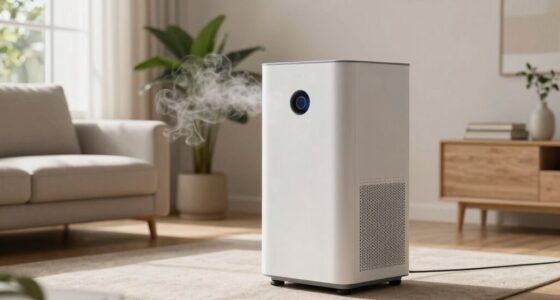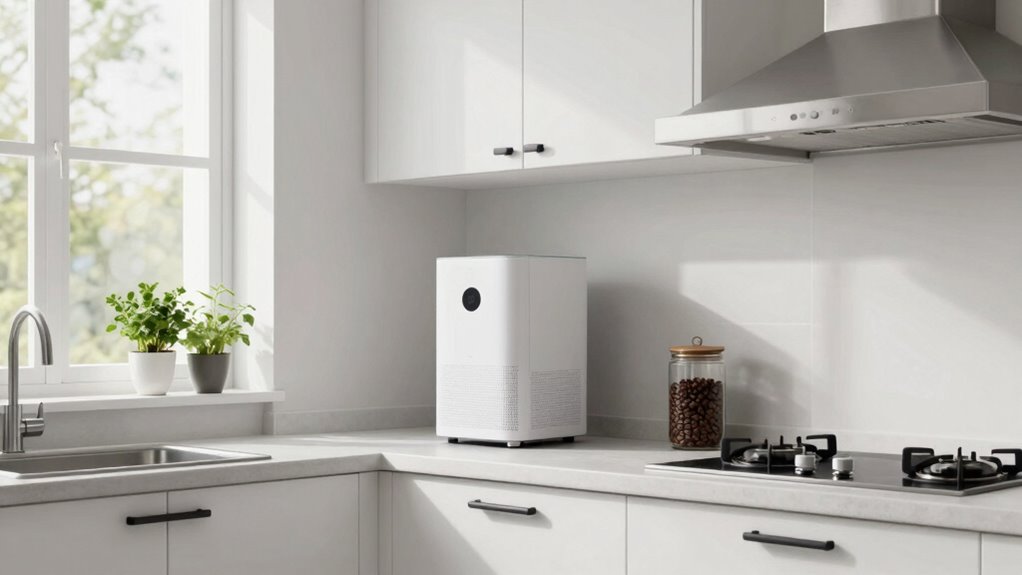
To build a cleaner-air kitchen without a full remodel, start by using eco-friendly materials like reclaimed wood or natural stone for surfaces, and opt for low-VOC paints and finishes. Incorporate air-purifying indoor plants such as snake plants and pothos, and guarantee good ventilation with range hoods and exhaust fans. Regularly clean with natural products and consider adding air purifiers. Small changes like these can make a big difference—discover more ways to improve your kitchen’s air quality.

Turn the school run and nap time into listening time
- Thousands of audiobooks, podcasts and originals
- Listen on your phone, tablet or Echo — also offline
- Cancel anytime
Key Takeaways
- Incorporate eco-friendly, low-VOC materials for countertops, cabinetry, and finishes.
- Add air-purifying plants like snake plants or pothos for natural filtration.
- Install or upgrade range hoods and exhaust fans to improve ventilation.
- Use natural cleaning products and regularly clean surfaces to reduce pollutants.
- Utilize air purifiers with HEPA filters and control humidity levels for healthier air.
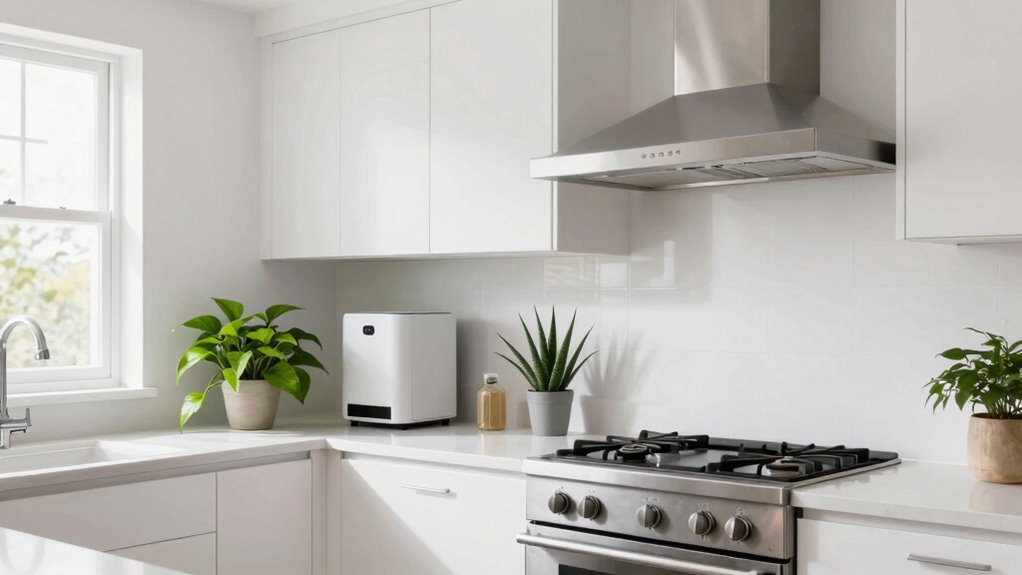
Ever wondered how to create a kitchen that promotes healthier air quality? You don’t need a complete remodel to make a significant difference. Small, strategic changes can turn your existing space into a cleaner-air zone. One of the best ways to start is by focusing on eco-friendly materials. These materials are not only better for the environment but also tend to emit fewer volatile organic compounds (VOCs), which can compromise indoor air quality. Swap out traditional countertops, cabinetry, and flooring with options like bamboo, reclaimed wood, or natural stone. These choices reduce chemical emissions and contribute to a fresher atmosphere. Additionally, when selecting paints, adhesives, and finishes, opt for low-VOC or zero-VOC products. They release fewer toxins, making your kitchen healthier for you and your family.
Opt for eco-friendly materials and low-VOC finishes to improve your kitchen’s air quality naturally.
Another effective step is indoor plant integration. Plants naturally purify the air by absorbing pollutants and releasing oxygen. Incorporate a variety of easy-to-maintain plants such as snake plants, pothos, or peace lilies. Place them on countertops, windowsills, or hang them from ceiling fixtures to maximize their air-cleaning benefits without cluttering your space. Not only do they improve air quality, but they also add a touch of greenery, making your kitchen feel more welcoming and lively. Be mindful to select plants that thrive indoors and require minimal upkeep, ensuring that your efforts to improve air quality are sustainable over time. Indoor air quality can be further enhanced by choosing plants known for their air-purifying properties. Creating a healthy indoor environment involves understanding how various elements interact to influence air quality. Incorporating air-purifying plants is a natural way to support this goal and can be an attractive addition to your kitchen decor.
Beyond these changes, consider improving ventilation. Installing or upgrading range hoods and exhaust fans helps remove cooking fumes, smoke, and moisture that can degrade indoor air quality. Regularly cleaning and maintaining these systems ensures they work efficiently. Also, avoid using harsh chemical cleaners; instead, choose natural cleaning products or make your own with ingredients like vinegar, baking soda, and lemon. These options emit fewer harmful fumes and contribute to a healthier kitchen environment. To further enhance indoor air quality, consider air purification devices that effectively capture airborne particles. Increasing awareness of green building materials can help you make informed choices that further reduce chemical emissions in your kitchen. Lighting can also influence air quality indirectly. Use LED bulbs that generate less heat, reducing the chances of mold growth caused by excess humidity. Keep your kitchen well-ventilated by opening windows when weather permits, and consider adding a portable air purifier with a HEPA filter to capture airborne particles, dust, and allergens.
As an affiliate, we earn on qualifying purchases.
Frequently Asked Questions
How Often Should I Replace My Kitchen Air Filters?
You should replace your kitchen air filters every 3 to 6 months, depending on usage and filter type. Regular air filter maintenance guarantees peak performance and improves air quality. Keep an eye on the filter lifespan—if it looks dirty or clogged before the scheduled time, change it sooner. Properly maintaining your filters helps reduce airborne pollutants, cooking odors, and moisture, creating a cleaner, healthier kitchen environment.
Are There Natural Air Purifiers Suitable for Kitchens?
Yes, natural purifiers can improve your kitchen’s air quality. Plants like spider plants, aloe vera, and peace lilies absorb toxins and release oxygen, making your space healthier. Ventilate regularly by opening windows or using exhaust fans to reduce cooking fumes and moisture. Incorporate natural air purifiers into your kitchen decor, and you’ll notice fresher air and a more inviting environment without needing a full remodel.
Can Plants Improve Indoor Air Quality in the Kitchen?
Yes, plants can indeed improve indoor air quality in your kitchen. Imagine the impact of plant types like snake plants, pothos, or peace lilies, known for their air purification abilities. These natural air purifiers absorb toxins and release oxygen, creating a fresher, healthier environment. Incorporate them into your space, and you’ll discover how nature’s own filters can subtly transform your kitchen into a cleaner, more inviting haven.
What Are the Best Practices for Ventilating During Cooking?
To guarantee proper ventilation during cooking, always turn on your kitchen exhaust fan before starting, and keep it running throughout. Use the fan to actively remove smoke, odors, and moisture, promoting good air circulation. Additionally, open a window or door if possible to boost airflow. This combination helps prevent buildup of pollutants, keeps the air fresh, and maintains a healthier kitchen environment without needing a major remodel.
How Do I Reduce Cooking Odors Effectively?
To reduce cooking odors effectively, you should use a powerful cooking exhaust system that vents odors outside, preventing them from lingering. Additionally, incorporate odor absorption methods like simmering vinegar or baking soda on the stove to neutralize smells. Regularly cleaning your range hood filters and keeping your kitchen well-ventilated also helps. These steps work together to keep your kitchen smelling fresh without a full remodel.
Conclusion
Creating a cleaner-air kitchen doesn’t require a full remodel—simple changes like better ventilation, air purifiers, and mindful cooking habits can make a difference. Some believe that houseplants naturally filter toxins, but studies show their impact is limited indoors. So, while they’re a nice touch, relying on practical solutions like proper airflow and regular cleaning is your best bet for healthier air. With these steps, you’ll breathe easier in your upgraded space.
Cold & flu season Picks
humidifiers
As an affiliate, we earn on qualifying purchases.