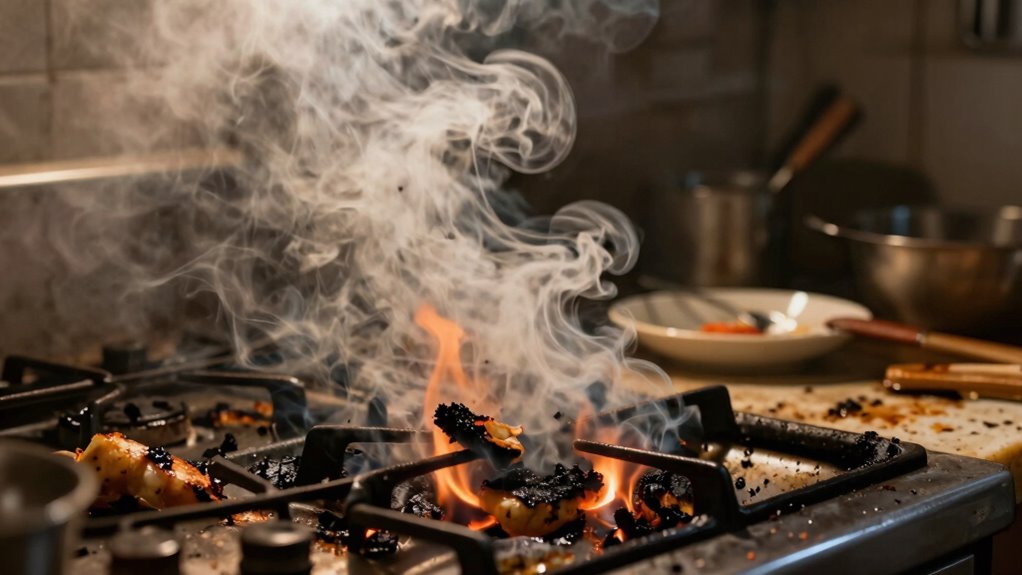
If you cook using high-temperature methods like frying, searing, or sautéing, you’ll release more pollutants into the air. These techniques generate smoke, fumes, and tiny particles that can settle on surfaces or linger in the air. Without proper ventilation, these pollutants can buildup, affecting your indoor air quality and your health. Keep going to discover tips on how to minimize these emissions and keep your kitchen safer and cleaner.

Turn the school run and nap time into listening time
- Thousands of audiobooks, podcasts and originals
- Listen on your phone, tablet or Echo — also offline
- Cancel anytime
Key Takeaways
- High-temperature cooking methods like frying and searing produce more smoke, fumes, and airborne particles.
- Cooking without proper ventilation traps pollutants indoors, increasing indoor air pollution.
- Using older or poorly maintained appliances can emit higher levels of pollutants during cooking.
- Not turning on exhaust fans or range hoods during cooking allows pollutants to accumulate in the air.
- Cooking at high heats with inadequate airflow intensifies the release of airborne contaminants.
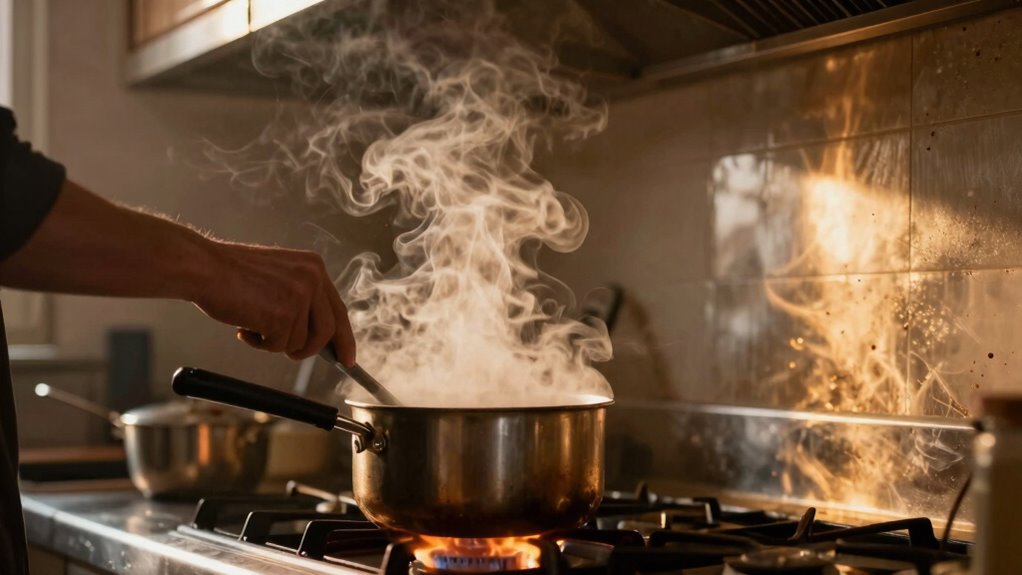
Many common cooking habits release pollutants into the air, often without you realizing it. When you cook, combustion byproducts and airborne particles can notably impact indoor air quality. The way you use your kitchen appliances, especially when cooking at high heats or without proper ventilation, plays an essential role in how much pollution gets released. If you’re not mindful, your daily cooking routine can turn your kitchen into a source of indoor air pollution, affecting the health of everyone in your home.
Cooking habits can release pollutants, impacting indoor air quality and health if not managed with proper ventilation.
One of the biggest culprits is cooking at high temperatures without adequate ventilation. When you fry, sear, or sauté, you generate smoke, fumes, and tiny particulate matter that pollute the air. These pollutants can linger and settle on surfaces, worsening indoor air quality over time. Without proper ventilation, these airborne contaminants stay trapped inside, which can cause respiratory issues, allergies, or other health problems, especially if you or your family members already have sensitivities.
Your choice of cooking appliance and how efficiently you use it directly influence indoor air quality and cooking appliance efficiency. For example, older or poorly maintained stoves often produce more emissions, releasing more pollutants into your home’s air. Upgrading to modern, efficient appliances can markedly reduce emissions, but only if you operate them correctly. Using the right burner sizes, avoiding excessive heat, and ensuring proper maintenance can help improve the efficiency of your appliances and minimize pollutant release.
Ventilation is key. If you don’t use an exhaust fan or range hood, smoke and fumes accumulate quickly, decreasing indoor air quality. Turning on the vent during and after cooking helps remove airborne pollutants and reduces their spread throughout your home. Proper air exchange dilutes indoor pollutants, keeping the air cleaner and safer for everyone. Additionally, routine appliance maintenance is essential to prevent excess emissions and ensure your kitchen remains healthier and more efficient. Regular cleaning of filters and vents can significantly reduce indoor air pollution caused by accumulated grease and dust. Furthermore, air circulation can help disperse pollutants more effectively, improving overall indoor air quality.
As an affiliate, we earn on qualifying purchases.
Frequently Asked Questions
How Do Pollutants From Cooking Affect Indoor Air Quality Long-Term?
Cooking emissions can considerably lower your indoor air quality over time by releasing pollutants like smoke, grease particles, and volatile organic compounds. If you don’t have proper indoor ventilation, these pollutants accumulate, potentially causing respiratory issues or allergies. Regularly using exhaust fans or opening windows helps clear out these emissions, reducing long-term health risks. Maintaining good ventilation ensures cleaner indoor air and a healthier living environment for you.
Are There Specific Foods That Produce More Pollutants When Cooked?
Certain foods, like fatty meats, frying oils, and heavily spiced dishes, produce more pollutants due to food emissions and cooking residue. When you cook these, they release more airborne particles and volatile organic compounds, which can degrade indoor air quality over time. To minimize this, you might use better ventilation, cook at lower temperatures, or opt for healthier preparation methods. This helps reduce indoor pollutants and keeps your air cleaner.
What Appliances Are Most Responsible for Air Pollution During Cooking?
Think of your kitchen as a stage, with appliances as the main actors. Your stove, especially gas models, is the star culprit, releasing emissions like a noisy performer. Without proper kitchen ventilation, these pollutants linger like uninvited guests, filling the air with harmful particles. To keep the atmosphere fresh and safe, guarantee your stove is well-ventilated, using range hoods or exhaust fans to clear out those unwanted emissions.
Can Cooking Habits Impact Outdoor Air Pollution Levels?
Yes, your cooking habits can impact outdoor air pollution levels. When you cook without proper kitchen ventilation, cooking emissions, like smoke and volatile organic compounds, can escape into the environment. Using range hoods or exhaust fans helps contain these pollutants, preventing them from contributing to outdoor air pollution. Being mindful of ventilation and cooking times reduces emissions, making the air safer both indoors and outside.
How Effective Are Air Purifiers in Reducing Cooking-Related Pollutants?
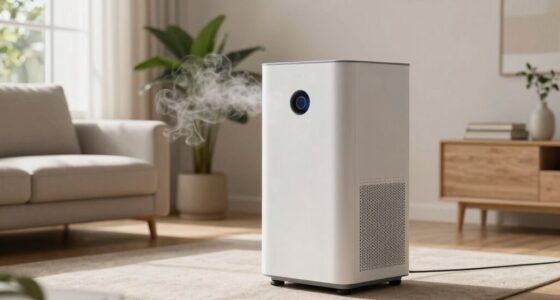
Air purifiers can be quite effective in reducing cooking-related pollutants if you choose a model with high efficiency for airborne particles and gases. Think of it as having a dedicated filter that catches the mess you create in the kitchen. Proper placement and regular maintenance boost their pollutant removal capabilities, helping improve indoor air quality. While not a magic solution, they markedly cut down pollutants, making your home healthier.
Conclusion
If you overlook your cooking habits, you might be inviting trouble into your home’s air quality. Small changes, like using proper ventilation or choosing healthier cooking methods, can make a big difference. Remember, a burning candle or neglecting your kitchen’s air flow might seem harmless, but they could be adding fuel to the fire of pollution. Stay ahead of the game—don’t let your good intentions backfire and turn your kitchen into a pollution hotspot.
Cold & flu season Picks
humidifiers
As an affiliate, we earn on qualifying purchases.