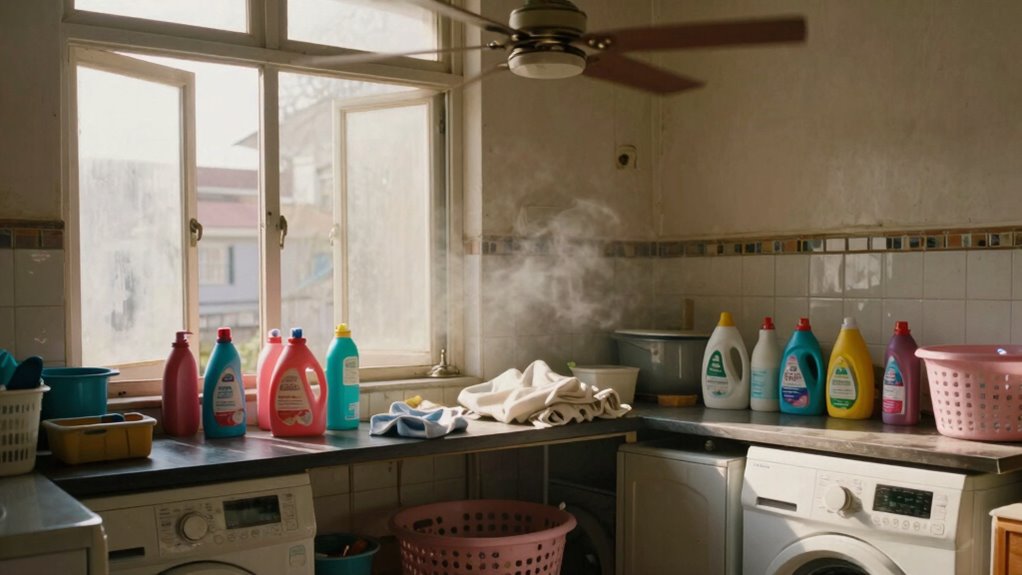

Laundry rooms produce a lot of moisture from washing and drying, which can lead to mold, damage, and poor air quality if not properly ventilated. Poor airflow allows humidity to build up, causing long-term issues like mold growth and structural damage. Improving ventilation helps keep the space dry, safe, and healthier for you and your family. Keep going to find out how small upgrades can make a big difference in your laundry area.

Turn the school run and nap time into listening time
- Thousands of audiobooks, podcasts and originals
- Listen on your phone, tablet or Echo — also offline
- Cancel anytime
Key Takeaways
- Laundry rooms generate high humidity from washing and drying, requiring enhanced ventilation to prevent mold and damage.
- Inadequate airflow leads to moisture buildup, risking structural damage and health issues from mold growth.
- Proper ventilation reduces odors and stale air, ensuring a healthier indoor environment.
- Upgraded airflow systems improve drying efficiency, saving energy and protecting laundry equipment.
- Laundry spaces often lack sufficient natural ventilation, making dedicated airflow attention essential for safety and longevity.

Many homeowners overlook the importance of proper airflow in their laundry rooms, but neglecting this can lead to serious issues. Your laundry space isn’t just a place to wash clothes; it’s a small ecosystem that needs good ventilation to stay healthy and safe. Without adequate airflow, moisture builds up quickly, creating the perfect environment for mold, mildew, and unpleasant odors. That’s why you should consider ventilation upgrades—improving how air moves in and out of your laundry area—to keep moisture levels in check. Proper ventilation isn’t just about comfort; it’s about protecting your home’s structure and your health.
Proper airflow in laundry rooms is essential for health, safety, and preventing mold and odors.
When moisture isn’t controlled, it seeps into walls, ceilings, and even flooring, which can cause long-term damage. Over time, this excess humidity promotes mold growth, which can trigger allergies or respiratory problems for you and your family. It also weakens building materials, leading to costly repairs. By focusing on moisture control through ventilation upgrades, you can substantially reduce these risks. Installing an exhaust fan or upgrading your existing system helps to vent humid air outside, preventing it from lingering and causing damage. It’s a simple step that makes a considerable difference in maintaining a clean, safe environment. Additionally, proper ventilation can contribute to better energy efficiency in your home by reducing the load on your HVAC system.
Many people underestimate just how much moisture is generated during laundry activities. Washing machines and dryers release hot, moist air that needs to escape efficiently. If it doesn’t, condensation occurs, and moisture accumulates. This is especially true in small or poorly ventilated laundry rooms. To combat this, you need to assure your ventilation system is robust enough to handle the moisture load. Ventilation upgrades might include installing a more powerful exhaust fan, sealing leaks around vents, or adding air intake vents to improve overall airflow. These improvements help to keep humidity levels low, which in turn discourages mold growth and reduces the risk of musty smells. Proper airflow is essential for maintaining a healthy indoor environment and preventing long-term damage. Ensuring good indoor air quality through ventilation is also crucial for maintaining a comfortable and healthy living space. Additionally, incorporating natural ventilation principles into your laundry area design can further enhance airflow and reduce reliance on mechanical systems.
Good airflow also improves air quality, making your laundry room a healthier space. It prevents stale air from lingering, which can carry dust, allergens, and lingering odors. When you invest in proper ventilation, you’re not just protecting your clothes from dampness—you’re safeguarding your home’s interior and your family’s health. It’s a simple upgrade that yields long-term benefits. Plus, good airflow can help your dryer work more efficiently, cutting down on energy costs and drying time.
In the end, paying attention to your laundry room’s airflow isn’t just about convenience; it’s about creating a safe, healthy environment. Ventilation upgrades and moisture control aren’t optional extras—they’re essentials. By making these improvements, you guarantee your laundry space remains a functional, mold-free zone that protects your entire home. Ensuring proper biodiversity principles in your home design can also contribute to healthier indoor environments by promoting better air quality and natural ventilation practices.
Products Worth Considering

LEVOIT Vital 200S-P Smart Air Purifier for Large Rooms, White

Levoit Vital 100S-P Air Purifier with Washable Pre-Filter

Levoit Eleva 300X Air Purifier with Sealed HEPA Filtration
As an affiliate, we earn on qualifying purchases.
Frequently Asked Questions
How Often Should Laundry Room Vents Be Cleaned?
You should clean your laundry room vents at least once a year to prevent lint buildup and maintain proper airflow. Consider ventilation upgrades to improve air circulation and reduce dust accumulation. Using air purifier options can also help filter airborne particles, making the space healthier. Regular cleaning guarantees your vents operate efficiently, reduces fire risks, and keeps the air fresh, especially in a busy laundry area.
What Are Signs of Poor Air Quality in Laundry Rooms?
You’ll notice poor air quality in your laundry room if you detect persistent odors or stuffy air, which indicates inadequate air circulation. Mold or mildew growth, increased dust, and condensation on walls are also signs of stagnant air. These issues can lead to musty smells and health concerns. Improving ventilation, cleaning vents regularly, and ensuring proper airflow help control odors and maintain fresh, healthy air in your laundry space.
Can Mold Growth Affect Laundry Room Air Quality?
Yes, mold growth can considerably affect your laundry room’s air quality. Mold releases spores into the air, which can cause health issues. To prevent mold, focus on mold prevention strategies like controlling moisture and maintaining good air circulation. Regularly ventilate the space, fix leaks promptly, and use exhaust fans. These steps help reduce humidity, discourage mold growth, and keep your laundry room’s air fresh and safe to breathe.
Are Special Air Filters Necessary for Laundry Rooms?
You probably don’t need special filters for your laundry room, but regular air purifier maintenance is essential. Standard HEPA filters work well if replaced at recommended intervals, usually every 6 to 12 months. This keeps the air clean and prevents mold or dust buildup. Don’t skip filter replacement intervals, as neglected filters can reduce effectiveness and worsen air quality, especially in a space prone to humidity and lint.
How Does Humidity Impact Laundry Room Air Health?
Humidity impacts laundry room air health by reducing ventilation efficiency and making moisture control difficult. High humidity promotes mold growth, allergens, and musty odors, which can harm your health. Proper ventilation helps maintain air quality by removing excess moisture, preventing these issues. You should guarantee your laundry room has good airflow, use exhaust fans, and consider dehumidifiers to keep humidity levels in check and promote a healthier environment.
Conclusion
In short, don’t dismiss the dull duties of your laundry room. Diligently dedicate time to draft in fresh air, diminish dampness, and dodge dangerous fumes. By boosting airflow, you’ll banish bacteria, banish mold, and bring brightness to your space. Remember, a well-ventilated laundry room isn’t just about cleanliness—it’s about creating a safer, smarter, and more satisfying sanctuary for your suds and suds sessions. So, give your laundry room the fresh focus it truly deserves!