If you have a well-water home, you need to plan your filtration system carefully from the start. Regular testing helps you identify specific contaminants and tailor your filters accordingly. Choosing the right, properly sized system prevents clogging and guarantees long-term effectiveness. Proper maintenance keeps your water safe, while understanding your groundwater sources helps avoid future issues. If you’re interested in building a reliable system that protects your health and appliances, there’s more you should know.
Key Takeaways
- Conduct comprehensive water testing to identify specific contaminants and determine appropriate filtration needs.
- Understand your groundwater source and local geology to anticipate potential pollutants.
- Choose properly sized and specialized filtration systems for your water chemistry and usage demands.
- Establish a regular maintenance schedule to ensure optimal system performance and longevity.
- Plan long-term investments in high-quality systems to ensure reliable, safe, and cost-effective water supply.
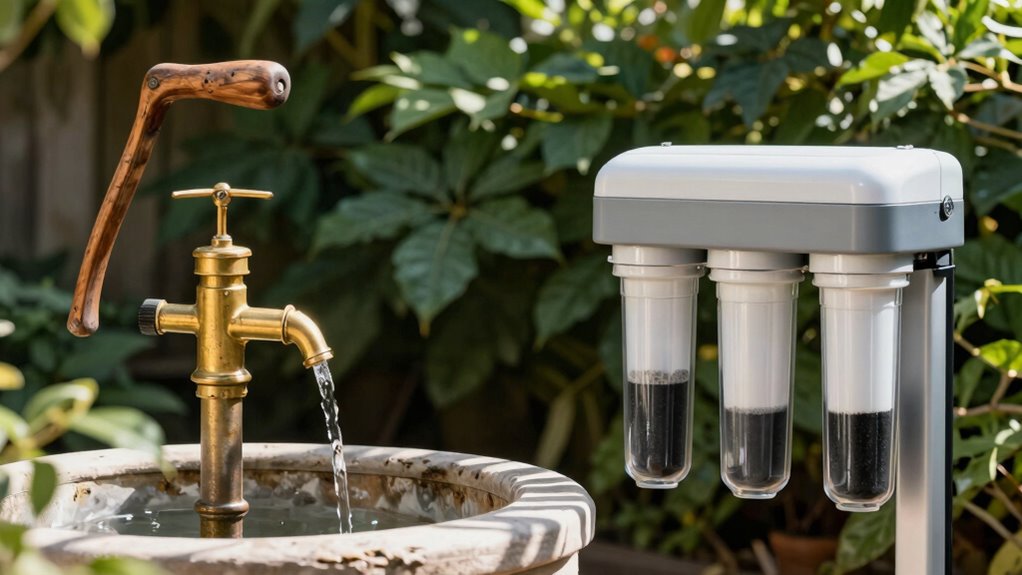
If you rely on well water, you need to understand that not all filtration systems are created equal. Well water can vary considerably in water quality, and choosing the right filtration system from the start is essential to guarantee your home’s water is safe and clean. Unlike municipal water, which often undergoes extensive treatment, well water is directly drawn from the ground, making it more vulnerable to contaminants like bacteria, nitrates, iron, manganese, and sediment. Without proper filtration, these impurities can affect your health, damage appliances, and cause staining or unpleasant tastes.
A key part of effective filtration planning involves understanding your well water’s specific issues. You should consider testing your water regularly to identify which contaminants are present and in what concentrations. This information guides you in selecting the appropriate filtration systems. For example, if your water contains high levels of iron or manganese, you’ll need specialized filters to remove these metals. If bacteria are a concern, UV purifiers or chlorination systems may be necessary. Knowing your water’s composition allows you to tailor your filtration approach, avoiding unnecessary expenses on systems that won’t address your specific needs. Regular testing helps maintain an accurate understanding of your well’s water quality over time. Additionally, understanding the groundwater sources can help anticipate potential contaminants and inform your filtration choices. Having a comprehensive understanding of your well’s water chemistry can further refine your filtration strategy and prevent unexpected issues. Moreover, understanding the biodiversity of groundwater can reveal natural filtration processes that might influence your water treatment needs. It’s also important to recognize that groundwater pollutants can vary based on local land use and geological conditions, emphasizing the need for tailored testing and treatment.
Choosing the right filtration systems isn’t just about removing contaminants; it’s also about guaranteeing consistent water quality. Cheaper or improperly sized systems might seem attractive initially but often fall short over time, leading to clogged filters, reduced flow rates, or even system failures. That’s why investing in high-quality, appropriately sized filtration systems from the beginning pays off in the long run. Properly designed systems will not only improve water quality but also extend the lifespan of your plumbing and appliances.
Another important aspect is planning for maintenance and replacement. Well water filtration systems require regular upkeep to remain effective. When planning your system, consider ease of access for filter changes and schedule routine maintenance to prevent bacteria buildup or filter clogging. This proactive approach ensures you maintain high water quality consistently, avoiding surprises or contamination issues down the line. Proper maintenance routines can also help you detect early signs of system failure, saving you money and hassle in the long run.
Ultimately, smarter filtration planning starts with understanding your well water’s unique needs. By researching and investing in suitable filtration systems from the start, you protect your family’s health, preserve your appliances, and ensure you always have clean, safe water. Well water may be a reliable source, but without proper filtration, it can quickly become a source of frustration and risk. Planning ahead makes all the difference in achieving long-term water quality and peace of mind.
As an affiliate, we earn on qualifying purchases.
Frequently Asked Questions
How Often Should Well Water Be Tested for Contaminants?
You should test your well water for contaminants at least once a year to guarantee safety. Testing frequency can increase if there are changes in water taste, smell, or appearance, or after severe weather events. Regular testing helps catch pollutants early, preventing health issues. Keep in mind, some contaminants like nitrates or bacteria may require more frequent testing, especially in areas with agricultural activity or known pollution sources.
What Are the Common Signs of Water Quality Issues?
Imagine your water turns cloudy or takes on a strange odor—these are signs of water quality issues. You might notice stains on laundry, a metallic taste, or skin irritation, all pointing to water contamination. Regular well maintenance helps catch problems early. If these signs appear, don’t ignore them—address water contamination promptly to guarantee your well water remains safe and clean.
Can Filtration Systems Be Customized for Specific Contaminants?
Yes, filtration systems can be customized for specific contaminants through system customization and contaminant targeting. You can choose filters designed to remove particular pollutants like bacteria, heavy metals, or chemicals. By identifying the contaminants present in your well water, you guarantee your filtration system effectively targets those issues. Customizing your system helps improve water quality, making it safer and more suitable for your household needs.
What Is the Average Cost of Installing a Comprehensive Filtration System?
The average cost to install a thorough filtration system varies based on your water source and the filtration materials used. Typically, you’ll spend between $1,000 and $5,000, depending on system complexity and contaminant levels. You’ll need to take into account costs for initial setup, including filters, tanks, and installation, plus ongoing maintenance. Planning ahead ensures you select the right filtration materials, making your system effective and budget-friendly.
Are There Government Incentives for Upgrading Well Water Filtration?
You can’t believe your luck—there are indeed government grants and tax incentives that make upgrading your well water filtration system feel like hitting the jackpot! These programs can cover a significant chunk of costs, making your home’s water safer and cleaner without draining your wallet. By taking advantage of federal or state incentives, you not only protect your health but also save money, turning a challenging task into a smart, budget-friendly move.
Conclusion
Just like planting a tree requires a solid plan from the start, so does designing your well-water filtration system. Imagine trying to fix a leaky pipe after the flood—much harder than installing the right valves upfront. By planning smarter from the beginning, you prevent future headaches and guarantee clean, safe water flows effortlessly. Think of it as laying a strong foundation—it’s the key to a worry-free well water experience that lasts for years to come.