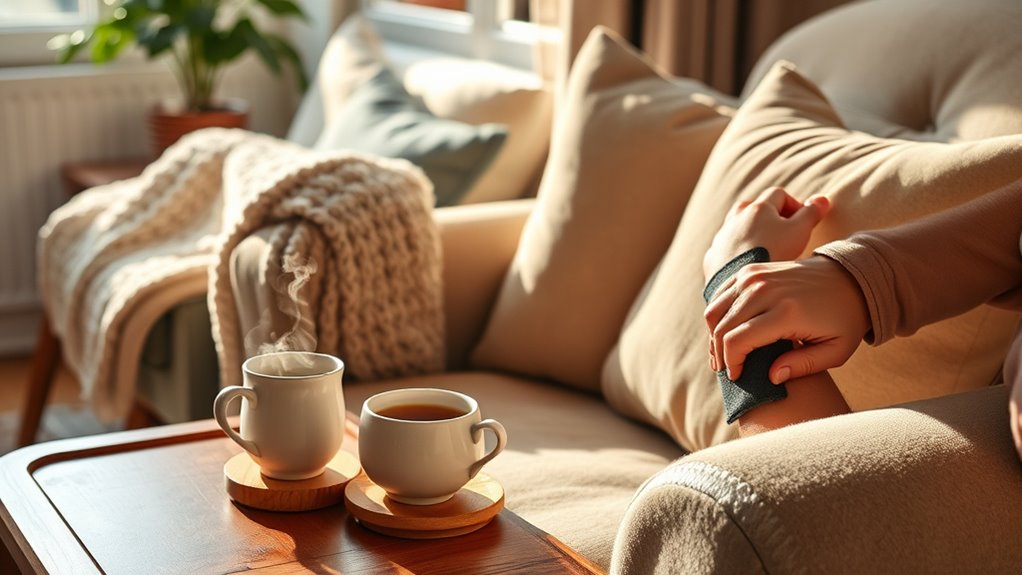

To make your home more pain-friendly, use warm compresses or heating pads to relax muscles and improve blood flow, and apply cold packs wrapped in cloth to reduce inflammation and numb nerve endings. Switch between heat and cold sessions for better relief, and add supportive cushions or pillows to ease pressure on joints and promote good posture. Small adjustments can create a more comfortable environment—keep exploring for simple tips to enhance your comfort even further.
Key Takeaways
- Use warm compresses, heating pads, or microwave-damp towels to relax muscles and improve blood flow.
- Apply cold packs or frozen peas wrapped in cloth to reduce inflammation and numb pain.
- Alternate heat and cold therapies based on pain intensity for effective relief and improved circulation.
- Incorporate supportive cushions and lumbar pillows to relieve pressure and maintain proper posture.
- Enhance comfort with ergonomic furniture, cushioned mats, and small home modifications to minimize pain triggers.
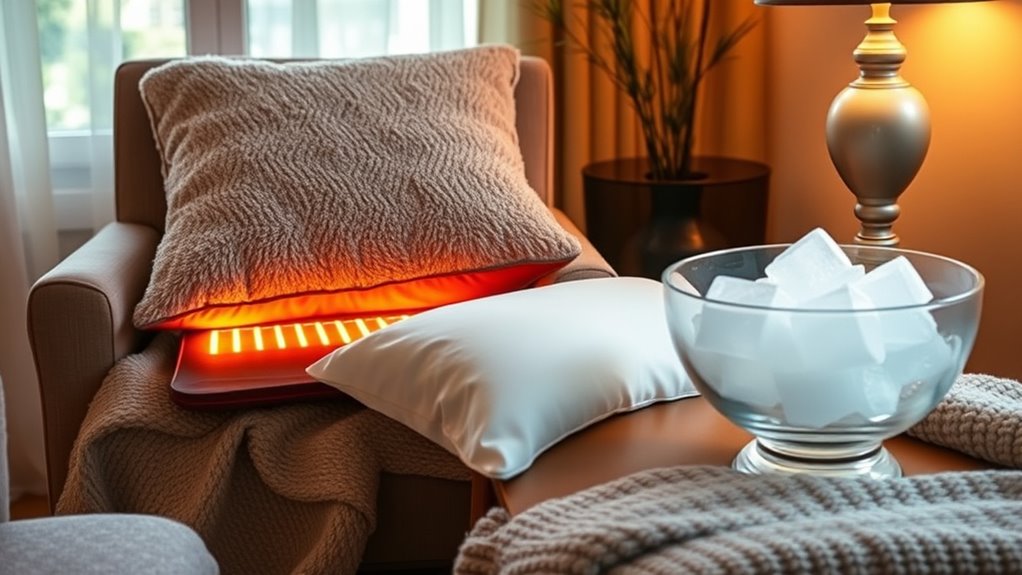
Living with pain can make everyday tasks challenging, but simple home hacks can make a big difference. One of the easiest ways to manage discomfort is by using heat and cold therapy. Applying a warm compress or heating pad can relax tense muscles and improve blood flow, providing relief from stiffness and soreness. You might try microwaving a damp towel for an instant, soothing heat or investing in a reusable gel pack that molds to your body. Cold therapy, on the other hand, helps numb nerve endings and reduce inflammation. Keep a bag of frozen peas or a gel cold pack in your freezer for quick access. When pain strikes, wrap the cold pack in a cloth and apply it to the affected area for 15-20 minutes. Alternating between heat and cold can be especially effective, so you might create a routine that switches between the two based on your pain level. Incorporating appropriate equipment like heating pads or cold packs can enhance the effectiveness of these therapies.
Cushioning is another simple yet powerful hack to lessen pain and improve comfort at home. When sitting for long periods, use supportive cushions or pillows designed to relieve pressure points. For lower back pain, a lumbar pillow placed behind your lower back can help maintain proper posture, reducing strain. If you experience joint pain, especially in knees or hips, consider cushioned pads or mats on hard floors to soften the impact. Even replacing standard chairs with ergonomic ones that have built-in cushioning can make a noticeable difference. For added comfort, seat cushions with memory foam contour to your body, providing tailored support that eases pressure. When lying down, an extra pillow between your knees can alleviate hip and lower back strain, keeping your spine aligned. These small adjustments can markedly diminish pain during daily activities.
You should also think about how your environment supports your comfort. Strategically placing soft mats or rugs in high-traffic areas can prevent slips and provide cushioning if you need to stand or walk for extended periods. Using ergonomic tools and supportive cushions in your workspace can help maintain proper posture, reducing the risk of pain flare-ups. Regularly adjusting your position and incorporating these simple hacks into your routine can help you stay more comfortable and manage pain more effectively. With some thoughtful modifications, your home can become a supportive environment that eases discomfort and allows you to focus more on what you enjoy. These small, practical changes are easy to implement and can lead to noticeable improvements in your daily well-being.
Frequently Asked Questions
Can Heat Therapy Worsen Certain Types of Pain?
Yes, heat therapy can worsen certain types of pain, especially if you have inflammation, swelling, or an acute injury. Applying heat to these areas may increase blood flow and swelling, making the pain worse. Always check with your healthcare provider before using heat therapy, and avoid it if you experience increased pain, redness, or swelling after applying heat. Properly timing and using heat correctly is key to avoiding worsening your pain.
How Long Should I Apply Cold Packs for Optimal Relief?
You should apply cold packs for about 15 to 20 minutes at a time to get maximum relief. Make sure to wrap the pack in a thin cloth to prevent frostbite, and wait at least an hour before reapplying. If you notice any skin irritation or numbness, remove the pack immediately. Consistent use within this time frame helps reduce inflammation and eases pain effectively.
Are There Any Risks With Using Cushions for Chronic Pain?
Like a gentle knight’s shield, cushions protect your comfort, but they do carry risks. You might develop skin irritation or pressure sores if you leave them in one spot too long. Also, poorly positioned cushions can misalign your posture, causing more pain over time. Always check your skin regularly and adjust cushions as needed. Staying mindful helps you enjoy their benefits without inviting new discomforts.
What Materials Are Safest for Homemade Heat or Cold Packs?
You should use materials like rice, beans, or flaxseed for homemade heat or cold packs, as they’re safe and mold well to your body. Avoid using water, gels, or anything with chemicals that could leak or cause reactions. Make sure the pack is well-sealed to prevent spills, and always wrap it in a cloth before applying to your skin. These simple materials help you manage pain safely at home.
How Do I Prevent Skin Damage During Heat or Cold Therapy?
Think of your skin as a delicate garden needing gentle care. To prevent damage during heat or cold therapy, always wrap packs in a cloth or towel before applying. Limit contact time to 15-20 minutes and take breaks in between. Check your skin frequently for redness or discomfort, and never apply extreme temperatures directly. These small steps keep your skin safe while soothing pain effectively.
Conclusion
By incorporating simple hacks like using cold packs after workouts or adding cushioned mats in your favorite sitting spots, you can make your home more pain-friendly. For example, imagine easing chronic joint pain by placing soft cushions on your favorite chair—it’s an easy change that offers relief. Small adjustments like these empower you to manage discomfort daily, so you can enjoy a more comfortable, pain-conscious environment. Start today and feel the difference tomorrow.