
When designing shared activity rooms, focus on creating flexible layouts that encourage interaction and adapt to different needs. Use multipurpose furniture and clearly define zones for quiet, lively, or focused activities with appropriate colors and lighting. Arrange furniture to foster communication and guarantee easy movement. Maximize natural light and keep sightlines clear for inclusivity. If you keep exploring, you’ll find practical tips to optimize your space and boost engagement even further.
Key Takeaways
- Assess room size, shape, and flow to create an open, adaptable layout that encourages interaction.
- Use versatile, adjustable furniture arranged in clusters or zones to facilitate various activities.
- Define functional zones with furniture and color differentiation, ensuring easy access and movement.
- Maximize natural light and use color schemes to enhance ambiance and distinguish activity areas.
- Prioritize strategic planning for flexibility, communication, and a welcoming environment that fosters community.

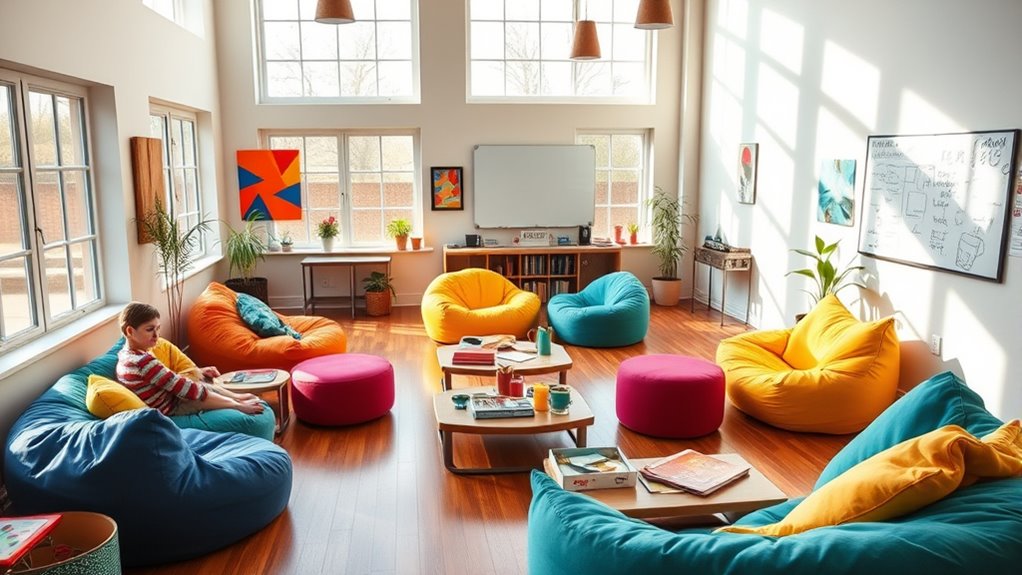
Creating effective shared activity rooms requires careful planning to foster community and encourage engagement. One of the most critical aspects of this planning is optimizing space utilization. You want to make sure every square foot is functional, versatile, and inviting. Start by evaluating the room’s size and shape, then consider how people will move through the space. Avoid cluttered layouts that restrict flow; instead, aim for an open environment that invites interaction. Use multipurpose furniture and flexible zones to maximize utility. For example, folding tables or stackable chairs can be stored away when not in use, freeing up space for different activities. Dividing the room into designated areas can also help, such as a quiet corner for reading or a lively section for group projects. This segmentation makes the room adaptable, ensuring it can serve various purposes without feeling overcrowded. Additionally, incorporating appropriate furniture can enhance comfort and usability, making the space more inviting for all users. Furniture arrangement plays a pivotal role in creating a welcoming atmosphere. When you plan how to place furniture, think about fostering communication and ease of access. Position seating in clusters or circle formations to promote discussion and collaboration. Avoid isolating individuals or creating dead zones that discourage movement. Instead, arrange furniture so that everyone feels included and connected. Consider the sightlines across the room as well; you want to make sure that no area feels disconnected or hidden. Placing larger pieces like sofas or tables strategically can define spaces without overwhelming the room. Additionally, adjustable furniture gives you flexibility, allowing you to reconfigure the space based on the activity or group size. For example, lightweight chairs and movable tables can be easily rearranged for a workshop, game night, or quiet study session. Lighting and color choices also influence furniture arrangement and space utilization. Bright, natural light encourages activity and makes the room feel larger. Position furniture to maximize light exposure and facilitate easy movement. Use color to define zones—calmer hues for reading or relaxation corners, brighter tones for activity zones. When you thoughtfully arrange furniture with these considerations, you create an environment that is not only functional but also inviting and adaptable. The goal is to craft a shared space that feels comfortable, encourages participation, and can evolve to meet the needs of its users. By prioritizing smart space utilization and strategic furniture arrangement, you ensure your activity room becomes a vibrant hub for community and engagement.
Frequently Asked Questions
What Safety Considerations Are Essential in Shared Activity Rooms?
You must prioritize fire safety by installing smoke detectors, fire extinguishers, and clear exit routes. Make certain equipment placement is safe, avoiding clutter and making sure all devices are stable and accessible. Regularly check electrical wiring and equipment for hazards. Keep pathways unobstructed, and use non-slip flooring to prevent falls. These safety measures help create a secure environment, reducing risks during shared activities and ensuring everyone’s safety.
How Can Privacy Be Maintained in Shared Spaces?
To maintain privacy in shared spaces, you should incorporate sound insulation to reduce noise transfer and install visual barriers like screens or curtains. These features help create a sense of personal space and minimize distractions, making everyone feel more comfortable. Additionally, arranging furniture strategically can further enhance privacy by defining individual zones, ensuring each person has a sense of separation within the shared activity room.
What Are Cost-Effective Design Options for Large Shared Rooms?
Think of your space like a Swiss Army knife—versatile and adaptable. Opt for modular furniture that you can rearrange easily, saving costs on renovations. Create multi-use zones that serve different functions, like a quiet corner and a lively group area, within the same room. These design choices maximize flexibility and efficiency without breaking the bank, making your shared space functional and welcoming for everyone.
How Do Lighting Choices Impact Activity Room Usability?
Lighting choices greatly impact your activity room’s usability. Ambient lighting provides overall brightness, creating a welcoming atmosphere, while task lighting targets specific areas for focused activities. Proper balance ensures the space is versatile, reducing eye strain and enhancing safety. You should combine both types to promote productivity and comfort, adapting the lighting levels to different activities. Thoughtful lighting design makes the room more functional and enjoyable for everyone using it.
What Are the Best Ways to Encourage Community Engagement?
Imagine a vibrant space where voices blend and laughter echoes, inviting everyone to join in. You can boost community engagement by hosting diverse community events and creating inviting social zones. Keep the atmosphere welcoming with comfortable seating and colorful decor. Promote participation through signage and word-of-mouth. When people feel connected and comfortable, they’ll naturally want to spend more time together, strengthening the community bonds that make your activity room lively and inclusive.
Conclusion
As you design shared activity rooms, remember they’re more than just spaces—they’re bridges connecting people’s passions. Think of these rooms as open doors to friendship, creativity, and community. Every chair, light, and corner symbolizes a shared journey, inviting everyone to step in and contribute. When you create with purpose, you craft a haven where connections grow and memories unfold, turning an ordinary room into a vibrant heart of shared life.