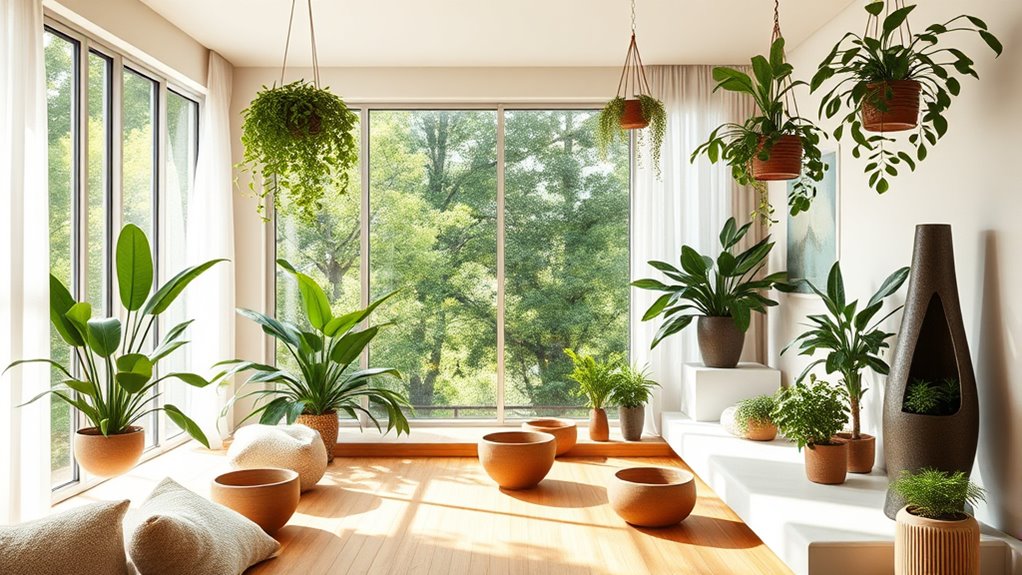

To design a wellness-focused home, prioritize good indoor air quality by using air purifiers, proper ventilation, and low-VOC materials. Maximize natural lighting through large windows, skylights, and reflective surfaces to boost mood and circadian health. Position furniture for ideal daylight and reduce artificial light at night to support sleep. Incorporate plants that filter toxins and improve air quality. Keep exploring for more tips on creating a space that truly supports your well-being.
Key Takeaways
- Prioritize indoor air quality with proper ventilation, air purifiers, low-VOC materials, and toxin-filtering plants.
- Maximize natural light through large windows, skylights, and reflective surfaces to boost mood and circadian health.
- Position furniture to enhance daylight exposure and reduce artificial lighting in the evening for better sleep.
- Ensure good airflow by opening windows regularly and incorporating plants to disperse pollutants and improve air freshness.
- Create a balanced environment that combines ample natural light and clean air to promote emotional well-being and physical health.
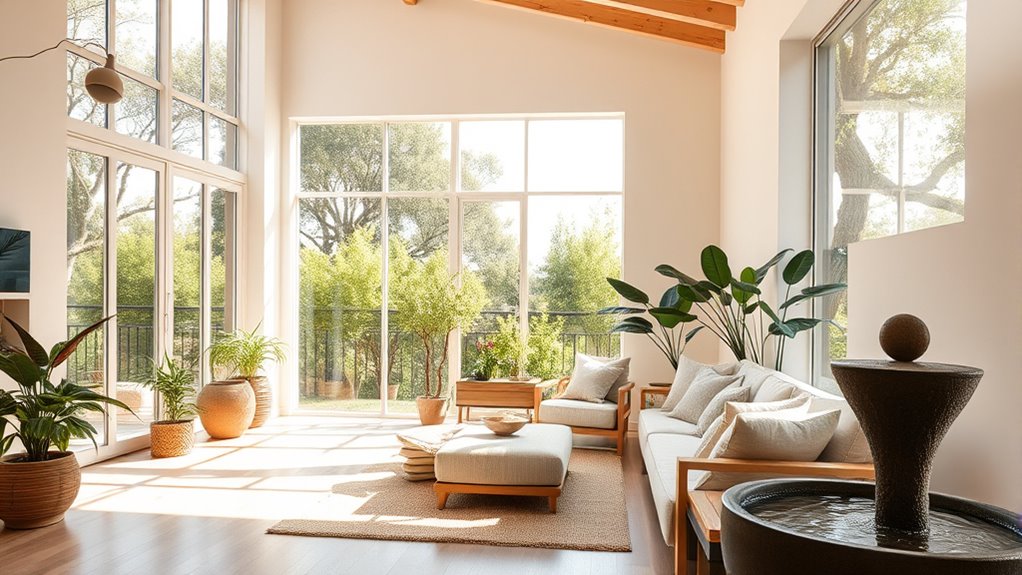
Creating a wellness-focused home involves more than just aesthetics—it’s about designing a space that supports your physical, mental, and emotional health. One of the most impactful ways to do this is by prioritizing indoor air quality and harnessing natural lighting. When you pay attention to indoor air quality, you’re creating an environment free from pollutants, allergens, and toxins that can negatively affect your health. Proper ventilation, air purifiers, and choosing low-VOC paints and materials help make certain the air you breathe is clean and fresh. You may also consider incorporating houseplants, which naturally filter toxins and add a calming presence to your space. Keeping indoor air healthy isn’t just about cleanliness; it’s about creating a sanctuary where your body can thrive without the stress of polluted air. Additionally, selecting the right projector technology can enhance your home environment by reducing eye strain and creating a more comfortable visual experience, supporting overall wellness.
Natural lighting plays a vital role in elevating your home’s wellness quotient. Sunlight boosts your mood, enhances your circadian rhythms, and improves sleep quality. To maximize natural lighting, opt for large windows, skylights, or glass doors that allow sunlight to flood your living spaces. Keep window treatments minimal or use sheer curtains to let light penetrate freely. Position your furniture to take advantage of daylight, and consider lighter-colored walls that reflect natural light, making rooms appear brighter and more inviting. When you’re exposed to natural light during the day, your body produces more serotonin, which helps combat stress and anxiety. Conversely, reducing exposure to artificial light in the evening can improve melatonin production, making it easier to fall asleep and wake up refreshed.
Creating a home that supports wellness also means paying attention to how natural lighting and indoor air quality interact. Good ventilation ensures that fresh air circulates, dispersing stale air and airborne pollutants. During the day, opening windows allows for a natural exchange of air, reducing indoor pollutants and bringing in the beneficial effects of sunlight. Using air-purifying plants near windows can further improve air quality while adding vibrant, calming greenery to your space. By making these adjustments, you’re not just enhancing your home’s aesthetic appeal—you’re actively fostering an environment that nurtures your well-being. When your indoor air is clean and your spaces are bathed in natural light, you create a foundation for better energy, improved mood, and overall health. It’s about designing a home where wellness is woven into the very fabric of your daily life.
Frequently Asked Questions
How Can I Incorporate Natural Light Effectively?
You can incorporate natural light effectively by strategically placing windows to maximize sunlight throughout the day. Use lighting control systems like dimmers and blinds to adjust brightness as needed, preventing glare and overheating. Position windows to capture views and promote airflow, enhancing your home’s wellness. Combining thoughtful window placement with adjustable lighting control helps create a bright, inviting space that supports your well-being.
What Are the Best Materials for Indoor Air Quality?
You should choose materials that promote healthy indoor air quality, like VOC-free paints and natural finishes, which release fewer harmful chemicals. Incorporate air-purifying plants such as spider plants or snake plants to naturally filter toxins. Use non-toxic, low-emission materials for furniture and flooring, and guarantee good ventilation. These strategies create a healthier environment, reduce indoor pollutants, and support your overall wellness at home.
How Does Color Psychology Influence Wellness Design?
Think of your home as a canvas, where colors paint your mood. Color psychology influences wellness design by shaping color moods and triggering psychological effects. For example, soft blues promote calmness, while vibrant yellows energize you. Choosing the right hues creates an environment that nurtures your mental health, balances your energy, and enhances comfort. You control this palette, using color to foster a space that supports your overall well-being.
What Are Budget-Friendly Wellness Home Upgrades?
You can boost your home’s wellness on a budget with affordable renovations like adding indoor plants, upgrading lighting, or using calming colors. Incorporate budget-friendly decor such as cozy textiles, aromatherapy diffusers, or ergonomic furniture to create a peaceful atmosphere. Simple changes like decluttering and enhancing air quality also promote wellness without breaking the bank. These upgrades help you create a healthier, more relaxing environment without overspending.
How Can I Ensure Privacy While Maximizing Natural Elements?
Think of your home as a garden where privacy is your protective fence. To guarantee privacy while maximizing natural elements, you can use privacy screens and soundproofing solutions to block unwanted views and noise. Strategically place these features near windows or outdoor spaces, and choose natural materials that blend seamlessly with your environment. This way, you enjoy fresh air and sunlight without sacrificing your personal sanctuary.
Conclusion
By prioritizing wellness in your home’s design, you create a space that truly nurtures your mind and body. Some might think it’s too costly or complicated, but small changes—like better lighting or natural ventilation—can make a big difference without breaking the bank. Remember, your home should support your well-being every day. Invest in these simple upgrades, and you’ll enjoy a healthier, more balanced life right within your own walls.