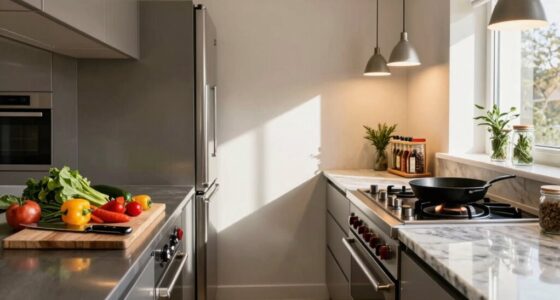
Keep essential cooking tools like spatulas, tongs, and lids close by in a holder or nearby drawers for easy access. Store flammable items such as paper towels, dishcloths, and cleaning supplies away from heat sources, preferably in designated storage spots. Make sure the fire extinguisher is within reach and clear the area of clutter that could catch fire or cause accidents. If you want tips on organizing your kitchen for maximum safety, keep going to learn more.

Get baby and family essentials delivered free — and shop member deals
- Fast, free delivery on millions of items
- Access to Prime Big Deal Days deals on October 6–7
- Prime Video, Amazon Music and more included
Key Takeaways
- Keep cooking utensils, pots, and lids within easy reach; store flammable items and cleaning supplies away from heat sources.
- Store paper towels, dish towels, and potholders at a safe distance from burners to prevent fires.
- Place small appliances on stable surfaces away from the stove to avoid overcrowding and tipping hazards.
- Maintain a clear work triangle between stove, sink, and refrigerator for safety and efficiency.
- Ensure the fire extinguisher is easily accessible, and keep heavy or bulky items off the stove’s sides.

Have you ever wondered whether the items sitting too close to your stove are actually safe? Your kitchen safety depends heavily on proper appliance placement, especially around the cooking area. When you keep the right items nearby, it makes cooking easier and safer. But cluttering your stove with unnecessary objects can lead to accidents, fires, or injuries. That’s why it’s crucial to be intentional about what you keep near your stove and what you move away.
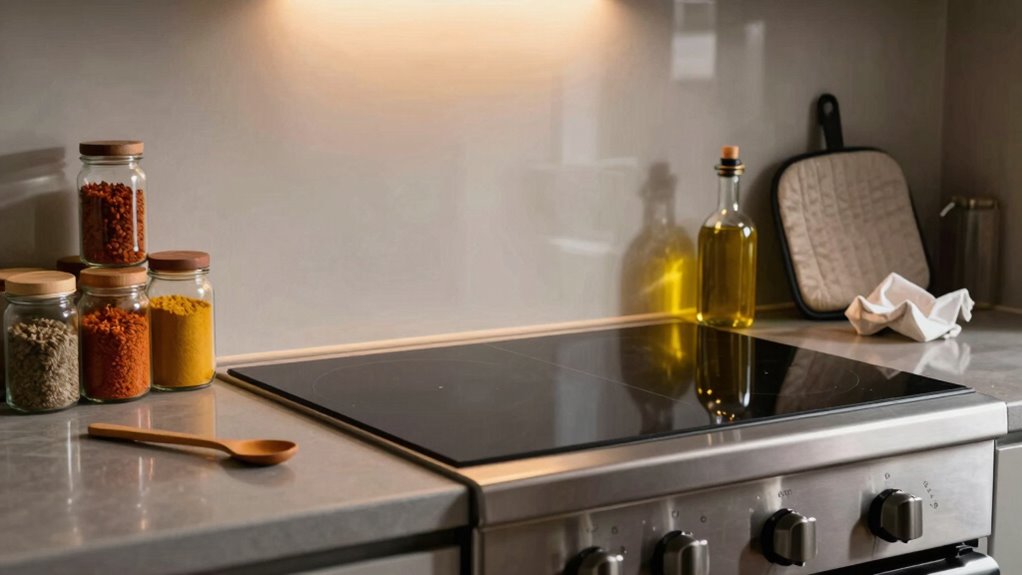
Start by examining your countertop and stove area. Items like potholders, dish towels, and paper towels should be kept at a safe distance from the burners. These materials are flammable, so if they’re too close, they could catch fire easily. Always store them in a designated drawer or a secure spot away from heat sources. Likewise, cleaning supplies or aerosol cans should be kept far from the stove, as they can be explosive or cause dangerous reactions if exposed to high heat. Proper appliance placement involves keeping these items out of reach and away from open flames or hot surfaces. Additionally, proper storage techniques help prevent clutter from accumulating around your cooking zone, reducing fire risks.
Keep flammable items and cleaning supplies away from heat sources for a safer cooking environment.
On the other hand, some tools you need while cooking should be kept within easy reach but not cluttering the stove. For example, utensils like spatulas, tongs, and spoons should be stored nearby but on a utensil holder or drawer so they don’t fall onto the burners or catch fire. This ensures you can grab what you need quickly without risking accidents. Also, pots, pans, and lids should be stored in accessible cabinets close to the stove to avoid unnecessary reaching or juggling, which could lead to spills or burns.
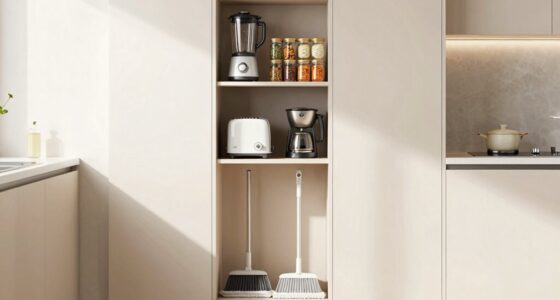
Another critical aspect of kitchen safety is guaranteeing that small appliances don’t obstruct your movement or block exits. Coffee makers, blenders, or toaster ovens should be placed on stable surfaces away from the stove’s immediate area. Overcrowding the countertop can lead to accidental knocking or tipping, increasing the risk of burns or fire hazards. When you space out your appliances thoughtfully, you maintain better airflow, reduce clutter, and create a safer cooking environment. Additionally, ensuring your appliance cords are properly managed prevents tripping hazards and accidental disconnections that could cause spills or electrical issues. Creating a clear work triangle between your stove, sink, and refrigerator can further improve safety and efficiency in your kitchen.
Finally, pay attention to the overall arrangement. Keep heavy or bulky items off the stove’s sides to prevent accidental knocking. Make sure your fire extinguisher is easily accessible in case of emergencies. Proper appliance placement isn’t just about convenience; it’s an essential part of kitchen safety. By moving away items that don’t belong near the stove and organizing your cooking area wisely, you create a safer, more efficient space to prepare your meals.
As an affiliate, we earn on qualifying purchases.
Frequently Asked Questions
How Often Should I Reorganize Items Around My Stove?
You should revisit your pantry organization and utensil placement every few months to keep your kitchen efficient. Regular reorganizing guarantees your stove area stays clutter-free and safe. If you notice spills, misplaced tools, or ingredients becoming hard to access, it’s time to update your setup. This routine helps maintain maximum functionality, minimizes accidents, and keeps your cooking space neat. Consistent adjustments make cooking smoother and your kitchen more enjoyable.
Are There Specific Materials That Should Never Be Near the Stove?
You should never keep flammable materials or heat-sensitive items near your stove. Studies show that kitchen fires often start from careless placement of paper towels, dishcloths, or plastic utensils close to heat sources. Keep items like paper, cloth, and plastic away to prevent accidents, as these materials can ignite or melt easily. Prioritize safety by storing such materials in cabinets or drawers, far from the stove’s heat.
Can I Store Cookware Directly on the Stove?
You shouldn’t store cookware directly on the stove, as it compromises cookware safety and increases stove clutter. Keeping pots and pans on the stove can accidentally cause fires or damage the cookware. Instead, store your cookware in cabinets or designated racks nearby. This keeps your cooking area organized, reduces hazards, and guarantees your stove remains safe and ready for use. Always prioritize safety and proper organization in your kitchen.
How Do I Prevent Pests From Near the Stove Area?
Imagine this: even in your modern kitchen, pests can still crash your party. To prevent them, use pest-proof storage for your food and utensils, sealing everything tightly. Clean up food residue immediately after cooking to avoid tempting pests. Keep the area dry and free from crumbs, and regularly check for gaps around cabinets. These simple steps create a pest-free zone, making your kitchen safer and more hygienic.
What Safety Precautions Should I Take When Moving Items Away From the Stove?
When moving items away from the stove, you should prioritize safety to prevent fire hazards and reduce clutter. Always turn off the stove before relocating anything nearby. Keep flammable items like paper towels, dishcloths, and curtains at a safe distance. Use clear pathways to avoid tripping. Regularly declutter the area to guarantee nothing obstructs your view or access, minimizing risks and creating a safer cooking environment.
Conclusion
By arranging your kitchen wisely, you turn your stove into a well-choreographed dance floor, where everything you need is just a step or two away. Keep your essentials close like trusted dancers, and move the clutter to the sidelines. When your workspace is clear and every tool has its place, cooking becomes a graceful waltz rather than a chaotic whirl. With a little planning, your kitchen transforms into a symphony of efficiency and ease.
Halloween Picks
halloween
As an affiliate, we earn on qualifying purchases.