If your kitchen always feels hotter than it should, poor ventilation and appliance placement are likely culprits. Blocked exhaust fans, closed windows, and layouts that don’t promote airflow trap heat and humidity, making the space uncomfortable. Positioning appliances too close together or near vents can worsen heat buildup. By optimizing your ventilation and layout, you can markedly improve comfort. Keep exploring to find out how smart adjustments can cool down your kitchen effectively.
Key Takeaways
- Poor ventilation traps heat and humidity, making the kitchen feel hotter.
- Appliance placement close together increases heat concentration and impedes airflow.
- Inadequate or blocked exhaust systems reduce heat and moisture removal.
- Layouts that restrict natural airflow cause heat to build up in the space.
- Lack of proper ventilation pathways prevents effective heat dissipation.
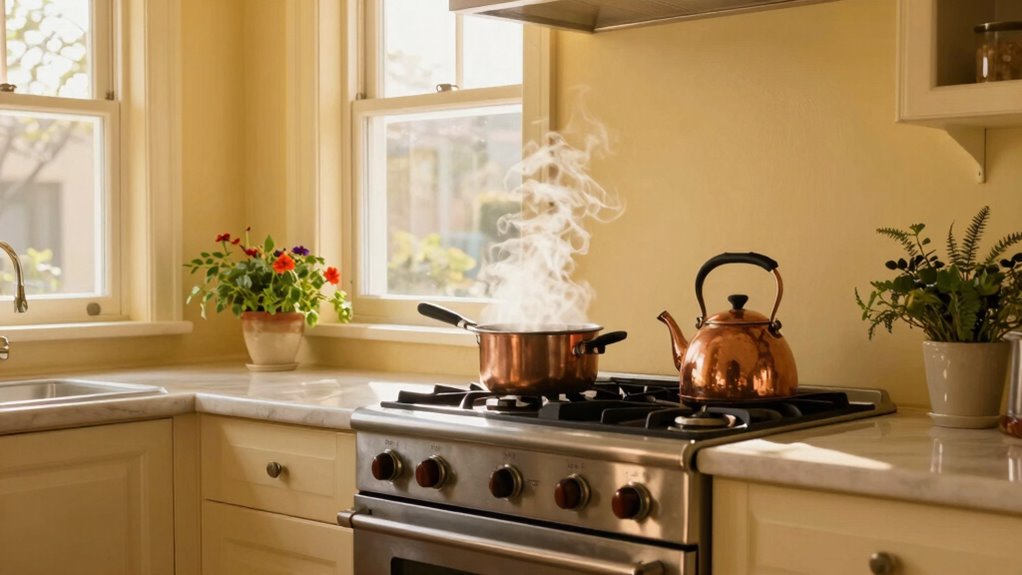
Have you ever entered a kitchen that instantly feels warmer than it should? It’s an uncomfortable sensation that makes you wonder if the space is just poorly ventilated or if something else is causing the heat buildup. Often, the answer lies in the way the kitchen is designed and how appliances are placed. Ventilation issues are a common culprit, trapping heat and humidity that should otherwise escape. When your kitchen lacks proper airflow, the warm air from cooking and appliances tends to linger, creating a stifling environment. Poor ventilation can be caused by blocked or inadequate exhaust fans, closed windows, or even a layout that doesn’t promote natural airflow. Without a clear path for hot air to escape, the space feels significantly warmer.
Poor ventilation traps heat and humidity, making your kitchen uncomfortably warm.
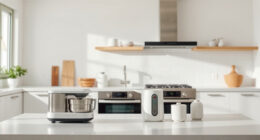
Another key factor is appliance placement. If your stove, oven, or microwave are positioned too close to each other or against poorly ventilated walls, they generate more heat than the room can dissipate. For example, placing a fridge next to a stove isn’t just a matter of convenience; it can also lead to increased heat retention. When appliances are tightly packed, the heat they produce accumulates in the confined space, raising the overall temperature. You might not notice this immediately, but over time, it can make your kitchen feel uncomfortably hot, especially during busy cooking sessions. Ensuring proper appliance placement can help reduce unnecessary heat buildup. Additionally, the layout of the kitchen can influence how effectively heat and air circulate. Properly planned layouts that account for natural airflow pathways can make a significant difference in maintaining a cooler environment.
Furthermore, the placement of appliances can interfere with natural airflow, especially if they block vents or windows. If your range hood isn’t venting properly or is improperly installed, your kitchen won’t get the necessary boost of fresh air to counteract the heat. The same goes for dishwasher or laundry appliances that release heat and moisture into the room. When appliances are positioned without regard for ventilation pathways, they contribute to a hotter environment instead of helping to cool it down. Ensuring proper ventilation systems are in place can significantly improve airflow and temperature regulation in your kitchen. Regular maintenance of exhaust fans and vents can also prevent blockages that might impede airflow. Additionally, utilizing natural ventilation by strategically opening windows during cooking can help dissipate heat more effectively. Considering the design of the kitchen and how it influences heat flow can help prevent uncomfortable heat buildup, making your kitchen more pleasant to work in. Properly designed ventilation and thoughtful appliance placement are essential for maintaining a comfortable kitchen temperature.
As an affiliate, we earn on qualifying purchases.
Frequently Asked Questions
How Does Kitchen Insulation Affect Perceived Temperature?
Kitchen insulation impacts perceived temperature by improving insulation effectiveness and creating thermal barriers that regulate heat flow. When your kitchen has good insulation, it keeps the heat out during summer and retains warmth in winter, making the space feel more comfortable. Without proper insulation, heat escapes or enters easily, causing the room to feel hotter or cooler than it actually is. Proper insulation helps maintain a consistent, comfortable temperature.
Can Outdoor Weather Impact Indoor Kitchen Heat Levels?
Ever wonder if outdoor heat influences your kitchen’s temperature? It certainly does—weather impact plays a big role. When outdoor temperatures soar, heat from the sun can seep through windows, walls, or poorly insulated areas, making your kitchen feel hotter. Warm air enters and traps, especially if there’s poor ventilation. So, on hot days, it’s natural for your kitchen to feel even warmer than usual, unless you take steps to cool it down.
Do Certain Appliances Generate More Heat Than Others?
Yes, certain appliances generate more heat than others. Appliances with high energy consumption, like ovens, stoves, and toasters, emit significant heat during operation. Their heat emission directly raises your kitchen’s temperature, making it feel hotter. On the other hand, smaller appliances like microwaves or coffee makers produce less heat. Understanding appliance energy use helps you identify which devices contribute most to indoor heat and manage your kitchen’s temperature better.
How Does Kitchen Layout Influence Heat Retention?
Your kitchen layout acts like a trap for heat, much like a greenhouse. Poor ventilation efficiency and strategic appliance placement can cause heat to linger, making the space feel hotter. For example, placing the oven near the refrigerator, which generates cold air, can disrupt airflow, trapping warmth. To cool things down, optimize ventilation and arrange appliances to promote better airflow, reducing heat retention and creating a more comfortable environment.
Are There Specific Materials That Trap More Heat?
Yes, certain materials trap more heat due to their thermal conductivity and material density. Materials like brick, stone, and dense ceramics have high thermal conductivity and density, which allow them to absorb and retain heat more effectively. When used in kitchen surfaces or walls, these materials can make the space feel warmer. You might notice that kitchens with stone countertops or brick walls tend to stay hotter longer.
Conclusion
So, next time your kitchen feels unexpectedly hot, remember it’s not just about the oven or stove. It’s like a summer day stuck inside, with appliances and appliances working overtime, turning your space into a mini sauna. The cool counter tiles and open windows stand in stark contrast to the sweltering oven and simmering pots. Recognize this visual battle, and you’ll find ways to bring balance back—cooler, calmer, more comfortable.