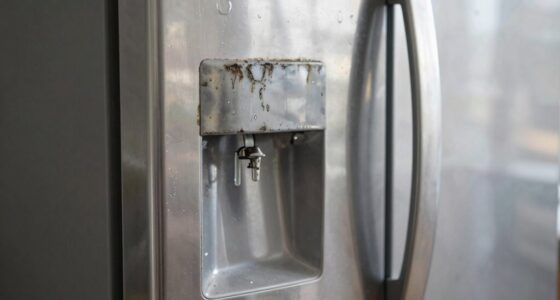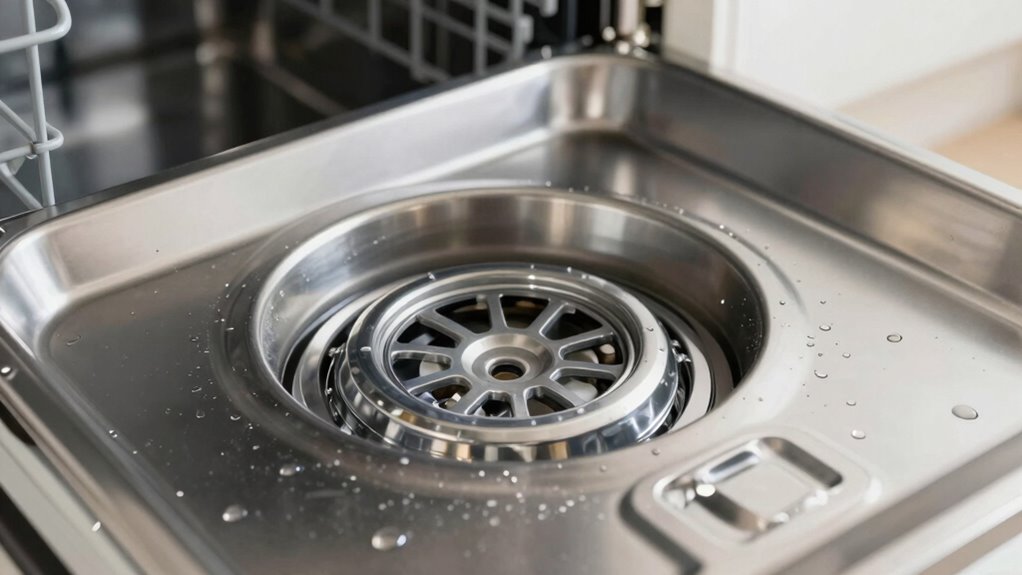

A healthy dishwasher drain should be clear of debris, soap scum, and foul odors, with no standing water after the cycle. It should sound smooth and steady, with a gentle flow and no gurgling or bubbling noises. If your drain remains clean and operates quietly, it’s a good sign everything’s working properly. Pay attention to any unusual sounds or odors, as these may signal issues that need attention. Keep exploring to learn how to maintain your drain’s health.

Turn the school run and nap time into listening time
- Thousands of audiobooks, podcasts and originals
- Listen on your phone, tablet or Echo — also offline
- Cancel anytime
Key Takeaways
- The drain area should be free of debris, soap scum, and foul odors, indicating proper cleaning and drainage.
- During draining, expect a smooth, steady water flow with no gurgling, bubbling, or irregular noises.
- Water should be fully removed at the end of the cycle, with no standing water remaining in the bottom of the dishwasher.
- The drain hose should be free of kinks, blockages, or leaks for optimal water flow.
- Regular maintenance and inspection help prevent clogs and ensure consistent, healthy drainage performance.
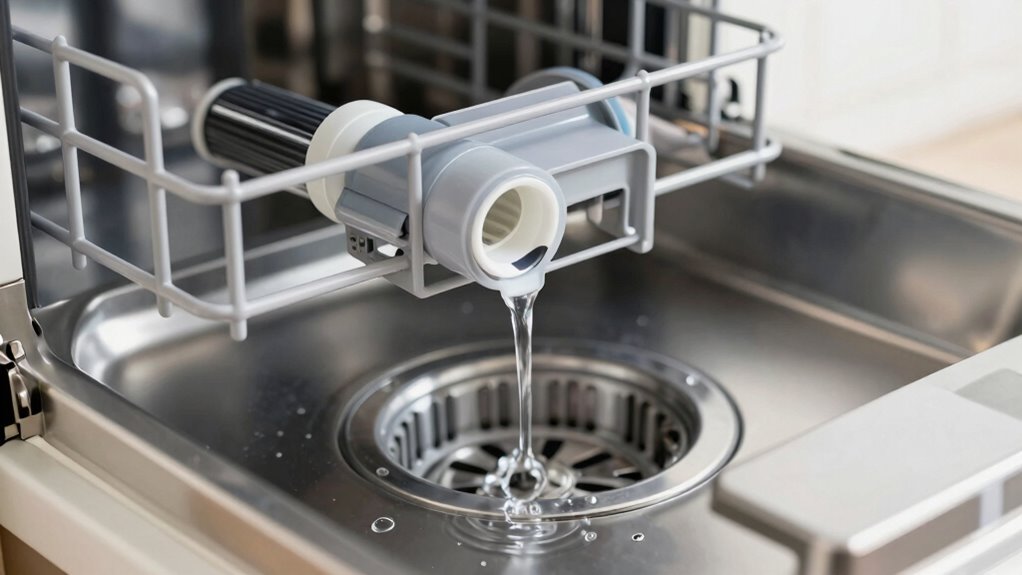
If your dishwasher isn’t draining properly, it can lead to unpleasant odors and poor cleaning performance. A sluggish drain often causes a buildup of food particles and soap scum, which can result in dishwasher odor. Not only does this make your kitchen smell bad, but it also diminishes the machine’s ability to clean effectively. One common culprit is drain clogs, which block water from flowing out properly. To keep your dishwasher functioning smoothly, you need to understand what a healthy drain looks and sounds like.
A properly draining dishwasher typically completes its cycle without any loud gurgling or persistent humming. When it drains correctly, you should notice a steady, unobstructed flow of water leaving the tub and going down the drain. After the cycle ends, the water level in the tub should be low or nonexistent, and there shouldn’t be standing water at the bottom. If you hear unusual noises, like loud gurgling or bubbling sounds during the drain, it could indicate a clog or vent issue. These sounds often signal blocked drain pathways, which can cause water to back up and create a dishwasher odor. Additionally, understanding drain system functions can help you diagnose and resolve issues more effectively.
Visually, a healthy drain is clear of debris and soap scum. If you open your dishwasher after a cycle and see water still sitting at the bottom, it’s a sign that the drain or drain hose is clogged or kinked. Similarly, foul smells emanating from your dishwasher point to trapped food particles and mold that thrive in stagnant water. Regularly inspecting and cleaning the drain area, including checking for venting issues, can prevent these issues and help maintain optimal performance. Being aware of the proper drainage process can also assist in identifying early signs of trouble before they escalate. Recognizing the importance of proper venting can prevent air pressure problems that hinder drainage. Proper venting is essential to allow air flow and prevent airlocks that obstruct water flow.
The sound of a healthy drain should be a smooth, consistent flow—nothing abrupt or irregular. If you notice splashing, gurgling, or strange noises during the drain cycle, it’s time to investigate. These noises often mean there’s a partial blockage, which can escalate into a full clog if left unaddressed. Addressing drain clogs early prevents odors from developing, keeps your dishwasher running quietly, and ensures your dishes come out sparkling clean.
dishwasher drain hose cleanout kit
As an affiliate, we earn on qualifying purchases.
As an affiliate, we earn on qualifying purchases.
Frequently Asked Questions
How Often Should I Clean My Dishwasher Drain?
You should clean your dishwasher drain at least once a month to keep it functioning well. Regular drain maintenance prevents clogs and odors, ensuring your appliance works efficiently. Incorporate drain cleaning into your routine as part of your overall cleaning routines. If you notice standing water or bad smells, do a quick drain check and clean. Staying proactive helps avoid costly repairs and keeps your dishwasher fresh and sanitary.
Can a Clogged Drain Cause Dishwasher Odors?
Oh, absolutely! A clogged drain can turn your dishwasher into a stinky swamp, thanks to poor air flow and water backup. When debris blocks the drain, odors fester and escape, making your kitchen smell like a science experiment gone wrong. Regularly cleaning your drain keeps air flow smooth and prevents water backup, ensuring your dishes come out fresh, not funky. Don’t let a clog ruin your culinary pride!
What Signs Indicate a Damaged Dishwasher Drain?
You can tell your dishwasher drain is damaged if you notice persistent leaks or foul odors. During drain repair or leak detection, look for water pooling around the base or unusual noises during operation. Cracks or clogs in the drain hose also signal damage. Address these issues promptly to prevent further damage, and consider professional help for effective drain repair and leak detection to restore proper drainage and avoid costly repairs.
Is It Safe to Use Chemical Drain Cleaners?
Using chemical drain cleaners is like inviting a wildfire into your plumbing; they can cause more harm than good. Chemical reactions might damage your pipes or dishwasher components over time. For drain safety, it’s best to avoid harsh chemicals and opt for safer alternatives like manual removal or enzyme-based cleaners. Always follow manufacturer instructions, and if in doubt, consult a professional to prevent costly damage.
How Can I Prevent Future Drain Clogs?
To prevent future drain clogs, you should focus on regular drain maintenance and clog prevention techniques. Avoid pouring grease or food scraps down the drain, and use a drain strainer to catch debris. Periodically flush your dishwasher drain with hot water or a mixture of vinegar and baking soda to clear buildup. Staying consistent with these habits helps keep your drain clear, reducing the likelihood of troublesome clogs.
Conclusion
Just like the steady flow of a well-tuned river, a healthy dishwasher drain keeps your kitchen running smoothly. When you pay attention to its sounds and appearance, you’re safeguarding your home from the chaos of backups and odors. Think of it as tending a garden—regular care guarantees it flourishes. By maintaining your drain, you’re not just fixing a problem; you’re preserving the harmony within your space, echoing the timeless wisdom that order in one part sustains the whole.
Fall Picks
fall essentials
As an affiliate, we earn on qualifying purchases.