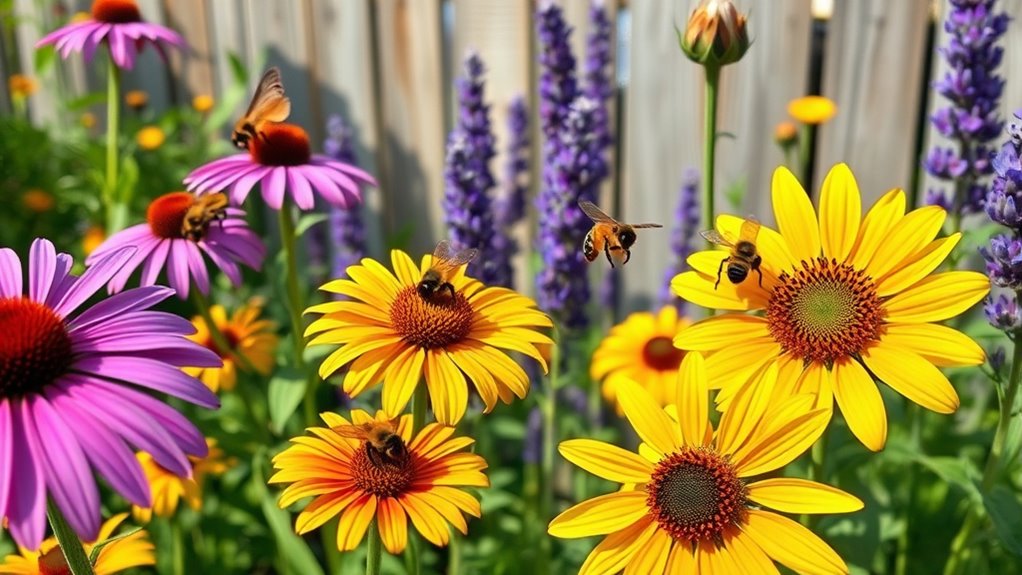

To attract and support pollinators, choose native plants adapted to your local conditions, as they provide essential nectar and pollen throughout the season. Incorporate a variety of flowering species and create layered habitats with ground covers, shrubs, and trees, including undisturbed areas with leaf litter or deadwood for shelter. Restoring natural features and reducing maintenance needs benefits both pollinators and your garden’s health. Keep exploring how small changes can boost your garden’s ecological vibrancy.
Key Takeaways
- Plant a diverse selection of native flowering plants to provide continuous nectar and pollen sources throughout the pollinators’ active seasons.
- Incorporate layered habitats with ground covers, shrubs, and small trees to offer shelter and nesting sites for various pollinator species.
- Minimize chemical use and invasive species to create a safe, resilient environment that supports native pollinator populations.
- Leave natural debris like leaf litter and deadwood to serve as microhabitats and shelter for burrowing or shelter-seeking pollinators.
- Restore and maintain natural areas within the garden to enhance biodiversity and provide essential resources for pollinator health.

Have you ever wondered how your garden can support the essential work of pollinators? The truth is, even small changes can make a big difference. One of the most effective ways to do this is by focusing on native plant selection. Native plants are adapted to your local climate and soil conditions, making them the best choice for attracting and sustaining pollinators like bees, butterflies, and hummingbirds. When you choose native species, you’re providing pollinators with familiar, nourishing nectar and pollen sources throughout their active seasons. This not only helps individual pollinators thrive but also supports the overall health of local ecosystems.
Choosing native plants supports pollinators and boosts local ecosystem health.
By prioritizing native plant selection, you’re also contributing to habitat restoration efforts. Many natural pollinator habitats have been lost due to urbanization, agriculture, and invasive species. Restoring these habitats within your garden can create crucial refuges where pollinators can find food, shelter, and breeding sites. Incorporate a variety of native flowering plants that bloom at different times of the year to ensure a continuous supply of resources. This diversity encourages a broader range of pollinator species, each with their unique needs and preferences.
Implementing habitat restoration in your garden doesn’t require a large space or extensive resources. You can start by removing invasive plants that displace native species and replacing them with native shrubs, grasses, and wildflowers. Creating layered plantings—combining ground covers, herbaceous plants, and small trees—provides multiple habitats and microclimates for different pollinators. Also, leaving some areas undisturbed with leaf litter, deadwood, or tall grasses offers nesting sites for bees and other pollinators that burrow or seek shelter in natural debris.
Furthermore, native plant selection and habitat restoration have the added benefit of reducing maintenance. Native plants generally require less watering, fertilizing, and pest control because they’re well adapted to the local environment. This means you can create a thriving pollinator-friendly garden without a lot of extra effort or chemical inputs. It’s a sustainable approach that supports biodiversity and strengthens the resilience of your garden ecosystem.
Incorporating native plants and restoring natural habitats not only benefits pollinators but also enhances the beauty and ecological value of your garden. Your effort becomes part of a larger movement to protect crucial pollinator populations, ensuring that future generations can enjoy vibrant, healthy gardens full of life. So, start small—select native species suited to your area, restore natural features, and watch your garden become a thriving hub for pollinators.
Frequently Asked Questions
Which Native Plants Attract the Most Pollinators?
You should choose native plants like coneflowers, bee balm, and milkweed, as they attract the most pollinators. Native plant selection is key because it aligns with pollinator preferences, ensuring better visits and pollination success. By planting these, you create a vibrant, pollinator-friendly garden. Focus on diversity, including flowering times, to support a wide range of pollinators throughout the season and boost your garden’s health.
How Can I Create Year-Round Pollinator Habitats?
To create a year-round pollinator habitat, you should start with seasonal planting, ensuring blooms during every season. Mix native plants to boost habitat diversity, attracting a variety of pollinators throughout the year. Incorporate diverse flowers, shrubs, and trees that bloom at different times, providing consistent sustenance. By layering plants and planting in patches, you’ll foster a flourishing, fast-acting habitat that keeps pollinators happy and healthy all year long.
Are Pesticides Safe for Pollinators in Gardens?
Pesticides aren’t safe for pollinators in gardens, so it’s best to avoid them. Instead, explore pesticide alternatives like biological controls or organic methods. You can protect pollinator safety by choosing plants that naturally resist pests and encouraging beneficial insects that control pests naturally. By making these choices, you guarantee your garden remains a safe haven for pollinators, supporting their health and the overall ecosystem.
What Are the Best Watering Practices for Pollinator-Friendly Plants?
You should water pollinator-friendly plants early in the morning, following a consistent watering schedule to maintain ideal soil moisture. Check the soil regularly, ensuring it’s moist but not waterlogged, as too much water can harm roots and discourage pollinators. Deep watering encourages deep roots, so give these plants a thorough soak once or twice a week, adjusting based on weather conditions to keep your garden thriving and attractive to pollinators.
How Do Urban Gardens Support Local Pollinator Populations?
You might think urban gardens can’t support pollinators, but they play a essential role in creating urban habitats. By planting native flowers and providing diverse nectar sources, you help sustain local pollinator populations. Establishing pollinator corridors through interconnected gardens allows insects to travel safely and find food. Your efforts turn small spaces into critical refuges, boosting biodiversity and helping pollinators thrive amid city environments.
Conclusion
By planting a pollinator-friendly garden, you become a superhero for the environment, transforming your yard into a vibrant haven that supports countless species. Every flower you nurture can make a monumental difference, helping pollinators thrive in a world full of challenges. So, get your hands dirty and create a sanctuary that’s more essential than the air we breathe—because, without pollinators, life as we know it would come to a crashing halt.