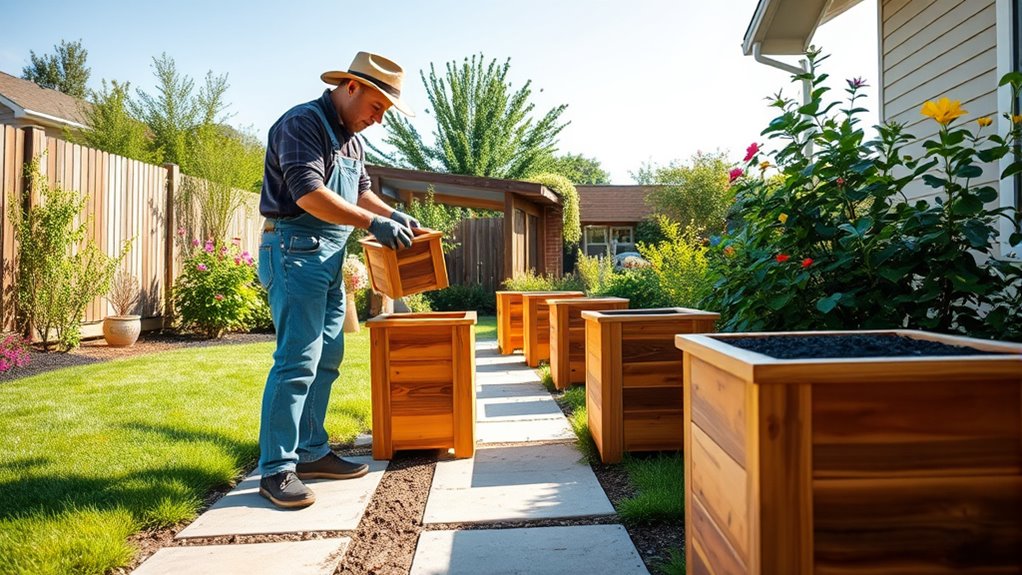

To install raised garden containers, choose sturdy, weather-resistant materials like cedar or recycled plastic and make certain they have proper drainage holes. Position them in a sunny spot on a stable surface, and fill with high-quality potting mix enriched with compost. Place your containers where you’ll easily access them for watering and maintenance, and adjust their location seasonally for maximum sunlight. Keep an eye on soil moisture and plant health to guarantee success—continue for more helpful tips.
Key Takeaways
- Select durable, weather-resistant containers with proper drainage and adequate size for plant roots.
- Prepare high-quality potting soil mixed with organic matter, ensuring drainage holes are functional.
- Place containers on stable, level surfaces in areas with suitable sunlight for your plants.
- Fill containers with soil, leaving space at the top, and water thoroughly to settle soil and check drainage.
- Regularly water, monitor plant health, and adjust container positioning seasonally for optimal growth.
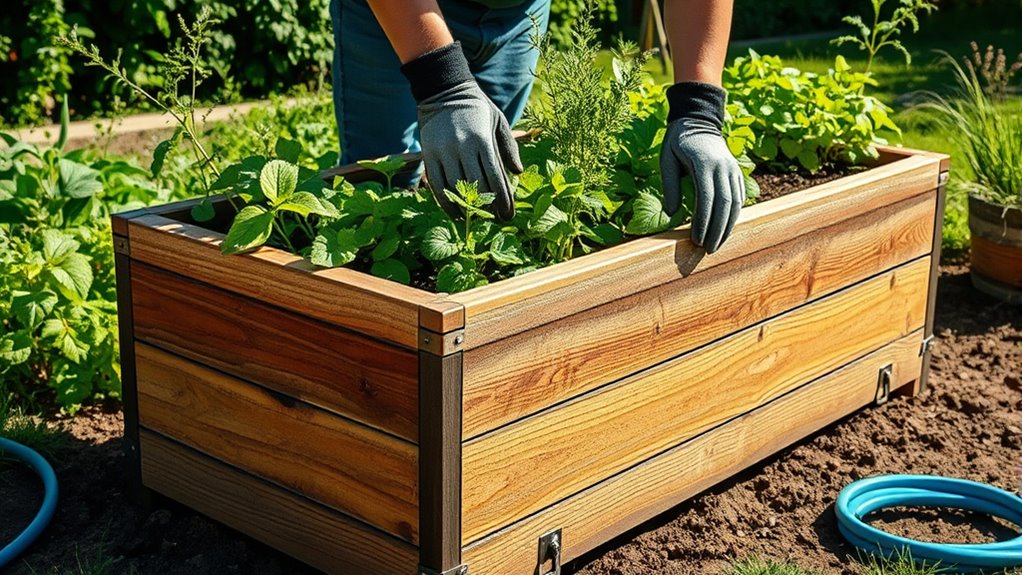
Installing raised garden containers is a straightforward process that can considerably improve your gardening experience. The first step is to focus on soil preparation and container selection, which set the foundation for healthy plant growth. When choosing your containers, opt for sturdy materials like cedar, recycled plastics, or composite wood that can withstand weather conditions and provide good drainage. The size of the container matters too; select ones that are deep enough for your preferred plants and offer ample space for roots to expand. Keep in mind that larger containers hold more soil, which helps maintain consistent moisture and reduces the need for frequent watering.
Once you’ve selected the right containers, it’s essential to prepare the soil properly. Good soil preparation ensures your plants get the nutrients they need and encourages healthy growth. Fill your containers with a high-quality potting mix designed for container gardening, as it typically contains the right balance of nutrients and aeration. Avoid using garden soil directly in containers because it can become compacted, hinder drainage, and lead to root rot. You might consider mixing in compost or organic matter to enrich the soil further, especially if your container is going to host vegetables or flowering plants that demand more nutrients. Before filling, double-check that your containers have drainage holes at the bottom. If not, drill some yourself to prevent excess water from pooling, which can damage roots. Additionally, using appropriate soil types can significantly impact the health and growth of your plants in containers.
Position your containers in a location that receives adequate sunlight according to your plants’ needs. Once placed, add the prepared soil to each container, filling them up to about an inch below the rim to allow space for watering. Gently pat the soil down to eliminate air pockets, but don’t compact it too tightly. After filling, water the soil thoroughly to settle it and provide immediate moisture for your plants. This step helps to identify any drainage issues and guarantees the soil is evenly moist before planting.
Frequently Asked Questions
What Materials Are Best for Durable Raised Garden Containers?
For durable raised garden containers, you should choose materials known for their longevity and attractive container aesthetics. Cedar and composite lumber stand out because they resist rot and decay, guaranteeing long-lasting use. Vinyl and fiberglass are also excellent, offering low maintenance and vibrant appearance. Metal options like galvanized steel provide durability but may need protective coatings. Pick a material that balances aesthetics with resilience to ensure your garden remains beautiful and functional over time.
How Do I Prevent Pests in Raised Garden Beds?
To prevent pests in your raised garden beds, plant pest-resistant varieties and encourage natural predators like ladybugs. Use organic pest control methods such as neem oil or insecticidal soaps to target pests without harming beneficial insects. Keep the area clean by removing debris and weeds that attract pests. Additionally, install row covers or barriers to physically block pests from reaching your plants, ensuring a healthier, pest-free garden.
Can Raised Containers Be Used for All Plant Types?
Think of your raised container as a versatile stage, ready for many acts. Yes, it can host nearly all plant types, from delicate herbs to sturdy vegetables. Choosing the right container material—whether wood, plastic, or metal—supports your plants’ needs. Incorporate pest prevention strategies to keep the scene pest-free. With thoughtful selection, your container becomes a thriving home for a diverse garden, flourishing in harmony.
What Is the Ideal Soil Mix for Raised Beds?
You should use a rich, well-draining soil mix for your raised beds. Combine high-quality garden soil with organic matter like compost or peat moss, and add soil amendments to boost nutrients. Incorporate drainage materials such as coarse sand or perlite to prevent waterlogging. This balanced mix guarantees healthy root growth, good aeration, and proper drainage, giving your plants the best environment to thrive in your raised garden containers.
How Often Should I Water Raised Garden Containers?
You should water your raised garden containers daily, especially during hot weather, to maintain consistent moisture. Keep a regular watering schedule and check container drainage to prevent overwatering, which can lead to root rot. Adjust your routine based on weather, container size, and plant needs. Make sure the soil stays evenly moist, and don’t let it dry out completely to promote healthy growth and maximize your garden’s productivity.
Conclusion
Now that you’ve installed your raised garden containers, imagine how they might transform your outdoor space. Some say elevated beds boost plant growth by providing better drainage and soil control, but is it just a myth? The truth is, with proper setup, raised containers do offer advantages like fewer pests and easier maintenance. So go ahead, enjoy your new garden—who knows, maybe your plants will thrive even more than you expected!