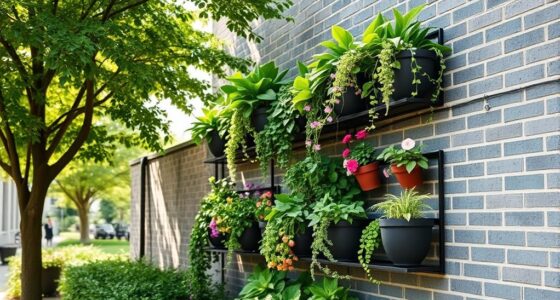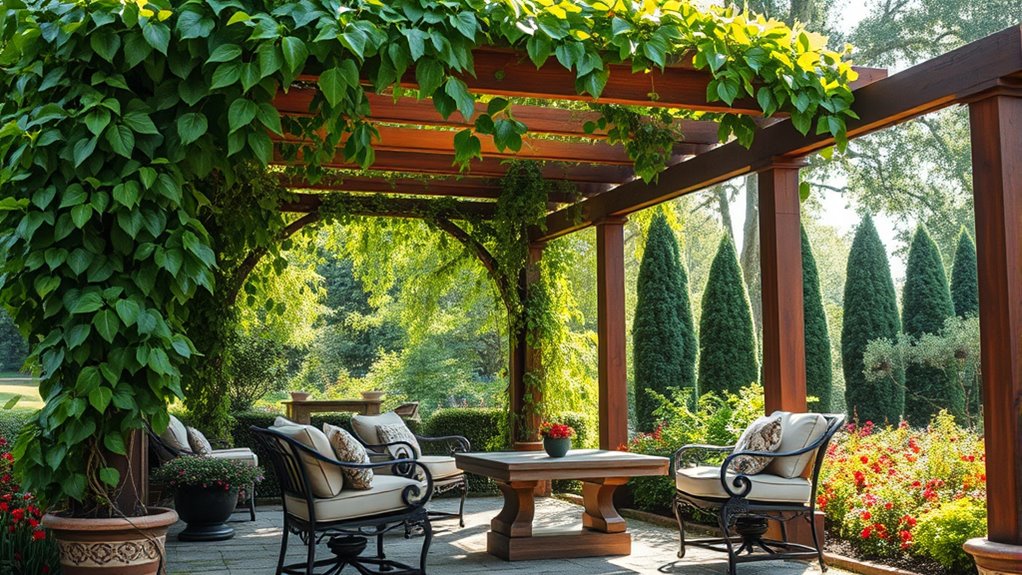

Creating shade and comfortable seating in your garden transforms it into a welcoming retreat where you can relax and enjoy the outdoors. Use natural structures like pergolas made from wood or bamboo, and enhance them with climbing plants for added beauty and shade. Add cozy benches and outdoor furniture that suit your style, and consider incorporating lighting and potted plants to create a peaceful, inviting space. Keep exploring for more ideas on making your garden both functional and charming.
Key Takeaways
- Incorporate natural pergolas made of wood or bamboo to provide stylish, functional shade that blends with the garden environment.
- Position cozy benches and seating areas beneath or near shade structures for relaxation and socializing.
- Use climbing plants like vines or jasmine on pergolas to enhance shade and aesthetic appeal.
- Add cushions, side tables, and lighting to increase comfort and usability of outdoor seating spaces.
- Arrange seating thoughtfully to promote peaceful retreats, outdoor activities, and seamless integration with natural surroundings.
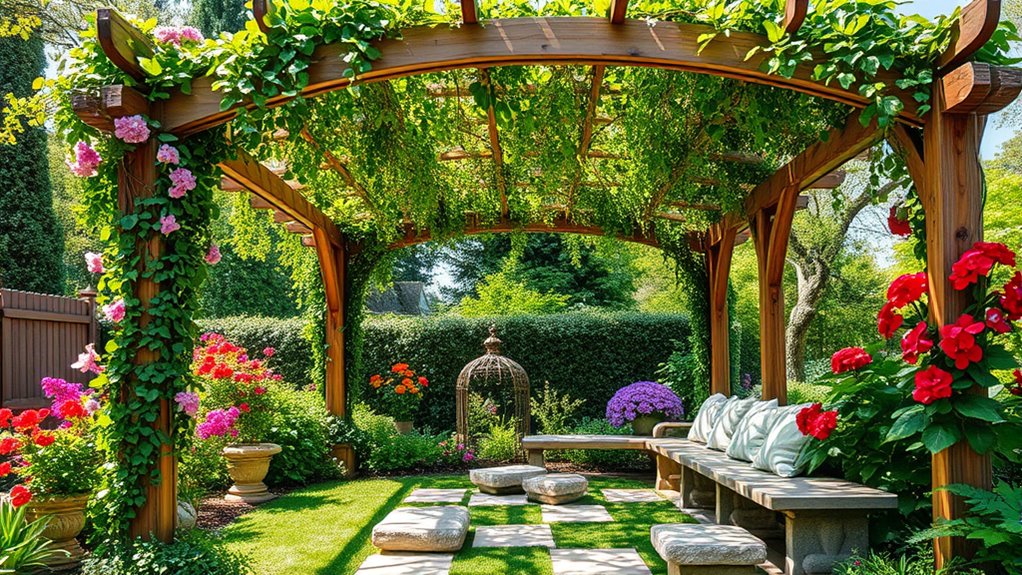
Adding shade and comfortable seating transforms your garden into a welcoming retreat. When you incorporate natural pergolas and cozy benches, you create a space that invites relaxation and enjoyment. Natural pergolas, crafted from wood or bamboo, serve as both functional shade structures and attractive focal points. Their open design allows dappled sunlight to filter through, providing relief from direct sun while maintaining a connection to the outdoors. You can enhance these structures with climbing plants like vines, jasmine, or wisteria, which add natural beauty and extra shade. The organic look of a natural pergola blends seamlessly with your garden’s environment, making it feel like a harmonious extension of nature.
Adding natural pergolas and cozy benches creates a relaxing, inviting garden retreat.
Pairing a pergola with cozy benches turns your garden into a perfect spot for unwinding. Think about placing sturdy, comfortable benches underneath or nearby the pergola, so you have a dedicated place to sit and enjoy your surroundings. When selecting benches, opt for weather-resistant materials like teak, cedar, or metal, and add cushions for extra comfort. Positioning your seating to face a garden feature, such as a pond, flower bed, or sculpture, enhances the visual appeal and creates a natural focal point. These cozy benches don’t just provide a place to sit—they encourage lingering, conversation, and quiet moments.
To maximize comfort and usability, consider spacing your cozy benches thoughtfully. Arrange them to facilitate social gatherings or to offer a quiet nook for reading. You might also add side tables or small pedestals nearby to hold drinks, books, or garden tools. Shade from the pergola will protect you from harsh sunlight, allowing you to relax comfortably for hours. Incorporating lighting, like string lights or lanterns, can extend your garden’s usability into the evening, creating an inviting ambiance. Adding potted plants or hanging baskets around the seating area can further soften the space and seamlessly integrate it with your garden’s natural beauty. Additionally, including super seeds like chia seeds in your garden or meals can promote overall health and vitality, enriching your outdoor experience.
Creating this inviting environment doesn’t require extensive effort or expense. With a natural pergola and cozy benches, you build a charming, functional retreat that encourages you to spend more time outdoors. These elements provide vital shade and comfortable seating, making your garden a peaceful haven for reading, socializing, or simply soaking up the scenery. By carefully selecting materials and positioning your furniture thoughtfully, you craft a space that feels both natural and inviting. The result is a garden that beckons you to unwind, connect with nature, and enjoy the outdoors on your own terms.
Frequently Asked Questions
What Are the Best Plants for Natural Shade?
You should consider planting flowering shade trees like dogwoods or Japanese maples for natural shade. Drought-tolerant plants such as oaks or magnolias also provide excellent coverage while needing less water. These options not only create a cool, shaded area in your garden but also add beauty and resilience. Choose your plants based on your climate and water availability to enjoy long-lasting, natural shade effortlessly.
How Can I Make My Garden More Wheelchair Accessible?
You can make your garden more wheelchair accessible by designing smooth, wide pathways that are easy to navigate—think of them as the backbone of your garden. Incorporate wheelchair-friendly pathways and guarantee surface materials are firm and even. Use accessible seating designs that are comfortable and easy to reach, and position them along your pathways for a welcoming feel. This way, everyone can enjoy your garden without feeling left out.
What Materials Are Most Durable for Outdoor Furniture?
For durable outdoor furniture, you should choose weather-resistant woods like teak or cedar, which naturally withstand moisture and pests. Synthetic composites are also excellent, as they resist rot, fading, and splitting, making them low-maintenance and long-lasting. These materials guarantee your furniture stays sturdy and attractive over time, even with frequent exposure to sun and rain. Investing in weather-resistant woods or synthetic composites assures your garden furniture remains functional and stylish.
How Do I Prevent Pests From Damaging Seating Areas?
To prevent pests from damaging your seating areas, you need effective pest control methods and proactive garden pest prevention. Regularly inspect furniture and surrounding plants, remove debris, and seal cracks to block pests’ entry points. Use natural deterrents like neem oil or essential oils, and encourage beneficial insects that prey on pests. By staying vigilant and maintaining a clean, healthy environment, you protect your seating spaces and enjoy pest-free relaxation.
What Are Eco-Friendly Options for Garden Shading?
You can choose sustainable shading solutions like bamboo pergolas or recycled metal umbrellas to keep your garden eco-friendly. For fabric shading, opt for eco-friendly outdoor fabrics made from natural or recycled materials. These options reduce environmental impact while providing effective shade. By selecting these sustainable options, you support eco-conscious practices and create a comfortable, shaded outdoor space that benefits both your garden and the planet.
Conclusion
By adding shade and seating, you transform your garden from a simple outdoor space into a haven of comfort and beauty. While the sun’s warmth invites relaxation, the shade offers refuge during the hottest hours. Seating invites conversations and quiet moments alike. Together, these features create a balance—an oasis where brightness and coolness coexist, reminding you that the most inviting gardens are those that embrace both light and shadow in harmony.