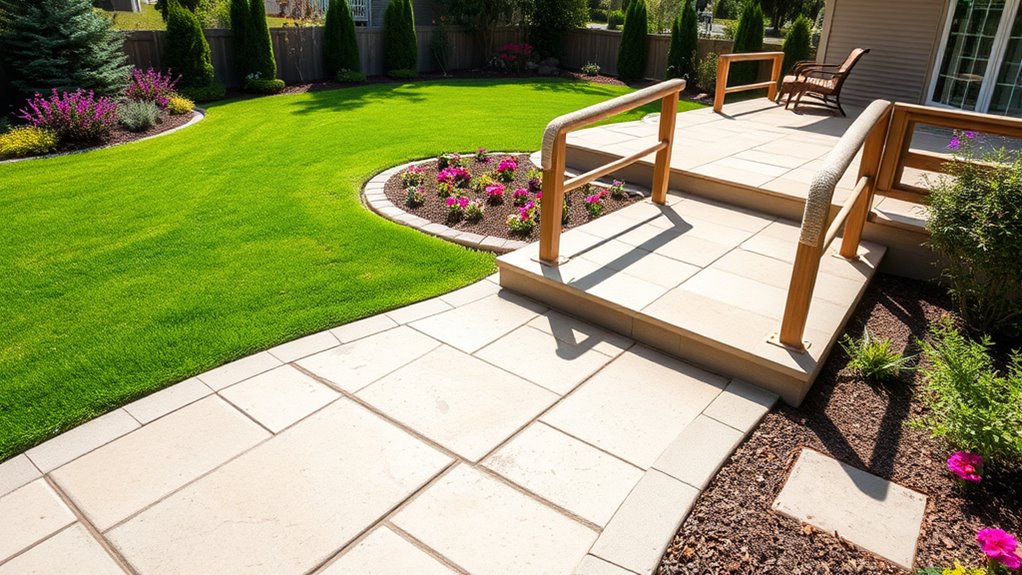

To create a wheelchair-friendly yard, focus on smooth, level surfaces like concrete or pavers that connect different areas seamlessly and eliminate tripping hazards. Incorporate gentle ramps with slopes no steeper than 1:12 at entrances and key passage points, making navigation easier. Use lighting along pathways for safety and visibility, and choose accessible outdoor storage at reachable heights. For more tips on designing an inclusive outdoor space, explore how to combine aesthetics with functionality effectively.
Key Takeaways
- Replace uneven pathways with continuous, stable surfaces like concrete or pavers to ensure safe wheelchair navigation.
- Incorporate gentle, properly graded ramps (max 1:12 slope) at entrances and transitions for easy access.
- Use slip-resistant, durable materials for all surfaces to enhance safety and long-term usability.
- Integrate lighting along pathways and ramps to improve visibility and safety during evening hours.
- Design outdoor storage at accessible heights and locations to prevent clutter and facilitate easy access.
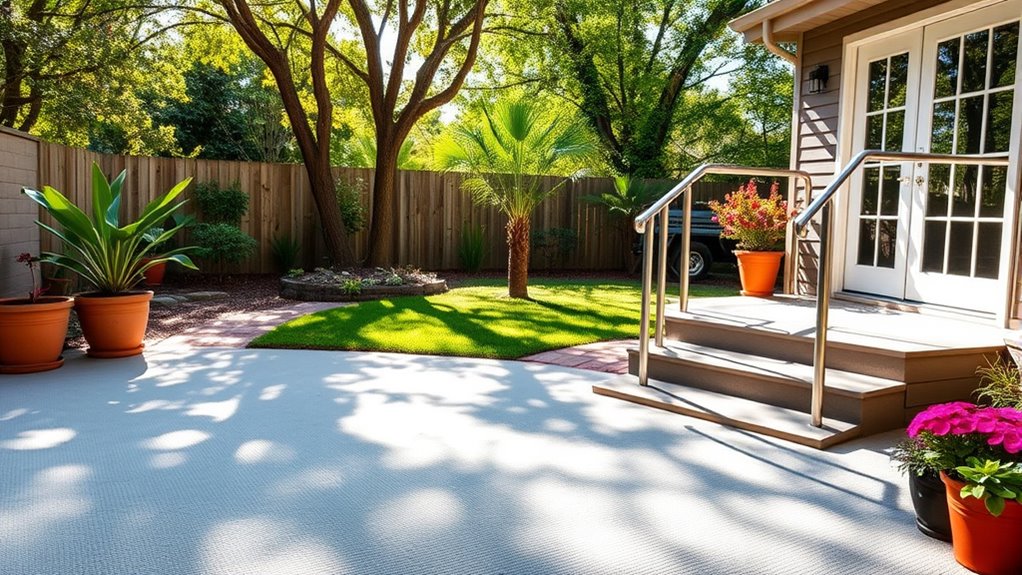
Creating a wheelchair-friendly yard guarantees that everyone can enjoy your outdoor space comfortably and safely. One of the most important steps is ensuring smooth, level surfaces that eliminate tripping hazards and make navigation easy. This means replacing uneven pathways with continuous, solid surfaces like concrete, pavers, or compacted gravel, which provide a stable footing for wheelchairs. When designing these surfaces, consider incorporating gentle slopes or ramps instead of stairs, especially at entrances, garden beds, or passages between different areas. Ramps should have a gentle incline, ideally no more than 1:12, to make pushing a wheelchair effortless. By doing so, you create a seamless outdoor environment that invites everyone to explore and relax without feeling limited by terrain.
Landscape lighting plays a key role in enhancing safety and ambiance. Properly placed lighting along pathways, ramps, and key outdoor features ensures visibility during evening hours, reducing the risk of accidents. Use low-voltage LED fixtures that are energy-efficient and safe, and position them to highlight edges and potential obstacles. Good lighting also improves security, making your yard welcoming at all hours. When planning your landscape lighting, think about integrating fixtures into existing outdoor design elements, such as around outdoor storage areas or along garden borders, so the entire yard feels cohesive and accessible.
Outdoor storage is another essential aspect of a wheelchair-friendly yard. Accessible storage solutions help keep your outdoor space organized and clutter-free, which is fundamental for safety and ease of movement. Choose storage units that are within reach, at a height that doesn’t require stretching or bending, and consider options like low-profile sheds or built-in cabinets. These should be sturdy, secure, and designed to accommodate gardening tools, outdoor cushions, or mobility aids. Proper outdoor storage not only keeps your yard tidy but also prevents tripping hazards caused by scattered equipment or supplies, making your entire yard safer and more inviting.
Incorporating wheelchair-friendly design elements like smooth, level surfaces, gentle ramps, strategic landscape lighting, and accessible outdoor storage transforms your yard into a space everyone can enjoy. These features foster independence, safety, and comfort, creating an outdoor environment where no one feels excluded. By paying attention to the details — such as choosing the right materials for surfaces or placing lighting thoughtfully — you guarantee your yard remains functional, attractive, and welcoming for years to come.
Frequently Asked Questions
How Do I Maintain Wheelchair Ramps in Different Weather Conditions?
To maintain wheelchair ramps in different weather conditions, you should implement weatherproofing strategies like adding non-slip surfaces and sealing cracks. Regular seasonal maintenance is essential—clear snow and ice promptly in winter, and remove debris and leaves during fall and spring. Applying a weather-resistant coating can also shield the material. By staying proactive with these practices, you ensure the ramps remain safe and accessible year-round, regardless of the weather.
What Materials Are Best for Durable, Wheelchair-Accessible Pathways?
When choosing materials for durable, wheelchair-accessible pathways, you should consider decorative paving options that combine aesthetics with function. Eco-friendly materials like recycled concrete or permeable pavers are excellent choices, offering durability and environmental benefits. These materials withstand weather conditions, providing a safe, slip-resistant surface. Opt for textured finishes to improve traction, ensuring your pathways remain accessible and attractive year-round, while also supporting sustainability.
Are There Specific Safety Standards for Yard Ramps?
Think of yard ramps as the bridges connecting independence and safety. Yes, there are specific safety standards for yard ramps that you should follow. These standards guarantee your ramps are secure, slip-resistant, and sturdy enough to support weight. Always check local building codes and ADA guidelines, as they set the benchmarks for safe, accessible yard ramps. Adhering to these standards keeps everyone safe and your yard accessible to all.
How Can I Incorporate Aesthetic Elements Into Accessible Yard Design?
You can incorporate aesthetic elements into accessible yard design by blending landscaping art with functional features. Use decorative accents like colorful planters, artistic fencing, or textured pathways to add visual interest. Integrate ramps and level surfaces seamlessly with natural elements, such as curved pathways or garden beds, to create a harmonious look. This way, your yard remains both beautiful and accessible, reflecting your personal style while ensuring safety and usability.
What Are Cost-Effective Options for Large-Scale Wheelchair-Friendly Yard Projects?
Think of your yard as a blank canvas waiting for a masterpiece. For large-scale projects, budget landscaping is your palette, offering affordable yet durable materials like concrete or gravel for ramps and level surfaces. DIY installation saves costs and gives you control. Focus on simple, accessible designs that blend function with beauty, turning your outdoor space into an inclusive haven without breaking the bank.
Conclusion
Creating a wheelchair-friendly yard isn’t just about ramps and level surfaces—it’s about opening doors to freedom and independence. Think of your yard as a welcoming hug, embracing everyone with accessibility and care. By thoughtfully designing your outdoor space, you turn it into a place where everyone can enjoy the beauty around them, no matter their mobility. After all, isn’t a yard meant to be enjoyed by all? Let your yard be a demonstration of inclusion and warmth.