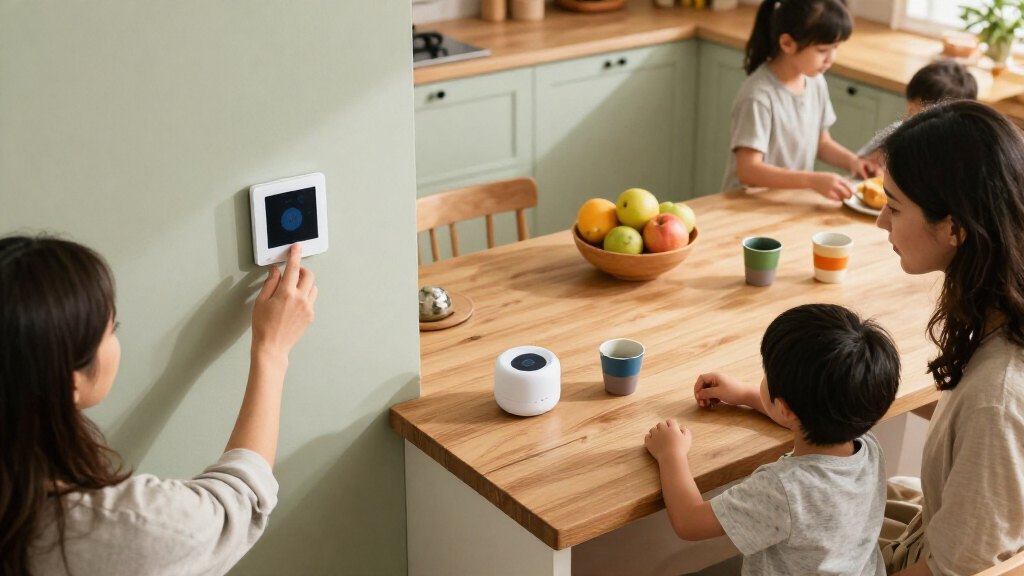

Families comparing Amazon Echo and Google Nest are choosing more than a voice assistant: they are picking the system that will handle shared timers, lights, music, reminders, and children’s access to connected devices. Echo’s main advantage is breadth: Alexa works with a large range of smart home products and supports detailed routines. Nest’s strongest case is its connection to Google services, including household calendars, search, and voice recognition features on supported devices. Neither ecosystem is automatically the safer or simpler choice for every household; setup and available controls vary by device and account. Choose Echo if flexibility and a wide choice of compatible products matter most. Choose Nest if your family already uses Google services and wants the assistant to fit that routine.

Turn the school run and nap time into listening time
- Thousands of audiobooks, podcasts and originals
- Listen on your phone, tablet or Echo — also offline
- Cancel anytime

Amazon Echo Show 15 (2nd Gen) 15.6-inch Full HD Smart Display with Fire TV and Alexa
- ✔ Display: 15.6-inch, 1920 × 1080
- ✔ Dimensions: 16.1 × 10.1 × 1.4 inches
- ✔ Weight: 4.96 lb

Amazon Echo Show 5 Smart Display (Newest Model), Charcoal
- ✔ Display: 5.5-inch touchscreen
- ✔ Dimensions: 5.8 × 3.6 × 3.2 inches
- ✔ Weight: 16.1 oz
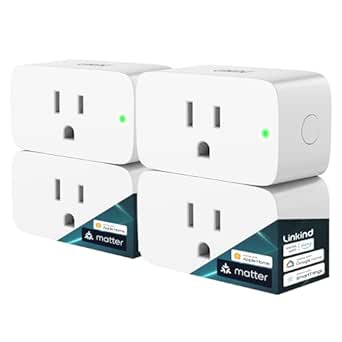
Linkind Matter Smart Plug, 4-Pack
- ✔ Pack quantity: 4
- ✔ Maximum rating: 15 A, 1800 W
- ✔ Wi-Fi: 2.4 GHz only
At a Glance
| Criteria | Amazon Echo | Google Nest | Winner |
|---|---|---|---|
| Compatible devices | Broad selection of Alexa-compatible smart home products; check specific device support before buying. | Works with Google Home compatible devices; confirm support for the products and features you need. | A |
| Family routines | Alexa routines can link triggers and actions across supported devices. | Google Home automations support common household actions, with availability depending on device and setup. | A |
| Household voice recognition | Alexa voice profiles and household features vary by device and setup. | Voice Match can personalize some responses for recognized household members on supported devices. | B |
| Parental controls | Amazon Kids and related controls are available on supported Echo devices and services; features depend on configuration. | Family Link and Google account settings provide controls for children; available features depend on age, device, and service. | Depends |
| Privacy controls | Voice recording review and deletion controls are available through Amazon account settings. | Voice activity and personal data settings can be reviewed through Google account controls. | Tie |
| Ease of setup | Straightforward for basic tasks, though more detailed routines and account settings take setup. | Simple for households already using Google accounts and services; device and home setup still takes configuration. | Depends |
| Value | Entry-level Echo devices and a wide range of compatible products make it easier to build gradually. | Nest devices can be good value for Google-centered homes, though options and prices vary by model and region. | Depends |
Amazon Echo Show 15 (2nd Gen) 15.6-inch Full HD Smart Display with Fire TV and Alexa
The Echo Show 15 is the most complete match for a family that wants one visible place for smart home control, schedules, and entertainment. Its 15.6-inch Full HD screen is large enough to be useful across a shared room, and it can be mounted in portrait or landscape orientation. That flexibility helps households choose a layout that fits the wall and how they want to use the display. Built-in Fire TV adds a second job: when it is not being used for household tasks, it can stream entertainment.Compared with the Echo Show 5, this model is far better suited to shared viewing and coordinating around a common space. It also connects to Zigbee, Matter, and Thread, giving it broader smart home hub capabilities than the smaller display. The 13 MP camera has auto-framing and a physical privacy shutter, which helps with video calls while retaining a clear way to block the camera. These features make the Show 15 our top pick for households that want a central screen and a more capable connection point.That breadth comes with a larger installation commitment. At 4.96 pounds and over 16 inches wide, it needs an appropriate mounting location or generous surface, and setup requires Wi-Fi. It is a poor fit for a small bedroom table, where the Echo Show 5 is more proportionate. Families should also consider that some skills and services may require subscriptions or other fees. We would choose the Show 15 when the shared display and connectivity are central to the household routine, not simply to add a screen to a room.
Pros:
- 15.6-inch Full HD display works well for shared viewing and household organization.
- Supports Zigbee, Matter, and Thread for broader smart home connectivity.
- Fire TV provides streaming without requiring a separate display device.
- 13 MP camera includes auto-framing and a physical privacy shutter.
Cons:
- Its large size and 4.96-pound weight require a suitable mounting spot or substantial surface.
- Wi-Fi is required for setup, and some skills or services may involve extra fees.
Best for: Families who want a wall-mounted or prominent shared display for smart home controls, video calls, and streaming.
Not ideal for: Households with limited wall or counter space, or buyers who only need a small bedside display or basic device scheduling.
Bottom line: Choose the Echo Show 15 when your family wants a visible, feature-rich hub and has a practical place to install it.
“Choose the Echo Show 15 when your family wants a visible, feature-rich hub and has a practical place to install it.”
Amazon Echo Show 5 Smart Display (Newest Model), Charcoal
For households that want a screen nearby without turning a room into a command center, the Echo Show 5 is the more space-conscious display. Its 5.5-inch touchscreen can show news, weather, photos, and compatible camera views, while Alexa voice control lets family members manage compatible smart home devices. The built-in camera supports video calls, and its shutter plus microphone and camera-off button give households physical privacy controls. Those controls may be especially useful when placing a connected display in a bedroom or other personal space.The difference from the Echo Show 15 is one of purpose, not just screen size. The Show 5 is easier to fit on a bedside table or crowded counter, but it cannot offer the same shared visibility, Fire TV experience, or Zigbee, Matter, and Thread hub capabilities as the larger model. Its compact design makes more sense for quick personal interactions and checking a camera than for coordinating family activity across a room. If everyone needs to read or watch the display together, we would move up to the Show 15.The 1.75-inch full-range speaker and small screen set limits on entertainment and group use, so this should not be the household’s only smart home interface if the goal is a prominent shared hub. It also requires Wi-Fi and does not support ad-hoc networks. Some Alexa skills and services may require subscriptions or other fees, and Bluetooth speakers that require PIN codes are not supported. We see it as a useful secondary display for a family that values a small footprint and clear camera controls.
Pros:
- Compact footprint fits small counters and bedside tables.
- Camera supports video calls and compatible camera viewing.
- Physical camera shutter and microphone/camera-off button offer direct privacy controls.
- Uses recycled materials in the fabric and aluminum, with recyclable packaging.
Cons:
- The 5.5-inch screen is less practical for shared viewing than the Echo Show 15.
- Does not support ad-hoc Wi-Fi networks, and some services may involve fees.
Best for: Families looking for a compact bedside or counter display for voice control, quick information, calls, and compatible camera viewing.
Not ideal for: Households wanting one large shared screen, built-in Fire TV, or a smart home hub with Zigbee, Matter, and Thread support.
Bottom line: Pick the Echo Show 5 for a small, personal smart display with physical privacy controls, and choose the Show 15 for shared household use.
“Pick the Echo Show 5 for a small, personal smart display with physical privacy controls, and choose the Show 15 for shared household use.”
Linkind Matter Smart Plug, 4-Pack
The Linkind Matter Smart Plug 4-Pack is the most focused option in this lineup: it adds scheduling and remote or voice control to compatible plug-in devices without adding a screen or camera. A family can use plugs for everyday routines around lamps and other suitable devices, then control them through supported platforms such as Apple Home, Alexa, Google Home, SmartThings, or the AiDot app. Four plugs make it possible to start in several rooms rather than building one routine around a single outlet.Compared with either Echo Show, the Linkind set is less of a visible family interface and more of a way to automate existing household items. It cannot display a schedule, host a video call, or stream a show; those are clear reasons to prefer one of the Echo displays. In return, it can control devices locally over the network during internet outages, and Matter support gives it compatibility across several smart home ecosystems. For a household that already has a suitable controller, that can make the plugs a practical foundation for simple routines without relying on a new display.Compatibility and safety checks matter before buying. The plugs require 2.4 GHz Wi-Fi and an IPv6 network. A Matter-certified hub or controller is needed for Apple Home, Alexa, Google Home, and SmartThings, although the AiDot app can be used without a hub. Each plug supports up to 15 A and 1800 W and includes short-circuit and overload protection, but that maximum does not make every appliance a suitable match. We would verify the connected device’s requirements and use the plugs only within their stated limits. Compared with the plug-and-display approach of an Echo, this set is simpler in concept but more dependent on the home’s existing network and platform setup.
Pros:
- Four plugs support schedules, timers, remote control, and voice commands.
- Matter compatibility spans Apple Home, Alexa, Google Home, and SmartThings with a suitable controller.
- Local network control can continue during internet outages.
- Short-circuit and overload protection, plus FCC and ETL certifications.
Cons:
- Requires 2.4 GHz Wi-Fi and an IPv6 network.
- Most named platforms require a Matter-certified hub or controller.
Best for: Families who want to schedule compatible lamps and other plug-in devices across several rooms and already have, or plan to use, a supported smart home platform.
Not ideal for: Buyers who want a shared touchscreen or camera, lack 2.4 GHz Wi-Fi or IPv6, or do not want to set up a Matter controller for their chosen platform.
Bottom line: Choose the Linkind pack to create simple, room-by-room routines for compatible devices, provided your network and smart home platform meet its requirements.
“Choose the Linkind pack to create simple, room-by-room routines for compatible devices, provided your network and smart home platform meet its requirements.”
As an Amazon Associate we earn from qualifying purchases.
Key Differences
The clearest practical difference is ecosystem flexibility. Echo has a broad range of compatible products, which can make it easier to mix bulbs, plugs, sensors, and other devices from different makers. Alexa routines also give families room to connect everyday actions, such as turning off lights at bedtime or announcing a reminder when a door sensor detects activity. That flexibility is useful, but the household still needs to confirm that each product works with the Alexa features it plans to use.
Nest makes more sense when Google is already the family’s digital home base. Voice Match can personalize some responses on supported devices, and Google services may make common requests feel familiar to people using Google accounts and calendars. These features are not universal across every Nest device or service, and voice recognition should not be treated as a security boundary. Both ecosystems offer child and privacy settings, but families need to configure them and review what applies to their specific devices. The best choice is the one that fits the family’s accounts, devices, and habits with the least friction.
Detailed Comparison
Compatible devices (Amazon Echo wins — moderate)
Amazon Echo wins by a moderate margin for choice: Alexa supports a broad range of smart home products, which gives families more flexibility when adding devices over time. Nest supports a substantial range too, but a family should verify compatibility with Google Home before buying. In practice, the wider pool can make it easier to find a suitable bulb or plug at a preferred price, provided the exact product supports the needed functions.Family routines (Amazon Echo wins — moderate)
Echo has a moderate edge for households that want to build custom routines across several compatible devices. Alexa routines can connect triggers and actions, such as a bedtime command that turns off selected lights. Google Home automations cover common household tasks as well, so the gap is smaller for simple schedules. Families with more involved routines may find Echo offers more room to build, though the exact options depend on the devices in the home.Household voice recognition (Google Nest wins — moderate)
Nest wins by a moderate margin for personalization when Voice Match is supported and configured. It can tailor some responses to recognized household members, which is useful in a shared home with separate Google accounts. Alexa also offers voice profiles and related features, but availability and behavior vary by device and service. Neither should be relied on to prevent a child from accessing sensitive settings or content; use account and parental controls for that.Parental controls (moderate difference)
This is a close, setup-dependent comparison. Amazon Kids offers child-focused features on supported Echo devices and services, while Google provides controls through Family Link and account settings. Which works better depends on the child’s account, the device, region, and services the family uses. The practical winner is the system whose controls cover the household’s actual use, including content access and purchases; review those settings before giving a child independent access.Privacy controls (minor difference)
Neither ecosystem wins outright. Amazon and Google provide account settings for reviewing or managing voice activity, but menus, defaults, and available controls can change. For either system, family members should know when voice features are active and agree on how recordings and account data are handled. The day-to-day difference is minor if the household takes time to review the settings; it can become more significant if nobody checks them after setup.Ease of setup (minor difference)
There is no universal winner. Nest may feel easier to a household already using Google accounts, while Echo may be more familiar to families with Amazon accounts or Alexa devices. Either can handle basic tasks without much effort, but mixing brands and creating detailed automations adds setup work. Choose the ecosystem the adults in the household already know if quick adoption matters more than experimenting with new routines.Value (moderate difference)
Value depends on the whole system, not just the assistant speaker. Echo’s range of compatible products can make it easier to build a home in stages and compare device prices. Nest can be better value when the household already uses Google services and wants supported features without adding another ecosystem. Paying extra for a particular speaker is worthwhile only if its sound, display, or other features will be used; families should compare the cost of the devices and subscriptions they actually need.Amazon Echo: Pros and Cons
Pros:
- Broad compatibility gives families more device options.
- Routines can link common household tasks across supported devices.
- Entry-level options can support a gradual setup.
Cons:
- Detailed routines may take time to configure.
- Child and voice features vary by device, account, and service.
- Compatibility should be checked for each smart home product.
Google Nest: Pros and Cons
Pros:
- A natural fit for families already using Google accounts and services.
- Voice Match can personalize some responses on supported devices.
- Family Link and account settings provide child-focused controls.
Cons:
- The value is less compelling if the household does not use Google services.
- Features differ across devices, accounts, and regions.
- Families must confirm each product works with Google Home as expected.
Who Should Choose What
Choose Amazon Echo if:
- You want a wide choice of compatible lights, plugs, sensors, and other devices.
- You plan to create routines that connect several devices or triggers.
- You want to add smart home products gradually and compare options.
Choose Google Nest if:
- Your family already uses Google accounts, calendars, or other Google services every day.
- Personalized responses through Voice Match are useful for your household.
- You prefer to keep household devices and services within Google Home.
Skip both if: Skip both if your household does not want always-available voice assistants, or if you need controls that cannot be met by the specific devices and account settings available in your region.
Value for Money
Paying more for a speaker or display is worthwhile only when the household will use its added features, such as a screen for visual reminders or better audio for shared music. For most families, the larger value question is whether the ecosystem reduces the cost and effort of the devices they plan to add. Echo has an advantage for shoppers who want a wide selection and plan to build gradually. Nest can be the better value when Google is already central to family life, since familiarity may matter more than adding another compatible device option. Compare the full setup, including any paid services, before deciding.
Final Verdict
For families starting from scratch and prioritizing device choice and flexible routines, Amazon Echo is the stronger default. Its broad compatibility gives households more ways to build a setup around their budget and needs, though each product’s support should be checked. Choose Google Nest if the family already relies on Google services and values the convenience of keeping voice assistance and household accounts in that ecosystem. The biggest deciding factor is where the family’s digital habits already live. Paying more for either system makes sense only when a specific feature will be used; for basic timers, reminders, and lights, buy the simplest compatible devices that meet the need.
Frequently Asked Questions
Which is better for a family starting a smart home: Echo or Nest?
Echo is the stronger default when broad device choice and flexible routines are priorities. Nest is often the better fit when the family already uses Google accounts and services. Check that the devices you plan to buy support the ecosystem and features you need.
Can children use Echo or Nest safely?
Both offer child-related account or device controls, but the available features depend on device, account, and region. Set up those controls before giving a child independent access, and review content and purchase settings. Voice recognition alone should not be treated as a safety control.
Is Google Nest easier to use than Amazon Echo?
That depends on what the household already knows. Google-centered families may find Nest more familiar, while households already using Alexa may prefer Echo. Basic requests are straightforward on either system; mixed-brand setups and custom automations take more work.
Is paying more for a smart speaker worth it for a family?
Pay more when a feature such as a display, stronger sound, or a specific supported function will be used regularly. If the family mainly wants timers, reminders, and control of a few lights, an entry-level device may provide better value.