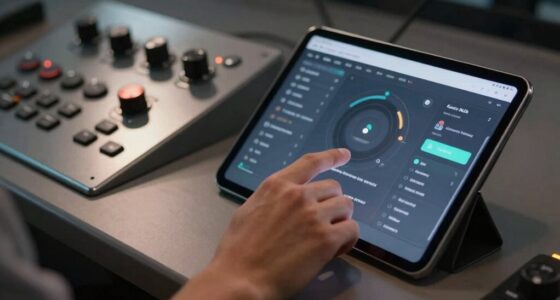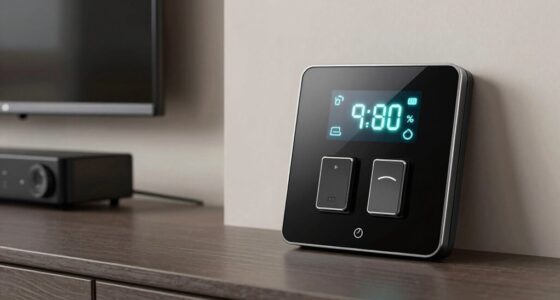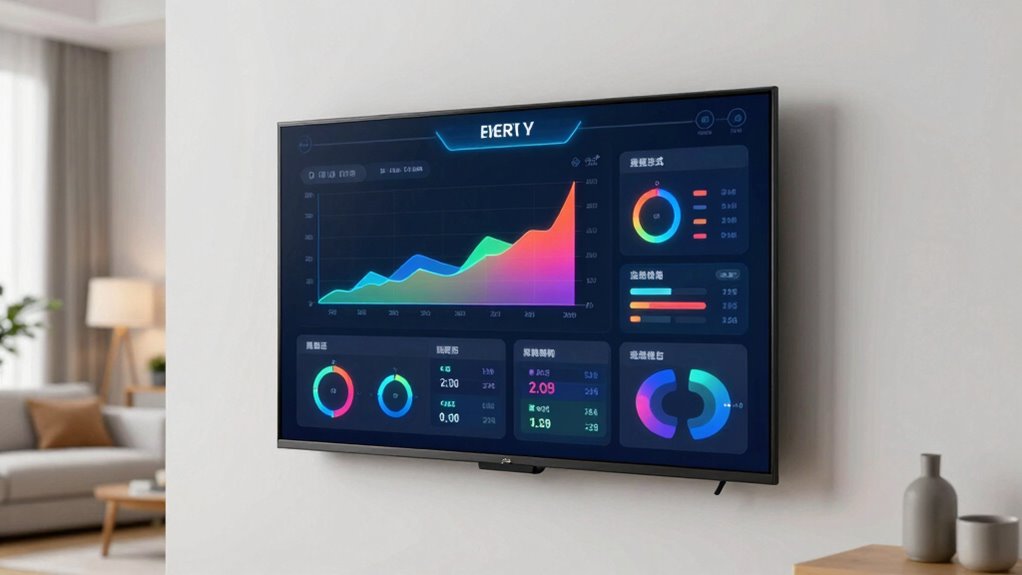

Energy dashboards change your behavior faster than bills because they give you real-time, visual feedback on your energy use. Unlike bills, which arrive after months, dashboards update constantly, helping you see patterns and make immediate adjustments. Clear graphs and indicators make complex data simple, encouraging quick actions. This instant connection between your actions and savings keeps you motivated. If you want to understand how this quick feedback works, keep exploring the key benefits…

Turn the school run and nap time into listening time
- Thousands of audiobooks, podcasts and originals
- Listen on your phone, tablet or Echo — also offline
- Cancel anytime
Key Takeaways
- Dashboards provide real-time energy data, enabling immediate awareness and prompt behavioral adjustments.
- Visual displays and intuitive interfaces simplify complex information, fostering quicker understanding and action.
- Instant feedback reinforces the connection between actions and energy savings, encouraging sustained change.
- Continuous updates keep users engaged and motivated through ongoing progress tracking.
- Traditional bills offer delayed, retrospective data, reducing their influence on current behavior.
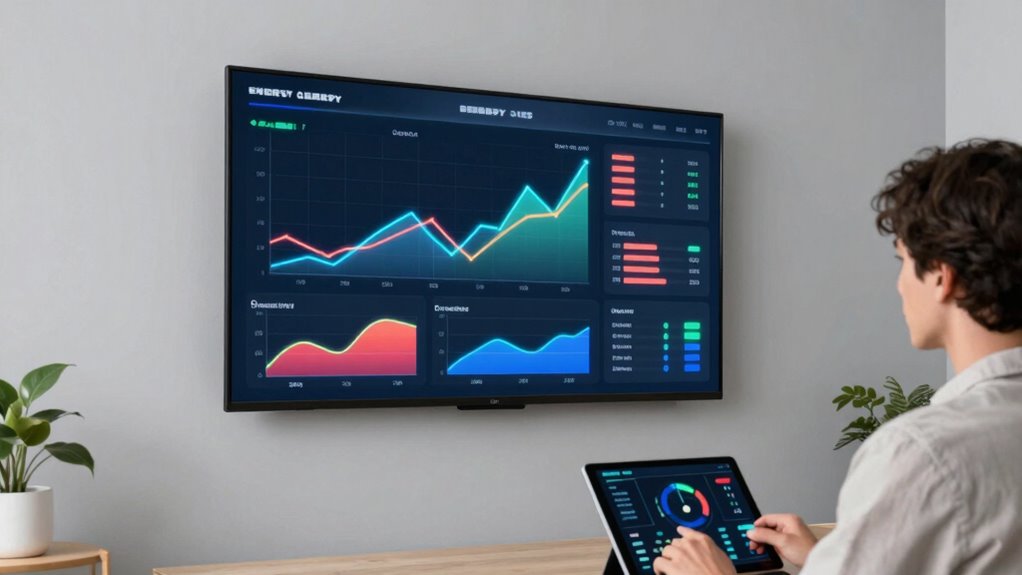
Energy dashboards have become powerful tools for influencing behavior by providing real-time data on energy consumption. Unlike traditional bills, which arrive monthly or quarterly and only show past use, dashboards give you immediate feedback. This instant insight makes it easier for you to see how your actions affect your energy use right now, which can lead to quicker behavior changes. When you see your consumption data displayed visually—like through graphs or color-coded indicators—you can easily identify patterns and understand where you’re wasting energy. This real-time feedback taps into your natural desire for immediate results, encouraging you to adjust your habits on the spot.
Energy dashboards provide instant feedback, helping you identify waste and adjust habits immediately for better energy efficiency.
Smart metering plays a pivotal role in this process. It enables the collection and transmission of detailed energy data directly to your dashboard, creating a seamless flow of information. With smart metering, you no longer have to wait for a bill to see how much energy you’ve used; instead, you get continuous updates. This constant stream of data helps you stay aware of your consumption, making it easier to set goals and track progress. Additionally, many energy dashboards incorporate renewable incentives, which motivate you to adopt sustainable practices. When you see how your efforts contribute to renewable energy goals or qualify for incentives, you’re more likely to change behaviors quickly. The real-time nature of these dashboards makes the connection between your actions and benefits clearer, reinforcing positive habits.
Traditional billing methods tend to be less effective for changing behavior because they provide only a snapshot of past consumption, often months after the fact. By then, the opportunity to act is gone, and the information may feel disconnected from your daily routines. Energy dashboards, on the other hand, bridge this gap by delivering immediate feedback that’s relevant to your current habits. This immediacy accelerates learning and motivation, helping you to make smarter decisions about turning off unused appliances or adjusting thermostats. The combination of real-time data, smart metering technology, and renewable incentives creates a compelling environment for behavior change—one where you feel empowered to take control and see tangible results almost instantly. Moreover, the data visualization features simplify complex energy information, making it easier for users to interpret and act upon their consumption patterns.
Furthermore, the visualization of data in dashboards simplifies complex information, making it accessible and understandable for everyone, regardless of technical background. The user-friendly interfaces enhance engagement and ensure that even those unfamiliar with energy metrics can easily interpret their consumption patterns. Incorporating educational components within dashboards can further improve user understanding and promote sustained behavioral improvements.
In essence, energy dashboards outperform bills because they make energy use visible and actionable in real time. You don’t have to wait weeks or months to understand the impact of your choices; instead, you see it instantly, encouraging faster, more sustained behavioral shifts. This dynamic approach is why many energy programs now prioritize dashboards over traditional billing as a tool for promoting energy efficiency and sustainability.
As an affiliate, we earn on qualifying purchases.
Frequently Asked Questions
How Do Energy Dashboards Adapt to Individual User Habits?
Energy dashboards adapt to your habits through real-time feedback and personalized insights. As you use the dashboard, it learns your energy patterns and highlights areas for improvement tailored specifically to you. This immediate feedback encourages quick adjustments, making it easier to change behavior compared to bills that arrive monthly. You stay motivated because you see instant results, and the insights help you understand how small changes impact your energy use.
What Psychological Factors Make Dashboards More Motivating Than Bills?
They say, “Seeing is believing.” Dashboards tap into behavioral incentives and cognitive engagement, making them more motivating than bills. You actively see real-time data, which sparks immediate awareness and encourages quick action. Unlike bills, which are often delayed and less engaging, dashboards motivate you by providing instant feedback, reinforcing positive habits, and making energy conservation feel personal and achievable. This psychological connection drives faster behavior change.
Can Dashboards Influence Long-Term Energy Conservation?
Yes, dashboards can influence your long-term energy conservation. By providing clear data visualization and behavioral nudges, they help you recognize patterns and make informed decisions. Over time, these visual cues reinforce habits and motivate sustained changes. Unlike bills, dashboards actively engage you daily, creating a continuous feedback loop that encourages ongoing energy-saving behaviors and fosters a deeper commitment to conservation.
How Often Should Energy Dashboards Be Updated for Maximum Impact?
You should update energy dashboards as often as possible, ideally in real time, to maximize impact. Real-time feedback keeps you engaged and aware of your energy use, fostering quicker behavioral changes. Visual engagement from dynamic, up-to-date data helps you identify patterns and make adjustments instantly. Regular updates guarantee the information remains relevant and compelling, encouraging continued conservation efforts and reinforcing positive habits over time.
Are Energy Dashboards Effective Across Different Demographic Groups?
You notice that energy dashboards are often effective across different demographic groups, especially when designed with inclusive usability in mind. Coincidentally, engaging diverse demographics hinges on reducing usability barriers, such as language or tech difficulties, ensuring everyone can interpret data easily. When these barriers are addressed, demographic engagement increases, making the dashboards a powerful tool for motivating energy-saving behaviors across all community segments.
Conclusion
So, next time you glance at an energy dashboard, ask yourself—are you really seeing your energy habits change? These dashboards provide instant feedback, making it easier for you to recognize and adjust your behavior quickly. Unlike waiting for bills, which feel distant and slow, dashboards bring your energy use into vivid focus. Isn’t it time you harnessed that real-time insight to make a real difference? After all, change happens faster when you see it happening.
Halloween Picks
halloween
As an affiliate, we earn on qualifying purchases.