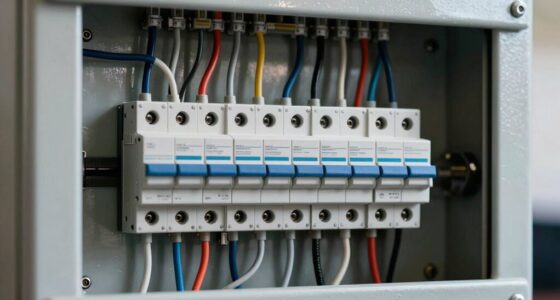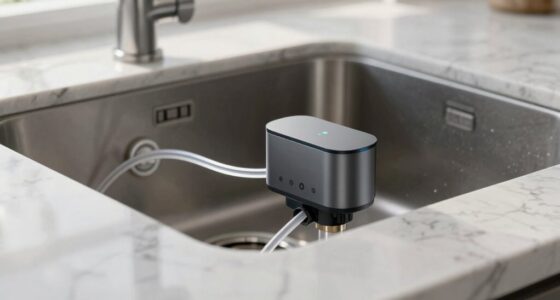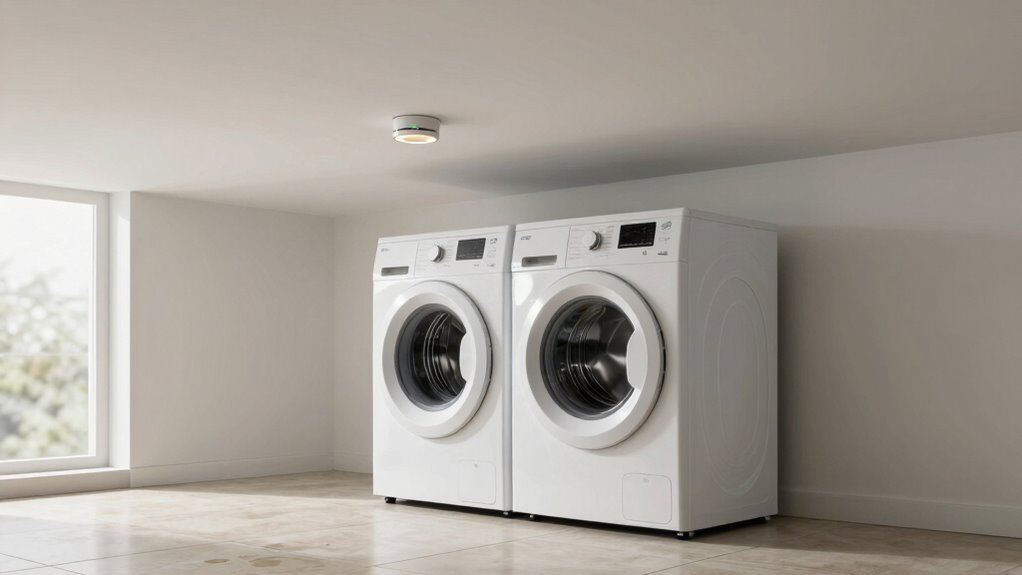

Water leak sensors in laundry rooms can detect even tiny leaks early, preventing major water damage and costly repairs. By alerting you quickly with smartphone notifications or voice commands, they help you act fast before a problem becomes serious. Proper placement near appliances and water source connections optimizes their effectiveness. Regular testing ensures they stay reliable. Want to discover how to get the most out of your water leak sensors? Keep going to find helpful tips.

Turn the school run and nap time into listening time
- Thousands of audiobooks, podcasts and originals
- Listen on your phone, tablet or Echo — also offline
- Cancel anytime
Key Takeaways
- Placing sensors near washing machines and water hoses ensures early leak detection before damage occurs.
- Smart leak sensors send instant alerts to your devices, enabling quick response to potential leaks.
- Regular testing and proper placement prevent false negatives and maximize sensor effectiveness.
- Integration with smart home systems allows automatic shutoff of water supply upon leak detection.
- Monitoring slow leaks helps prevent hidden water damage and costly repairs in laundry areas.
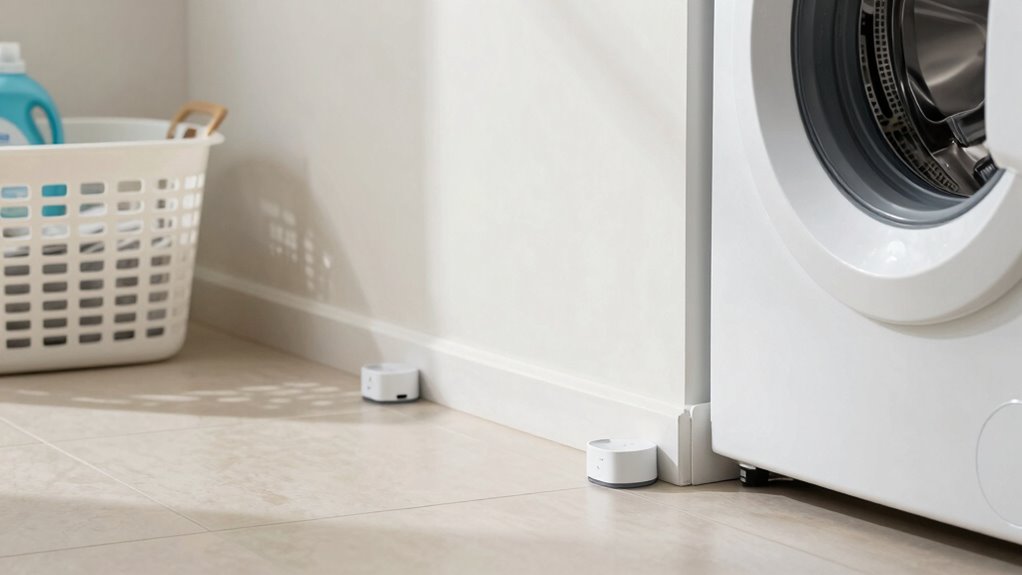
Water leak in your laundry room can cause significant damage and costly repairs if left unnoticed. That’s why installing water leak sensors is one of the smartest moves you can make to protect your home. These devices are designed to detect even the tiniest leaks early, giving you time to react before water damage becomes a major problem. Modern sensors often integrate seamlessly with your smart home system, allowing you to get alerts on your phone or smart device instantly. This integration means you don’t have to be physically present in the laundry room to be aware of a leak; you can respond quickly from anywhere.
When it comes to smart home integration, it’s crucial to choose sensors that work well with your existing setup. Look for models compatible with your voice assistant or smart hub, such as Alexa, Google Home, or Apple HomeKit. This way, you can receive notifications through your preferred platform and even automate responses, like shutting off the water supply if a leak is detected. This level of integration guarantees you’re always in the loop, no matter where you are.
Sensor placement tips are critical to maximizing the effectiveness of your leak detection system. You should position sensors near appliances that use water, such as washing machines and utility sinks. Place them on the floor beneath hoses, valves, and drain pipes, where leaks are most likely to occur. Avoid placing sensors too high or too far from water sources, as they may not detect leaks early enough. For added protection, consider placing a sensor near the water heater or behind appliances where leaks might develop slowly over time. Confirming the sensors are on a flat, stable surface and not obstructed by clutter helps them function properly. Regular testing of your sensors ensures they remain reliable, especially if you have a smart home system, which can depend on timely alerts to prevent damage. Additionally, understanding the location of water sources can help optimize sensor placement for early leak detection, and familiarizing yourself with leak detection technology can improve your overall system effectiveness.
Products Worth Considering

Levoit Core 400S-P Smart Air Purifier for Large Rooms

Sonos Era 100 Wireless Smart Speaker, Black

Samsung 65-Inch The Frame Pro Neo QLED 4K TV (2026) Bundle with Modern Brown Bezel, HDMI Cables, and Home Theater Guide
As an affiliate, we earn on qualifying purchases.
Frequently Asked Questions
How Long Do Water Leak Sensors Typically Last?
Water leak sensors usually last about 3 to 5 years, depending on their sensor durability and battery life. You should check the manufacturer’s recommendations for specific models, as some may have rechargeable batteries or longer-lasting components. Regularly replacing batteries and testing the sensors guarantees they stay functional. Proper maintenance helps catch leaks early, protecting your laundry room from water damage and extending the sensor’s effective lifespan.
Are Water Leak Sensors Compatible With Smart Home Systems?
Think of water leak sensors as the bridge connecting your laundry room to your smart home ecosystem. Many sensors are compatible with smart home systems, allowing seamless integration. With smart home integration, you can receive instant alerts and even automate responses. Check the sensor’s specifications for sensor compatibility, ensuring it works with your system like a perfect puzzle piece. This way, you stay proactive and protected effortlessly.
What Is the Cost Range for Installing Leak Sensors?
Installation costs for leak sensors typically range from $50 to $150 per sensor, depending on the type and brand. You should consider sensor placement carefully to guarantee effective coverage, especially near appliances like washing machines and water heaters. Professional installation might add $100 to $200, but it ensures ideal setup. DIY installation can save money but requires attention to detail to prevent future leaks and false alarms.
Can Leak Sensors Detect Slow Leaks or Only Sudden Bursts?
Leak sensors can detect both slow leaks and sudden bursts, thanks to their sensor sensitivity. Slow leak detection is possible because many sensors monitor moisture levels over time, alerting you before damage occurs. The key is choosing a sensor with high sensitivity, which can catch minor leaks early. This proactive approach helps prevent costly repairs and water damage, giving you peace of mind knowing your laundry room is protected from all types of leaks.
Do Water Leak Sensors Require Regular Maintenance or Calibration?
Imagine your sensor alerts you with a gentle beep when a tiny leak starts. Water leak sensors typically don’t need regular calibration but do require periodic maintenance. You should check sensor placement to guarantee maximum coverage and replace batteries when needed, as battery life varies—some last up to a year. Regularly inspecting and maintaining your sensors keeps them functioning effectively, giving you peace of mind and early leak detection.
Conclusion
By installing water leak sensors in your laundry room, you’re not just preventing floods—you’re safeguarding your home’s future. Think of these sensors as silent sentinels, always watching, always ready to alert you before disaster strikes. Don’t wait until a small drip turns into a costly nightmare. Take control today, and let these smart devices be the first line of defense—because in the game of home safety, early detection is your best move.