

Choosing local video storage over cloud dependence means you’ll enjoy reliable access to your footage without ongoing subscription fees or internet issues. It offers better security with encryption and full control over your data, reducing risks of hacking or breaches. Plus, scalable options let you expand your storage as needed, and backup setups ensure your footage stays safe even if a device fails. Keep exploring to discover how this approach can truly benefit your home security.

Turn the school run and nap time into listening time
- Thousands of audiobooks, podcasts and originals
- Listen on your phone, tablet or Echo — also offline
- Cancel anytime
Key Takeaways
- Local storage provides reliable, instant access without internet dependency or bandwidth limitations.
- It offers enhanced privacy and security through strong encryption and control over data.
- Local backups and redundancy prevent footage loss from device failure or damage.
- Upgrades and capacity adjustments are more cost-effective and tailored to user needs.
- It avoids ongoing subscription fees and reduces vulnerability to cloud-related breaches.
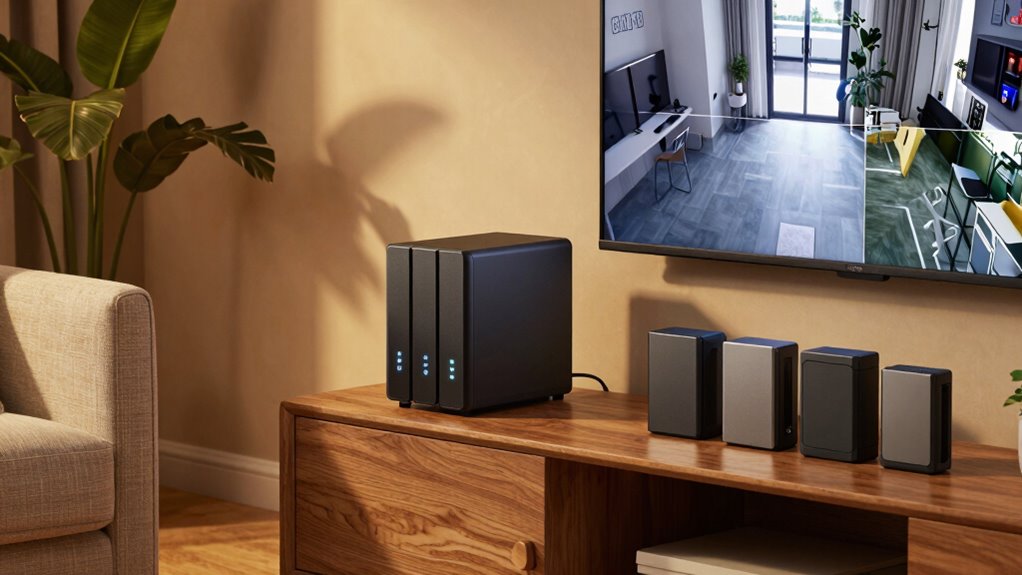
Many homeowners are discovering that local video storage offers a more reliable and cost-effective solution than relying on cloud services. When you store your security footage locally, you take control over how your data is managed and protected. Unlike cloud providers, who often charge ongoing fees and can be vulnerable to outages, local storage provides instant access without recurring costs. Plus, with local storage, you’re less dependent on internet speed or bandwidth, which means your footage remains accessible even during internet disruptions.
One of the key benefits of local storage is the ability to implement strong security measures like video encryption. This technology ensures that your footage remains private and protected from unauthorized access. With encryption, even if someone manages to physically access your storage device, they can’t view the videos without the decryption key. This added layer of security gives you peace of mind, especially if you’re concerned about privacy or potential hacking attempts.
Another essential aspect is storage redundancy. When you store your videos locally, you can set up backup systems that duplicate your footage across multiple devices or drives. This way, if one storage device fails or gets damaged, your footage isn’t lost. Storage redundancy ensures continuous protection and access to your recordings, which is vital for maintaining a thorough security archive. Many local storage options allow you to configure RAID (Redundant Array of Independent Disks) systems, making your setup even more resilient against hardware failures. Implementing data protection strategies can further enhance your system’s reliability and security. Additionally, utilizing local storage options allows you to customize your setup to fit your unique needs and environment. Selecting the right storage technology is crucial for optimizing performance and security. Moreover, modern backup solutions can help automate the process, reducing the risk of human error and ensuring your footage is always protected.
Additionally, local video storage tends to be more scalable and customizable. You can choose a storage capacity that fits your specific needs and upgrade it as your requirements grow. This flexibility often proves more economical over time compared to cloud plans, which can become costly as your footage accumulates. You also avoid the risk of vendor lock-in, giving you full control over your data and hardware. Moreover, local storage systems can be tailored to incorporate space-saving solutions, making them ideal for small homes or limited areas.
While cloud storage might seem more convenient at first, it has limitations that many homeowners find frustrating. Latency, ongoing subscription fees, and potential data breaches make local solutions more appealing. By investing in a robust local storage system with video encryption and storage redundancy, you guarantee your footage is safe, accessible, and under your control. Ultimately, for many homeowners, local video storage is a smarter, more secure choice that offers long-term value and peace of mind.
As an affiliate, we earn on qualifying purchases.
Frequently Asked Questions
What Equipment Is Needed for Local Video Storage Setup?
To set up local video storage, you’ll need a reliable NAS or external hard drive, a router, and possibly a dedicated server. Make sure your system supports video encryption to keep your footage secure. Implement storage redundancy—like RAID configurations—to protect against data loss. Regularly back up your videos, and keep firmware updated for security. With this setup, you gain control, privacy, and quick access to your videos without relying on cloud services.
How Secure Is Local Storage Compared to Cloud Services?
Local storage is generally more secure than cloud services because you control the data directly. You can enhance security by creating encrypted backups, ensuring your videos stay private even if the storage device is compromised. Additionally, data redundancy—like using multiple drives—protects against hardware failure. While no system is foolproof, managing your own storage gives you better control over security measures and reduces reliance on third-party providers.
Can Local Storage Handle Large Video Libraries Efficiently?
Yes, local storage can handle large video libraries efficiently, but it depends on your setup. As your collection grows, you’ll need effective video compression to save space without losing quality. Data redundancy is essential too—you’ll want backup systems to prevent data loss. With smart management, including regular backups and compression, your local storage can scale to meet your expanding library, keeping everything accessible and safe.
What Is the Cost Difference Between Local and Cloud Storage?
The cost comparison shows that local storage is generally more affordable in the long run compared to cloud storage. You pay upfront for hardware, but avoid ongoing subscription fees, making it more cost-effective over time. An affordability analysis reveals that, especially for large video libraries, local storage reduces recurring expenses. While initial costs are higher, you gain better control and fewer monthly charges, saving you money in the long run.
How Easy Is It to Upgrade Local Storage Systems?
Upgrading your local storage system is pretty straightforward. You can add more drives or replace existing ones, enhancing capacity and performance. This boosts remote access by ensuring your videos are always available locally, and improves data redundancy, so your files stay safe even if a drive fails. Most systems are user-friendly, allowing you to upgrade without much hassle, giving you peace of mind and reliable access whenever you need it.
Conclusion
Imagine your home as a fortress, guarding your precious memories behind sturdy walls rather than relying on distant clouds. Local storage keeps your videos close, like treasures in a chest, safe from storms and shadows. You hold the keys, and your data stays anchored, not drifting away in the digital sky. With local storage, you’re the captain of your own ship, steering through calm seas, confident your memories are always within reach, safe and sound.
Halloween Picks
halloween
As an affiliate, we earn on qualifying purchases.