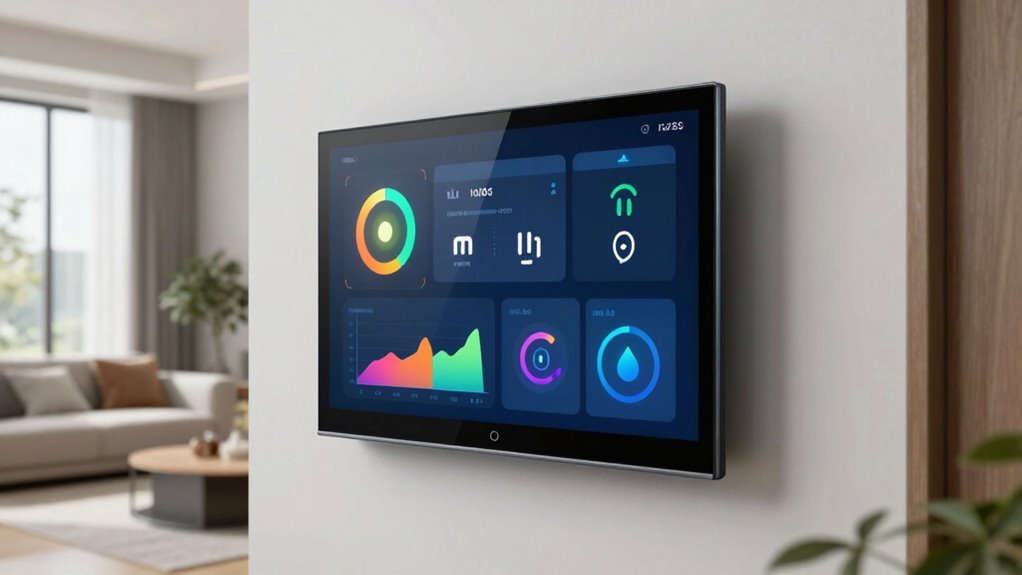
A good smart home dashboard gives you quick access to controls for lights, thermostats, and security devices, with clear icons and labels that are easy to navigate. It should show real-time device statuses, energy usage data, and suggest automation routines based on your habits. Security features and customization options help keep your home safe and tailored to your needs. Keep exploring to discover more ways to optimize your smart home experience.

Turn the school run and nap time into listening time
- Thousands of audiobooks, podcasts and originals
- Listen on your phone, tablet or Echo — also offline
- Cancel anytime
Key Takeaways
- Quick access to essential controls like lights, thermostats, and security cameras with clear icons and labels.
- Real-time energy usage data displayed through charts and graphs for efficient monitoring.
- Voice control integration with status updates for seamless device management.
- Automated routines and proactive notifications tailored to user habits and security alerts.
- Customizable layout and centralized device management for an organized, user-friendly interface.
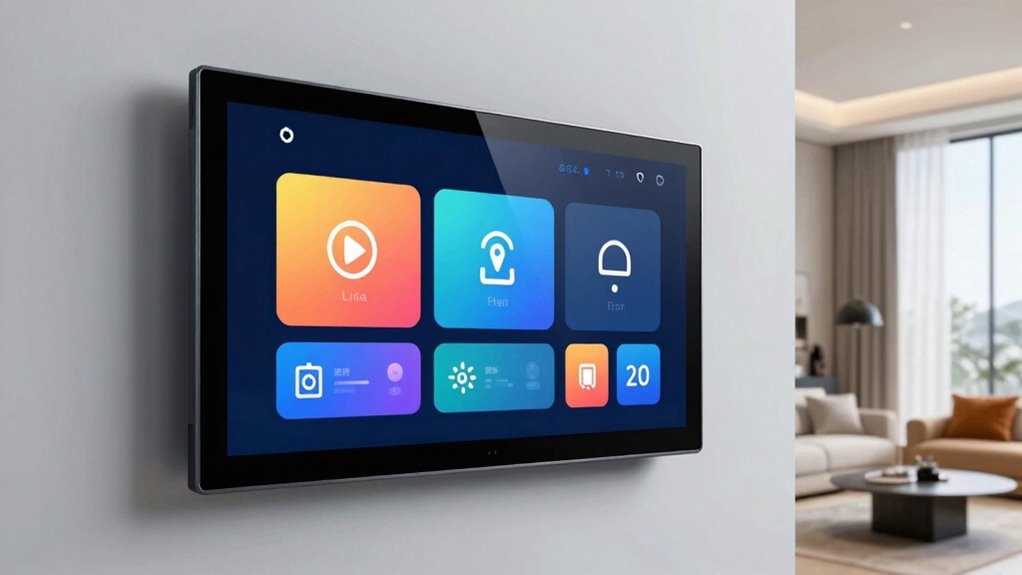
A well-designed smart home dashboard can make managing your devices effortless, but it’s easy to feel overwhelmed by too many options or clutter. To avoid this, your dashboard should present essential information clearly and intuitively. At the top, you want quick access to your most-used controls, such as lights, thermostats, and security cameras. This allows you to make immediate adjustments without digging through menus. The design should be clean, with icons and labels that are easy to understand, helping you navigate smoothly.
Voice control integration is a must-have feature on a good smart home dashboard. When you see options to activate voice commands, you can effortlessly give commands without touching your devices. This not only simplifies management but also enhances accessibility, especially when your hands are full or you’re across the room. Your dashboard should show status updates of voice-activated devices, making it easy to verify commands or troubleshoot issues quickly. Incorporating voice control options directly into the interface means you can switch between manual and voice commands seamlessly. Understanding smart device compatibility can help you choose the right system that works well with your existing devices. Additionally, integrating interoperability standards ensures your various devices communicate effectively across platforms.
Voice control options enhance accessibility, allowing seamless switching between manual and voice commands for effortless home management.
Energy monitoring is another crucial component that a good dashboard should display. You’ll want real-time data on your energy usage, broken down by device or room, so you can identify where most of your power is going. This helps you make smarter decisions to cut costs and reduce your carbon footprint. The dashboard should visualize energy consumption with easy-to-read charts or graphs, showing trends over time. When you notice spikes or unusual activity, you can take action immediately, perhaps turning off devices or adjusting settings to save energy. Having this information readily available keeps you informed and in control of your home’s efficiency. Recognizing the importance of biodiversity in sustainable living can also inspire eco-friendly choices within your smart home.
Beyond basic controls, your dashboard should also offer automation insights. For example, it could suggest routines based on your habits, like turning off lights at bedtime or lowering the thermostat when no one’s home. These proactive suggestions make your home smarter without requiring constant manual input. Notifications about system updates or alerts for security issues should be accessible without cluttering the main interface, ensuring you’re always informed but not overwhelmed. Customization options are also essential; being able to prioritize what appears on your dashboard helps tailor the experience to your needs. Incorporating smart home security features can further enhance your peace of mind by keeping you informed of any potential threats.
Ultimately, a good smart home dashboard offers a balance of simplicity and detailed information. It highlights key controls, integrates voice commands, and provides energy monitoring features that empower you to manage your home efficiently. When designed thoughtfully, it becomes your central hub—keeping your smart devices organized, your energy use optimized, and your home running smoothly.
As an affiliate, we earn on qualifying purchases.
Frequently Asked Questions
Can I Customize the Dashboard Layout?
Yes, you can customize the dashboard layout to suit your preferences. Many smart home systems offer dashboard customization, allowing you to rearrange widgets or add new ones for better layout flexibility. This way, you get quick access to your most-used controls and information. You simply select the customization options, drag and drop elements, and tailor the layout to fit your needs perfectly, making your smart home experience more intuitive.
How Secure Is My Smart Home Data?
Your smart home data is surprisingly secure, but don’t let your guard down. Data encryption keeps your information safe from prying eyes, while robust privacy settings give you control over who accesses what. Still, new threats emerge every day, so staying vigilant is key. Regularly update your software, review privacy options, and choose strong passwords. Your data’s security depends on your proactive steps—don’t wait until it’s too late.
Does the Dashboard Support Voice Control?
Yes, a good smart home dashboard should support voice control through voice recognition technology. This allows you to manage devices easily and hands-free. Make sure it also prioritizes privacy protection, so your voice commands are kept secure and confidential. Look for dashboards that clearly specify their privacy policies and offer secure voice recognition features, ensuring your data remains safe while enjoying the convenience of voice-activated control.
Can I Integrate Third-Party Devices Easily?
Ever wondered if your smart home dashboard can seamlessly connect with third-party devices? The good news is, many platforms now prioritize device compatibility, making integration easier. Still, some face challenges with compatibility issues or complex setup processes. To avoid frustration, choose a dashboard known for broad support and reliable integration features. This way, you guarantee your smart home is flexible, future-proof, and truly personalized.
What Is the Ideal Screen Size for a Dashboard?
The ideal screen size for a smart home dashboard is around 10 to 12 inches. This size offers a user interface that’s easy to navigate without feeling cluttered, allowing you to view multiple controls at once. A balanced visual design is key, so the display isn’t overwhelming. Choose a screen size that provides clear visibility, smooth interaction, and efficient control, making your smart home experience seamless.
Conclusion
Imagine a dashboard so powerful, it feels like having the universe’s smartest assistant right in your pocket. With all your devices perfectly coordinated, you’ll wonder how you ever managed without this technological marvel. It’s more than just a control panel — it’s your command center for a smarter, safer, and more effortless life. Embrace the future today, and let your dashboard transform your home into a haven of innovation and ease that’s truly out of this world.
Halloween Picks
halloween
As an affiliate, we earn on qualifying purchases.