
When shopping for smart appliances, you should ask how your data is collected, shared, and secured. Find out if the device uses encryption to protect your information during transmission and storage. Ask about user control over data, including options to opt-in or out of sharing. Also, review the privacy policy for transparency and clarity. Knowing these details helps guarantee your personal info stays safe. Keep exploring to learn more essential questions for protecting your privacy.

Turn the school run and nap time into listening time
- Thousands of audiobooks, podcasts and originals
- Listen on your phone, tablet or Echo — also offline
- Cancel anytime
Key Takeaways
- Ask if the device collects personal data and what specific information is gathered.
- Inquire about encryption protocols used to protect data in transit and storage.
- Verify if users can easily control, review, or revoke data sharing and collection preferences.
- Review the privacy policy for clarity on data usage, security measures, and sharing practices.
- Confirm whether the manufacturer provides regular security updates and transparent data protection commitments.
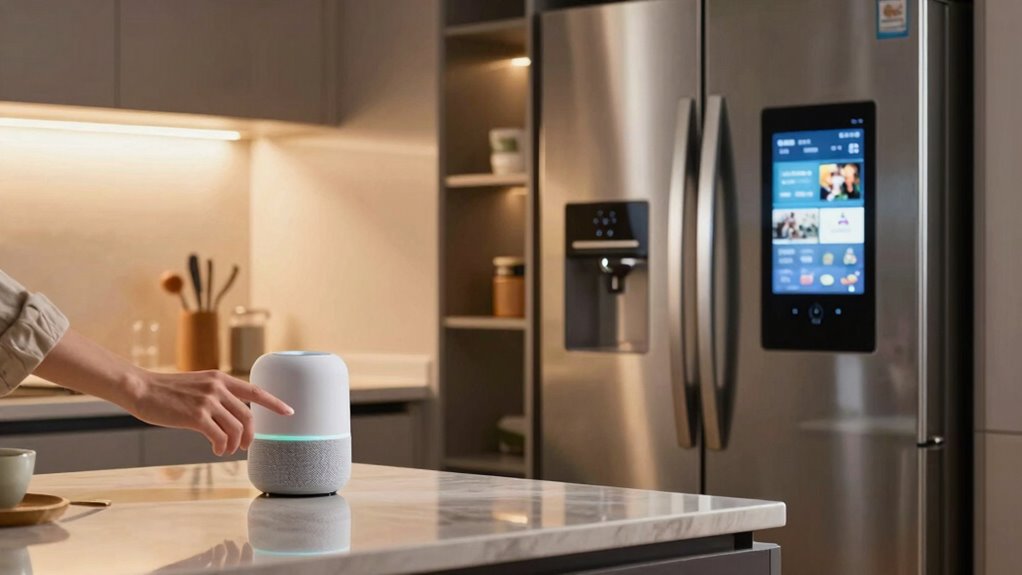
Have you ever wondered how much personal information your smart appliances collect and share? It’s a question that often gets overlooked when you’re excited about the convenience these devices bring to your home. But behind that convenience lies a complex web of data that can reveal details about your daily routines, habits, and even your personal preferences. That’s why, as a buyer, it’s essential to ask about how your data is protected and managed.
One of the key aspects to consider is data encryption. When your smart appliances transmit data—whether to manufacturers, cloud servers, or other devices—encryption acts as a safeguard, ensuring that the information remains secure and unreadable to anyone who intercepts it. If a device doesn’t use proper data encryption, your personal information could be vulnerable to hacking or unauthorized access. Before making a purchase, you should inquire whether the appliance employs robust encryption protocols, both during data transmission and storage. Knowing that your data is encrypted gives you peace of mind, knowing that your personal details are protected from malicious actors. Additionally, understanding the data collection practices of the manufacturer can help you make informed decisions about your privacy. It’s also wise to investigate whether these devices implement regular security updates, which are crucial for maintaining ongoing data security.
Another vital question relates to user consent. When your smart appliance collects data, you should have control over what information is gathered and how it’s used. Manufacturers should be transparent about their data collection practices and give you clear options to opt-in or opt-out of certain data-sharing features. User consent isn’t just a legal requirement; it’s about respecting your privacy and giving you autonomy over your personal information. You should ask whether the device’s privacy policy is accessible and easy to understand, and whether you can easily revoke consent or change your preferences later on. If a company is vague about their data practices or makes it difficult to exercise control, that’s a red flag. Being aware of privacy policies and how they are communicated can significantly impact your trust in a device. Furthermore, understanding how these policies address data security can help you gauge the manufacturer’s commitment to protecting your information. Your personal information is valuable, and you have every right to demand transparency and security from the technology you trust to be part of your daily life.
As an affiliate, we earn on qualifying purchases.
Frequently Asked Questions
How Is My Data Stored and Encrypted on These Devices?
Your data is usually stored on servers with device security measures like encryption, which protects your information from unauthorized access. Many manufacturers now prioritize data transparency, clearly explaining how they handle your data. It’s smart to check if the device encrypts your data both at rest and in transit, ensuring your information remains private. Always review the privacy policy to understand how your data is stored and protected, giving you peace of mind.
Can I Control What Data My Smart Appliance Collects?
Seventy-five percent of smart appliance users want more control over their data. You can typically manage what data your device collects through settings or app permissions. Voice recognition features often allow you to disable voice data collection, and firmware updates may include privacy controls. Regularly reviewing these options guarantees you control your data, preventing unnecessary collection and keeping your information safe while still enjoying smart features.
Are There Options to Disable Data Collection Entirely?
Yes, many smart appliances offer options to disable data collection entirely. You can often do this through settings that prioritize data anonymization, ensuring your information isn’t linked to your identity. Additionally, look for appliances that require your explicit user consent before collecting data. By choosing devices with these features, you maintain greater control over your privacy, reducing the risk of your personal information being shared or misused.
Who Has Access to My Privacy Data and How Is It Shared?
Sure, your smart appliance’s secret society is probably sharing your data behind your back. Only trusted parties with your explicit user consent get access, and data ownership stays with you—if you read the fine print. But beware: companies often share info with third parties or use it for targeted ads. So, stay vigilant, ask questions, and demand transparency—because your privacy shouldn’t be a game of hide and seek.
What Are the Manufacturer’s Policies on Data Breaches?
The manufacturer’s policies on data breaches show their commitment to data breach prevention and transparency. They should clearly explain how they protect your data, respond to breaches, and notify you promptly if one occurs. Look for manufacturers that prioritize transparency, providing detailed breach response plans and regular security updates. This way, you stay informed and confident that your privacy is protected, even in the unlikely event of a data breach.
Conclusion
As you stand at the crossroads of convenience and privacy, remember the wise words of Orwell: “Big Brother is watching.” Before you invite a smart appliance into your home, ask yourself if the benefits outweigh the risks. Stay vigilant, question what data is being collected, and demand transparency. Your privacy isn’t just a feature; it’s your right. Don’t let the allure of smart tech turn your home into a surveillance state.
Cold & flu season Picks
humidifiers
As an affiliate, we earn on qualifying purchases.