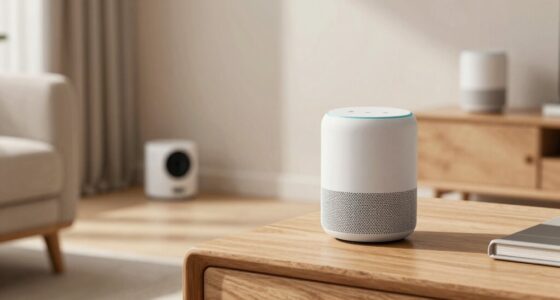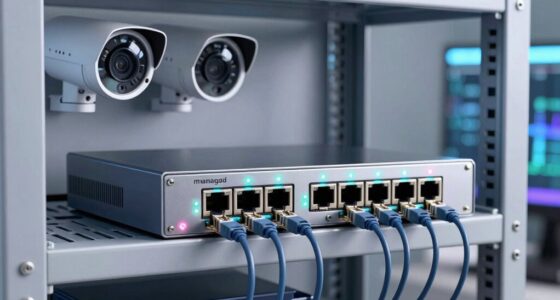

Local-control smart hubs are back because they prioritize your privacy by keeping data within your home and processing commands offline. They respond faster and work reliably even during internet outages, giving you immediate control over your devices. Plus, they’re easier to customize and compatible with more brands, making your smart home setup smoother. If you’re curious how they can improve your home, stick around to find out more about these powerful, secure hubs.

Turn the school run and nap time into listening time
- Thousands of audiobooks, podcasts and originals
- Listen on your phone, tablet or Echo — also offline
- Cancel anytime
Key Takeaways
- Local control enhances privacy by processing data and commands within the home, reducing reliance on cloud services.
- Faster response times and reliable operation without internet dependency improve user experience.
- Greater device compatibility and customization options simplify setup and expandability.
- Reduced energy consumption and cost savings stem from independent operation and optimized device management.
- Increased system reliability and security are achieved through direct device updates and reduced cyberattack vulnerability.
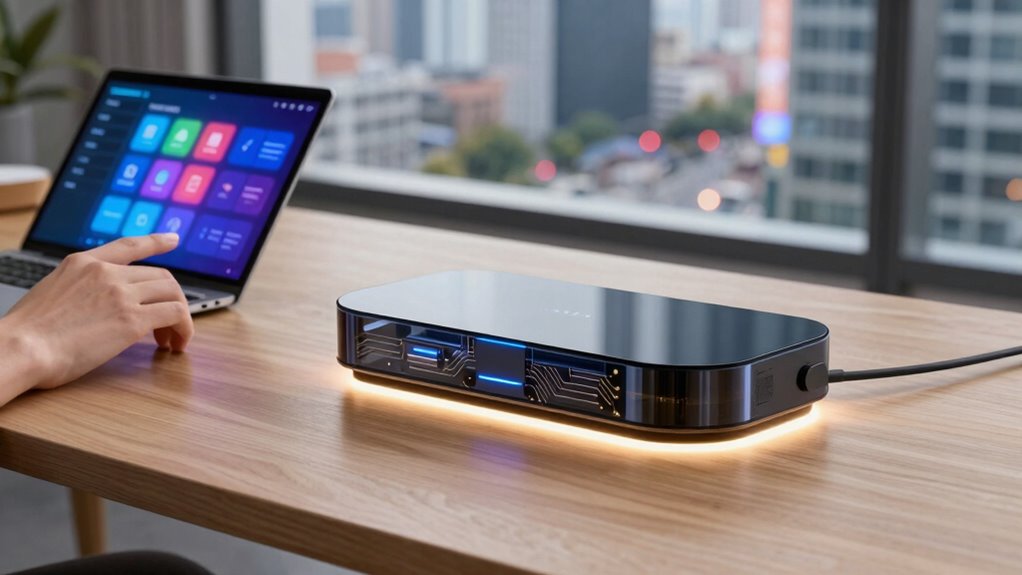
After years of reliance on cloud-based systems, local-control smart hubs are making a strong comeback, and for good reason. You might have gotten used to controlling your smart devices through apps or voice commands connected to the internet, but now, the appeal of keeping everything locally managed is gaining momentum. One major advantage is enhanced privacy—since your data stays within your home, you don’t have to worry about external servers storing sensitive information. Plus, local-control hubs can respond faster, giving you immediate control without lag or dependency on internet stability. Moreover, local processing allows for secure data management, reducing the risk of external breaches. Voice recognition plays an essential role in this shift. Many modern smart hubs now feature sophisticated voice recognition technology that works seamlessly even without an internet connection. This means you can issue commands like “turn on the lights” or “adjust the thermostat” and get instant responses, all processed locally. This not only improves responsiveness but also boosts privacy, as your voice data isn’t sent to cloud servers for processing. You feel more in command knowing your voice commands are handled securely within your home network. Additionally, local-control hubs can often be customized more easily to suit unique home setups, giving homeowners greater flexibility in how they integrate their devices. Enhanced device compatibility allows for smoother integration of various brands and models, making setup and expansion more straightforward. Energy efficiency is another compelling reason to choose local-control hubs. Cloud-based systems often require constant internet access and data transmission, which consume additional energy and increase operational costs. Local hubs, on the other hand, operate independently of the cloud, reducing energy consumption and making your entire smart setup more eco-friendly. They can optimize device operations, turning off unused appliances or adjusting temperatures based on your habits without the delays caused by cloud processing. This localized control ensures your home runs more efficiently, saving you money in the long run. Furthermore, as technology advances, local hubs are increasingly capable of supporting advanced AI features, allowing for smarter automation and personalization. Additionally, local-control hubs are less vulnerable to outages or cyberattacks that can compromise cloud services. When your system is stored and managed locally, it’s easier to secure and maintain. You don’t have to worry about losing control during internet disruptions, and updates can be performed directly on the device, minimizing potential vulnerabilities. This independence from external servers gives you peace of mind, knowing your smart home functions reliably and securely.
Local-control hubs offer faster responses, enhanced privacy, and greater reliability without relying on internet connectivity.
In essence, the resurgence of local-control smart hubs offers a blend of privacy, speed, and energy efficiency that many homeowners now prioritize. Voice recognition technology has advanced to the point where local processing is both practical and highly effective. By choosing a local hub, you create a smarter, more secure, and energy-conscious home environment—one that’s designed to give you better control and peace of mind in an increasingly connected world.
As an affiliate, we earn on qualifying purchases.
Frequently Asked Questions
How Do Local-Control Hubs Differ From Cloud-Based Systems?
You’ll find local-control hubs differ from cloud-based systems because they prioritize edge processing and local autonomy. With local-control hubs, data is processed directly at the device or nearby, reducing latency and dependence on internet connectivity. This setup gives you more control over your system, enhances security by keeping sensitive data local, and guarantees quick responses even if cloud connections drop. It’s all about keeping operations smooth and reliable on-site.
What Are the Security Benefits of Local-Control Smart Hubs?
They say, “A chain is only as strong as its weakest link,” and local-control smart hubs strengthen your security by keeping data privacy in your hands. With local data processing, you reduce reliance on cloud servers, lowering cyber security risks. This setup minimizes exposure to hacking, ensuring your information stays safe and private. You maintain control, making your smart system more resilient against cyber threats.
Can Local-Control Hubs Integrate With Existing Smart Home Devices?
Yes, local-control hubs can integrate with many existing smart home devices. They often support broad device compatibility, allowing you to connect different brands and protocols. You get more user customization because you can tailor your smart home setup without relying solely on cloud services. This flexibility makes it easier to expand or modify your system over time, ensuring your devices work seamlessly together for a smarter, more personalized home experience.
What Is the Typical Lifespan of a Local-Control Smart Hub?
A typical local-control smart hub lasts around 5 to 10 years, depending on hardware durability and software updates. You should expect the hardware to remain functional if it’s well-made, but software updates are essential for security and compatibility with new devices. Regular updates can extend the hub’s lifespan, while neglecting them might cause it to become outdated or insecure. Proper maintenance ensures your hub stays reliable for years.
Are Local-Control Hubs More Cost-Effective Than Remote Options?
Yes, local-control hubs are often more cost-effective than remote options because they promote energy independence and reduce reliance on external systems. You gain greater control over your energy use and can customize settings to suit your needs, which can lower your overall energy costs. Plus, their durability and ease of maintenance mean fewer long-term expenses, making them a smart investment for those seeking efficient, tailored energy solutions.
Conclusion
While cloud-connected smart hubs promise endless convenience, the return of local-control hubs reminds you that reliability and privacy matter just as much. In a world enthusiastic for seamless automation, sometimes the simplest, most immediate solution offers peace of mind. You realize that true smartness isn’t just about features—it’s about knowing your home remains responsive and secure, even when the internet goes down. Sometimes, going back to basics is the smartest move you can make.
Columbus Day / Indigenous Peoples' Day Picks
long weekend sales
As an affiliate, we earn on qualifying purchases.