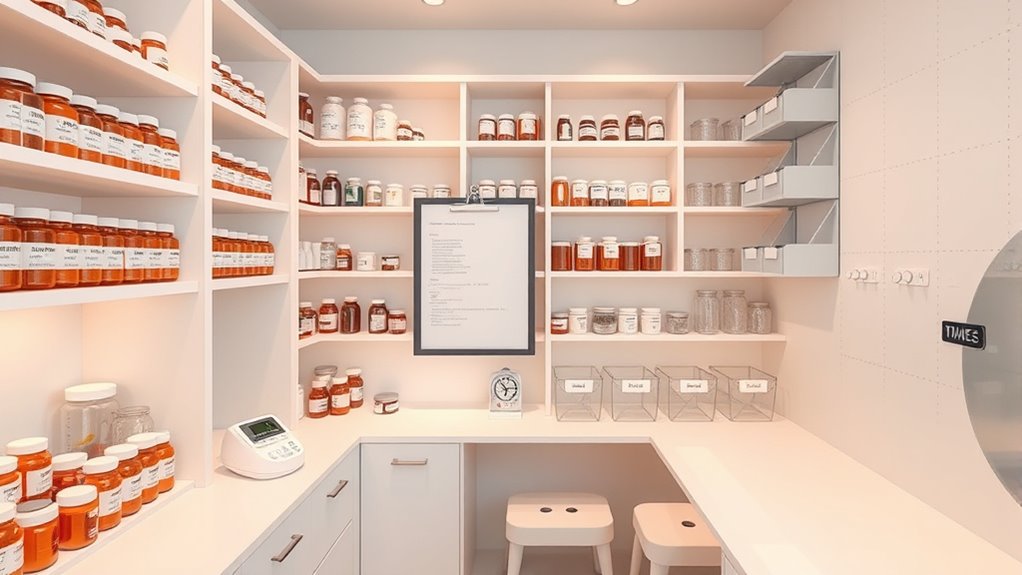

To prevent errors in your medication room, organize medications in clearly labeled, sturdy containers and store them in a cool, dry spot away from sunlight. Use bright, even lighting so you can easily read labels and distinguish pills. Keep frequently used meds within arm’s reach and less-used items higher or further back. Regularly check expiry dates and keep safety features like child-proof caps. Stay tuned for more ways to create a safe, efficient medication space at home.
Key Takeaways
- Organize medications by type and schedule in clearly labeled, sturdy containers to prevent misplacement and errors.
- Use bright, even lighting and adjustable task lights to enhance label reading and distinguish similar pills.
- Store frequently used meds within easy reach, and less-used items higher or further back to streamline workflow.
- Maintain a cool, dry environment away from sunlight to preserve medication efficacy and prevent spoilage.
- Implement safety features like child-proof caps, double-check labels, and keep the space clutter-free to minimize mistakes.
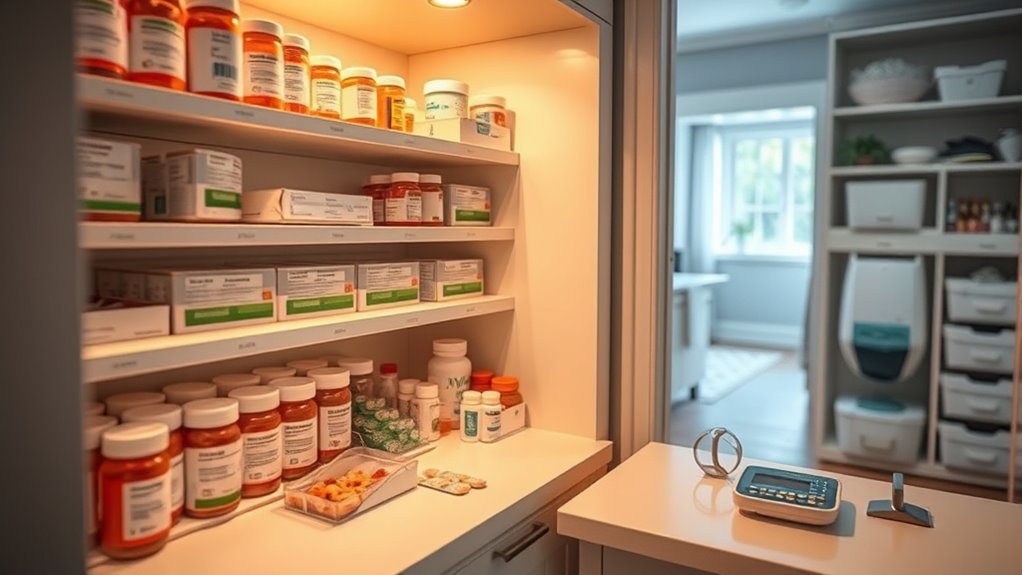
Having a designated medication room at home can greatly improve safety and organization when managing multiple prescriptions. When you set aside a specific space for storing your medications, you reduce the chances of misplacing pills, taking the wrong dose, or accidentally mixing up prescriptions. This dedicated area helps you develop a consistent routine, making it easier to track what you’ve taken and when. It also provides a clear, centralized location that family members or caregivers can access easily, ensuring everyone stays informed about your medication schedule.
A dedicated medication space enhances safety, organization, and routine for managing prescriptions effectively at home.
To optimize your medication room, start by choosing a spot that’s cool, dry, and away from direct sunlight. Proper storage conditions preserve the efficacy of your medicines and prevent spoilage. Use sturdy, clearly labeled containers or shelves to keep different types of medications separated. Consider organizing by medication type, dosage frequency, or daily schedule. This approach minimizes confusion and streamlines your routine, especially if you’re managing multiple prescriptions from different healthcare providers. When medications are well-organized, you’re less likely to accidentally take an expired drug or miss a dose.
Lighting is another critical element that enhances safety in your medication room. Bright, even lighting allows you to read labels accurately and distinguish between pills, which can sometimes look similar. Avoid dim or uneven lighting that might cause you to misidentify medications or overlook important instructions. If possible, incorporate adjustable lighting options or task lighting near shelves and storage containers. Good illumination not only helps prevent errors but also reduces eye strain, making it easier to verify labels or check expiration dates regularly. It’s a simple step that markedly boosts your confidence and safety when handling medications.
Your workflow within this space should prioritize efficiency and safety. Keep frequently used medications within easy reach, and store less commonly used items higher or further back. When you plan your workflow, think about how you access your medications daily. Set up a system where you check your prescriptions against your schedule, perhaps using a medication chart or digital reminders. Always double-check labels before opening a bottle or taking a dose. Incorporate safety features like child-proof caps if you have children in the home. Maintaining a clean, clutter-free workspace helps prevent accidental spills or mix-ups, ensuring your medication routine remains safe and straightforward. Additionally, tuning principles from performance optimization can be applied to streamline your medication management process, making it more efficient and reducing the risk of errors.
Frequently Asked Questions
How Can I Prevent Children From Accessing Medications in the Room?
You can prevent children from accessing medications by storing them in a high, locked cabinet out of their reach. Use childproof locks on doors and drawers, and keep medications in original containers with safety caps. Always double-check that the lock is secure after use. Educate children about the dangers of medicines, and never leave pills or liquids unattended. Consistent safety measures help keep your children safe from accidental poisoning.
What Are the Best Pest Control Practices for Medication Storage?
A stitch in time saves nine, so prioritize pest control for your medication storage. Keep medications in airtight, sealed containers to deter pests. Regularly inspect storage areas for signs of pests, and maintain cleanliness to remove food crumbs and spills. Use pest traps or natural deterrents like peppermint oil. Avoid chemicals near medications, and ensure storage spaces are well-ventilated and dry. Staying proactive keeps your medications safe and pest-free.
How Often Should Medication Storage Areas Be Cleaned and Inspected?
You should clean and inspect your medication storage areas at least once a month. Regular cleaning prevents dust and pests from contaminating your medications. During inspections, check for expired or damaged drugs, leaks, or signs of pests. Keep the area organized and well-lit to easily spot issues. Consistent maintenance guarantees your medications remain safe, effective, and free from contamination, reducing the risk of errors or health hazards.
Are There Specific Guidelines for Storing Liquid Versus Pill Medications?
Yes, you should store liquid and pill medications differently. Keep liquids upright in a cool, dark place, tightly capped, to prevent spills and spoilage. Pills should be stored in a dry, airtight container at room temperature, away from direct sunlight. Always follow the specific storage instructions on the label. Regularly check expiration dates and discard expired medications to guarantee safety and effectiveness. Proper storage helps prevent errors and maintains medication potency.
How Can I Organize Medications for Multiple Family Members Effectively?
Did you know that over 70% of medication errors happen due to disorganized storage? To organize medications for multiple family members effectively, assign each person a clearly labeled storage area or container. Use separate shelves or bins for pills and liquids, and keep a shared chart or digital list to track doses. This method minimizes confusion, guarantees timely refills, and keeps everyone’s medications easily accessible and safe.
Conclusion
Imagine opening your medication room, where everything is neatly organized and softly lit, no clutter or confusion in sight. With proper storage, good lighting, and a smooth workflow, you create a safe haven for your medications. This calm, orderly space helps you avoid mistakes and keeps your health on track. By intentionally designing your medication room, you turn a simple space into a secure, inviting place where errors are kept at bay, and peace of mind prevails.