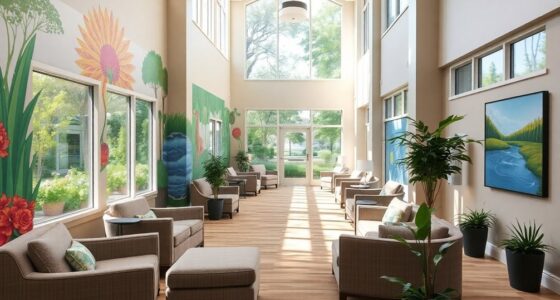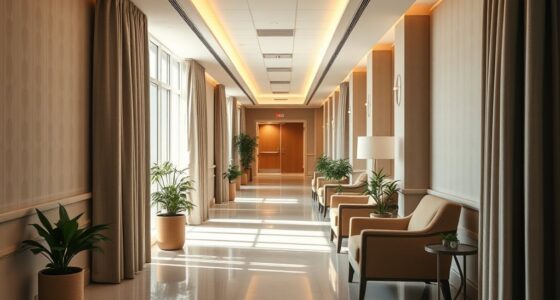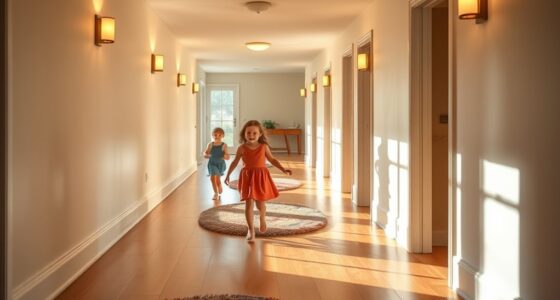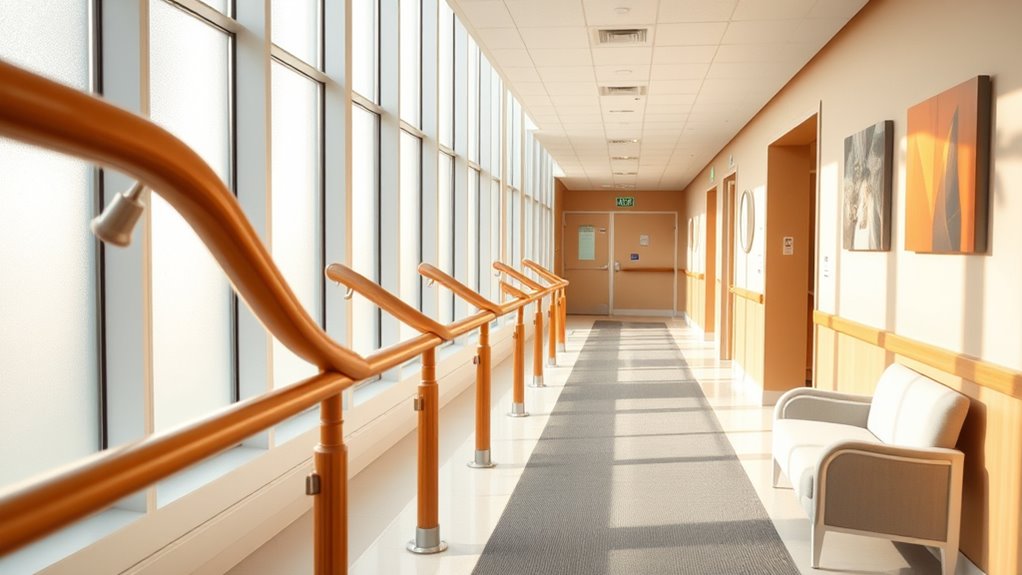

Balancing aesthetics and safety in care facilities involves creating warm, inviting environments that also prioritize residents’ well-being. Use thoughtful lighting, contrasting colors for key features, and durable, slip-resistant flooring to enhance safety without sacrificing style. Proper furniture placement, clutter reduction, and integrated safety features make spaces both functional and appealing. Paying attention to these elements helps create environments that foster independence and dignity, while still meeting safety standards—discover more ways to achieve harmony in care spaces.
Key Takeaways
- Incorporate safety-enhancing features like contrasting colors and non-slip flooring without compromising aesthetic appeal.
- Use lighting solutions that improve visibility and mood while blending seamlessly with interior design.
- Choose furniture and fixtures that are both functional for safety and visually harmonious with the environment.
- Minimize clutter and optimize space layout to ensure safety while maintaining an inviting atmosphere.
- Implement adjustable lighting and safety features that adapt to residents’ needs, balancing comfort and security.
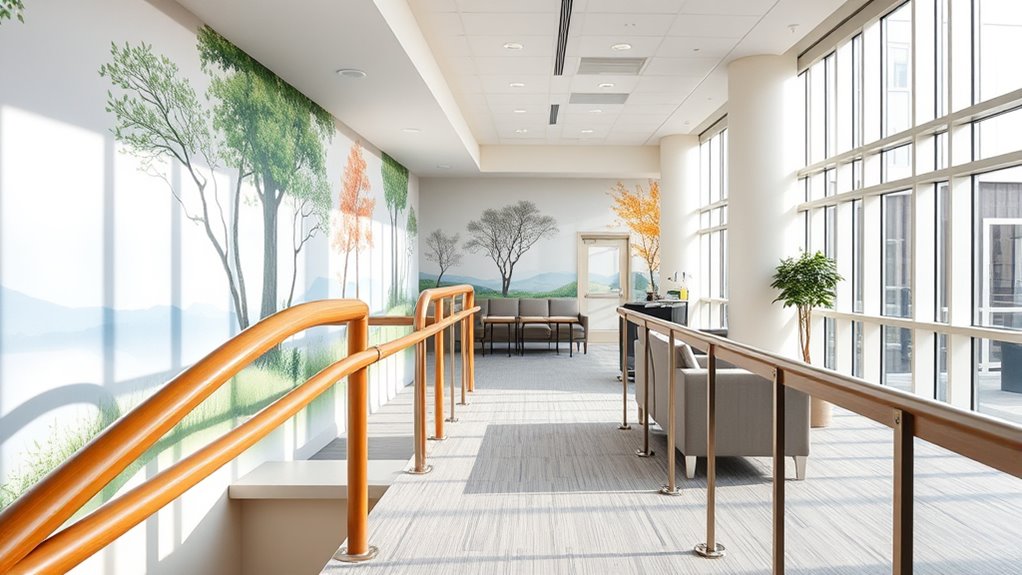
Designing care facilities involves more than just choosing attractive interiors; it’s about creating spaces that prioritize safety without sacrificing aesthetics. When you approach interior design for these environments, you need to strike a delicate balance between functionality and visual appeal. Thoughtful interior design incorporates elements that foster comfort and dignity for residents while guaranteeing safety is never compromised. Every choice, from layout to finishes, should be intentional—aimed at creating an environment that feels welcoming yet secure.
Creating safe, welcoming care environments through thoughtful interior design and intentional choices.
Lighting solutions play a vital role in this balance. Proper lighting can dramatically improve navigation, reduce fall risks, and create a warm, inviting atmosphere. When selecting lighting, you should consider both natural and artificial sources. Maximize natural light wherever possible, as it not only enhances mood but also helps residents see clearly, reducing accidents. For artificial lighting, opt for fixtures that provide even illumination without harsh glare. Incorporate task lighting in areas like bathrooms and kitchens to support daily activities, and use motion sensors in hallways and common spaces to make certain visibility without the need for residents to search for switches.
The key is to choose lighting solutions that are both functional and aesthetically pleasing. Fixtures should complement the overall interior design, blending seamlessly into the décor rather than standing out as hazards. Use warm, soft lighting in communal areas to foster a sense of comfort, while brighter, more focused lighting in workspaces helps staff perform tasks efficiently. You should also think about the placement of lights to avoid shadows and dark spots, which can cause disorientation or accidents. Dimmable options can add flexibility, allowing you to adjust lighting levels based on time of day or activity, further enhancing safety and comfort. Additionally, incorporating appropriate lighting design principles can help optimize both safety and ambiance in care environments.
In addition to lighting, the interior design itself should prioritize safety features that don’t detract from visual appeal. Use contrasting colors for handrails, steps, and edges to improve visibility, especially for residents with impaired vision. Select durable, non-slip flooring that’s easy to maintain, ensuring safety without compromising style. Furniture and fixtures should be appropriately sized and arranged to facilitate easy movement and access, avoiding clutter that can become hazards.
Ultimately, your goal is to craft a care environment where safety and aesthetics coexist harmoniously. By integrating well-thought-out interior design and lighting solutions, you create spaces that promote independence, dignity, and well-being. This approach not only benefits residents but also supports staff in delivering high-quality care within a safe, inviting setting.
slip-resistant flooring for care facilities
As an affiliate, we earn on qualifying purchases.
As an affiliate, we earn on qualifying purchases.
Frequently Asked Questions
How Do Design Choices Impact Infection Control in Care Facilities?
Your design choices directly impact infection control by emphasizing easy-to-clean surfaces and minimizing clutter. Incorporate gardening therapy areas with antimicrobial materials and guarantee natural lighting to reduce mold and bacteria growth. Proper ventilation also helps manage airborne pathogens. By thoughtfully blending aesthetics like calming gardens and ample natural light with safety protocols, you create a healthier environment that promotes healing while reducing infection risks.
What Are the Latest Innovations Balancing Safety and Aesthetics?
You can incorporate the latest innovations by using color schemes that promote calmness and well-being, helping residents feel comfortable. Material selection plays a vital role; opt for antimicrobial surfaces that are both durable and visually appealing. Modern design integrates these elements seamlessly, ensuring safety without sacrificing aesthetics. By thoughtfully combining vibrant, soothing colors with safe, easy-to-clean materials, you create a welcoming environment that prioritizes health and comfort simultaneously.
How Do Regulations Influence Aesthetic Design Options?
Regulations vital influence your aesthetic design options by setting standards for safety that you must follow. You’ll need to choose color schemes that promote a calming environment while complying with lighting and visibility requirements. Material selection is essential; you must opt for safe, durable, and easy-to-clean materials that meet safety codes. These regulations guarantee your facility remains both attractive and secure, guiding your choices without compromising aesthetic appeal.
Can Aesthetic Improvements Compromise Security Measures?
While aesthetic improvements aim to enhance comfort, they can subtly pose privacy concerns or introduce maintenance challenges that might seem to compromise security. You might find that open layouts or decorative features unintentionally reduce surveillance or create hidden spaces. Careful planning helps you maintain safety without sacrificing style, ensuring that privacy concerns are addressed, and maintenance remains manageable—preserving both the visual appeal and the security integrity of your care facility.
How Do Residents’ Preferences Shape Design Decisions?
You should consider residents’ preferences to enhance their satisfaction and comfort in the facility. By involving residents in design decisions, you can incorporate personalization options that reflect their tastes, making spaces feel more like home. This approach boosts resident satisfaction and promotes well-being, while still maintaining safety standards. Listening to their feedback helps you create a balance where aesthetic appeal and security work together harmoniously.
Conclusion
Striking the right balance between aesthetics and safety in care facilities isn’t just about looks—it’s about creating a space where residents feel comfortable and secure. Did you know that well-designed environments can reduce falls by up to 30%? By thoughtfully blending beauty and safety, you guarantee residents enjoy a warm, inviting atmosphere without compromising their well-being. Remember, a beautiful space that prioritizes safety truly enhances quality of life.