
When designing homes with adaptable kitchens, focus on maximizing storage with pull-out drawers, modular shelving, and open display areas. Plan an ergonomic layout with the classic work triangle and flexible fixtures like movable islands or appliance drawers. Incorporate versatile lighting, adjustable surfaces, and multi-use components to support various activities. This approach creates a space that easily adapts to your changing needs and lifestyle, and exploring these ideas further can help you craft a truly functional, long-lasting kitchen.
Key Takeaways
- Incorporate multi-functional storage solutions like pull-out drawers and modular shelving to maximize space and organization.
- Design ergonomic layouts with the classic work triangle and adjustable surfaces for enhanced accessibility.
- Integrate flexible fixtures such as fold-away appliances and movable islands to adapt to various needs.
- Combine smart storage with ergonomic design to create a versatile, efficient kitchen that supports daily and special occasions.
- Focus on long-term usability by using adaptable elements that evolve with household needs and lifestyles.

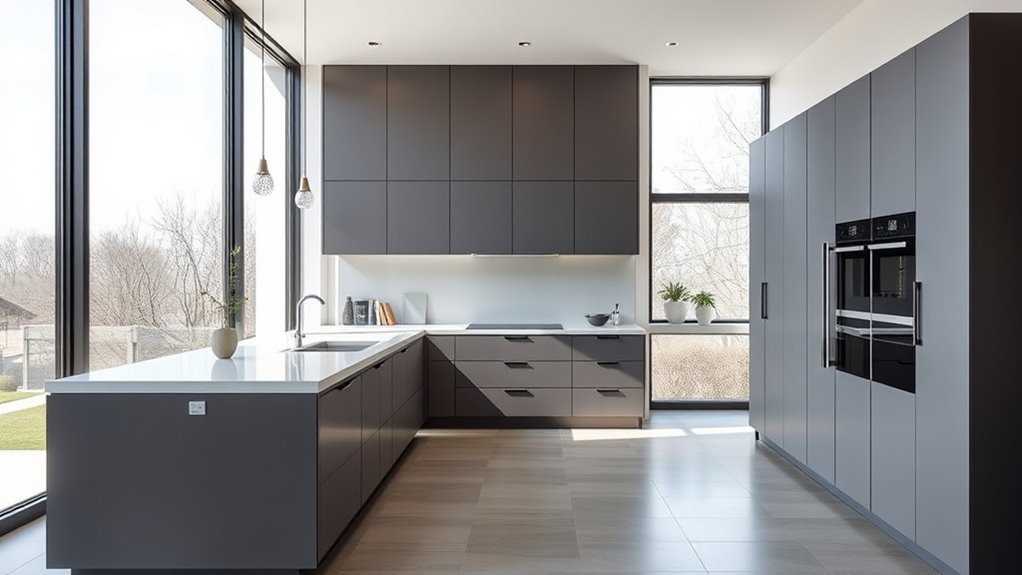
Creating an adaptable kitchen is essential for modern homes that need to accommodate changing lifestyles and needs. When designing such a space, focus on integrating multi functional storage options and ergonomic layouts. These features ensure your kitchen remains flexible, organized, and comfortable, no matter how your routines evolve over time. Multi functional storage is key to maximizing space efficiency. Instead of traditional cabinets that hold a single type of item, opt for solutions like pull-out drawers, vertical dividers, and modular shelving that can be customized to fit your specific needs. For example, incorporating a mix of open shelving and enclosed cabinets allows you to display decorative pieces while hiding clutter. Lazy Susans, corner carousels, and under-sink organizers help make every inch count, reducing wasted space and making access easier. This approach guarantees you can store different kitchen tools, small appliances, or pantry items without cluttering the countertop or creating chaos within cabinets.
Alongside smart storage, designing ergonomic layouts enhances the kitchen’s adaptability. An ergonomic setup reduces strain and makes tasks more efficient, especially as your needs change. Position the sink, stove, and refrigerator in a classic work triangle, but consider adjustable features like pull-out countertops or movable islands that can be repositioned for different activities or gatherings. Include a variety of surface heights or adjustable workspaces to accommodate standing or seated tasks, which is especially useful if you’re designing for multi-generational use or accessibility. Also, consider incorporating flexible lighting solutions—such as dimmable fixtures or under-cabinet LEDs—that can adapt to different activities, whether you’re preparing a quick meal or hosting a dinner party. Incorporating adaptable fixtures can further enhance the functionality of your space.
In addition, think about incorporating appliances and fixtures that can serve multiple functions. For instance, a microwave drawer can free up counter space while still providing easy access. An island with built-in storage or fold-away components can serve as a prep station, breakfast bar, or additional workspace as needed. The goal is to create a kitchen that responds to your changing needs without requiring major renovations. By thoughtfully combining multi functional storage with ergonomic layouts, you make your kitchen a versatile hub that supports both everyday routines and special occasions. This approach not only streamlines your workflow but also enhances comfort and convenience, ensuring your kitchen remains a welcoming, adaptable space for years to come.
Frequently Asked Questions
What Are the Cost Implications of Adaptable Kitchen Designs?
Adaptable kitchen designs may initially cost more due to specialized features and flexible cabinetry, impacting your overall budget considerations. A thorough cost analysis helps you weigh these expenses against long-term benefits like increased functionality and future-proofing. While the upfront investment might be higher, you could save money over time by avoiding costly renovations later. Be sure to prioritize features that align with your needs to make the most of your budget.
How Do Adaptable Kitchens Impact Home Resale Value?
Adaptable kitchens can boost your home’s resale value by attracting buyers seeking flexible, modern spaces. Including luxury upgrades like high-end appliances or smart features makes your kitchen more appealing. Plus, energy-efficient designs lower utility costs, which buyers appreciate. These enhancements not only make your home stand out but also justify higher asking prices, helping you recoup your investment and potentially increase your overall property value.
What Maintenance Is Required for Modular Kitchen Components?
You need to follow regular cleaning routines to keep your modular kitchen components in top shape. Wipe surfaces with a damp cloth and avoid harsh chemicals to protect component durability. Check hinges, drawers, and locks periodically, and tighten any loose screws. Proper maintenance prevents wear and tear, ensuring your kitchen remains functional and looks great for years. Staying proactive helps extend the lifespan of your modular kitchen components effectively.
Are Adaptable Kitchens Suitable for Small or Limited Spaces?
Yes, adaptable kitchens are suitable for small or limited spaces. They utilize compact layouts that maximize every inch of your area, making them perfect for tight spaces. You’ll find versatile storage solutions integrated into the design, helping you keep your kitchen organized and clutter-free. This flexibility allows you to customize your space efficiently, ensuring you have all necessary features without sacrificing comfort or functionality in a smaller footprint.
How Can I Personalize an Adaptable Kitchen to Suit My Style?
Your adaptable kitchen is like a blank canvas waiting for your personal touch. To personalize it, choose decorative accents that reflect your style, such as unique handles or artwork. Experiment with color schemes—bold or soft—that match your personality. Incorporate accessories and textures that make the space feel uniquely yours. This way, your flexible kitchen becomes a true reflection of your taste, blending functionality with your individual aesthetic.
Conclusion
By embracing adaptable kitchen designs, you’re crafting a space that dances to your life’s rhythm, shifting effortlessly from bustling mornings to quiet evenings. Think of your kitchen as a chameleon, changing colors and shapes to suit your needs. With flexibility at its core, your home becomes a living, breathing canvas—ready to grow, transform, and reflect your evolving story. Ultimately, an adaptable kitchen isn’t just a space; it’s the heartbeat of your home’s endless possibilities.