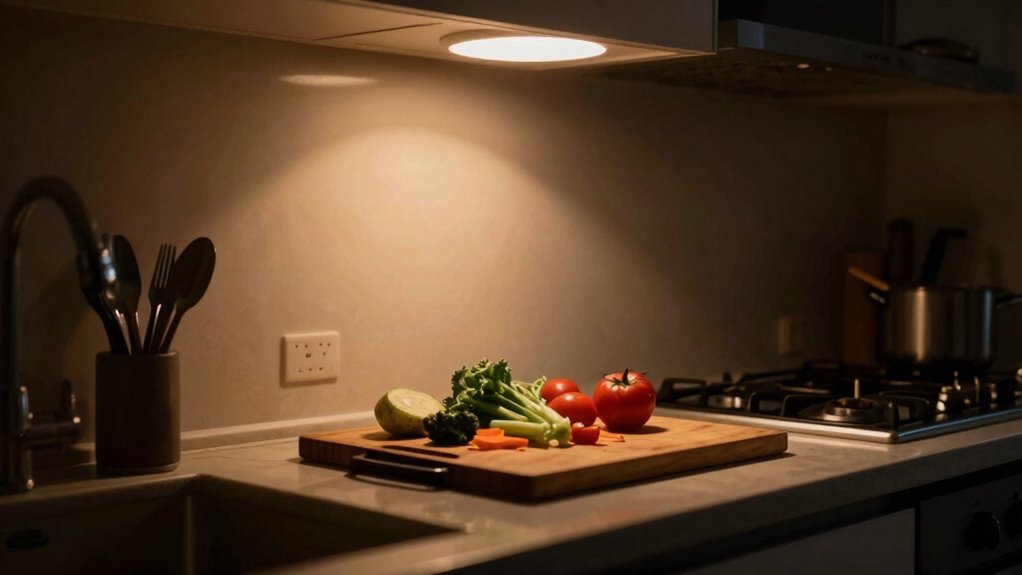
Poor kitchen lighting can make cooking harder by creating shadows, dull spots, or glare that hinder your view of ingredients and tools. If the lighting isn’t properly layered or focused over work areas, you might strain your eyes or make mistakes. Insufficient or poorly placed lights can also increase safety risks and cause frustration. To improve your cooking experience, understanding how to optimize your kitchen’s lighting will reveal simple ways to brighten your space effectively.
Key Takeaways
- Poorly placed or insufficient ambient lighting creates shadows, making it difficult to see ingredients clearly.
- Dim or weak task lights cause eye strain and hinder detailed tasks like chopping or measuring.
- Overhead fixtures that wash out work surfaces reduce focus and visibility during meal prep.
- Lack of layered lighting results in uneven illumination, increasing the risk of accidents.
- Outdated or non-adjustable fixtures limit your ability to customize lighting for different cooking needs.
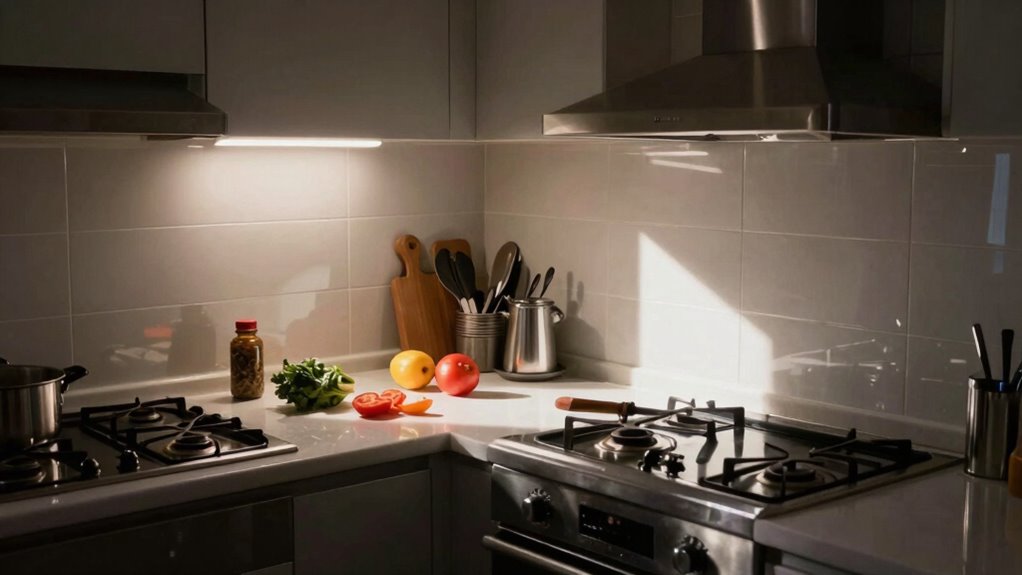
Good lighting in your kitchen is essential for safe and efficient cooking, as it helps you see ingredients clearly and avoid accidents. If your kitchen’s lighting isn’t quite right, it can make preparing meals more frustrating than it needs to be. One common issue is the imbalance between ambient fixtures and task illumination. Ambient fixtures provide overall light, filling the space evenly, but if they’re too dim or poorly placed, your entire kitchen feels dull and shadowy. Without sufficient ambient lighting, you struggle to see the big picture, which can cause mistakes or slow down your workflow.
On the other hand, task illumination targets specific work areas, like over the stove, sink, or cutting board. If these lights are weak or poorly directed, you’ll find yourself straining your eyes or needing to reposition yourself constantly. For example, a bright overhead light can wash out your view, making it hard to focus on fine details, while a too-weak under-cabinet light leaves your cutting surface in shadows. The key is to strike a balance—enough ambient fixtures to create a comfortable, welcoming atmosphere and ample task lighting to illuminate the precise areas where you work.
Many kitchens suffer from outdated or poorly designed lighting setups. You might have a single ceiling fixture that doesn’t quite do the job, or your task lights might be too far from the work surfaces. Upgrading to modern fixtures, such as adjustable under-cabinet lights or focused pendant lighting, can make a huge difference. These fixtures allow you to customize your lighting based on your needs, reducing shadows and improving visibility. LED bulbs are a smart choice because they’re bright, energy-efficient, and long-lasting. When installing or upgrading, consider placing ambient fixtures in strategic locations to eliminate dark corners, and ensure task lights are positioned directly over your main work zones. Proper lighting design can significantly enhance both safety and efficiency in your kitchen. Additionally, incorporating energy-efficient lighting options can help reduce your environmental impact while maintaining optimal visibility.
If your current setup makes cooking more difficult, it’s time to rethink your lighting plan. Properly layered lighting not only enhances safety but also improves your kitchen’s overall functionality and ambiance. When your lighting is well-designed, you won’t have to squint or move around awkwardly to see what you’re doing. Instead, you’ll enjoy a well-lit space that makes cooking easier, faster, and more enjoyable. Incorporating biodiversity-friendly lighting options, such as energy-efficient LEDs, can also reduce your environmental impact while improving kitchen visibility.
Frequently Asked Questions
How Does Lighting Color Temperature Affect Cooking Accuracy?
The lighting color temperature directly impacts your cooking accuracy by influencing color accuracy, helping you distinguish ingredients and doneness more clearly. Cooler temperatures (around 5000K) mimic daylight, enhancing visibility and detail, while warmer tones create a cozy mood but may distort colors. Choosing the right temperature helps you cook precisely and sets the right mood, making your kitchen both functional and inviting.
Can Dim Lighting Impact Kitchen Safety?
Dim lighting cast shadows that dance across your kitchen, creating ambient shadows that obscure details, making it harder to see hazards clearly. This reduced visibility affects your ability to judge color contrast accurately, increasing the risk of accidents like cuts or burns. When lighting is too dim, you might miss spills or ingredients, compromising safety. Bright, well-balanced lighting helps you cook confidently, ensuring a safer culinary environment.
What Is the Best Lighting Setup for Small Kitchens?
For small kitchens, the best lighting setup involves strategic lighting placement and choosing fixture styles that maximize space. Use under-cabinet lights for focused task lighting on countertops, and install ceiling-mounted fixtures or track lighting to evenly illuminate the entire area. Opt for sleek, minimalist fixture styles to avoid clutter. This combination guarantees bright, efficient lighting that enhances visibility and makes cooking easier without overwhelming your small space.
How Often Should I Replace or Upgrade Kitchen Lights?
You should replace or upgrade your kitchen lights every 2-3 years to maintain energy efficiency and aesthetic appeal. Over time, bulbs dim or become less efficient, so timely updates guarantee your space remains bright and inviting. Upgrading to modern, energy-efficient fixtures can save you money on electricity bills and enhance your kitchen’s look. Regular updates also ensure your lighting stays functional, safe, and visually appealing for your cooking and entertaining needs.
Do Smart Lighting Systems Improve Cooking Efficiency?
Yes, smart lighting systems can improve your cooking efficiency by offering ambiance enhancement and energy savings. You can easily customize brightness and color temperature to match your tasks, ensuring better visibility and focus. Automated schedules and voice controls save you time and effort, making your kitchen more functional. Plus, energy-efficient LEDs reduce electricity bills, so you enjoy better lighting without sacrificing sustainability.
Conclusion
If your kitchen lighting isn’t up to par, you’re not just losing a little brightness—you might be making cooking infinitely harder than it needs to be. Poor lighting can turn simple tasks into frustrating puzzles, turning your kitchen into a shadowy maze. Upgrade your lights, and you’ll reveal a whole new world of clarity and ease, transforming your cooking experience from a formidable chore into a breeze. Don’t let bad lighting steal your culinary joy—shine a light on the problem today!