
Smart toilets are about more than just tech features—they focus on sustainability, hygiene, and your comfort. You can save water with dual-flush options and eco-friendly materials, while advanced systems promote a healthier environment. Adjustable bidets and heated seats enhance your daily routines. These innovations help reduce waste and chemical reliance, aligning with eco-conscious living. If you want to discover how these toilets blend smart design with eco-responsibility, there’s more to explore.
Key Takeaways
- Smart toilets prioritize water and energy conservation through dual-flush systems and sustainable materials, reducing environmental impact.
- They enhance user comfort with personalized features like heated seats and adjustable bidet functions.
- Hygiene is improved with integrated sterilization, air purifiers, and self-cleaning technologies for a healthier environment.
- Eco-friendly manufacturing processes and renewable energy integration support sustainability goals.
- These toilets combine innovation with environmental responsibility, promoting health, efficiency, and ecological benefits.
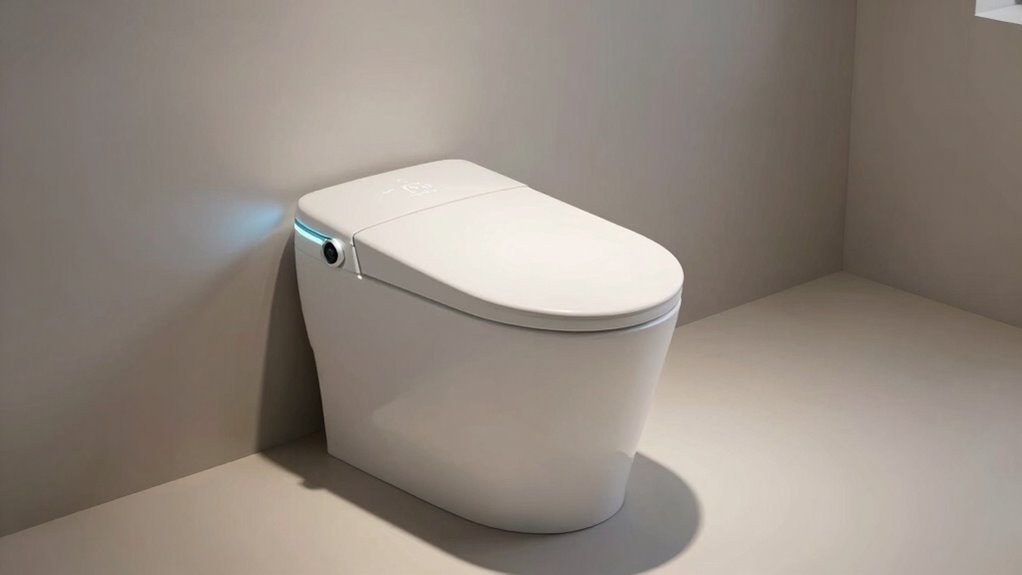
Have you ever wondered how technology is transforming one of the most basic aspects of daily life? Smart toilets do more than just add high-tech features; they’re reshaping how you experience comfort, hygiene, and sustainability. At the heart of this evolution is the focus on eco-friendly design, which means these toilets are built to minimize environmental impact while maximizing user comfort. Instead of wasting water or energy, they incorporate innovative systems that conserve resources without sacrificing performance. For example, many smart toilets feature dual-flush options, allowing you to choose a lighter flush for liquid waste and a more robust one for solids, markedly reducing water consumption. This eco-friendly design not only helps the planet but also lowers your utility bills.
Smart toilets optimize water use with dual-flush options, cutting waste and lowering utility bills.
But it’s not just about being environmentally conscious. User comfort remains a top priority. Imagine sitting on a seat that warms to your preferred temperature, which you can easily customize through a sleek control panel or a mobile app. The comfort features go beyond temperature; many smart toilets include adjustable bidet functions, offering multiple spray patterns, pressure levels, and even heated water, making personal hygiene more comfortable and hygienic. These comforts are designed to be intuitive, so you don’t have to fuss over complicated settings. Instead, you get a seamless, personalized experience every time you use the toilet.
Smart toilets also incorporate features aimed at improving your overall well-being. Some models include air purifiers, deodorizers, or UV sterilization systems, ensuring a fresher, cleaner environment while reducing odors. These features contribute to a healthier, more hygienic space that’s easy to maintain. Plus, many smart toilets are equipped with self-cleaning functions, which use electrolyzed water or UV light to sanitize the bowl after each use. This not only saves you time and effort but also promotes better hygiene and reduces the need for harsh cleaning chemicals. Incorporating sustainable materials and environmentally friendly manufacturing processes, these toilets are aligned with conservation efforts that focus on reducing ecological impact. Additionally, the integration of biodiversity principles in product design encourages manufacturers to use sustainable materials and environmentally friendly manufacturing processes, making these toilets even more aligned with conservation efforts.
Furthermore, advancements in water-saving technology ensure these toilets operate efficiently without compromising performance, reinforcing their role in conservation. The ongoing development of eco-conscious components in smart toilets demonstrates a commitment to sustainability, making them an ideal choice for environmentally aware homeowners. As the industry continues to evolve, many manufacturers are exploring ways to incorporate renewable energy into their products, further enhancing their eco-friendly profile. All of these technological improvements demonstrate that smart toilets are about more than just tech show-offs. They’re designed to bring real benefits—saving water, reducing waste, enhancing comfort, and promoting health—all while fitting seamlessly into modern, eco-conscious homes. As you consider upgrading, remember that the latest models balance innovation with sustainability and user experience. It’s about making your daily routine more efficient, comfortable, and environmentally friendly, proving that smart toilets are truly about more than just gadgets—they’re about improving your everyday life.

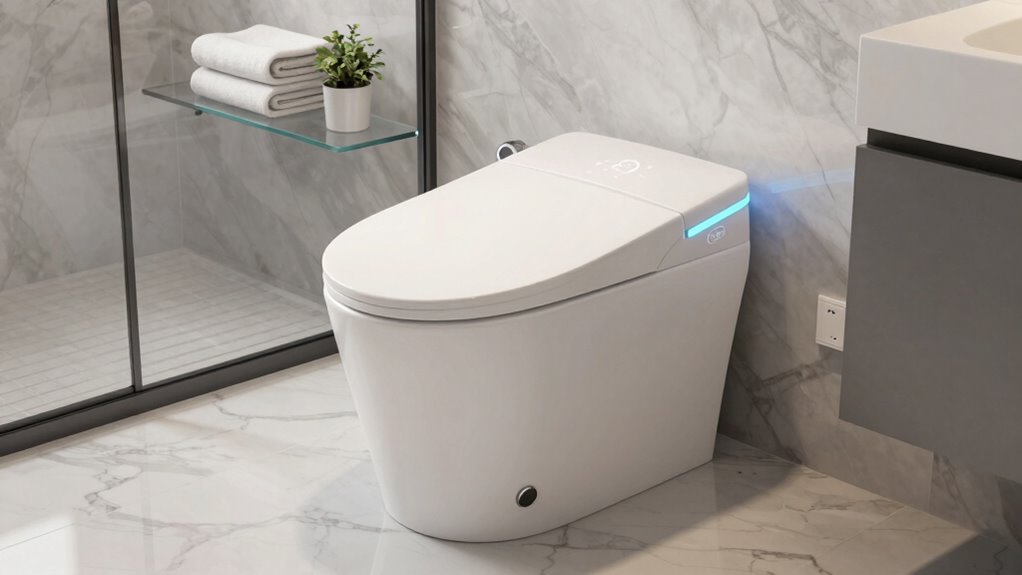
Modern Smart Toilet with Built-In Bidet, Electric Toilet, Auto Open/Close Lid, Heated Seat, Dual Auto Flush & Foot Sensor, Tankless, Warm Water Wash & Dryer, Wireless Remote, 1000g MaP
- Water-Saving Dual Flush System: Powerful 360° siphon jet, 0.92/1.28 GPF
- Hands-Free Operation: Auto lid, foot sensor, remote control
- Heated Seat & Warm Water: Instant ceramic heating, adjustable temperature
As an affiliate, we earn on qualifying purchases.
As an affiliate, we earn on qualifying purchases.
Frequently Asked Questions
How Do Smart Toilets Improve Hygiene Compared to Traditional Toilets?
Smart toilets improve hygiene benefits by offering features like automatic flushing, touchless operation, and self-cleaning surfaces, reducing contact with germs. These innovations enhance user comfort by providing a cleaner, more sanitary experience. You’ll notice fewer odors and a fresher environment, making your bathroom visits more pleasant. Overall, smart toilets promote better hygiene and comfort, making daily routines easier and cleaner without the need for harsh cleaning products or manual effort.
Are Smart Toilets Easy to Install in Existing Bathrooms?
Installing smart toilets can be straightforward, but you’ll want to take into account potential installation challenges like plumbing adjustments and electrical setup. While they often fit into existing spaces, some models may require professional help, adding to installation time and cost considerations. Overall, if your bathroom’s current setup aligns with the smart toilet’s requirements, installation is manageable, but be prepared for possible upgrades that could influence your budget and timeline.
What Maintenance Is Required for Smart Toilet Systems?
Think of maintaining your smart toilet like tending a garden—regular care keeps it thriving. You’ll need to clean the nozzles, check for software updates, and guarantee water connections are secure. This maintenance promotes water conservation and protects user privacy by keeping sensors and connections secure. Occasionally, replace filters or batteries if applicable. Simple, consistent upkeep ensures your smart toilet remains efficient, hygienic, and respectful of your privacy.
Do Smart Toilets Use More Water Than Conventional Models?
Smart toilets generally use less water than conventional models, thanks to advanced features like efficient flushing systems and customizable settings. By reducing water consumption, they positively impact the environment, lowering your overall water bill and minimizing environmental impact. You’ll find that smart toilets help you conserve water without sacrificing performance, making them an eco-friendly choice. So, rather than increasing water use, they promote smarter, more sustainable water management in your home.
Are Smart Toilets Suitable for People With Disabilities?
You’re right—“Where there’s a will, there’s a way.” Smart toilets are suitable for people with disabilities because they include accessibility features like adjustable heights and touch-free controls. These toilets also offer user customization, making it easier for everyone to use comfortably. They can improve independence and hygiene, showing that technology can adapt to your needs rather than the other way around.
Conclusion
Smart toilets aren’t just shiny gadgets; they’re the silent revolution transforming your bathroom into a sanctuary of health and convenience. Imagine a world where your throne not only listens but cares—detecting health issues before you do. These smart devices are like your personal wellness guardians, blending technology with everyday life. So, next time you flush, remember: your toilet is stepping into the future, turning a simple act into a smarter, healthier experience.