Regularly flushing your tankless water heater each year is key to preventing sediment buildup that can cause inefficiency, noisy operation, and costly repairs. By removing minerals that settle at the bottom, you keep the system running smoothly, extend its lifespan, and save on energy bills. This simple maintenance acts as a proactive health check-up, ensuring continuous hot water. Keep going to discover how this easy step can prevent years of frustration down the line.
Key Takeaways
- Prevents sediment buildup that causes inefficiency and operational noise, reducing frustration over time.
- Maintains consistent water temperature, avoiding unexpected cold showers and user discomfort.
- Extends the lifespan of the water heater, delaying costly replacements and repairs.
- Ensures optimal heat transfer, reducing energy bills and system strain.
- Acts as a proactive maintenance step, minimizing unexpected breakdowns and plumbing issues.
When was the last time you flushed your tankless water heater? If it’s been more than a year, you might be risking more than just a little inconvenience. Regular water heater maintenance isn’t just about keeping things running smoothly; it’s about preventing small issues from escalating into costly repairs. One of the most effective ways to do this is through an annual flush, which helps remove sediment buildup and ensures your system functions efficiently. Sediment buildup prevention is crucial because, over time, minerals in your water settle at the bottom of the unit, reducing heat transfer and making your heater work harder. This not only shortens its lifespan but also increases your energy bills.
Regular annual flushing prevents sediment buildup, extending your water heater’s lifespan and boosting efficiency.
Performing an annual flush might seem like a chore, but it’s a straightforward process that can save you significant frustration down the line. When you flush your tankless water heater, you’re removing mineral deposits and debris that accumulate in the system. This step keeps the heat exchanger clean, allowing your heater to operate at peak efficiency and preventing sluggish hot water supply. Plus, by regularly maintaining your system, you reduce the risk of costly breakdowns caused by sediment clogging important components. It’s a proactive approach that pays off in durability and performance. Regular maintenance also helps to prevent corrosion, which is a common issue caused by mineral deposits in water heaters.
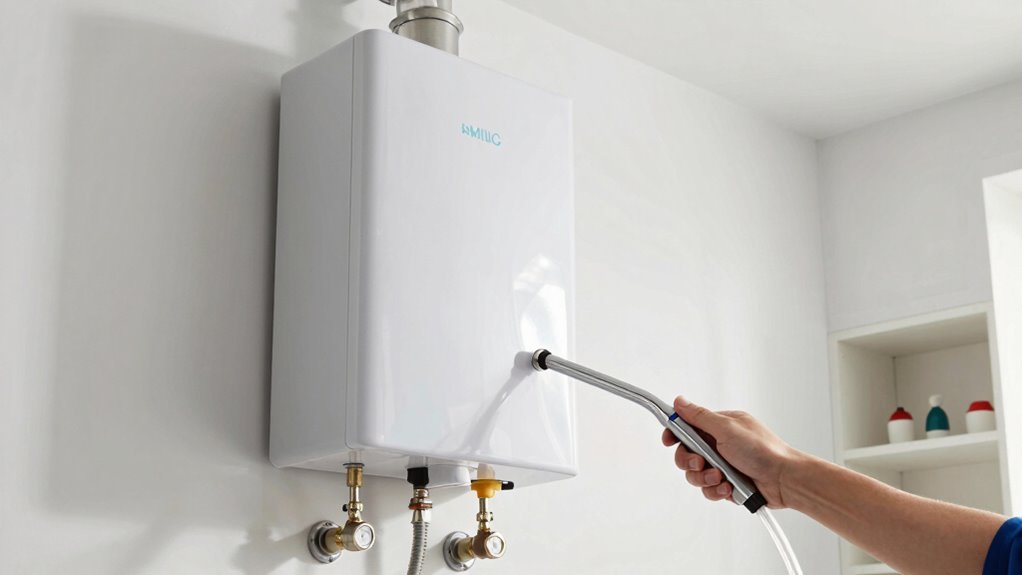
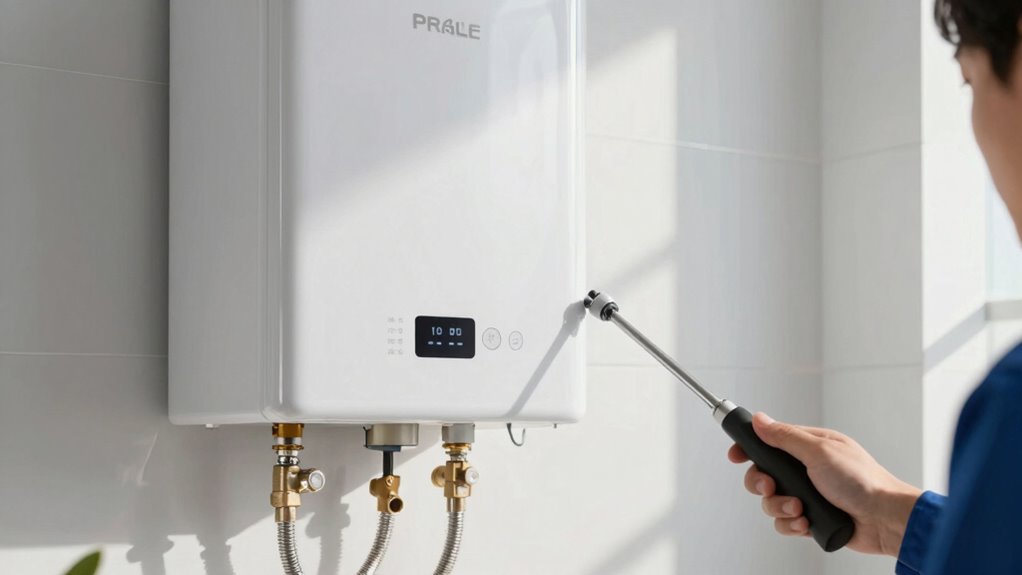
Neglecting water heater maintenance can lead to stubborn problems, such as inconsistent water temperature or loud noises during operation. These issues often stem from mineral buildup that impairs the heat exchange process. By committing to an annual flush, you’re actively preventing these problems. Think of it as giving your water heater a health check-up—removing the buildup that could cause damage or reduce efficiency. The process usually involves shutting off the unit, attaching a hose, and flushing out the sediment with clean water and a descaling solution if needed. This simple task can extend your heater’s lifespan, saving you money and hassle. Regular maintenance also helps maintain optimal system performance, which is essential for energy efficiency.
Additionally, understanding how sediment buildup occurs and its effects can motivate ongoing care, as it directly impacts the longevity of your water heater. In the long run, sticking to an annual maintenance routine keeps your system running smoothly, ensuring you always have hot water when you need it. It’s a small effort with significant benefits—better energy efficiency, fewer repairs, and a longer-lasting water heater. By preventing sediment buildup before it becomes a serious issue, you’re taking control of your home’s plumbing health. Regular maintenance also helps avoid sediment buildup, which is a common cause of inefficiency in tankless water heaters. Don’t wait for problems to crop up; schedule that yearly flush and enjoy the peace of mind that comes with knowing your tankless water heater is in top shape.

6699 Tankless Water Heater Flushing Kit Includes 1/6HP Submersible Sump Pump with Two Adapters & 3 Gallons Pail with Bucket Lid Opener & Two 1/2” Dia X 6’ PVC Hoses with Washers
- Complete tankless heater cleaning kit: Includes hoses, adapters, and pump
- Energy-efficient submersible sump pump: 1100 GPH flow, 16.5 ft height
- Easy-to-use maintenance tools: Bucket, lid opener, hoses, and adapters
As an affiliate, we earn on qualifying purchases.
As an affiliate, we earn on qualifying purchases.
Frequently Asked Questions
How Often Should I Schedule a Tankless Flush?
You should schedule a tankless flush once a year, following your maintenance schedule. Water quality varies, so if you notice mineral buildup or reduced efficiency, consider flushing more often. Regular maintenance helps prevent clogs and extends your system’s lifespan. Keep an eye on hot water flow and sediment, and adjust your flush frequency accordingly. Staying proactive guarantees your tankless water heater runs smoothly and saves you from costly repairs later.
Can I Perform a Tankless Flush Myself?
Think of DIY maintenance as trying to navigate a river without a paddle—you might get there, but it’s easier with guidance. You can perform a tankless flush yourself if you’re comfortable with basic tools and follow clear instructions, but for thoroughness and safety, professional service is recommended. It guarantees the job’s done right and prevents potential damage, saving you time and future headaches.
What Signs Indicate My Tankless Water Heater Needs a Flush?
You should consider flushing your tankless water heater if you notice inconsistent water temperature, reduced flow rate, or strange noises during operation. Use a maintenance checklist to stay on top of issues, and think about water quality considerations—hard water can cause mineral buildup. Regular flushing helps prevent scale buildup, improves efficiency, and extends your heater’s lifespan, making it a smart, proactive maintenance step.
Are There Risks Involved With Annual Flushing?
Are you worried about risks during your annual flush? While generally safe, improper flushing can lead to chemical corrosion or system overload. If you don’t follow the correct procedure or use the wrong cleaning solutions, you might damage internal components. To prevent these issues, it’s best to follow manufacturer instructions carefully or hire a professional. This way, you protect your system and ensure it operates efficiently for years to come.
How Long Does a Tankless Flush Typically Take?
A tankless flush typically takes about 30 to 60 minutes, depending on your system size and sediment buildup. During this maintenance, you remove mineral deposits that cause sediment buildup, improving efficiency and extending your unit’s lifespan. Regular flushing prevents costly repairs, reducing overall maintenance costs. You’ll find that investing this short time annually helps avoid bigger issues later, saving you both time and money in the long run.
Conclusion
Think of your tankless water heater as a garden that needs regular watering and care. Skipping your annual flush is like neglecting the weeds—eventually, they take over and choke out the good. By performing this simple maintenance, you’re nurturing your system, ensuring it runs smoothly and lasts longer. Keep up with your annual flush, and you’ll enjoy a steady flow of warm water, free from surprises—turning frustration into effortless comfort, year after year.