
You should replace your refrigerator water line before it leaks if you notice signs like discoloration, foul smells, cracks, kinks, or pooling water around your appliance. Regular inspections for corrosion or reduced water pressure can help catch issues early. Using high-quality replacement lines and acting promptly can prevent water damage and keep your system running smoothly. Keep an eye out for these signs, and if you want to learn more about maintaining your line, continue exploring.
Key Takeaways
- Replace the water line if you notice discoloration, foul smell, or water quality issues.
- Inspect regularly for cracks, kinks, or corrosion to catch problems early.
- Replace the line proactively if it shows signs of wear or has been in use for several years.
- Address leaks or decreased water pressure immediately to prevent further damage.
- Use high-quality replacement lines to ensure reliability and prevent future leaks.
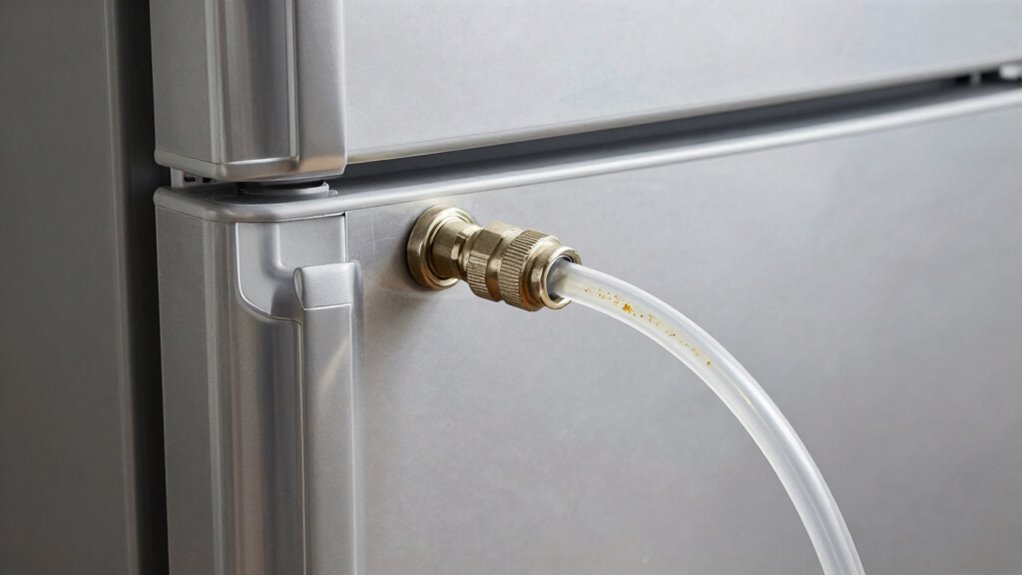
Your refrigerator’s water line is an essential component that supplies fresh water and ice, but it doesn’t last forever. Over time, wear and tear can lead to problems like leaks or reduced water quality. Recognizing when to replace the water line before it leaks is crucial to prevent costly water damage and ensure your ice maker functions properly. Regular ice maker maintenance plays a big role in catching issues early; inspecting the line periodically helps you spot signs of trouble before they escalate.
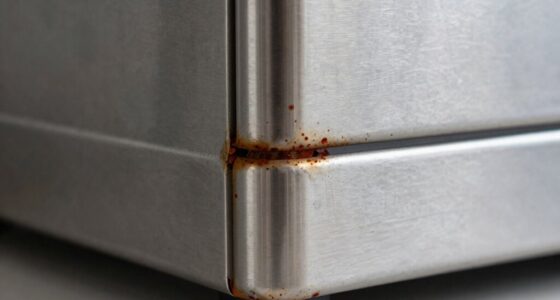
One common issue that signals it’s time for a replacement is water line corrosion. Corrosion occurs when mineral deposits, bacteria, or other contaminants build up inside the line, weakening the material. If you notice a discoloration or a foul smell in your water or ice, it could be a sign of corrosion. Additionally, cracks or kinks in the line can cause leaks or blockages, which might lead to water pooling around your refrigerator or under your floor. When corrosion becomes severe, it compromises the integrity of the line, increasing the risk of leaks and water damage.
Leaks are often a clear sign that your water line needs replacing. If you observe pooling water, damp spots, or water dripping from behind or underneath your refrigerator, don’t ignore it. Sometimes, the leak may be slow, causing water to accumulate over time and damage flooring or cabinets. Even if you don’t see obvious signs, a sudden decrease in water pressure or inconsistent water flow to your ice maker indicates that the line may be clogging or deteriorating. Addressing these issues early prevents more extensive repairs later. Regular inspections can help you identify early warning signs of deterioration before a leak occurs. Using proper tools and techniques during inspections can also help you detect issues more effectively.
Proper ice maker maintenance involves inspecting the water line regularly, especially if your refrigerator is several years old. Look for signs of corrosion, cracks, or kinks, and replace the line if needed. Remember, a compromised water line not only causes leaks but can also affect water quality, leading to taste or smell issues in your ice and drinking water. In some cases, buildup inside the line can cause blockages, reducing water flow and impairing ice production. Ensuring the line is made from high-quality materials can also help prevent early deterioration and extend its lifespan. Additionally, using high-quality replacement lines can help extend the lifespan of your water supply system and reduce the likelihood of future issues. Staying aware of material durability factors can help you choose the best options for long-term reliability. Ultimately, replacing your refrigerator’s water line before it leaks is a proactive step to safeguard your home. Keep an eye out for corrosion, leaks, and reduced water flow, and don’t wait until water damage occurs. Regular maintenance and timely replacement ensure your ice maker continues to produce clean, fresh ice and water, maintaining your refrigerator’s efficiency and your peace of mind.

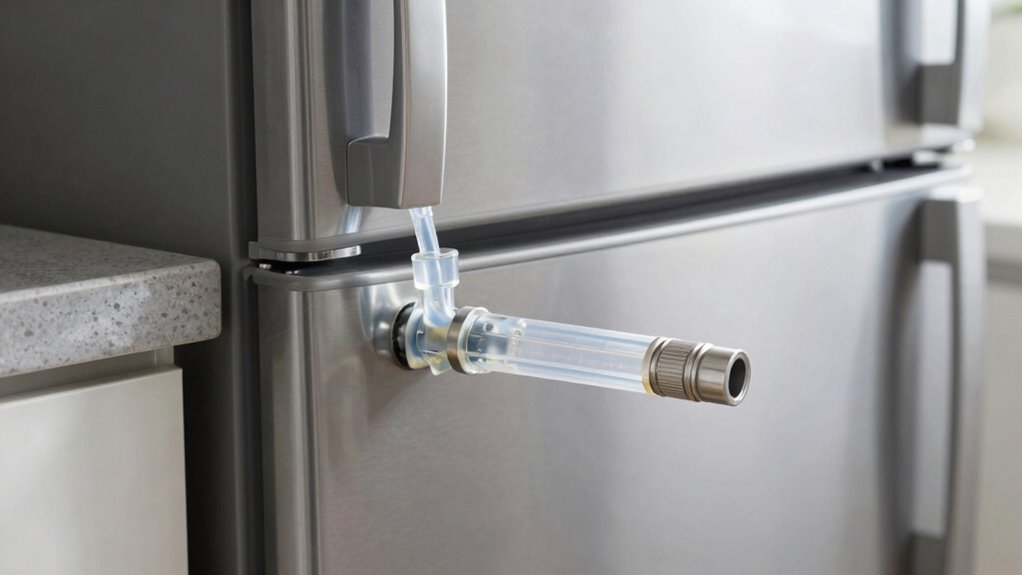
Ice Maker Water Line Kit – 25FT Water Line&Quick Fittings for Refrigerator
- Compatibility: Fits most refrigerator brands and models
- Material: Food-grade, NSF/ANSI tested, BPA free
- Installation: Easy push-in quick connect fittings
As an affiliate, we earn on qualifying purchases.
As an affiliate, we earn on qualifying purchases.
Frequently Asked Questions
How Long Does a Typical Refrigerator Water Line Last?
A typical refrigerator water line lasts about 5 to 7 years, depending on water quality and usage. Water line durability varies, but regular inspections help prevent leaks. To guarantee leak prevention, replace the line if you notice cracks, brittleness, or reduced water flow. Staying proactive with maintenance extends the line’s lifespan and avoids costly repairs, keeping your refrigerator functioning smoothly and your water supply clean.
Can I Replace the Water Line Myself?
Absolutely, you can replace the water line yourself, especially if you’re comfortable with DIY installation. Just like assembling a vintage radio, it requires patience and attention to detail. Use the right water line materials, such as braided stainless steel or reinforced plastic, to guarantee durability. Turn off the water supply first, then follow your refrigerator’s manual for guidance. With basic tools and care, you’ll have it done in no time.
What Tools Are Needed to Replace a Water Line?
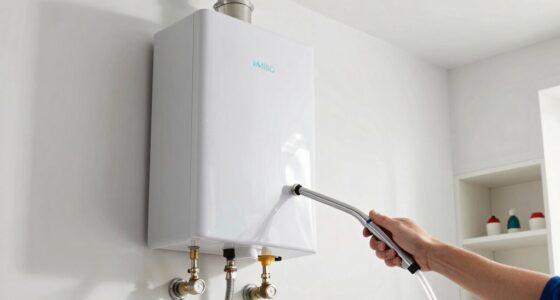
To replace a water line, you’ll need basic tools like a wrench, adjustable pliers, and a bucket to catch any water. You should also have water line connectors compatible with your fridge and replacement hose types suitable for your model. Make certain to turn off the water supply before disconnecting the old line. Having these tools and parts ready guarantees a smooth and leak-free replacement process.
Are There Any Signs of Hidden Water Line Damage?
You might notice hidden leaks if you see water pooling behind or beneath your refrigerator, or if your floor feels damp or warped. Look for corrosion signs like rust or mineral deposits on the water line, which indicate deterioration. Even if there’s no obvious leak, these signs suggest it’s time to inspect the line closely and consider replacing it to prevent future damage or water damage.
How Often Should I Inspect My Refrigerator Water Line?
Think of inspecting your refrigerator water line like a dial-up modem—outdated but still functional if checked regularly. You should inspect it at least once every six months, especially if you’re using an ice maker or water filter. Look for leaks, cracks, or mineral buildup. Regular inspections help catch issues early, ensuring your water line stays in good shape and prevents costly repairs down the line.
Conclusion
Knowing when to replace your refrigerator water line can save you from messy leaks and costly repairs. For example, if you notice a slow drip or decreased water flow, it’s time to act. Regular inspections and replacing aging lines prevent surprises. Imagine coming home to a flooded kitchen—avoid that stress by staying proactive. Keep an eye on your water line’s condition, and you’ll guarantee your fridge keeps running smoothly without unexpected leaks.