Making medication time pleasant starts with creating consistent routines you enjoy. Place your meds in visible spots and pair taking them with something you love, like a favorite playlist or a morning coffee. Reward yourself after sticking to your schedule, whether with a treat or relaxing activity. Celebrate small wins to stay motivated. Incorporating these simple habits can turn medication into a positive experience—discover more ways to make it easy and enjoyable as you go along.
Key Takeaways
- Establish consistent routines by taking medication at the same time and in familiar spots to make it automatic.
- Use visual cues and pair medication with enjoyable activities or media to create positive associations.
- Reward yourself with small treats after adherence to reinforce the habit and boost motivation.
- Set gentle reminders like alarms or sticky notes to support routine development and reduce forgetfulness.
- Celebrate small successes and maintain a positive attitude to make medication time a pleasant, stress-free experience.
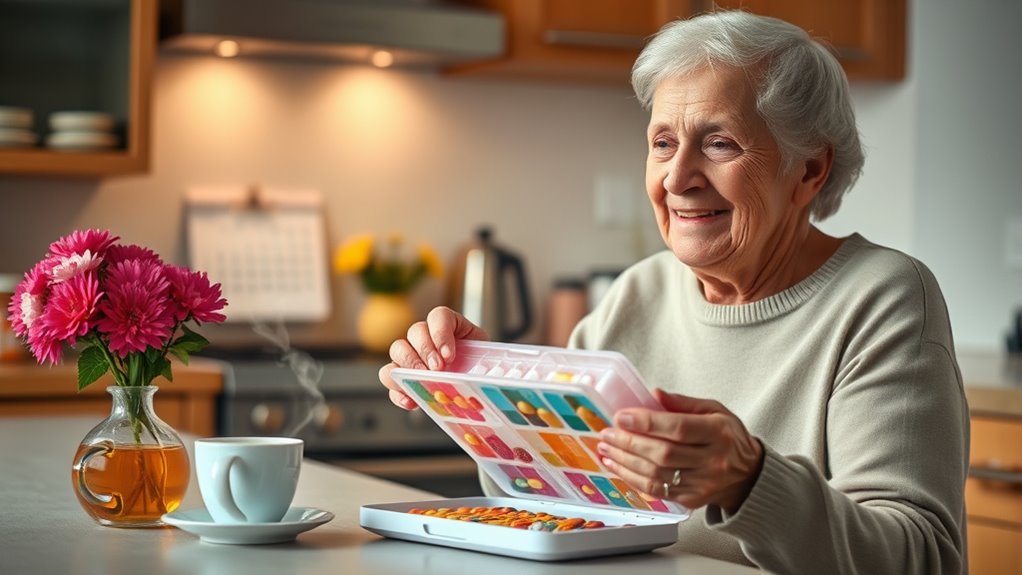
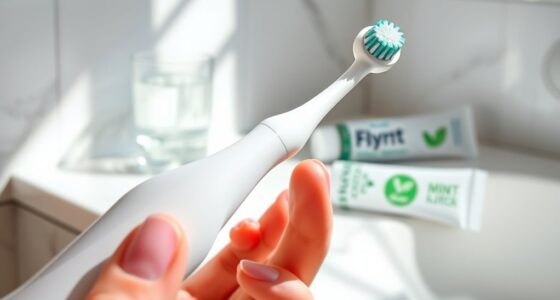
Taking medication doesn’t have to be a stressful or unpleasant experience. By establishing simple routines and adding small rewards, you can transform what might feel like a chore into a positive part of your day. The key is consistency. When you take your medication at the same time each day, it becomes a habit, and habits tend to stick better. Choose a specific spot in your home, like next to your toothbrush or on your kitchen counter, where you’ll always see your medication. This visual cue helps you remember and reinforces the routine. Over time, you’ll find that taking your medication becomes automatic, reducing the mental effort involved and minimizing the chance of forgetting doses. Understanding the importance of medication adherence can motivate you to stay consistent and diligent with your routine.
Establish a routine and visual cues to make medication-taking automatic and stress-free.
Creating a routine also involves pairing medication time with an activity you already enjoy. For example, if you love drinking tea or coffee in the morning, take your medication right after your beverage. If you listen to your favorite playlist or podcast, do so while taking your pills. These small associations help your brain link medication with something pleasant, making the process feel less like a burden. Incorporate a gentle reminder, like an alarm or a sticky note, until the habit feels ingrained. Over time, these cues will trigger your routine without much thought.
Adding rewards can further motivate you and make medication time feel more rewarding. After taking your medication consistently for a week or a month, treat yourself to something nice—a favorite snack, a relaxing bath, or an episode of a show you love. Rewards don’t have to be big; even small acknowledgments of your effort reinforce positive behavior. This approach strengthens your motivation and helps you view medication as a part of your self-care, not just an obligation. Remember, the goal is to build a sustainable habit that supports your health without creating stress or resistance.
Finally, keep in mind that celebrating your successes, no matter how small, encourages you to stay on track. If you miss a dose, don’t be too hard on yourself—simply get back into your routine as soon as possible. Over time, these routines and rewards become second nature, making medication time a moment you look forward to rather than a task you dread. With patience and consistency, you’ll find that managing your medication can seamlessly integrate into your daily life, fostering a sense of control and well-being.
Frequently Asked Questions
How Can I Customize Routines for Different Age Groups?
You can customize routines for different age groups by tailoring activities and rewards to their interests and developmental stages. For young children, use colorful visuals and simple praise, while older kids might enjoy earning privileges or small treats. Incorporate age-appropriate distractions or educational elements to keep them engaged. Remember to keep routines consistent but flexible, adjusting rewards and tasks as they grow, ensuring medication time remains positive and stress-free.
What Are Some Effective Reward Ideas for Children?
Think of rewards as treasure chests waiting to be opened. You can give children stickers, extra playtime, or small toys as effective incentives. Praise their efforts with enthusiastic words, or create a fun chart to track progress. Special privileges, like choosing a family activity, also work well. The key is to match rewards to what excites each child, turning medication time into a positive adventure rather than a chore.
How Do I Handle Missed Medication Doses?
If you miss a medication dose, don’t panic. Check the instructions or contact your child’s healthcare provider for guidance. If it’s soon after the missed dose, give it as soon as you remember, unless it’s close to the next dose. Never double up without advice. Keep a medication schedule, set reminders, and stay consistent to reduce missed doses. If you’re unsure, always consult a healthcare professional for the best course of action.
Are There Any Risks With Using Rewards Excessively?
Yes, using rewards excessively can lead to dependence on external motivation, reducing your internal drive to stick with routines. Over time, you might find it harder to stay consistent without rewards, which could undermine long-term habits. To avoid this, use rewards sparingly and focus on building intrinsic motivation, like feeling good about taking care of yourself. Balance is key to maintaining healthy routines without becoming overly reliant on external incentives.
How Can I Involve Family Members in the Routine?
You can involve family members by assigning specific roles, like reminding your loved one or offering encouragement. Make it a team effort by celebrating successes together, which boosts motivation. Share responsibilities so no one feels overwhelmed, and keep communication open to adapt routines as needed. When family members participate regularly, it creates a supportive environment that makes medication time smoother and more positive for everyone involved.
Conclusion
By blending bright banners of belief with playful practices, you transform medication time from a chore into a cheerful chapter. Embrace engaging routines and rewarding rituals to reinforce reliability and restore a sense of rhythm. When you weave wonder into these moments, medication becomes manageable and meaningful. Make the mundane memorable by mixing motivation with mindfulness, turning daily doses into delightful duties. With consistent cues and creative comforts, you’ll cultivate calm, confidence, and a continued commitment to caring for yourself.