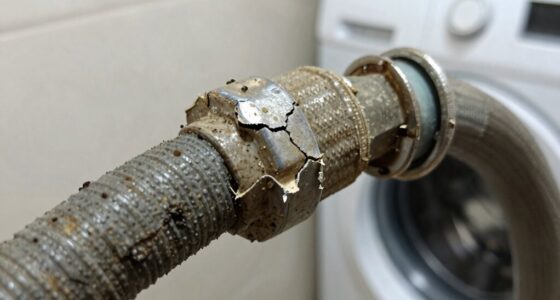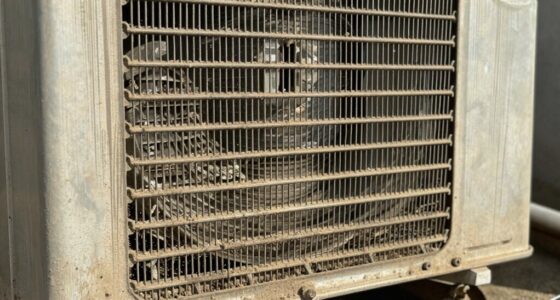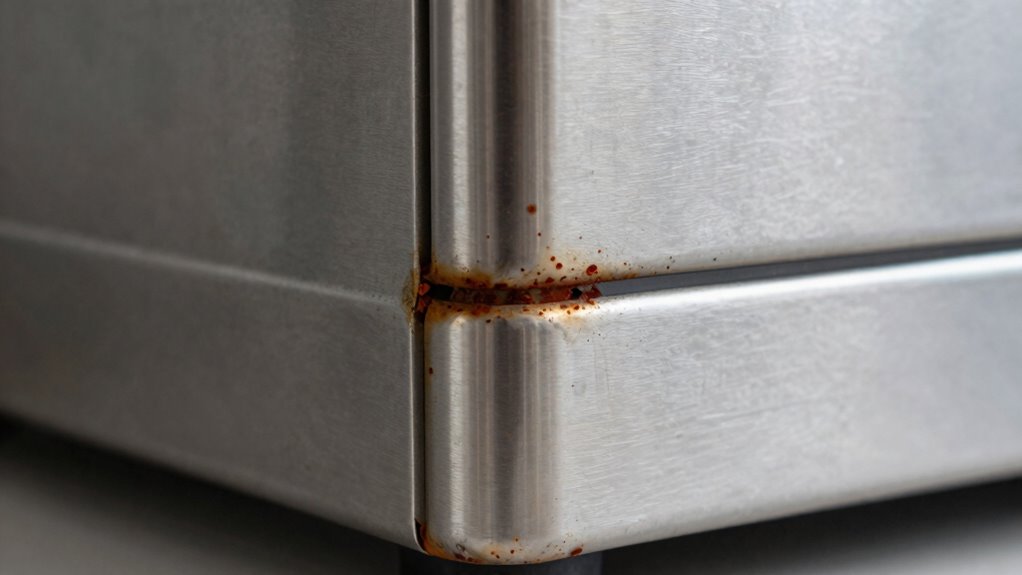

To spot early rust on kitchen appliances, look for tiny discoloration spots, rough patches, or subtle color changes, especially near seams, joints, or moisture-prone areas. Keep an eye out for rough textures that feel different from the surface. Regularly check for these signs, as rust often starts beneath the surface before becoming visible. Staying vigilant now can save you from bigger problems later—continue to find out how to protect your appliances effectively.
Key Takeaways
- Look for tiny discoloration spots or rough patches on appliance surfaces.
- Check seams, joints, and moisture-prone areas regularly for subtle changes.
- Use detection tools to identify rust before it becomes visible.
- Monitor areas exposed to water or humidity for early signs of corrosion.
- Pay attention to color or texture changes indicating initial rust formation.
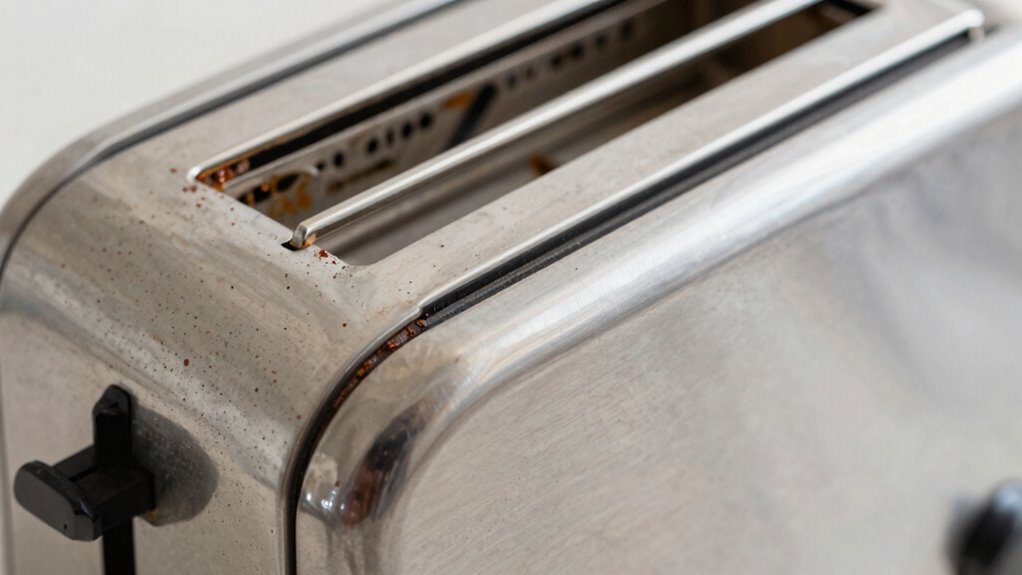
Kitchen appliances are essential for daily tasks, but early signs of rust can silently compromise their functionality and appearance. Catching rust early is critical to prevent it from spreading and causing more significant damage. To do this, you need to stay vigilant and regularly inspect your appliances, especially those exposed to moisture or water. Look closely at seams, joints, and any areas where moisture might accumulate. Tiny spots of discoloration or rough patches are often the first indicators of rust forming beneath the surface. If you notice these signs, don’t ignore them—addressing rust early can save you money and prolong the life of your appliances. Recognizing early rust formation is key to effective prevention and treatment.
Prevention is always better than cure, so incorporating rust prevention strategies into your routine is essential. Keep your appliances dry whenever possible by wiping down surfaces after use. Consider using moisture-absorbing products or silica gel packs in areas prone to dampness. Applying a thin layer of protective coating, such as a rust-inhibiting spray or paint designed for kitchen appliances, can also help create a barrier against moisture. Regular maintenance extends beyond just cleaning; it involves being proactive about minimizing exposure to water and humidity that can accelerate rust formation. Being proactive with maintenance can help you catch early rust signs before they develop into more serious issues. Staying informed about rust prevention techniques can significantly reduce your risk of early corrosion. Additionally, using tools designed for detecting rust early can help you identify problem areas before they become visible.
When it comes to cleaning techniques, gentle yet effective methods work best for early rust spots. Use a soft cloth or sponge with mild dish soap and warm water to clean your appliances regularly. For areas showing initial rust signs, create a paste from baking soda and water, then gently scrub the affected spots with a soft brush or cloth. This natural abrasive helps lift rust without damaging the appliance’s surface. For more stubborn spots, applying a commercial rust remover specifically made for appliances can be effective—just follow the manufacturer’s instructions carefully. Always rinse thoroughly afterward and dry the surface completely to prevent moisture from lingering and causing further corrosion. Regular inspections combined with proper cleaning can help you catch rust early and prevent costly repairs.
Consistent cleaning and inspection are your best tools for spotting early rust. Don’t wait until you see visible corrosion; instead, be proactive in checking for subtle changes in color or texture. When you detect early rust, act quickly with appropriate cleaning techniques to remove it and apply preventive measures. Maintaining a dry environment, using protective coatings, and cleaning regularly will help you keep your kitchen appliances looking new and functioning smoothly for years to come. Staying attentive to these details ensures rust never gets a foothold, saving you time, effort, and money down the line.
Frequently Asked Questions
What Are Common Kitchen Appliances Prone to Rust?
You should watch out for appliances like dishwashers, refrigerators, and toasters, which are prone to rust. Regular cleaning techniques help prevent rust buildup, especially on metal surfaces. Keep these appliances dry and wipe away spills promptly. Applying rust prevention treatments or coatings can also protect against corrosion. By maintaining good cleaning habits and addressing early signs of rust, you’ll keep your appliances looking new and functioning well longer.
Can Rust on Appliances Be Safely Removed?
Yes, rust on appliances can be safely removed. Use rust removal techniques like applying a paste of baking soda and water or using commercial rust removers. Always opt for safe cleaning solutions and test a small area first. You can scrub gently with a soft brush or cloth to lift rust without damaging the surface. Regular maintenance and prompt attention help prevent rust from spreading and keep your appliances in good shape.
How Often Should I Inspect My Appliances for Rust?
Imagine your appliances as battle-ready armor, constantly exposed to daily wear. You should inspect them at least once a month, especially in humid or moist environments. Regular cleaning tips, like wiping down surfaces and keeping areas dry, help catch rust early. Rust prevention starts with vigilance—spotting the first signs of corrosion allows you to address issues before they worsen, keeping your appliances looking new and functioning smoothly longer.
Does Rust Affect Appliance Performance or Safety?
Yes, rust can affect appliance performance and safety. Metal corrosion weakens appliance structures, potentially causing malfunctions or leaks. Over time, rust compromises the integrity of components, reducing appliance longevity. If you notice rust early, cleaning and treating it can prevent further damage. Ignoring rust risks safety hazards, like electrical issues or contamination, and decreases the appliance’s lifespan. Regular inspections help catch rust early, maintaining both performance and safety.
Are There Rust-Proof Alternatives for Kitchen Appliances?
Yes, there are rust-proof alternatives for kitchen appliances. You can opt for appliances with rust-resistant coatings that prevent corrosion and extend lifespan. Stainless steel options are also a great choice because they’re naturally resistant to rust and easy to clean. When shopping, look for appliances labeled as rust-resistant or made of stainless steel to guarantee durability and maintain a sleek appearance over time.
Conclusion
Catching early rust on your kitchen appliances is like spotting the first cracks in a favorite mug — it can save you from bigger problems down the line. Keep an eye out for tiny discolorations, rough patches, or flakes, and address them quickly. With a little vigilance, you can prevent rust from spreading, keeping your appliances looking shiny and new. Stay proactive, and your kitchen will stay beautiful and functional for years to come.